CBSE has officially announced the Class 10 Second Board Examination Result 2026, marking another important milestone in the implementation of the National Education Policy (NEP) 2020. The second board examination system, introduced to reduce academic pressure and provide students with an additional opportunity to improve their performance, has shown encouraging results in its latest edition.
According to CBSE, the combined pass percentage of the Main Board Examination and the Second Board Examination has reached 96.78%, reflecting a strong overall performance by students. One of the biggest highlights of this year’s results is that nearly 60% of the students who appeared in the second board examination improved their scores, demonstrating the effectiveness of the revised assessment model.
The announcement has brought relief to thousands of students and parents across the country who viewed the second examination as an opportunity to improve marks without losing an academic year. Students who appeared for the examination can now access their digital marksheets through the DigiLocker Results Portal.
Table of Contents
CBSE Announces Class 10 Second Board Examination Result
The Central Board of Secondary Education released the Class 10 Second Board Examination Result on July 18, 2026. Students who appeared in the examination can now download their digital scorecards using their Roll Number, School Number, Admit Card ID, and other required login credentials through the official DigiLocker platform.
The release of the result marks another successful step in CBSE’s transition towards a more student-friendly examination system. Unlike the traditional single annual examination, the new structure allows students an additional opportunity to improve their academic performance within the same academic session.
The second board examination was conducted only for subjects where external evaluation accounted for more than 50% of the total marks. Practical examinations were held only once, reducing the burden on both students and schools.
Nearly 60% of Students Improved Their Scores
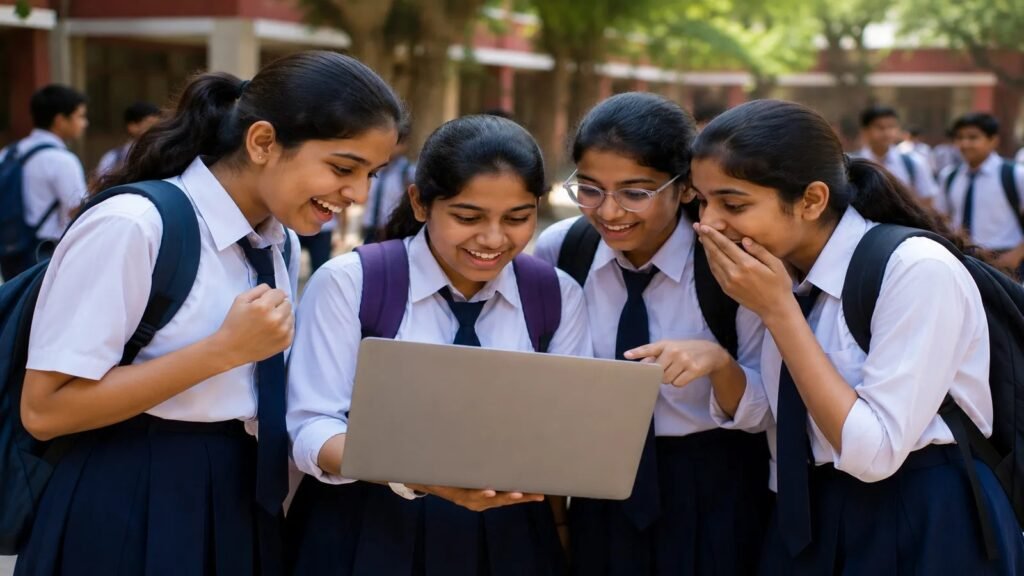
One of the most significant outcomes of this year’s examination is the improvement shown by students who appeared for the second attempt.
According to CBSE, nearly 60% of candidates managed to improve their scores after taking the second board examination. This indicates that many students were able to perform better after identifying their weak areas and preparing again without the pressure of waiting for another academic year.
For many students, the second examination served as an opportunity to strengthen concepts, correct mistakes made during the main examination, and approach the papers with greater confidence.
Education experts have often noted that multiple assessment opportunities allow students to demonstrate their true academic ability instead of relying on performance during a single examination period.
Overall Pass Percentage Reaches 96.78%
CBSE reported that the overall pass percentage has reached 96.78% after combining the results of both the Main Board Examination and the Second Board Examination.
The impressive pass percentage reflects not only the performance of students but also the effectiveness of the new examination framework introduced under NEP 2020.
The board also stated that the compartment pass percentage recorded a noticeable improvement compared to the previous year. This suggests that many students who were unable to clear one or more subjects in the main examination successfully passed during the second attempt.
The revised examination system has therefore reduced the number of students facing academic delays due to compartment examinations.
NEP 2020 Introduced the Twice-a-Year Examination System
The Class 10 Second Board Examination is one of the major reforms introduced under the National Education Policy 2020.
The policy aims to transform India’s education system by shifting the focus from high-pressure examinations to continuous learning and conceptual understanding.
Instead of placing students under intense pressure to perform well in a single annual examination, the revised system offers an additional opportunity to improve marks during the same academic year.
CBSE has designed the second examination as an improvement opportunity rather than simply a supplementary test. Students can attempt the examination to improve scores, clear compartment subjects, or enhance their academic record for future educational opportunities.
The reform is intended to encourage learning instead of memorisation while reducing examination-related stress among school students.
Better Score Considered Final
An important feature of the revised CBSE examination policy is that regular students automatically receive the benefit of their better score.
According to CBSE guidelines issued under NEP 2020, if a student performs better in the Second Board Examination than in the Main Examination, the improved marks will be considered final.
Similarly, if the original marks are higher, those scores will remain unchanged.
This system ensures that students have nothing to lose by appearing for the second examination. Instead, they receive an opportunity to improve their academic record without any disadvantage.
Education specialists believe this approach encourages students to attempt improvement examinations with confidence rather than fear of reducing their earlier scores.
Designed to Reduce Academic Pressure
One of the primary objectives behind introducing the second board examination was to reduce the stress associated with Class 10 board exams.
For decades, students often viewed the annual board examination as a make-or-break event, where one poor performance could significantly affect future academic plans.
The revised CBSE model seeks to change this perception by offering students another structured opportunity to improve their results.
Rather than repeating an entire academic year because of one or two subjects, students can now clear their papers through the second examination Class 10 conducted within the same session.
This approach also benefits families by reducing emotional pressure and financial costs associated with repeating a school year.
Limited Subjects Included in the Second Examination
CBSE clarified that not every subject was included in the second board examination.
Only those subjects where external written examinations carried more than half of the total marks were eligible for the second attempt.
Class 10 Subjects involving practical assessments followed a different structure. Practical examinations were conducted only once during the academic session, while students appeared again only for the theory component where applicable.
This arrangement reduced duplication of practical assessments and simplified the examination process for schools.
CBSE Also Aimed to Ease Teacher Workload
Before introducing the revised system, Class 10 CBSE had estimated that only around 40% of students would choose to appear in each subject during the second board examination.
The board believed this would help maintain manageable evaluation workloads for teachers while still providing students with meaningful opportunities to improve.
Since Class 10 only interested candidates appear in the second examination, the number of answer sheets requiring evaluation remains considerably lower than during the main board examinations.
This balanced approach allows CBSE to implement examination reforms without placing excessive administrative pressure on schools and evaluation centres.
How Students Can Check Their Result
CBSE has made the Class 10 Second Board Examination Result available through the DigiLocker Results Portal.
Students can check and download their digital marksheets by following these steps:
- Visit the DigiLocker Results Portal.
- Select the CBSE Class 10 Second Board Examination Result 2026 link.
- Enter the required details, including Roll Number, School Number, Admit Card ID, and other login credentials.
- Submit the information to access the digital scorecard.
- Download and save the marksheet for future admission and academic purposes.
The digital marksheet can be used for official purposes while students wait for any additional documentation issued by their respective schools.
A Major Shift in India’s School Assessment System
The introduction of the Class 10 twice-a-year examination format represents one of the biggest changes in the history of CBSE’s assessment system.
By allowing Class 10 students multiple opportunities to demonstrate their knowledge, CBSE is gradually moving away from the traditional high-stakes examination model toward a more flexible and learner-focused approach. The latest results, showing a combined pass percentage of 96.78% and nearly 60% of candidates improving their scores, indicate that the reform is beginning to achieve its objective of supporting student learning while reducing unnecessary academic pressure.