Amrit Bharat Express is set to strengthen Pune’s rail connectivity as Union Minister for Railways Ashwini Vaishnaw and Maharashtra Chief Minister Devendra Fadnavis announced a comprehensive development plan centred on a ₹600 crore redevelopment of Pune Railway Station Yard. The initiative is designed to address the city’s rapidly growing passenger demand, improve train-handling capacity and prepare Pune for the next phase of India’s expanding rail network.
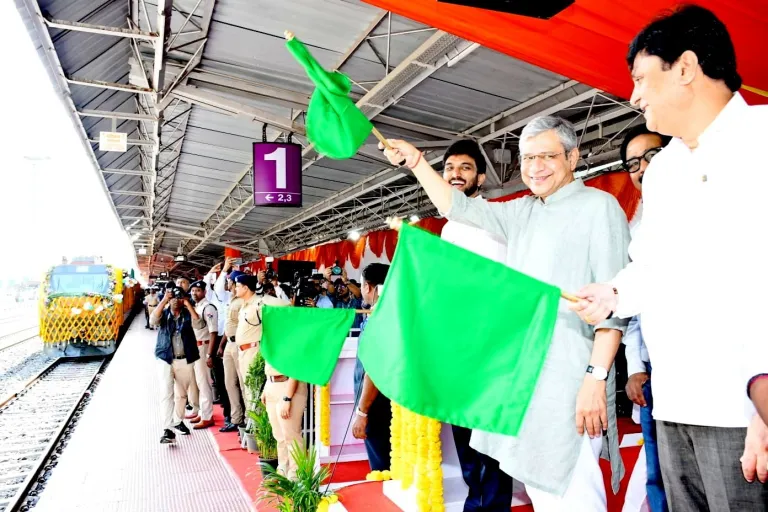
The announcement was made on June 17, 2026, during a major railway event at Pune Railway Station, where two new train services were also flagged off. These include the Pune–Sainagar Shirdi Express and the Pune–Danapur Amrit Bharat Express, strengthening connectivity between Pune and important destinations in Maharashtra, Bihar and other parts of the country.
The infrastructure programme is expected to transform Pune Junction into a larger mega railway terminal with 12 operational platforms, upgraded passenger facilities, new maintenance infrastructure and the capacity to accommodate additional train services.
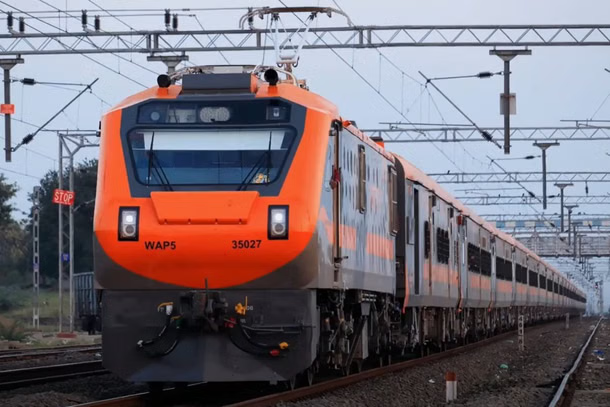
Table of Contents
Pune Railway Station to Undergo Major ₹600 Crore Redevelopment
At the centre of the announcement is the redevelopment and remodeling of the Pune Station Yard. The ₹600 crore project is intended to improve the way trains enter, depart and are handled at the station while reducing congestion in one of Maharashtra’s busiest railway hubs. The expansion will also support the growing operational requirements of Amrit Bharat Express services.
Pune has experienced rapid urbanisation and industrial growth over the years. With the city’s population and travelling public estimated at more than 70 lakh, railway infrastructure has faced increasing pressure from daily commuters, long-distance passengers and growing inter-city traffic. The growing network of Amrit Bharat Express trains is also expected to benefit from improved infrastructure.
The redevelopment plan aims to address these challenges by reorganising railway tracks, points and operational infrastructure around Pune Junction. This will help create better conditions for existing services as well as future Amrit Bharat Express operations.
The project is expected to create a more efficient railway operating environment while allowing the station to handle significantly higher passenger and train volumes.
Pune Junction to Get 12 Operational Platforms
One of the most important components of the master plan is the expansion of Pune Junction’s platform capacity to 12 operational platforms.
The additional capacity is expected to help Indian Railways accommodate longer trains and manage a higher number of services, including Amrit Bharat Express services. Increasing platform availability can also provide railway authorities with greater flexibility when scheduling arrivals and departures.
The upgraded yard will involve extensive reconfiguration of tracks and points. The objective is to reduce operational bottlenecks and improve the movement of trains through the station.
Once the redevelopment is completed, Pune Junction is expected to gain the capacity to support up to 20 additional train services. This expanded capacity could create more opportunities for Amrit Bharat Express connectivity from Pune.
For passengers, the increase could translate into improved connectivity, greater service availability and potentially more options for travelling to major cities and pilgrimage destinations.
New Passenger Facilities Planned at Pune Station
The redevelopment is not limited to railway tracks and operational infrastructure.
The master plan also includes modern terminal gates, improved entry and exit arrangements and wider pedestrian concourses. These facilities are intended to improve passenger movement and reduce congestion during busy periods.
With Pune witnessing substantial daily passenger traffic, crowd management has become an important consideration in station development. Better facilities will be particularly useful for passengers using long-distance services such as Amrit Bharat Express.
Wider pedestrian areas and better-designed access points can make it easier for passengers to enter and leave the station, particularly during peak hours and festival periods.
The development is part of a broader effort to create railway stations that are more convenient, modern and capable of handling future passenger growth, including the increasing demand for Amrit Bharat Express services.
New Coaching Maintenance Facilities at Ghorpadi and Alandi
Another important part of the railway expansion plan involves the development of new coaching maintenance facilities at Ghorpadi and Alandi.
Maintenance infrastructure is crucial for increasing the number of trains that can be operated from a railway hub. New coaching depots can provide dedicated facilities for inspection, servicing and preparation of train coaches.
The addition of facilities at Ghorpadi and Alandi is therefore expected to complement the redevelopment of Pune Yard and support the operational needs of Amrit Bharat Express.
Together, the upgraded yard and new maintenance infrastructure could provide Indian Railways with greater operational flexibility as train services from Pune increase.
Two New Train Services Strengthen Pune Connectivity
The infrastructure announcements were accompanied by the introduction of two new train services.
The Pune–Sainagar Shirdi Express is expected to strengthen connectivity between Pune and Sainagar Shirdi, one of Maharashtra’s most important religious destinations. Better rail connectivity to Shirdi can support both local passengers and spiritual tourism.
The second service, the Pune–Danapur Amrit Bharat Express, provides an important connection between Pune and Danapur in Bihar.
The Amrit Bharat Express service is particularly significant for passengers travelling between Pune and eastern India, including workers, students and families with connections to Bihar and neighbouring regions.
Pune–Danapur Amrit Bharat Express Uses Push-Pull Technology
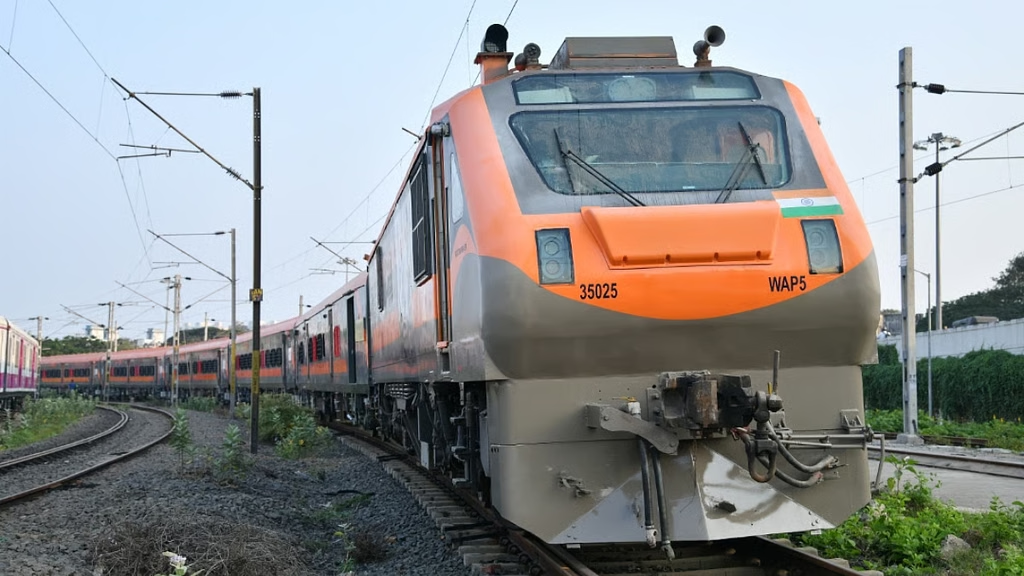
Following the main ceremony at Pune Junction, Railway Minister Ashwini Vaishnaw visited Hadapsar Railway Station to inspect the newly introduced Pune–Danapur Amrit Bharat Express.
The train uses push-pull technology, a configuration designed to improve acceleration and operational efficiency. The arrangement allows locomotives positioned at both ends of the train to work together, helping improve performance during acceleration and reducing the need for locomotive reversal at certain terminals.
The Amrit Bharat Express is positioned as a high-capacity and comparatively affordable long-distance service. The new Pune–Danapur Amrit Bharat Express therefore adds another important long-distance option for passengers travelling from Maharashtra towards Bihar.
During his visit to Hadapsar, Vaishnaw also interacted with schoolchildren participating in the inaugural journey and railway employees involved in operating and maintaining the service.
The interaction highlighted the role of railway personnel, including loco pilots and maintenance engineers, in delivering new services safely and efficiently.
Railway Development to Continue Under Live Traffic
A major challenge associated with the Pune Yard redevelopment is that the work has to be carried out while existing railway operations continue.
Vaishnaw highlighted the complexity of undertaking major infrastructure projects on a railway network that serves millions of passengers every day.
Unlike systems where railway operations can potentially be suspended for extensive redevelopment, Indian Railways often has to undertake construction and remodeling while maintaining regular services.
The Pune project will therefore require careful planning, engineering coordination and continuous monitoring, particularly as Amrit Bharat Express services continue to operate alongside other trains.
Work around active railway lines demands strict safety procedures because trains must continue operating while construction and infrastructure modifications take place.
The ability to modernise the station without completely shutting down railway operations will be an important part of the project’s implementation and could ultimately strengthen Pune’s capacity to handle future Amrit Bharat Express services.
132 Maharashtra Railway Stations Under Redevelopment
The Pune project forms part of a much larger railway modernisation programme across Maharashtra.
According to the information released at the event, redevelopment work is underway at 132 railway stations across the state under the Amrit Bharat Station Scheme.
The stations include major railway hubs as well as important regional centres.
In the Mumbai region, Chhatrapati Shivaji Maharaj Terminus is among the major stations being modernised. In Pune and western Maharashtra, projects include Pune Junction, Hadapsar, Kolhapur and Satara.
In the Marathwada region, redevelopment includes Chhatrapati Sambhajinagar, Jalna and Nanded. Nagpur Junction and Nasik Road are also among the important stations included in the wider modernisation programme.
The upgraded stations are expected to incorporate modern passenger amenities, improved accessibility, eco-friendly designs, roof plazas and better integration with other modes of transportation.
Pune’s Future Railway Network to Prepare for High-Speed Trains
The railway roadmap outlined at the event extends beyond conventional train services.
The development plan also looks towards future high-speed rail connectivity, including proposed Bullet Train corridors and next-generation Vande Bharat services.
Projected travel times discussed at the event indicate that a future high-speed rail connection could reduce the journey between Pune and Mumbai to around 48 minutes.
Another proposed high-speed connection between Pune and Hyderabad could potentially reduce travel time to approximately two hours and eight minutes.
Such connectivity could have significant implications for business travel, tourism and regional economic integration if and when these corridors become operational.
Vande Bharat Sleeper Trains Planned for Maharashtra
Maharashtra is also expected to benefit from the rollout of Vande Bharat Sleeper trains.
Unlike the existing daytime-oriented Vande Bharat services, sleeper variants are designed for longer overnight journeys.
These trains are expected to combine higher-speed operations with sleeping accommodation and improved passenger comfort.
For Maharashtra, the introduction of sleeper services could strengthen overnight connectivity with distant cities while offering passengers a more modern alternative for long-distance travel.
The development also reflects Indian Railways’ broader push towards upgrading passenger train technology and improving onboard facilities.
Pune–Nashik Rail Link Moves Forward
Another significant regional connectivity project highlighted during the event is the proposed direct Pune–Nashik railway line.
The route alignment has reportedly been finalised, marking an important step towards the next stages of the project.
A direct rail connection between Pune and Nashik could improve connectivity between two major urban and industrial centres in Maharashtra.
It could also benefit passengers travelling for business, education, tourism and employment while potentially reducing dependence on road transportation.
The proposed line is therefore viewed as an important part of the region’s longer-term railway development strategy.
Direct Mumbai–Nanded Train Service Also Planned
The railway expansion roadmap also includes a proposed direct train service connecting Mumbai with Nanded.
Nanded is an important city in the Marathwada region and has significant religious and cultural importance.
A direct connection with Mumbai would provide passengers with a more convenient rail option while strengthening links between Marathwada and Maharashtra’s financial capital.
The proposed service could also improve accessibility for passengers travelling for employment, education, healthcare and business.
Maharashtra Railway Network Enters a New Phase
The announcements in Pune represent a broader shift in the way railway infrastructure is being planned across Maharashtra.
The immediate focus is on increasing capacity and improving existing stations, while the longer-term vision includes high-speed rail, sleeper trains and new regional railway corridors.
Pune occupies an especially important position in this strategy because of its large population, industrial base, educational institutions and growing demand for inter-city connectivity.
The ₹600 crore Pune Yard redevelopment is therefore more than a station improvement project. It is intended to create the infrastructure required to support a larger number of trains and passengers in the years ahead.
With 12 operational platforms, new maintenance facilities at Ghorpadi and Alandi, improved passenger circulation and the potential for up to 20 additional train services, the project could significantly increase Pune Junction’s operational capacity.
At the same time, the launch of the Pune–Sainagar Shirdi Express and Pune–Danapur Amrit Bharat Express provides immediate improvements in connectivity.
The wider redevelopment of 132 stations across Maharashtra, along with proposed Bullet Train corridors, Vande Bharat Sleeper services and the Pune–Nashik rail link, indicates that the state’s railway network is being prepared for both present demand and future mobility requirements.
For Pune and Maharashtra, the combination of new trains, expanded railway infrastructure and future high-speed connectivity could mark a significant new chapter in the region’s transport network.