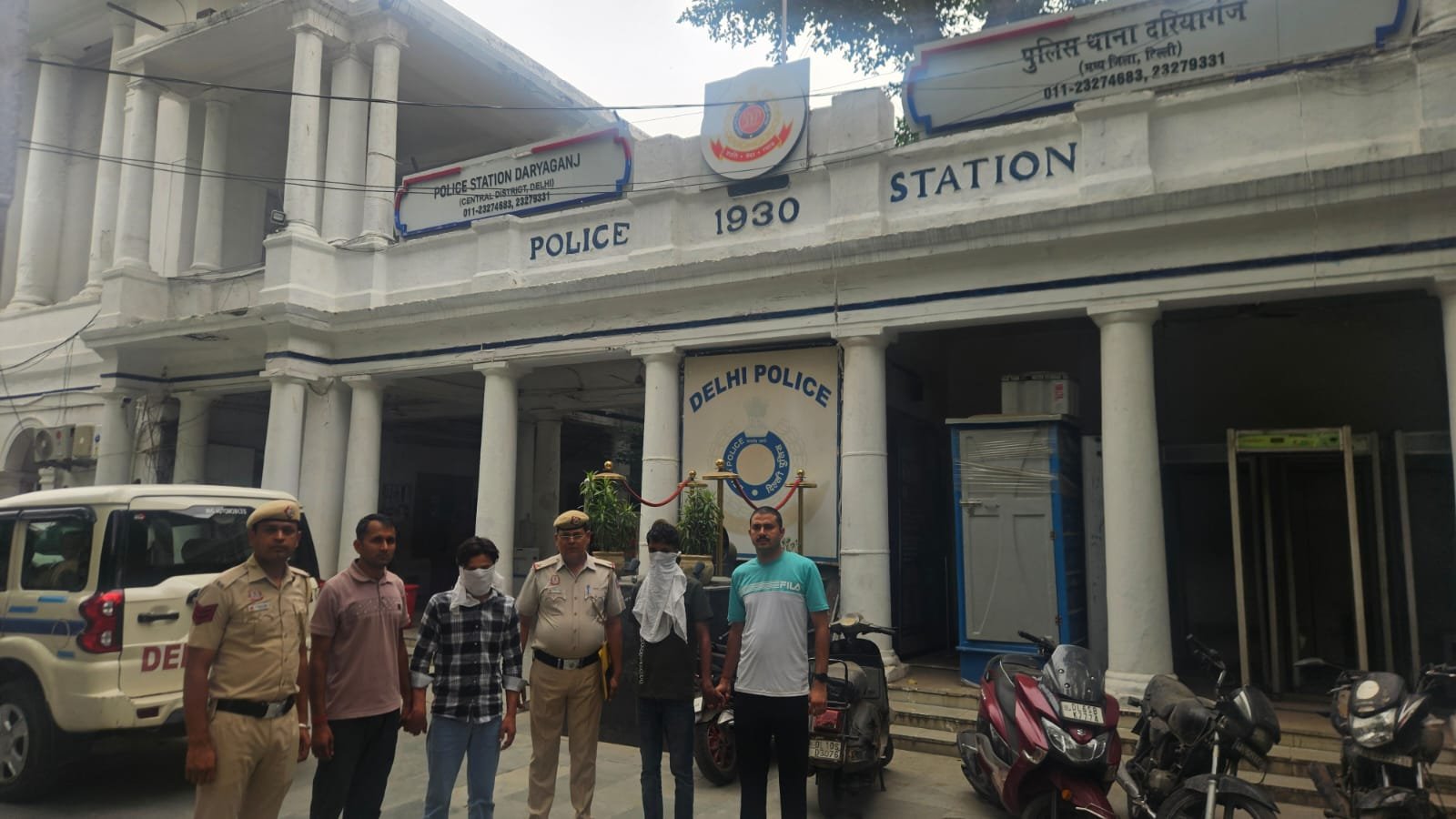
Chain snatcher incidents continue to remain one of the biggest concerns for commuters in Delhi, particularly on busy roads where criminals take advantage of traffic movement and unsuspecting pedestrians. In a significant breakthrough, the Delhi Police’s Paharganj police station has arrested two alleged chain snatchers after an intensive 48-hour operation involving technical surveillance, intelligence gathering, and continuous field raids. The operation not only solved a recent chain snatching case registered at Daryaganj Police Station but also led to the arrest of one of Delhi’s most notorious repeat offenders.
The swift action by the police highlights how modern policing, backed by technology and coordinated teamwork, can help track habitual criminals who repeatedly target innocent citizens. The case also sheds light on the growing challenge posed by professional chain snatcher gangs that operate across multiple districts of the national capital.
Table of Contents
Chain Snatcher Targeted Victim Near Guru Nanak Chowk
The incident took place on June 22, 2026, when the complainant and his friend were travelling from Guru Nanak Chowk on Jawaharlal Nehru Marg towards G.B. Pant Hospital. According to the complaint, a black Pulsar motorcycle carrying two men approached them while they were on the road.
The pillion rider, reportedly wearing a black shirt and a cap, suddenly snatched a gold chain weighing around 10 grams from the complainant’s neck. Within seconds, the motorcycle sped away towards Kamla Market, leaving the victims with little opportunity to react.
Chain snatcher crimes are often executed within a matter of seconds. The offenders carefully identify vulnerable targets before escaping through crowded streets or narrow lanes, making immediate arrest extremely difficult. This particular case followed a similar pattern, demonstrating the speed and planning commonly associated with professional chain snatcher gangs.
Following the complaint, Daryaganj Police registered FIR No. 222/2026 under the relevant provisions of the Bharatiya Nyaya Sanhita (BNS) and launched an investigation.
Paharganj Police Assigned the Responsibility
Considering the seriousness of the offence and the possibility that the accused were experienced offenders, the responsibility of tracing the suspects was also assigned to the staff of Paharganj Police Station.
Rather than relying on routine investigation methods, senior officers directed a dedicated operation under the supervision of the Station House Officer (SHO), with overall monitoring by the Assistant Commissioner of Police (ACP), Paharganj.
Two specialised investigation teams were immediately constituted.
The first team included Head Constable Pankaj, Constable Seeta Ram and Constable Ravi. The second team consisted of Sub-Inspector Sudheer, Head Constable Rakesh, Head Constable Jagvir, Constable Puneet and Constable Deepak.
Instead of conducting random searches, both teams followed a structured investigative strategy. Officers combined technical evidence, local intelligence, and field surveillance to narrow down the movements of the suspected chain snatcher duo.
Non-Stop 48-Hour Operation Leads to Arrest
According to Delhi Police, the breakthrough came after nearly 48 hours of relentless work.
Investigators examined technical inputs, tracked possible movement patterns, developed human intelligence sources, and conducted continuous raids at multiple locations across the city.
Such investigations require extensive coordination because habitual chain snatcher offenders frequently change locations, avoid using traceable communication methods, and often receive shelter from criminal associates.
Despite these challenges, the police teams continued their search without interruption. Their persistence eventually resulted in both accused being successfully located and apprehended.
The successful operation reflects the importance of patient investigation rather than depending solely on immediate leads. By combining technology with traditional policing methods, Delhi Police managed to crack the case within a relatively short period.
Following their arrest, both accused were formally handed over to the Investigating Officer of Daryaganj Police Station for further legal proceedings.
Two Accused Identified
The arrested accused have been identified as:
- Arjun, who is also known by several aliases including Badal, Chhamta, Rahul, Sanga and Karan, a resident of Multani Dhanda in Paharganj.
- Ovesh, a resident of Jafrabad in Delhi.
Police records indicate that both individuals are habitual offenders with lengthy criminal backgrounds.
The arrest of repeat offenders is considered particularly significant because experienced chain snatcher criminals often continue committing offences across multiple districts until they are apprehended.
Confession During Interrogation
During sustained interrogation, both accused allegedly admitted their involvement in the chain snatching incident.
According to investigators, they disclosed that after committing the crime they sold the stolen gold chain to a person in Sadar Bazar for approximately ₹20,000.
The accused further informed the police that the money received from the sale had already been spent on their personal expenses, including food and other day-to-day needs.
Police also recovered the motorcycle allegedly used during the commission of the offence.
Recovery of the stolen gold chain is still underway, and investigators are continuing efforts to identify the receiver who allegedly purchased the stolen jewellery.
Recovering stolen property often becomes one of the most challenging parts of a chain snatcher investigation because valuable items such as gold jewellery are quickly sold, melted, or transferred through informal networks.
Motorcycle Played Key Role in Crime
One of the important recoveries made during the investigation was the motorcycle allegedly used during the offence.
Motorcycles remain the preferred mode of transport for many chain snatcher gangs because they provide quick acceleration, easy movement through congested roads, and faster escape routes.
Police investigators generally examine recovered vehicles for fingerprints, ownership records, CCTV movement, and possible links with previous criminal cases.
The recovery of the motorcycle may therefore prove useful not only for the present investigation but also for connecting the accused with other unsolved incidents.
Habitual Offender With 79 Criminal Cases
One of the most striking aspects of this case is the criminal history of the main accused.
According to Delhi Police, Arjun is an active Bad Character (BC) of Paharganj Police Station.
Within the Delhi Police system, the “Bad Character” category is maintained for habitual offenders who repeatedly engage in criminal activities and require continuous surveillance.
Police records reveal that Arjun has previously been involved in around 79 criminal cases, including chain snatching, robbery and theft registered across different police stations in Delhi.
Such an extensive criminal history indicates a long pattern of repeat offending rather than an isolated incident.
Habitual chain snatcher offenders often develop specialised methods to avoid arrest, making them more difficult to apprehend than first-time criminals.
The arrest of such an individual therefore represents a significant achievement for the investigating team.
Second Accused Also a Repeat Chain Snatcher
The second accused, Ovesh, also has a substantial criminal background.
Police records show that he has previously been involved in approximately 10 criminal cases related to chain snatching and theft across different police stations in Delhi.
Repeat offenders frequently operate in partnerships where each member performs a specific role.
Typically, one person rides the motorcycle while the other acts as the chain snatcher responsible for executing the theft.
Such coordinated operations allow them to commit crimes quickly before disappearing into heavy traffic.
The arrest of both accused together may help investigators identify additional cases where the duo could have been involved.
Why Chain Snatcher Cases Continue to Challenge Police
Chain snatcher incidents remain a major urban policing challenge because of their speed and mobility.
Unlike planned burglaries or organised robberies, a chain snatcher usually requires only a few seconds to execute the crime.
The offenders often identify victims walking near roads, elderly citizens, women wearing visible jewellery, or people distracted by mobile phones.
Once the chain is snatched, the motorcycle accelerates rapidly through traffic, making pursuit extremely difficult.
Investigations therefore depend heavily on CCTV footage, mobile tower analysis, witness statements, intelligence networks, and technical surveillance.
The present case demonstrates how combining these investigative tools can significantly improve the chances of identifying and arresting habitual offenders.
Strong Coordination Between Police Teams
One of the major strengths of this operation was the close coordination between Daryaganj Police Station and Paharganj Police Station.
Criminals involved in chain snatcher offences rarely limit themselves to one locality. Instead, they move across different police jurisdictions to reduce the chances of being recognised.
This makes coordination between police districts extremely important.
In the present case, information sharing between investigators, technical teams, and field officers enabled the suspects to be tracked within two days.
Such coordinated policing has become increasingly important in metropolitan cities where criminals frequently operate across multiple neighbourhoods.
Investigation Continues
Although both accused have been arrested, the investigation has not yet concluded.
Police are continuing efforts to recover the stolen gold chain and identify the individual who allegedly purchased the jewellery after the offence.
Investigators may also examine whether the accused were involved in other recent chain snatcher incidents reported across Delhi.
Given the extensive criminal background of both accused, further interrogation could provide valuable leads regarding additional offences, stolen property networks, or other criminal associates.
Delhi Police’s Swift Response Deserves Recognition
The successful arrest of two habitual chain snatcher suspects within 48 hours reflects the professionalism, persistence, and coordinated efforts of the Delhi Police. Rather than allowing experienced offenders to continue targeting the public, the investigation teams worked continuously through technical analysis, intelligence development, and sustained field operations to bring the accused into custody.
The operation also highlights the value of proactive policing, where experienced investigators combine technology with on-ground intelligence instead of relying on a single source of evidence. Their timely action not only solved the Daryaganj case but also removed two alleged repeat chain snatcher offenders from the streets, including one accused with an exceptionally long criminal history.
As the investigation progresses and efforts continue to recover the stolen property, the case stands as another example of how determined police work and inter-station coordination can produce quick and meaningful results against habitual criminal networks operating in the capital.