The 2026 Bajaj Pulsar NS200 receives a major technology upgrade, including selectable ride modes, traction control, a bi-directional quickshifter and revised front suspension. The updated motorcycle is priced at Rs 1,60,374 (ex-showroom, Delhi).
Bajaj Pulsar NS200 has received a significant update in India, bringing new technology, additional rider-assistance features and mechanical improvements to the popular 200cc streetfighter. Bajaj Auto has introduced an electronic throttle-by-wire system, a new 5-inch TFT instrument console with Google Maps mirroring, selectable ride modes and traction control. The motorcycle also benefits from a slight increase in engine power, thicker upside-down front forks and a radial rear tyre.
The updated model is priced at Rs 1,60,374 (ex-showroom, Delhi), positioning it above the outgoing version equipped with USD front forks. The latest changes are aimed at making the motorcycle more technologically advanced while retaining its performance-oriented character and familiar engine configuration. The update also brings features such as a bi-directional quickshifter, adjustable levers, a USB Type-C charging port, a hazard switch and a Panic Brake Alert system.
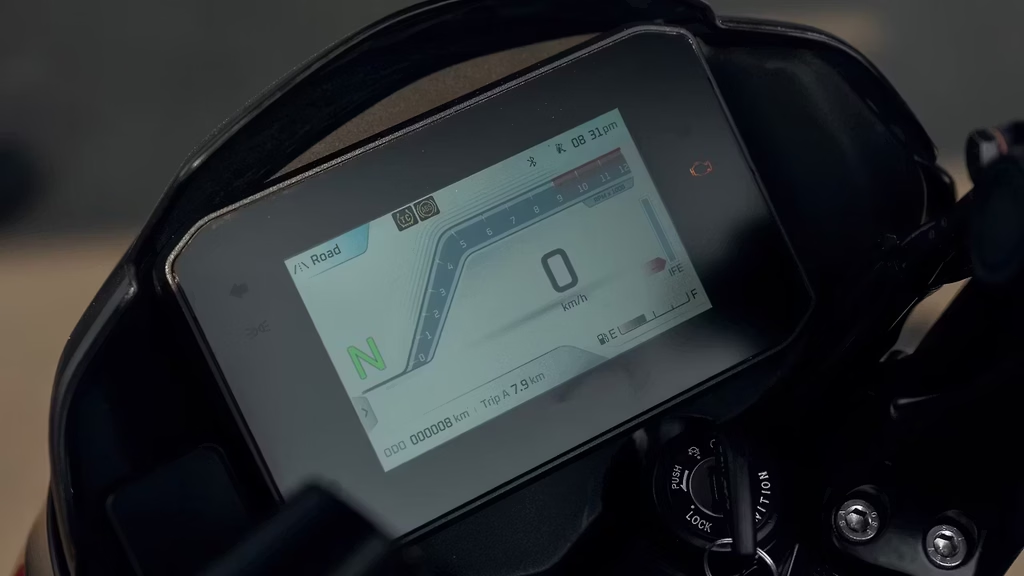
Table of Contents
Bajaj Pulsar NS200: What’s New in the 2026 Update?
The latest update focuses on technology, rider convenience and selected mechanical improvements rather than a complete redesign. The motorcycle retains its established streetfighter styling and perimeter frame, while the addition of electronic controls and a modern instrument console brings it closer to newer motorcycles in its category.
The most important changes include:
- A new 5-inch colour TFT instrument console
- Electronic throttle-by-wire technology
- Selectable riding modes
- Traction control
- A bi-directional quickshifter, marketed as the Sports Shifter
- Increased engine power
- Thicker 37mm upside-down front forks
- A radial rear tyre
- Adjustable levers and a USB Type-C charging port
- Hazard warning switch and Panic Brake Alert
Together, these additions make the updated NS200 a more feature-rich proposition for riders looking for a sporty motorcycle with modern electronics.
New 5-Inch TFT Instrument Console With Google Maps
One of the most noticeable changes is the introduction of a 5-inch colour TFT instrument console. The new display replaces the earlier instrument unit and provides a more contemporary interface for accessing riding information.
The TFT console supports Google Maps mirroring, allowing compatible navigation information to be displayed on the motorcycle’s screen. This feature can be useful for riders navigating unfamiliar roads, particularly during daily commutes and longer journeys.
An updated instrument console also gives manufacturers greater scope to present information in a clearer and more organised format. For the NS200, the addition of navigation functionality is an important convenience upgrade, especially for riders who regularly depend on their smartphones for directions.
However, the availability of Google Maps mirroring should not be confused with a complete replacement for a smartphone. Riders will still need to understand the compatibility and connectivity requirements associated with the feature.
The new display is part of a broader technology package that includes electronic throttle control, selectable ride modes and traction control. These additions distinguish the updated motorcycle from its predecessor, which had a more conventional equipment package.
Ride-by-Wire Technology Introduced
Another major development is the addition of electronic throttle-by-wire technology, also referred to as an electronic throttle body (ETB) system.
On motorcycles equipped with a conventional throttle arrangement, the rider’s input is transmitted mechanically through a cable. In a ride-by-wire system, electronic sensors communicate the rider’s throttle input to the engine management system, which controls throttle operation electronically.
This arrangement allows the manufacturer to adjust how the engine responds to throttle inputs under different riding conditions. In the updated Pulsar NS200, the technology enables selectable ride modes and works alongside the motorcycle’s electronic rider-assistance features.
Ride modes can modify aspects of the motorcycle’s response according to the selected setting. Their usefulness depends on how each mode is calibrated and the conditions in which the motorcycle is being ridden.
The introduction of ride-by-wire represents an important change for the NS200 because it provides the electronic foundation for features that were not available on the earlier version. It also reflects the growing use of electronic engine-management systems in the performance-oriented commuter and streetfighter segments.
Selectable Ride Modes and Traction Control
The updated Bajaj Pulsar NS200 also gains selectable ride modes and traction control.
Ride modes allow riders to choose between different engine-response settings. Depending on the manufacturer’s calibration, these settings can alter throttle response and other electronically controlled parameters. The aim is to make the motorcycle’s behaviour more adaptable to different riding situations.
Traction control is another significant addition. The system is designed to help manage rear-wheel slip when the available grip is limited. This can be particularly relevant on slippery surfaces, although the system cannot eliminate every risk associated with poor road conditions or aggressive riding.
The effectiveness of traction control depends on factors such as tyre condition, road surface, riding inputs and the system’s calibration. It should therefore be treated as an additional safety aid rather than a substitute for careful riding.
These features expand the NS200’s electronic equipment and give it a more modern specification. Their practical value will ultimately depend on how effectively they work in real-world conditions.
Bi-Directional Quickshifter Adds Convenience
The updated motorcycle receives Bajaj’s Sports Shifter, a bi-directional quickshifter that allows clutchless upshifts and downshifts under suitable operating conditions.
A quickshifter is designed to reduce the need to operate the clutch lever during gear changes. On systems that support both directions, riders can shift up and down without using the clutch, subject to the system’s operating requirements.
The feature is particularly relevant to performance-oriented motorcycles, where smoother and quicker gear changes can make the riding experience more engaging. It can also reduce the number of manual inputs required during frequent gear changes.
The addition of a bi-directional quickshifter is notable because the NS200 continues to use a six-speed gearbox. Rather than replacing the existing transmission, the technology enhances how riders interact with it.
As with any electronic riding aid, the quickshifter should be used in accordance with the owner’s manual. Riders should also remain familiar with conventional clutch operation, especially in situations where the system may not be suitable.
Engine Continues With a Small Power Increase
Mechanically, the updated Pulsar NS200 retains its familiar 199.5cc, single-cylinder, four-valve, liquid-cooled engine. The motor continues to be paired with a six-speed transmission.
The key change is a modest increase in maximum power. The updated motorcycle produces 25.5 hp, compared with 24.5 hp in the outgoing version, according to published reports. Peak torque is reported at 18.7 Nm.
While the increase in output is relatively small, it represents an incremental improvement to a motorcycle already known for its performance-focused character. The retained liquid-cooling system helps regulate engine temperature, while the four-valve configuration supports the engine’s performance-oriented design.
The six-speed gearbox also remains part of the package, offering a range of ratios for acceleration and cruising. The addition of the Sports Shifter further enhances the transmission experience without changing the basic gearbox configuration.
Importantly, the latest update does not represent an entirely new engine platform. Instead, Bajaj has retained the existing displacement and configuration while adding electronic technology and making a limited increase in power.
No major engine redesign has been indicated in the available reports. Consequently, buyers should view the changes as an evolution of the existing NS200 rather than a complete mechanical overhaul.
Revised Front Suspension With Thicker USD Forks
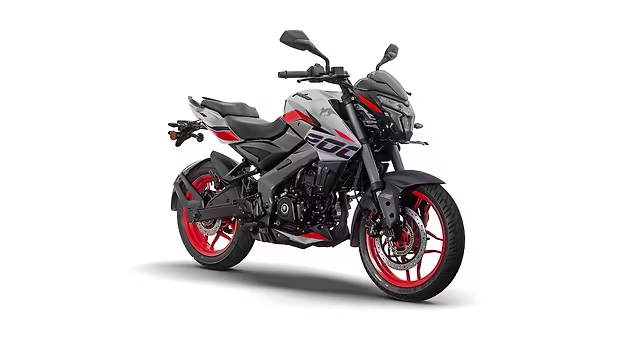
The suspension setup receives a hardware upgrade as well. The updated Pulsar NS200 features 37mm upside-down front forks, replacing the earlier 33mm units.
Upside-down forks, also known as USD forks, are commonly used on sporty motorcycles because of their structural design and potential to provide the stiffness required for responsive handling. Increasing the fork diameter can also influence rigidity, although actual performance depends on the complete suspension design, spring rates, damping and overall chassis setup.
For the NS200, the move to thicker forks is intended to strengthen its hardware package. The motorcycle continues to use its perimeter frame, which remains an important part of its chassis design.
The rear suspension retains the monoshock arrangement, according to published reports. This means the latest model continues with the established basic chassis layout while receiving a targeted improvement at the front.
It is worth noting that larger-diameter forks alone do not automatically guarantee better ride comfort or handling in every situation. A complete assessment would require riding the motorcycle on different road surfaces and evaluating its behaviour under braking, cornering and everyday use.
Radial Rear Tyre and Additional Convenience Features
The updated NS200 also receives a 130/70-R17 radial rear tyre, according to reports. The change adds another hardware improvement to the motorcycle’s package.
Tyre construction, compound, tread design, pressure and road conditions all influence grip and stability. While a radial tyre can offer advantages depending on its design and application, its real-world performance must be assessed alongside the motorcycle’s suspension and chassis characteristics.
Beyond the major updates, Bajaj has introduced several convenience and safety-related features.
The motorcycle gets adjustable levers, which allow riders to adjust the lever position according to their preferences and reach. It also receives a USB Type-C charging port, offering a way to charge compatible devices during journeys.
A hazard warning switch is included as well. The Panic Brake Alert system is designed to activate a warning to other road users during hard braking, improving the visibility of a sudden deceleration event.
These features may appear less significant than the engine or suspension changes, but they contribute to the overall ownership experience. Together with the new TFT display, they make the motorcycle more convenient for everyday use.
Bajaj Pulsar NS200 Price in India
The updated Bajaj Pulsar NS200 is priced at Rs 1,60,374 (ex-showroom, Delhi). This places it above the outgoing USD-fork-equipped version, which has been reported at approximately Rs 1.49 lakh.
The difference reflects the addition of new electronics, rider aids, revised hardware and the updated instrument console. Buyers should remember that ex-showroom prices do not include all the costs associated with purchasing and registering a motorcycle.
The final on-road price will vary depending on the city, registration charges, insurance and other applicable costs. Prospective buyers should confirm the latest price and variant details with an authorised Bajaj dealership before making a purchase decision.
The additional equipment also changes the value proposition of the NS200. Customers who prioritise modern technology, navigation functionality and electronic rider aids may find the updated package more appealing than the older version.
However, those primarily interested in the motorcycle’s core engine and chassis performance may want to consider the price difference alongside the features they are likely to use regularly.
Competition in the 200cc Streetfighter Segment
The Bajaj Pulsar NS200 operates in a competitive segment that includes motorcycles such as the TVS Apache RTR 200 4V.
Buyers in this category often consider a combination of performance, handling, equipment, fuel efficiency, comfort, maintenance costs and pricing. As manufacturers introduce more electronics into relatively affordable motorcycles, features such as TFT displays, traction control and quickshifters are becoming increasingly relevant to comparisons.
The NS200’s updated package gives it several features to highlight against its rivals. Its liquid-cooled 199.5cc engine, six-speed gearbox and perimeter frame remain central to its identity, while the latest electronic additions broaden its appeal.
Nevertheless, specifications alone cannot determine which motorcycle is the better choice for an individual buyer. Seat comfort, riding position, service support, reliability and performance in everyday traffic should also be considered.
A direct comparison with rival models would need to account for their latest prices and equipment levels, as these can change over time.
An Evolution of the Pulsar NS200
The Pulsar NS200 has long occupied a performance-oriented position within Bajaj Auto’s wider Pulsar range. The latest update builds on that identity by adding technology that was previously associated more closely with higher-specification motorcycles.
Instead of replacing the existing engine and chassis architecture, Bajaj has concentrated on electronic controls, rider convenience and selected hardware changes. The new TFT display with Google Maps mirroring, ride-by-wire technology, selectable ride modes, traction control and bi-directional quickshifter represent the most important additions.
The power increase is comparatively modest, but the combined equipment upgrade is more substantial. The thicker front forks and radial rear tyre further distinguish the updated model from its predecessor.
For existing NS200 owners, the changes may provide a reason to consider the new version if they want additional technology and convenience. For new buyers, the decision will depend on whether the expanded equipment package justifies the higher price.
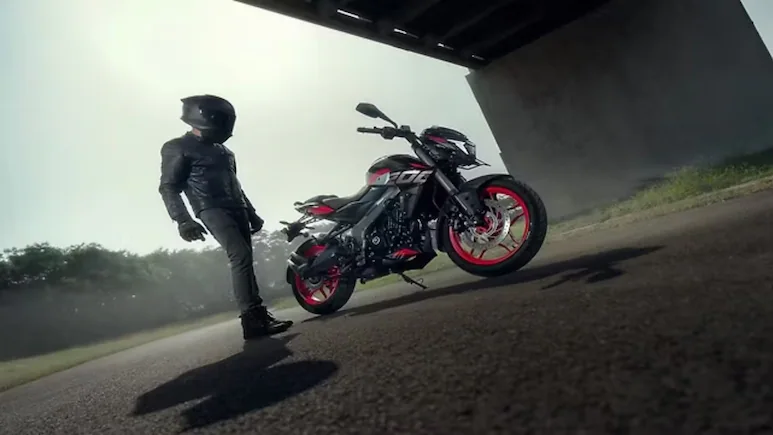
The updated Bajaj Pulsar NS200 brings a significant equipment upgrade to the 200cc streetfighter segment. Its 5-inch TFT instrument console, Google Maps mirroring, ride-by-wire technology, selectable ride modes and traction control are among the most important changes. The addition of a bi-directional quickshifter, adjustable levers, a USB Type-C port and Panic Brake Alert further expands its feature list.
The motorcycle retains its 199.5cc liquid-cooled engine and six-speed gearbox, while maximum power rises to 25.5 hp. Revised 37mm upside-down front forks and a radial rear tyre complete the hardware changes.
Priced at Rs 1,60,374 (ex-showroom, Delhi), the updated NS200 is positioned as a more technology-rich version of the established model. Its appeal will depend on how buyers value the new features, the incremental performance improvement and the price difference compared with the outgoing motorcycle and competing offerings.