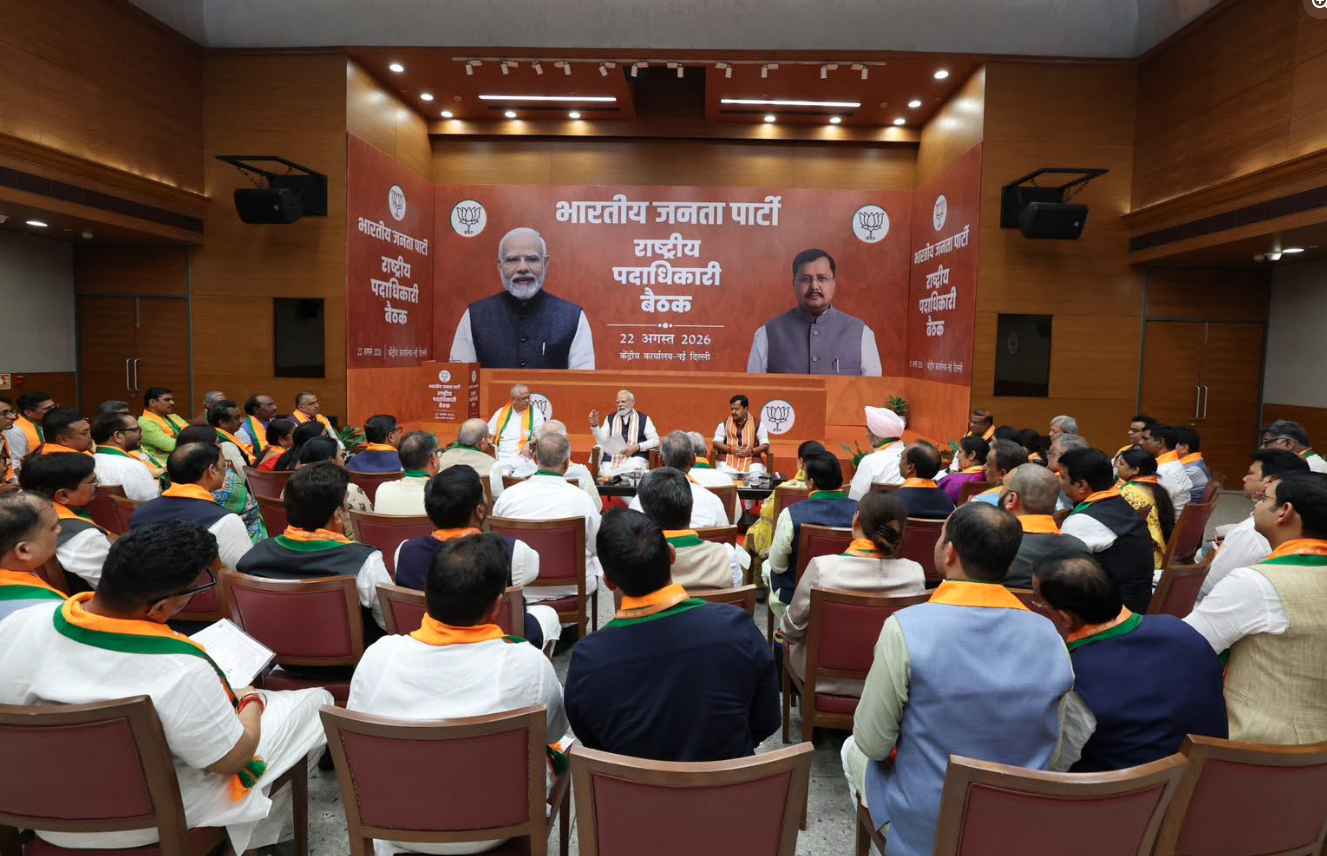
Prime Minister Narendra Modi met the Bharatiya Janata Party’s newly appointed national office-bearers at the BJP headquarters in New Delhi, marking a key organisational moment under party president Nitin Nabin. During the interaction, PM Modi stressed the importance of organisational meetings as platforms for “new ideas and perspectives” and urged the team to focus on strengthening the party and its connection with people.
The BJP’s new national team has 65 members, including 51 leaders who are new to the national organisational structure. The restructuring brings together experienced politicians, younger leaders and representatives from different regions and social groups. PM Modi’s interaction with the team comes as the party prepares for upcoming Assembly elections and seeks to strengthen its grassroots, youth and digital outreach.
Table of Contents
PM Modi Welcomes the New BJP Office-Bearers
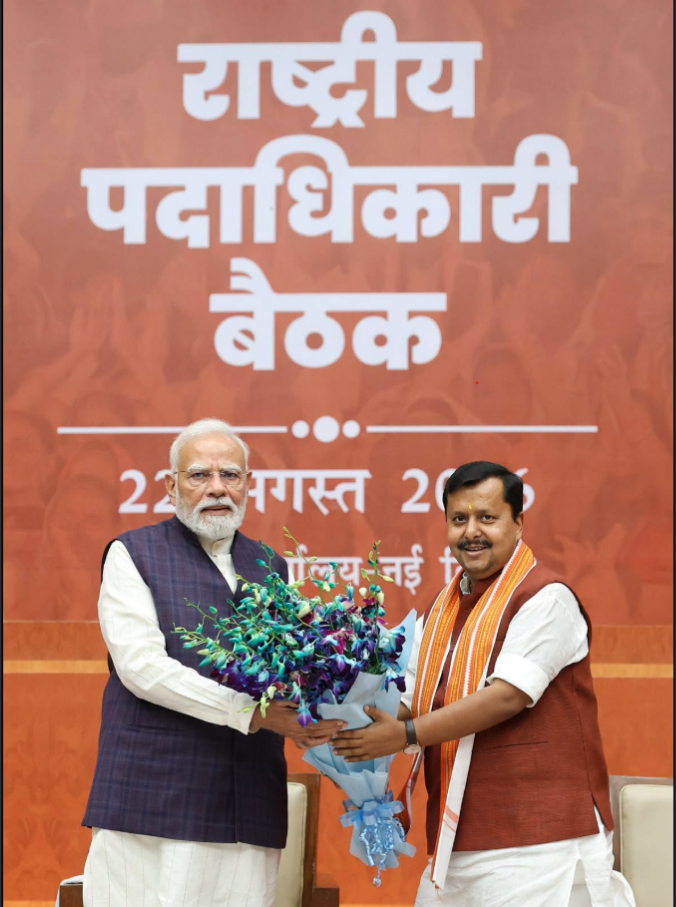
The Prime Minister was welcomed at the BJP headquarters by Nitin Nabin and later posed for a group photograph with the newly appointed office-bearers. The meeting provided the new team with an opportunity to interact directly with the Prime Minister and understand the broader organisational expectations.
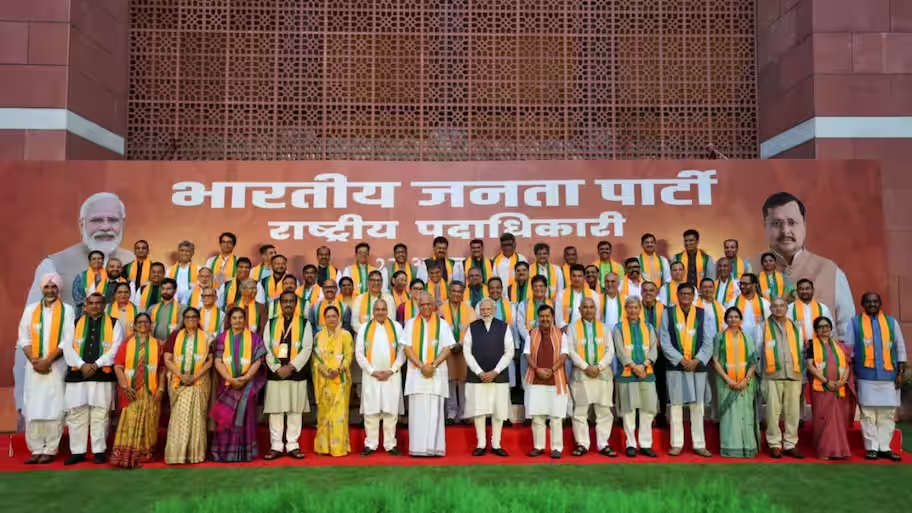
PM Modi highlighted the value of organisational discussions in bringing different perspectives into the party’s decision-making process. The emphasis on fresh thinking comes alongside the BJP’s effort to retain organisational experience while giving greater space to new faces.
The new office-bearers are expected to work across several areas, including coordination with state units, grassroots mobilisation, communication, youth outreach and implementation of party programmes.
What PM Modi’s Message Means for the New Team
The Prime Minister’s message places organisational renewal at the centre of the BJP’s current strategy. By describing organisational meetings as opportunities for new ideas and perspectives, PM Modi underlined the importance of listening to regional experiences and changing public expectations.
For a national political organisation, such meetings can help leaders discuss campaign planning, public outreach, organisational expansion and political communication. PM Modi’s emphasis on people’s connection also points to the importance of maintaining contact with voters beyond election periods.
The message is particularly relevant for a team in which a large majority of members are entering the national structure for the first time.
Nitin Nabin’s 65-Member Team
The BJP announced the new 65-member national team under Nitin Nabin’s leadership. Of the 65 office-bearers, 51 are new to the national team, making the restructuring a significant organisational change.
PM Modi’s meeting with the office-bearers gives the new structure an early opportunity to align its responsibilities with the party’s wider priorities. The team combines organisational experience with leaders who bring newer political and regional perspectives.
The restructuring also includes changes in communication, social-media and youth-related responsibilities, reflecting the growing importance of digital political engagement.
A Major Organisational Reshuffle
The scale of the reshuffle has attracted attention because the BJP has traditionally placed considerable importance on organisational continuity. Reports describe the latest changes as the party’s first major reshuffle of this scale since 2015, when Amit Shah was BJP president.
PM Modi’s interaction with the new team comes at a time when political communication is changing rapidly, particularly among younger voters. The BJP is therefore seeking to combine established organisational methods with newer approaches to communication and public engagement.
The inclusion of leaders from different regions and backgrounds is also intended to strengthen the party’s national organisational network.
Focus on Upcoming Assembly Elections
One of the major responsibilities before the new team will be preparation for upcoming Assembly elections. Organisational readiness is crucial for the BJP because its election strategy depends heavily on coordination among national, state, district and booth-level workers.
PM Modi has repeatedly emphasised organisational strength as an important part of political work, and the new office-bearers will be expected to translate national priorities into effective grassroots programmes.
The team will have to coordinate closely with state units, understand local political conditions and ensure that communication remains consistent while addressing regional concerns.
Grassroots Connect Remains a Priority
Strengthening the party’s connection with people is another central theme of the new organisational phase. PM Modi’s reference to public connect highlights the importance of maintaining a strong grassroots network.
The BJP has developed a large organisational structure across the country, but changing voter expectations require parties to remain responsive. Local interactions, public meetings, digital communication and community-level programmes can all contribute to this effort.
For the new office-bearers, the challenge will be to convert organisational discussions into practical outreach and measurable engagement.
Youth and Gen Z Outreach
Youth engagement is expected to remain an important part of the BJP’s organisational strategy. The party has also been working on initiatives aimed at engaging Gen Z and understanding the concerns of younger citizens.
PM Modi’s focus on new ideas fits naturally into this effort because younger voters increasingly interact with political content through digital platforms. Their expectations around education, employment, technology and public services can influence political conversations.
The new team will therefore need to understand both traditional organisational methods and the communication habits of younger audiences.
Changes in Digital and Communication Operations
The new organisational structure also includes changes in the BJP’s communication and digital operations. Amit Malviya, who had served as the party’s IT Cell chief, was removed from that position, while Deepak Mhaskey was named to lead IT and social-media functions. Hemang Joshi was appointed to head the Bharatiya Janata Yuva Morcha.
PM Modi’s emphasis on fresh perspectives comes as digital communication becomes increasingly important to political organisations. Social-media platforms allow parties to respond rapidly to events, communicate directly with supporters and reach audiences that may not regularly engage with traditional political programmes.
The changes in the BJP’s digital structure could therefore influence the party’s communication strategy in the coming months.
Experienced Leaders Remain Important
Although the new team contains many new faces, experienced leaders continue to hold important organisational roles. This combination is intended to provide continuity while allowing new approaches to emerge.
PM Modi’s interaction with the team can be seen as an early step in bringing these different strengths together. Experienced office-bearers can provide institutional knowledge, while newer leaders can contribute regional experiences and different approaches to political outreach.
The effectiveness of the structure will depend on how well these two elements work together.
Vande Mataram Campaign and National Outreach
The BJP’s organisational activity also coincides with a renewed focus on Vande Mataram. The party has highlighted the historical significance of the national song and announced plans for a nationwide campaign to raise awareness about its legacy.
PM Modi’s meeting with the new office-bearers comes as the party prepares to implement such nationwide initiatives through its organisational network. The new team could play an important role in coordinating programmes across states and communicating the party’s message at the grassroots level.
Challenges Ahead for the BJP’s New Team
The new office-bearers face several organisational challenges. Coordination between the national leadership and state units will be crucial, especially because political conditions vary widely across India.
PM Modi’s emphasis on new ideas also places an expectation on the team to remain open to feedback and regional perspectives. At the same time, the party must maintain a consistent national strategy.
Another challenge will be reaching younger voters while preserving the BJP’s traditional grassroots structure. Digital communication, local engagement and organisational mobilisation will need to work together rather than operate as separate efforts.
A New Phase Under Nitin Nabin
The formation of the 65-member team marks a new organisational phase for the BJP under Nitin Nabin. With 51 new faces, the structure represents a substantial infusion of fresh leadership.
PM Modi’s interaction has given the new team an early opportunity to understand the expectations of the party’s national leadership. His focus on new ideas, public connection and organisational strengthening sets a broad direction for the office-bearers.
The team will now have to convert that direction into programmes, outreach and election preparedness across states.
What the New Team Could Mean for the BJP
The new organisational structure is significant not only because of the number of new appointments but also because of the areas in which the party is seeking greater attention. Youth engagement, digital communication, grassroots mobilisation and coordination with state units are becoming increasingly important.
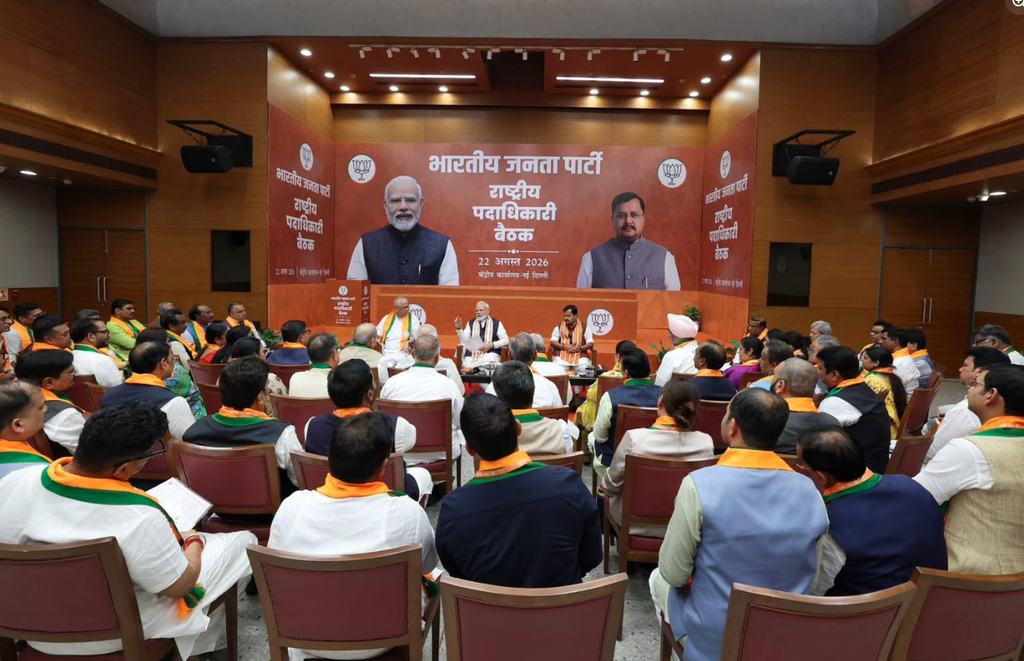
PM Modi’s message suggests that organisational meetings should produce practical ideas rather than remain routine administrative exercises. The emphasis on perspectives from different leaders could help the party identify local issues and improve its outreach.
The coming months will show how effectively the new office-bearers translate this approach into organisational action.
The BJP’s new national team has begun its organisational tenure with a direct interaction with Prime Minister Narendra Modi at the party headquarters in New Delhi. The 65-member team, led by Nitin Nabin, includes 51 new faces and combines experienced leaders with younger representatives.
PM Modi’s call for new ideas and perspectives reflects the party’s stated aim of refreshing its organisational approach while strengthening its connection with people. The new office-bearers will be responsible for supporting grassroots mobilisation, youth outreach, digital communication and preparation for upcoming Assembly elections.
The restructuring also signals an attempt to balance continuity with organisational renewal. As the team begins work across different states and regions, its ability to combine experience, fresh thinking and effective grassroots engagement will be closely watched.
For the BJP, the immediate task is to turn the organisational changes into effective political and public outreach. PM Modi’s message has provided the new team with a broad direction, but the success of the restructuring will ultimately depend on how effectively the office-bearers implement that vision on the ground.