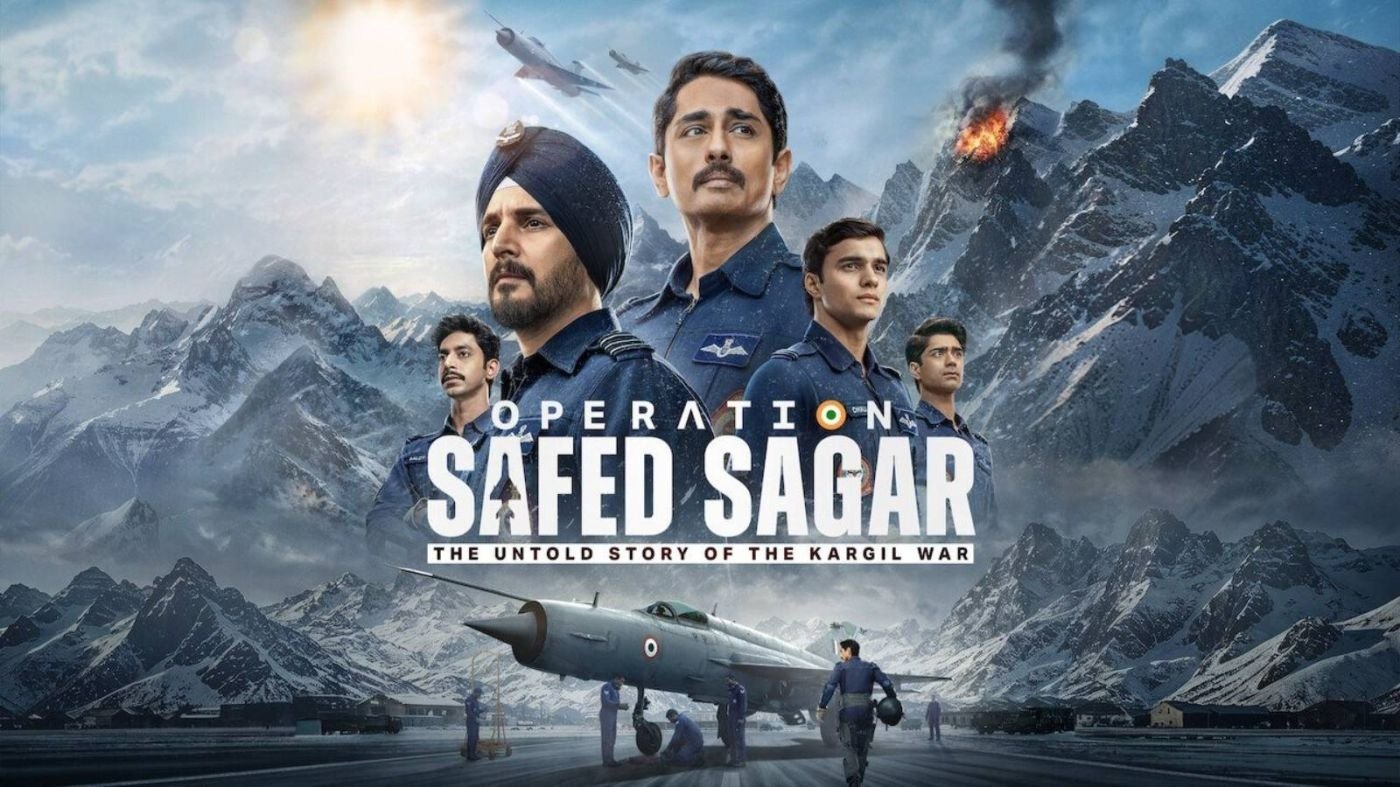
Operation Safed Sagar has emerged as a distinctive addition to India’s growing catalogue of military dramas, choosing restraint, authenticity and human detail over conventional displays of patriotism. The series, which premiered on Netflix on August 7, has received positive responses from audiences and critics for its treatment of a familiar subject: the Indo-Pak conflict and the experiences of Indian armed forces personnel.
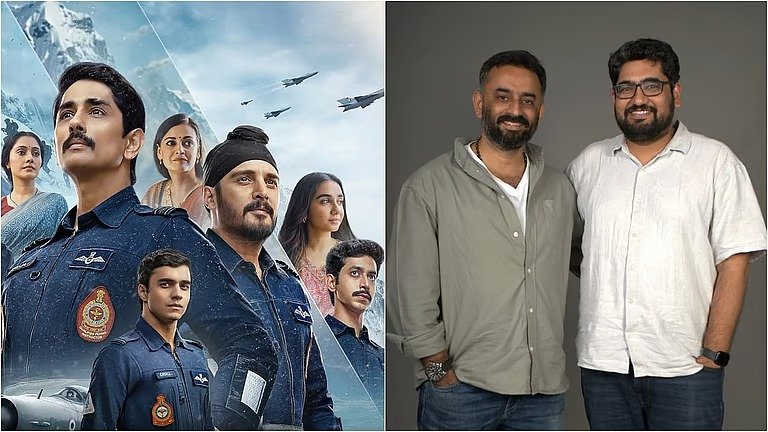
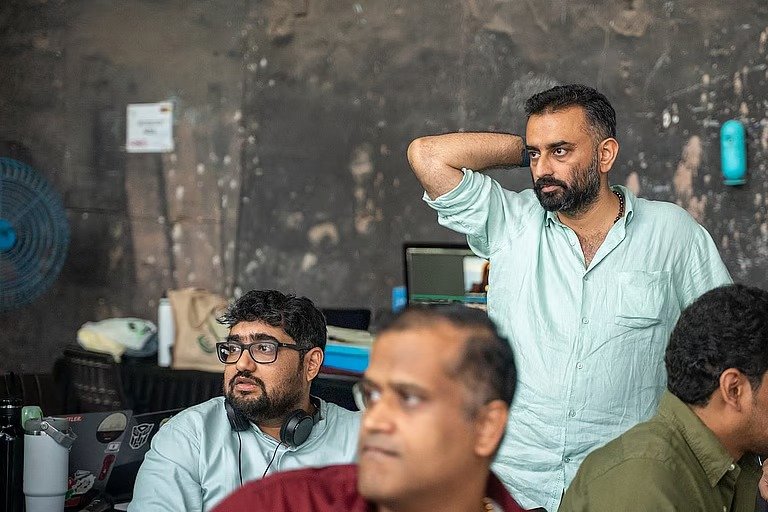
Created and developed over an extraordinary four-and-a-half-year period, the series seeks to go beyond the battlefield and explore the lesser-known aspects of military life. Co-creator and co-showrunner Abhijeet Singh Parmar and co-producer Mehboob Pal Singh Brar have spoken about the challenges behind the project, from extensive research and writing to shooting in real snow-covered mountains and creating convincing aerial combat sequences.
At the heart of their approach was a simple creative principle: patriotism did not need to be manufactured. According to Parmar, the everyday courage, discipline, professional commitment and relationships of military personnel were enough to communicate the sentiment without adding unnecessary dramatic flourishes.
Table of Contents
Operation Safed Sagar Takes a Different Approach to the War Drama
When the first-look teaser of Operation Safed Sagar was released in November last year, the response was relatively muted despite the presence of recognised actors in its cast. Rather than viewing the reaction as a setback, the creators saw it as potentially encouraging.
Mehboob Pal Singh Brar recalled that some viewers immediately described the project as another familiar Indo-Pak conflict story. For him, that response suggested that audiences had certain expectations about what the series would be. He believed that the finished show would eventually surprise viewers through its treatment of the subject.
That expectation appears to have been central to the show’s creative identity. Rather than presenting the conflict simply through battles, patriotism and heroism, Operation Safed Sagar attempts to examine the wider ecosystem surrounding military operations.
The series focuses on details that are often overlooked in mainstream war narratives, including the differences between branches of the armed forces, the training and development of fighter pilots, professional relationships, military routines and the psychological pressures experienced by officers.
From Film Idea to an Expansive Series
The project originally began as a film concept developed by Kushal Shrivastava, an ex-Air Force officer who is also credited as a co-creator. Parmar, however, felt that the subject contained considerably more material than could comfortably fit into a feature-length film.
The decision to develop Operation Safed Sagar as a series gave the creators the opportunity to explore the world around the conflict in greater depth.
For Parmar, the research process was particularly important because many aspects of Air Force life were unfamiliar even to him. Instead of approaching the project purely as a war story, he wanted to use it as an opportunity to uncover details that audiences may not ordinarily encounter.
Among the questions that shaped the writing were how Army life differs from Air Force life, why different branches of the armed forces have distinct traditions, how fighter pilots are trained and why Air Force operations rely on particular forms of mapping and planning.
This research-driven approach eventually became one of the show’s defining characteristics.
Parmar described his writing philosophy as creating a collection of previously unseen details and recording aspects of history that may not be widely known.
Looking Beyond the Indian Side of the Conflict
Another significant feature of Operation Safed Sagar is its attempt to devote substantial attention to the Pakistani side of the conflict.
Instead of presenting the opposing side merely as an anonymous enemy, the series explores the people positioned across the battlefield and provides context about the circumstances surrounding the confrontation.
For Parmar, this was an extension of the show’s research philosophy. He wanted to explore the questions he himself had while studying the conflict.
The approach allows viewers to understand the geographical and strategic realities of the confrontation while also recognising that the battlefield consists of people, decisions and circumstances rather than simply opposing labels.
This perspective contributes to the show’s effort to make the conflict feel grounded rather than relying solely on conventional war-film imagery.
The Human Side of Air Force Officers
One of the major discoveries made by the creators during their research was the sharp separation that many Air Force personnel maintain between their professional and personal lives.
Brar described meeting officers outside their uniforms and discovering personalities that were very different from the stereotypical image of military personnel.
According to him, officers could be remarkably approachable, humorous and relaxed in civilian environments despite operating under enormous professional pressure.
That contrast became an important part of the series.
The creators were interested in the psychological transition that takes place when an officer puts on the uniform and helmet and moves into a professional combat environment.
The transformation is not necessarily about becoming a different person. Instead, it represents a shift in responsibility, focus and awareness.
This human dimension allows Operation Safed Sagar to portray its characters as individuals rather than simply as symbols of military strength.
Why the Series Avoided Excessive Jingoism
Perhaps the most notable creative decision behind Operation Safed Sagar was its deliberate avoidance of excessive jingoism.
Military dramas can easily rely on dramatic speeches, patriotic music and larger-than-life heroes to generate emotional impact. Parmar and his team instead wanted the patriotism to emerge naturally from the characters’ actions.
The portrayal of Ajay Ahuja, played by Siddharth, became particularly important in establishing this tone.
According to Parmar, the team agreed from the beginning that Ahuja should not be presented as a conventional cinematic hero. He was a professional officer carrying out his duty, and his heroic status emerged retrospectively from his actions and circumstances.
Siddharth’s approach reportedly reflected the same philosophy. During filming, the actor would question whether he was moving beyond the character and beginning to perform the role as a conventional heroic figure.
That attention to restraint helped maintain the grounded quality that the creators wanted.
Patriotism Without Additional “Masala”
For Parmar, one of the most challenging sequences to write was the scene in which Ahuja is interrogated in Episode 4.
The scene presented an obvious opportunity for a dramatic patriotic monologue. However, the creators deliberately resisted that temptation.
Instead of delivering the dialogue loudly or theatrically, the character’s patriotism remains internal and controlled.
This reflects a larger philosophy behind the show.
Parmar argued that patriotism becomes powerful when it feels earned. When it is inserted merely to manipulate emotions, it can appear artificial or jingoistic.
The series therefore places greater emphasis on duty, perseverance, camaraderie and professional discipline.
The message is that soldiers and officers do not necessarily need to announce their patriotism for audiences to recognise it.
Their willingness to perform their responsibilities under extraordinary circumstances can communicate the same sentiment more effectively.
Recreating the Snow-Covered Battlefield
While the emotional and historical authenticity of Operation Safed Sagar presented one challenge, recreating its physical world presented another.
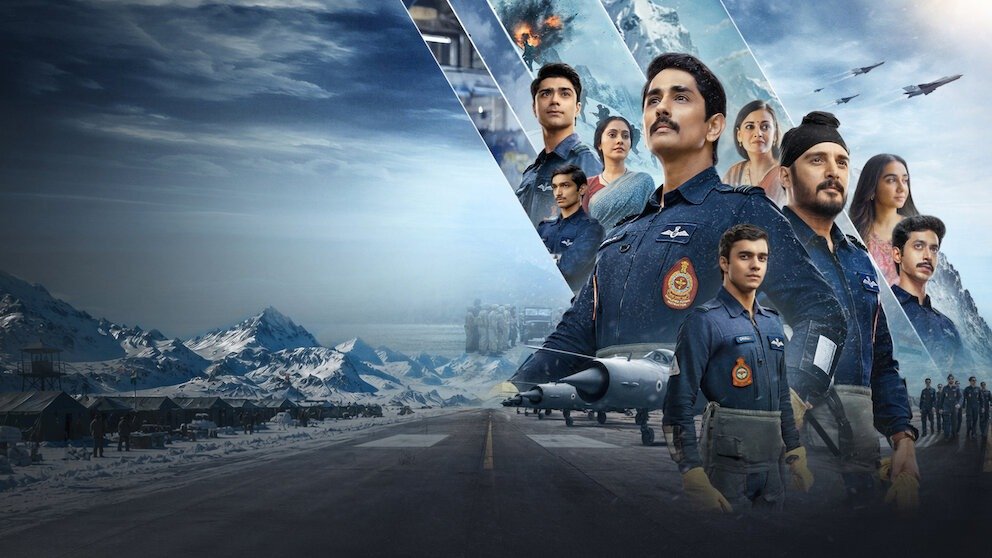
The snow-covered mountains associated with the operation were essential to the visual identity of the series. The creators initially considered using artificial snow for some sequences, but concerns raised by Brar and cinematographer Setu eventually convinced the team that real locations were necessary.
The production conducted a detailed recce approximately a year before filming was scheduled to begin. Specific mountain peaks were identified, and the team had to plan transportation, equipment, accommodation and acclimatisation.
The logistics were extensive.
Shooting at high-altitude locations involves challenges that go far beyond ordinary location filming. Crew members have to deal with difficult terrain, unpredictable weather and reduced oxygen levels, while equipment and other production materials must be transported under demanding conditions.
The team nevertheless believed that artificial environments would not provide the same visual or emotional impact.
Why Real Snow Mattered to the Creators
Brar explained that filming the snow sequences inside a studio would have diminished their impact.
For the creators, authenticity was not simply a matter of making the background visually convincing. It was about allowing the environment itself to influence the performance and imagery.
Details such as a character’s footsteps in the snow, clothing moving in the wind and the physical experience of standing at high altitude could not be completely replicated on a soundstage.
The production’s local line producer reportedly had more than 35 years of experience and indicated that the location itself presented an unprecedented challenge.
Yet the team continued because of its belief in the story.
The result is intended to give the battlefield sequences a physicality that complements the show’s emphasis on realism.
Creating Convincing Aerial Combat Sequences
The aerial sequences presented another major challenge.
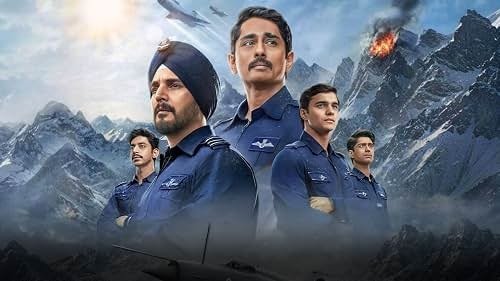
Parmar admitted that after completing approximately 200 pages of story beats, he was concerned about how the ambitious material would actually be executed.
While he was confident about handling the political dimensions and slice-of-life elements of the story, the aerial sequences needed to be convincing enough to sustain the show’s world.
The production therefore broke down the enormous challenge into smaller components.
Mountain filming, cockpit visuals, visual effects and aerial sequences were treated almost like individual production projects.
This approach helped the team manage the technical complexity while maintaining the broader storytelling vision.
Netflix’s backing also played an important role, according to the creators. Parmar said the platform supported the project and encouraged the team to continue pursuing its ambitious approach.
The collaboration reportedly involved multiple cross-functional teams, with the boundaries between the production company and streaming platform becoming less visible as everyone worked toward the same objective.
A Four-and-a-Half-Year Journey
Perhaps the most remarkable aspect of Operation Safed Sagar is the amount of time invested in bringing it to the screen.
The project took approximately four and a half years to develop and produce.
During that period, the creators remained committed to the project rather than quickly moving on to other opportunities.
Brar took up work as a supervising producer to provide financial support while Parmar continued researching and writing the series.
That decision highlights the unusual level of commitment required for a project built around extensive research and complicated production requirements.
The creators were not simply waiting for a conventional production cycle to begin. They were spending years developing the story, protecting its tone and solving the practical challenges involved in filming it.
Protecting the Soul of the Story
For Parmar and Brar, the long development period was ultimately about protecting the identity of Operation Safed Sagar.
The series could have been approached as another high-energy military drama built around conventional patriotic themes. Instead, the creators chose to spend years exploring the details of Air Force life, the realities of the conflict and the people who experienced it.
That commitment is visible in the show’s emphasis on character, research and atmosphere.
Its treatment of patriotism is similarly rooted in restraint. Rather than repeatedly telling audiences what to feel, the series attempts to create situations in which those emotions emerge naturally.
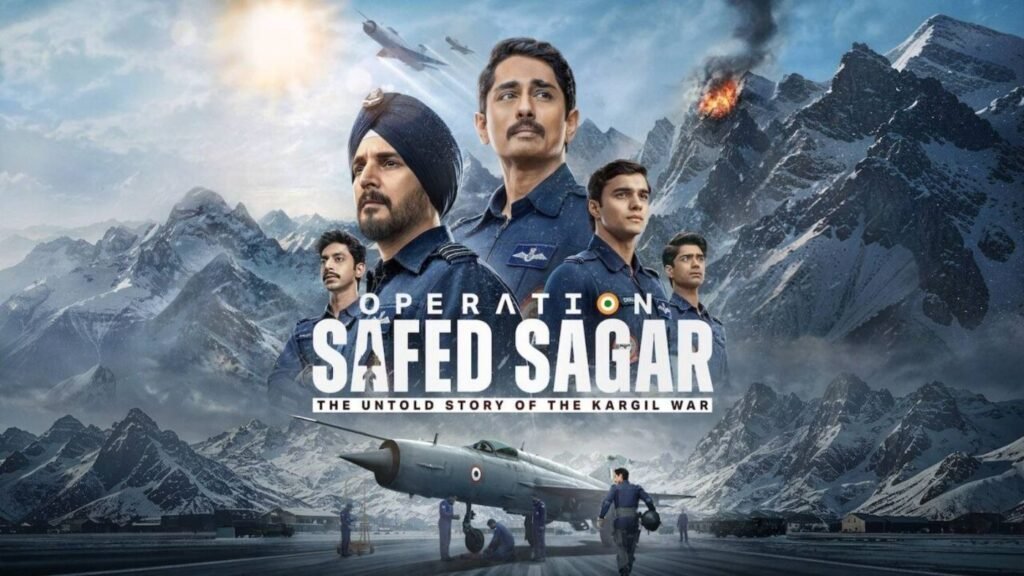
Operation Safed Sagar’s Place in India’s Military Drama Landscape
Indian cinema and streaming platforms have produced numerous stories around military conflicts and national security. However, Operation Safed Sagar attempts to distinguish itself by focusing on the less familiar aspects of military life.
Its emphasis on the Air Force, fighter pilots, professional discipline and the personal lives of officers provides a different perspective from conventional battlefield narratives.
The creators’ decision to explore both sides of the conflict also adds another layer to the storytelling.
Most importantly, Operation Safed Sagar the series appears to be built around the belief that a military story does not need exaggerated heroism to be emotionally powerful.
The Operation Safed Sagar real experiences of service personnel, their responsibilities and their ability to continue performing their duties under extreme conditions can provide sufficient dramatic weight.
Operation Safed Sagar represents the result of a four-and-a-half-year creative journey built around research, patience and an unusually strong commitment to authenticity.
From Operation Safed Sagar its origins as a film idea to its expansion into a series, the project evolved into an exploration of Air Force life, military professionalism, the human cost of conflict and the lesser-known details surrounding the Kargil-era confrontation.
The Operation Safed Sagar creators’ decision to avoid excessive jingoism is perhaps its most significant defining feature. Instead of adding patriotic “masala”, the series allows duty, sacrifice, perseverance and camaraderie to communicate its emotional message.
The decision to shoot Operation Safed Sagar in real snow, undertake difficult mountain logistics and invest heavily in cockpit and aerial visuals further reflects the production’s commitment to realism.
Ultimately, Operation Safed Sagar appears to have found its identity not by making the familiar louder, but by looking more closely at the details that audiences may not have seen before. Its Operation Safed Sagar creators’ four-and-a-half-year journey demonstrates the time and persistence involved in transforming a historical conflict into a nuanced, character-driven streaming series — one that seeks to honour its subject through authenticity rather than exaggeration.