Mercedes-Benz C-Class facelift has been unveiled for the European market, bringing styling revisions, upgraded technology, new cabin themes and improved powertrain options to one of the German luxury brand’s most important models. The refreshed sedan introduces a new-generation infotainment experience called MB.OS, which incorporates artificial intelligence from multiple technology platforms, while the mechanical package also receives several notable upgrades.
The latest Mercedes-Benz C-Class facelift retains the familiar proportions and overall silhouette of the current-generation model but receives a more contemporary front and rear design. The update also brings additional equipment, revised suspension tuning, improved aerodynamic performance and rear-axle steering.
While the European market will receive the updated Mercedes-Benz C-Class first, other international markets are expected to follow in 2027. India is also expected to get the facelifted Mercedes-Benz C-Class sometime in 2027, although the company has not yet announced an exact Indian launch date.
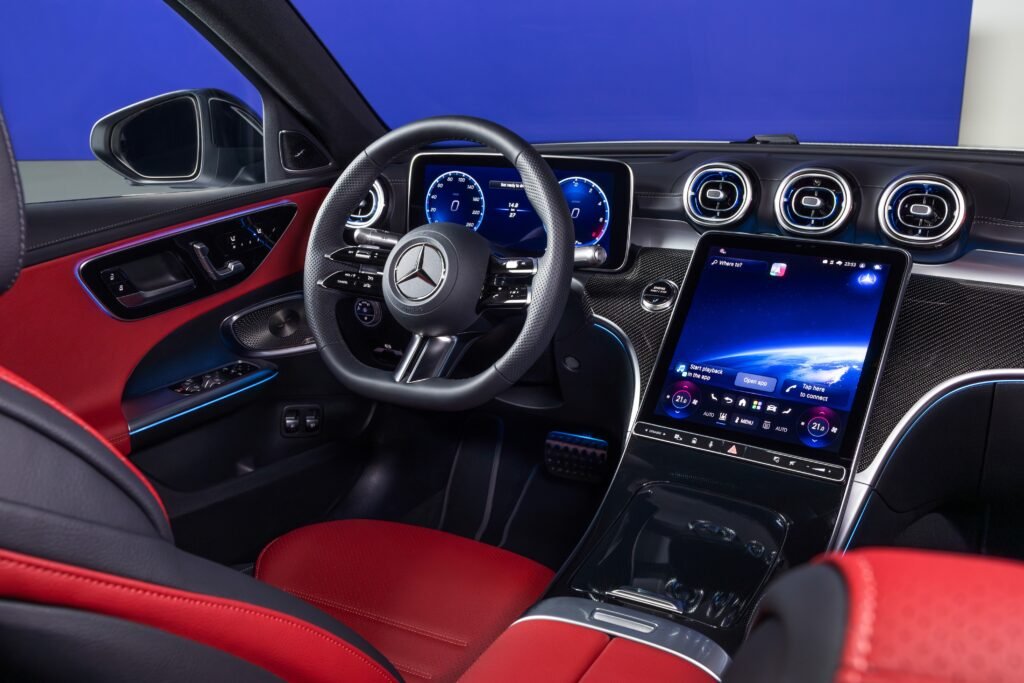
Table of Contents
Mercedes-Benz C-Class Facelift Gets a Fresh Exterior
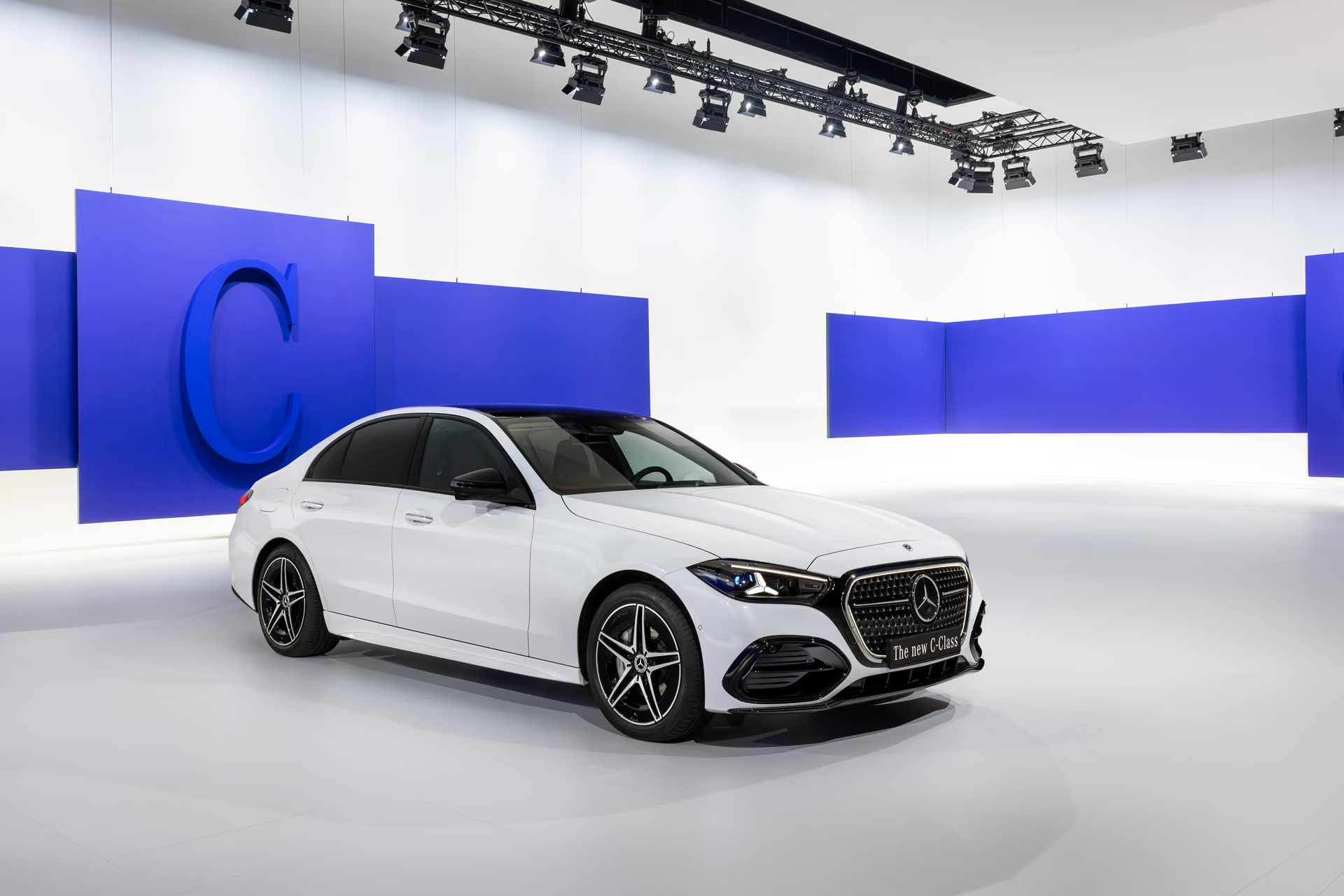
The most visible changes to the updated Mercedes-Benz C-Class are concentrated around its exterior design. Mercedes-Benz has retained the overall body shape and proportions of the sedan, but several details have been redesigned to bring the model closer to the brand’s latest family design language.
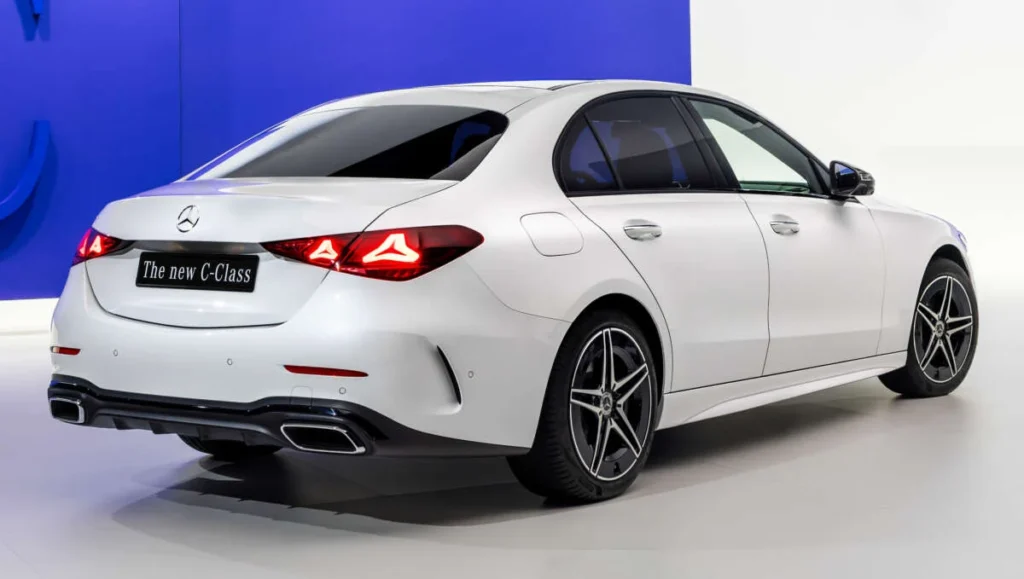
The headlamp and tail-lamp shapes remain broadly familiar. However, their internal lighting signatures have been revised. The updated units feature a new tri-arrow design, inspired by the lighting treatment seen on larger Mercedes-Benz models, including the S-Class.
The revised lighting elements give the Mercedes-Benz C-Class a more recognisable appearance, particularly at night. Rather than completely redesigning the lamps, Mercedes-Benz has focused on their internal graphics to provide a fresh visual identity without altering the vehicle’s established proportions.
The grille has also been redesigned and is now larger than before. It features additional detailing and available illumination, adding a more premium appearance to the front of the sedan.
The bumper has received further attention, with larger air intakes that give the updated Mercedes-Benz C-Class a more aggressive appearance. The design treatment appears to draw inspiration from Mercedes-AMG models, creating a sportier visual character without fundamentally changing the Mercedes-Benz C-Class’s luxury-sedan identity.
Two New Exterior Colour Options
Mercedes-Benz is also expanding the visual customisation options for the updated Mercedes-Benz C-Class with two new metallic exterior colours.
The new shades are Lavender Silver and Moody Sky Grey.
These colours complement the facelift’s updated design and are intended to give customers additional choices beyond the existing exterior palette.
The addition of new colours may appear to be a relatively small update, but colour availability is an important part of the luxury-car buying experience. Mercedes-Benz has increasingly used distinctive paint options to differentiate newer models and give customers greater scope for personalisation.
Cabin Layout Remains Familiar
Inside the cabin, Mercedes-Benz has not completely redesigned the Mercedes-Benz C-Class dashboard. Instead, the facelift focuses heavily on technology and user interaction.
The basic cabin layout remains familiar to existing C-Class owners, but the biggest change comes from the introduction of the company’s latest software architecture and infotainment interface.
The updated system is called MB.OS and represents the fourth generation of Mercedes-Benz’s MBUX infotainment experience.
The company has placed artificial intelligence at the centre of the updated infotainment system. The technology integrates AI capabilities from ChatGPT, Microsoft Bing and Google Gemini, giving the vehicle access to a broader range of conversational and information-based functions.
This approach represents a significant shift in how Mercedes-Benz is developing its in-car technology. Instead of relying solely on conventional voice commands and fixed infotainment menus, the system is designed to provide a more flexible interaction between the driver, passengers and the vehicle.
MB.OS Brings AI Into the C-Class
Artificial intelligence has become an increasingly important area of development for automobile manufacturers, and Mercedes-Benz is positioning Mercedes-Benz C-Class as a major component of its refreshed technology strategy.
The integration of AI technologies is intended to make the infotainment system more intuitive and capable of understanding natural-language interactions.
The inclusion of ChatGPT, Microsoft Bing and Google Gemini gives the system access to multiple AI ecosystems. This could allow users to interact with the vehicle in a more conversational manner while also accessing information through the infotainment system.
For Mercedes-Benz, the introduction of MB.OS also demonstrates how software is becoming increasingly important to the company’s future vehicles.
Modern luxury cars are no longer differentiated solely by engine performance, materials or ride quality. Infotainment, connectivity, digital interfaces and software features are increasingly becoming major factors in the ownership experience.
The updated Mercedes-Benz C-Class therefore combines a familiar luxury-sedan environment with a substantially more technology-focused user experience.
2.0-Litre Mild-Hybrid Engine Produces 255bhp
The facelifted Mercedes-Benz C-Class continues with a 2.0-litre four-cylinder petrol engine supported by a 48-volt mild-hybrid system.
According to the specifications provided, this powertrain produces around 255bhp and 400Nm of torque.
The mild-hybrid setup is designed to provide additional electrical assistance while improving efficiency and supporting smoother operation.
The system also incorporates IGS support, which can provide up to an additional 23bhp under appropriate conditions.
This means the updated C-Class combines conventional internal-combustion power with electrification without requiring drivers to rely exclusively on electric propulsion.
The approach is particularly relevant for markets where customers continue to demand petrol-powered luxury cars but increasingly expect improved efficiency and electrified technology.
C400 Plug-In Hybrid Offers 100km EV Range
One of the most important additions to the powertrain lineup is the updated C400 plug-in hybrid.
The plug-in hybrid configuration combines an internal-combustion engine with an electric powertrain and offers a claimed pure-electric driving range of around 100km.
For many daily urban journeys, this could potentially allow owners to complete a substantial portion of their travel without using the combustion engine, provided the battery is adequately charged.
The C400 plug-in hybrid also supports both AC and DC charging.
The vehicle can accept up to 11kW of AC charging and up to 55kW of DC charging, giving owners greater flexibility when recharging the battery.
The combination of a substantial electric-only range and faster charging capability makes the plug-in hybrid version an important part of Mercedes-Benz’s broader electrification strategy.
Suspension Retuned for Improved Dynamics
Mercedes-Benz has also made changes to the Mercedes-Benz C-Class chassis.
The suspension has reportedly been retuned as part of the facelift, with the objective of improving the vehicle’s overall driving characteristics.
The C-Class has traditionally attempted to balance comfort with handling, and the updated suspension tuning is intended to maintain that balance while improving the car’s dynamic behaviour.
Mercedes-Benz has also worked on aerodynamic efficiency. The updated model is said to benefit from a better drag coefficient, which can contribute to improved efficiency and high-speed stability.
Although aerodynamic improvements may not be immediately visible to customers, reducing aerodynamic resistance can become increasingly important as manufacturers attempt to improve fuel efficiency and electric driving range.
Rear-Axle Steering Adds Greater Manoeuvrability
Another significant mechanical upgrade is the availability of rear-axle steering with up to 2.5 degrees of steering angle.
Rear-wheel steering systems can improve manoeuvrability at lower speeds by effectively reducing the turning circle. At higher speeds, the system can also contribute to improved stability and handling by helping the vehicle respond more effectively to steering inputs.
For a luxury sedan such as the C-Class, this technology can provide benefits both in urban environments and during faster driving.
In cities, greater rear-wheel steering capability can make parking and tight manoeuvres easier. On highways and winding roads, it can contribute to a more responsive driving experience.
The technology also brings the C-Class closer to the equipment levels increasingly found in larger and more expensive Mercedes-Benz models.
Updated C-Class Continues Mercedes’ Family Design Direction
The facelift also demonstrates how Mercedes-Benz is gradually applying a common design language across its model range.
The revised lighting signatures, larger grille and more pronounced bumper design give the C-Class visual links to larger Mercedes-Benz sedans.
The tri-arrow lighting elements are particularly important because lighting signatures have become one of the key ways manufacturers establish brand identity.
Rather than making dramatic changes to the overall body structure, Mercedes-Benz has chosen to refine the C-Class’s existing design while incorporating newer family elements.
This approach is typical of a mid-cycle facelift, where manufacturers update styling, technology and mechanical components while retaining the underlying platform and proportions of the existing vehicle.
Focus Shifts From Hardware to Software
One of the most significant aspects of the new C-Class is not necessarily visible from the outside.
The integration of AI-powered MB.OS highlights the growing importance of software in the luxury-car segment.
Mercedes-Benz is positioning the infotainment system as an intelligent interface rather than simply a screen for navigation, music and vehicle settings.
The involvement of ChatGPT, Microsoft Bing and Google Gemini also shows the increasing convergence between the automotive and technology industries.
As vehicles become more connected, software updates, digital assistants, AI capabilities and cloud-based services are likely to become increasingly important parts of the ownership experience.
For the C-Class, this means the facelift is more than a cosmetic update. It combines traditional areas such as design, powertrain and chassis engineering with a major emphasis on digital technology.
India Launch Expected in 2027
The updated Mercedes-Benz C-Class will make its European-market debut before being introduced across other international markets.
According to the information available, several markets are expected to receive the updated model in early 2027.
India is also expected to receive the facelifted C-Class in 2027. Mercedes-Benz has not yet announced a confirmed Indian launch date or final India-specific specifications.
The Indian-specification model could potentially differ from the European version in terms of engine choices, equipment and variant structure, depending on local market requirements.
The C-Class remains an important model for Mercedes-Benz in India, competing in the premium executive sedan segment against other German luxury manufacturers.
Its combination of technology, premium design, performance and brand positioning makes the facelift particularly relevant to buyers considering a luxury sedan in the segment.
What the C-Class Facelift Means for Mercedes-Benz
The updated C-Class represents a broader evolution of Mercedes-Benz’s approach to luxury vehicles.
The company is attempting to maintain the traditional strengths of the C-Class — premium design, comfort, performance and driving dynamics — while incorporating technologies that are becoming increasingly important to modern customers.
The revised exterior provides a fresher appearance, while the updated cabin introduces a significantly more advanced software experience.
At the same time, the mild-hybrid and plug-in hybrid powertrains demonstrate Mercedes-Benz’s continuing investment in electrification.
The addition of rear-axle steering and revised suspension also ensures that the mechanical side of the car has not been overlooked.
Mercedes-Benz C-Class Facelift: What to Expect in India
For Indian buyers, the updated C-Class could bring a combination of styling, technology and electrification upgrades when it arrives in 2027.
The biggest talking points are likely to be the new exterior design, AI-powered MB.OS infotainment system, improved mild-hybrid powertrain and the availability of plug-in hybrid technology.
However, the final India-specification equipment list will be crucial in determining how closely the Indian model matches the European version.
Mercedes-Benz is expected to reveal more information closer to the launch.
Until then, the facelifted C-Class represents an important update to the company’s executive sedan lineup, combining subtle styling changes with major advances in software and electrified powertrain technology.
With its new tri-arrow lighting signatures, illuminated grille, AI-powered MB.OS interface, 48-volt mild-hybrid technology, plug-in hybrid capability, improved aerodynamics and rear-axle steering, the updated Mercedes-Benz C-Class is positioned as a considerably more sophisticated evolution of the existing model.
As the vehicle moves towards its global rollout and eventual India arrival in 2027, more details about India-specific variants, pricing and equipment are expected to emerge.