
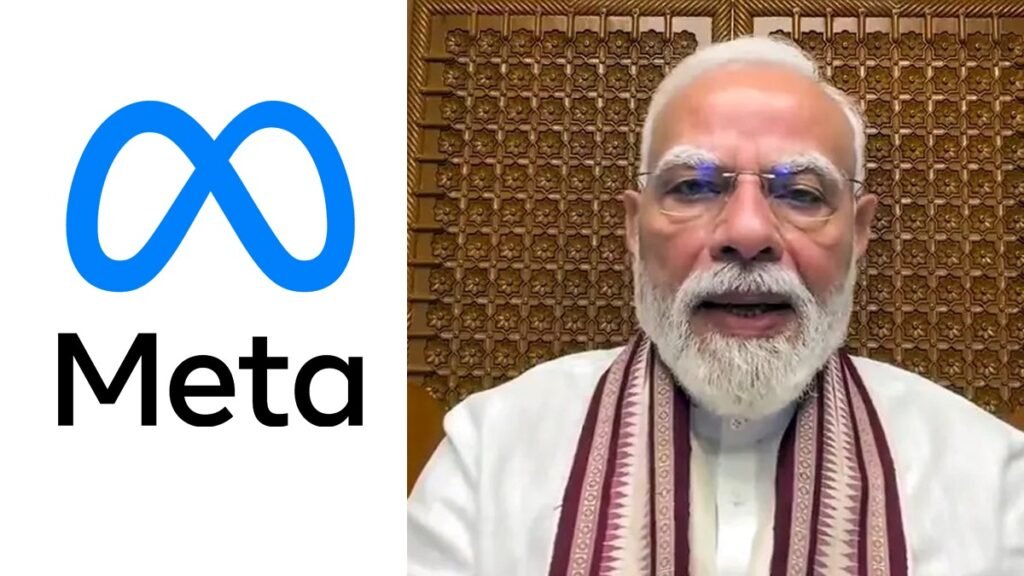
Social media giant Meta has officially apologized to the Government of India after a video posted by Prime Minister Narendra Modi was temporarily restricted on the company’s platforms, Facebook and Instagram. The incident, which Meta attributed to an operational and technical error, sparked political controversy, prompted intervention from the Union government, and has now led to renewed scrutiny of the company’s content moderation practices in India.
The apology was conveyed by a senior Meta executive during a meeting with Union Minister for Electronics and Information Technology Ashwini Vaishnaw, where the company admitted that the restriction was unintentional and resulted from an internal error in its content moderation systems. However, despite the apology, the issue has not been laid to rest. The Parliamentary Standing Committee on Communications and Information Technology has reportedly demanded a direct and unconditional apology from Meta CEO Mark Zuckerberg, warning that failure to do so could trigger a review of Meta’s legal protections under Indian law.
The episode has once again placed the spotlight on the challenges of automated content moderation, platform accountability, and the responsibilities of global technology companies operating in one of the world’s largest digital markets.
Table of Contents
Meta Admits Operational Error Behind Restriction
According to the information shared by the company, the temporary restriction of Prime Minister Narendra Modi’s video was not the result of a deliberate moderation decision. Instead, Meta said the incident occurred because of an operational or technical issue within its automated moderation system.
The video, which featured the Prime Minister addressing students amid concerns surrounding examination paper leak protests, was briefly restricted on Facebook and Instagram before the issue was identified and rectified.
Meta acknowledged that the restriction should not have occurred and expressed regret over the inconvenience caused. Company representatives assured the Indian government that the incident was an isolated error and emphasized that no intentional action was taken against the Prime Minister’s content.
The company also stated that it is reviewing its internal systems to reduce the likelihood of similar incidents occurring in the future.
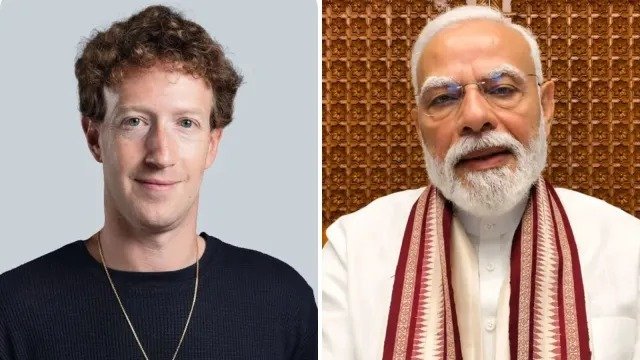
Senior Meta Executive Meets Union IT Minister Ashwini Vaishnaw
Following the controversy, a senior executive representing Meta met Union IT Minister Ashwini Vaishnaw to formally communicate the company’s apology.
During the meeting, the Meta representative reportedly explained that the temporary restriction resulted from an internal operational lapse and reaffirmed the company’s commitment to improving its moderation systems.
The company assured government officials that additional safeguards would be introduced to strengthen content review mechanisms and minimize technical errors affecting public-interest content.
The meeting reflected the seriousness with which both the Government of India and Meta approached the issue, given the significance of the Prime Minister’s official communications on social media platforms.
How the Controversy Began
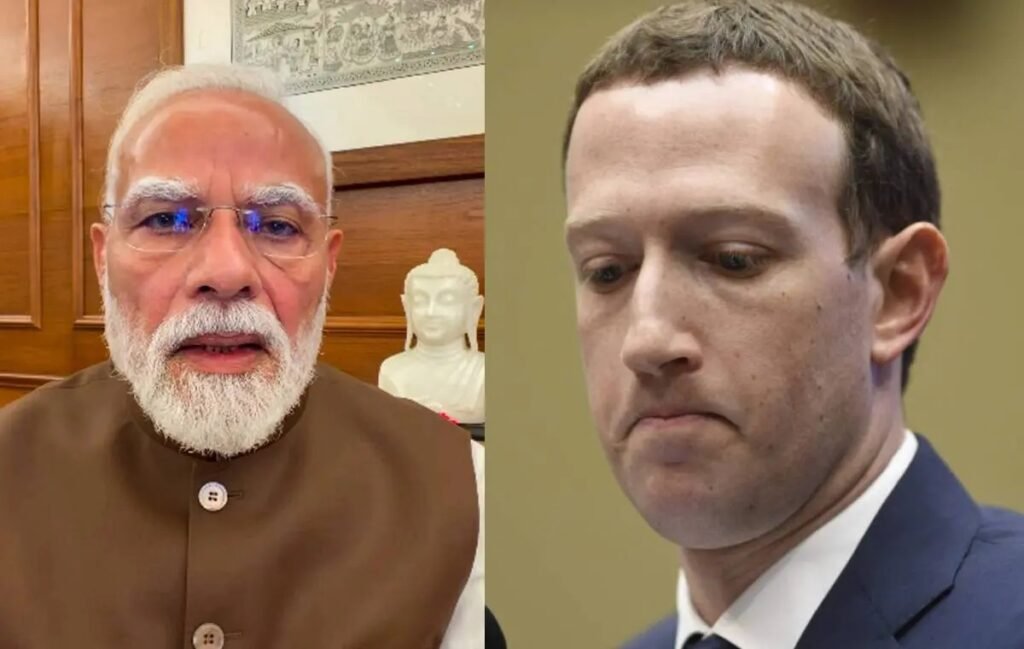
The controversy emerged after users noticed that a video posted by Prime Minister Narendra Modi on Facebook and Instagram had been temporarily restricted.
The video reportedly addressed students during ongoing discussions related to examination paper leak protests, making it a matter of considerable public interest.
The restriction quickly attracted widespread attention across social media, with political leaders, commentators, and users questioning why the Prime Minister’s official content had been affected.
As criticism intensified, the Government of India sought an explanation from Meta regarding the incident.
The matter soon escalated beyond a routine platform error, becoming a subject of political debate and parliamentary interest.
Government Summons Meta Officials
Following public concern, the Indian government reportedly summoned Meta officials to explain the circumstances that led to the restriction.
Officials sought detailed clarification regarding:
- Why the Prime Minister’s video had been restricted.
- Whether the restriction resulted from human intervention or automated moderation.
- The safeguards in place to prevent similar incidents.
- Meta’s internal review process for high-profile public communications.
Meta responded by acknowledging the mistake and assuring authorities that corrective measures had already been initiated.
Parliamentary Committee Demands Direct Apology from Mark Zuckerberg
Although Meta has formally apologized through its representatives, the Parliamentary Standing Committee on Communications and Information Technology believes the matter requires a stronger response.
According to reports, the committee has sought a direct apology from Meta CEO Mark Zuckerberg.
Committee Chairman Nishikant Dubey reportedly stated that an unconditional apology from Zuckerberg himself would demonstrate accountability at the highest level of the company.
The committee also warned that failure to provide such an apology could prompt discussions regarding the review of Meta’s safe harbour protections under Indian law.
The remarks indicate that Parliament intends to closely examine the responsibilities of digital platforms in handling official communications and politically significant content.
Understanding Safe Harbour Protection
One of the key issues emerging from the controversy is the reference to safe harbour protection, a legal framework that shields online intermediaries from liability for user-generated content, provided they comply with applicable laws and regulatory requirements.
Technology companies operating in India rely on these protections while moderating billions of pieces of content across their platforms.
However, policymakers have increasingly debated whether global digital platforms should face stricter accountability when content moderation errors affect public institutions, elected representatives, or matters of national importance.
While no formal action has been announced, parliamentary discussions suggest that platform accountability may remain a significant policy issue going forward.
Broader Issues Discussed During Meetings
The discussions between Meta representatives and Indian authorities reportedly extended beyond the Prime Minister’s video.
Officials also examined several broader concerns relating to digital safety and platform governance.
Child Sexual Abuse Material (CSAM)
One of the important issues discussed involved Meta’s efforts to identify and remove Child Sexual Abuse Material (CSAM) from its platforms.
The company reportedly briefed officials on the technologies and enforcement mechanisms being used to detect illegal content more effectively.
Strengthening child safety online continues to be a major priority for governments and technology companies worldwide.
AI-Generated Deepfakes
Another major topic was the growing challenge posed by AI-generated deepfakes.
Advances in artificial intelligence have made it increasingly easy to create highly realistic manipulated videos, audio recordings, and images capable of spreading misinformation or impersonating public figures.
Indian authorities reportedly discussed the need for stronger detection systems and faster response mechanisms to address AI-generated misinformation before it spreads widely.
Meta reaffirmed its commitment to improving AI-based detection technologies while strengthening its enforcement policies.
Improving Content Moderation Systems
Meta also discussed ongoing improvements to its content moderation infrastructure.
According to the company, billions of posts are reviewed across Facebook and Instagram using a combination of:
- Artificial intelligence
- Machine learning
- Automated detection systems
- Human reviewers
- Community reporting mechanisms
While automation enables rapid moderation at scale, occasional technical errors can occur.
Meta acknowledged that minimizing such errors remains an ongoing challenge and pledged continued investment in improving system accuracy.
Challenges of Automated Content Moderation
The incident illustrates the broader challenge faced by global social media platforms.
Every day, companies such as Meta review enormous volumes of content across multiple languages, regions, and legal jurisdictions.
Automated moderation systems are designed to quickly identify harmful content, including spam, misinformation, hate speech, graphic violence, and other policy violations.
However, these systems sometimes mistakenly restrict legitimate content because of technical limitations or contextual misunderstandings.
Industry experts note that improving accuracy while preserving freedom of expression remains one of the most difficult balancing acts for technology companies.
India: A Critical Market for Meta
India represents one of Meta’s largest and most strategically important markets.
The country has hundreds of millions of users across Facebook, Instagram, and WhatsApp, making it central to Meta’s global operations.
Government communications, political outreach, educational campaigns, public awareness initiatives, and citizen engagement increasingly depend on social media platforms.
Consequently, any disruption affecting official government communications naturally attracts heightened attention from regulators and policymakers.
The incident is expected to reinforce ongoing dialogue between technology companies and the Indian government regarding transparency, accountability, and platform governance.
Growing Focus on Digital Accountability
In recent years, India has strengthened its regulatory framework governing digital intermediaries, emphasizing greater transparency, user protection, and platform responsibility.
Authorities have repeatedly stressed that technology companies must balance innovation with accountability while ensuring that automated systems do not unfairly restrict legitimate public communication.
The latest controversy is likely to contribute to continuing discussions about improving moderation accuracy, protecting democratic communication, and strengthening cooperation between government agencies and global technology platforms.
Meta’s formal apology to the Government of India over the temporary restriction of Prime Minister Narendra Modi’s video marks an important development in the evolving relationship between global technology companies and Indian regulators. While the company has acknowledged that the incident resulted from an operational error rather than intentional moderation, the controversy has triggered broader conversations about platform accountability, automated content moderation, and digital governance.
The Parliamentary Standing Committee’s demand for a direct apology from Meta CEO Mark Zuckerberg underscores the seriousness with which lawmakers are viewing the issue. At the same time, discussions on child safety, AI-generated deepfakes, and improved content moderation demonstrate that the dialogue extends well beyond a single incident.
As India continues to play an increasingly influential role in the global digital economy, the expectations placed on technology companies regarding transparency, reliability, and responsible platform management are likely to grow. For Meta, strengthening trust through improved moderation systems, closer cooperation with regulators, and greater accountability will remain essential as it serves one of its most important user communities worldwide.