
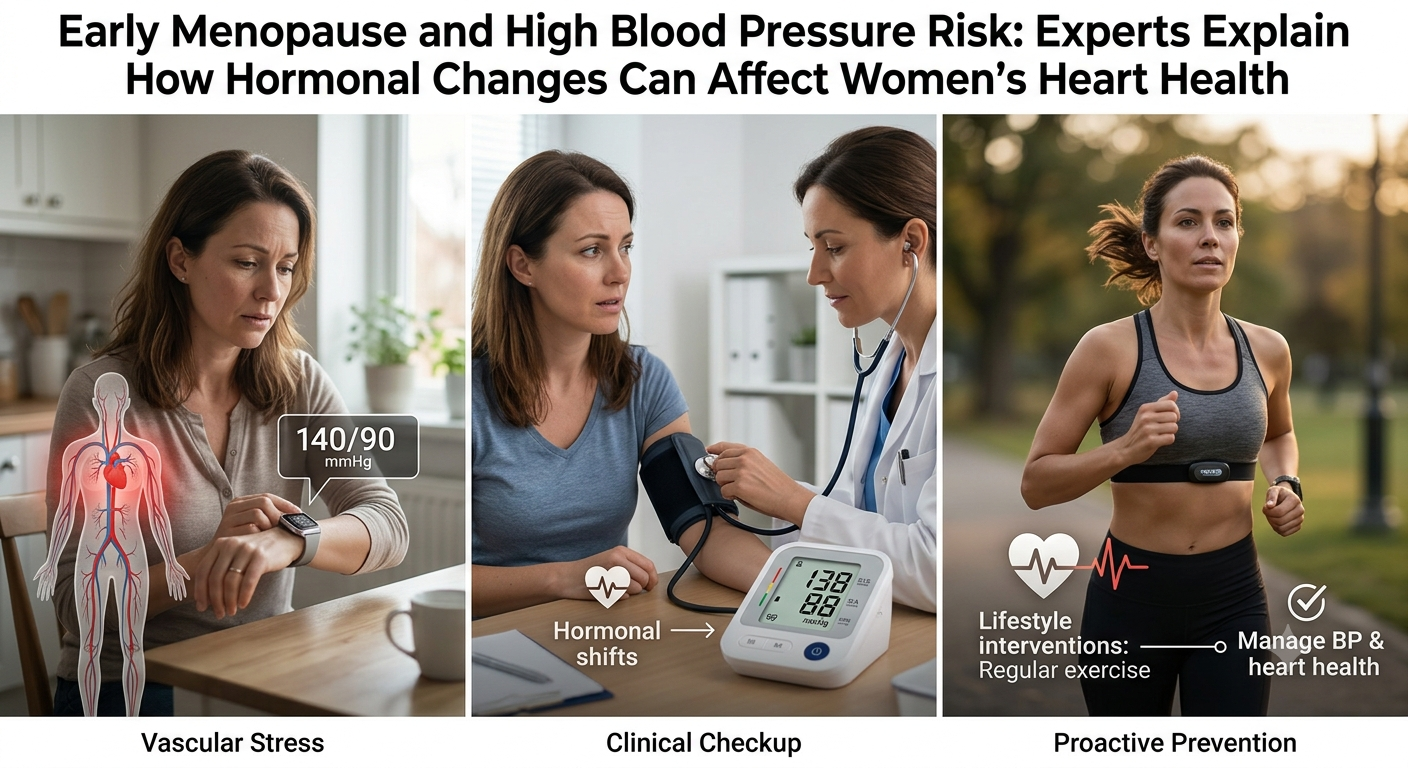
Menopause is a natural biological transition in every woman’s life, marking the end of menstrual cycles and reproductive years. While many women associate menopause mainly with symptoms such as hot flashes, mood changes, sleep problems, and irregular periods, experts warn that the timing of menopause may also influence long-term health risks, particularly cardiovascular health.
Recent medical discussions have highlighted concerns that early menopause may increase the risk of high blood pressure (hypertension) and other heart-related conditions. Experts explain that the decline in estrogen levels during menopausal can bring changes in the body that affect blood vessels, metabolism, cholesterol levels, and overall cardiovascular function.
Table of Contents
Health specialists emphasize that women who experience menopausal at an unusually early age should pay closer attention to heart health, regular blood pressure monitoring, lifestyle habits, and preventive healthcare.
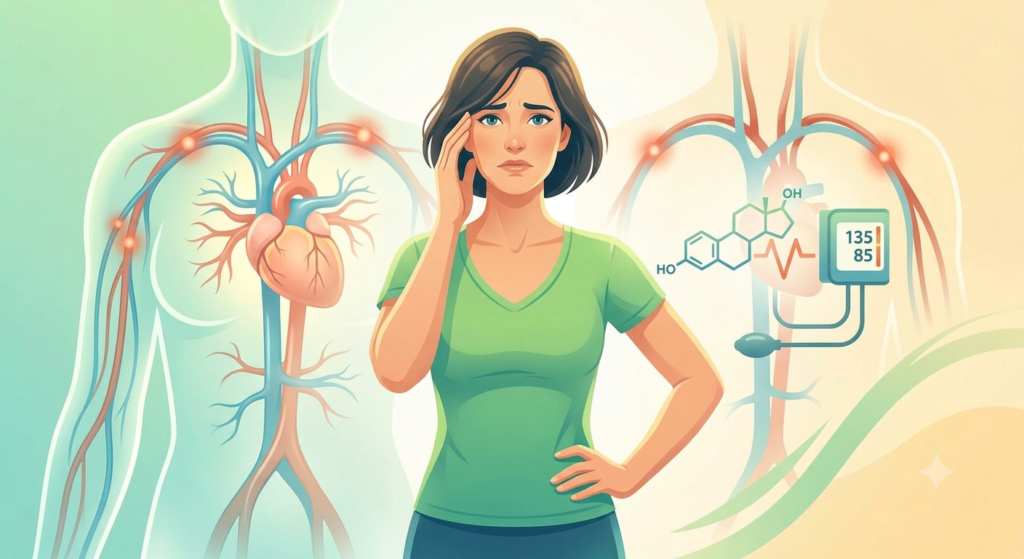
What Is Menopause?
Menopause is the stage when a woman permanently stops having menstrual periods due to a decline in ovarian function. According to the World Health Organization (WHO), natural menopause generally occurs between the ages of 45 and 55 years, with many women experiencing the transition around their early 50s.
The hormonal change phase is officially confirmed when a woman has gone 12 consecutive months without menstruation, provided there is no other medical explanation.
However, some women experience menopause earlier than expected. When menopause occurs before the age of 45, it is often referred to as early menopause, while menopause before age 40 is considered premature menopause. Causes may include genetic factors, medical treatments, autoimmune conditions, or surgical removal of ovaries.
Why Can Early Menopause Affect Heart Health?
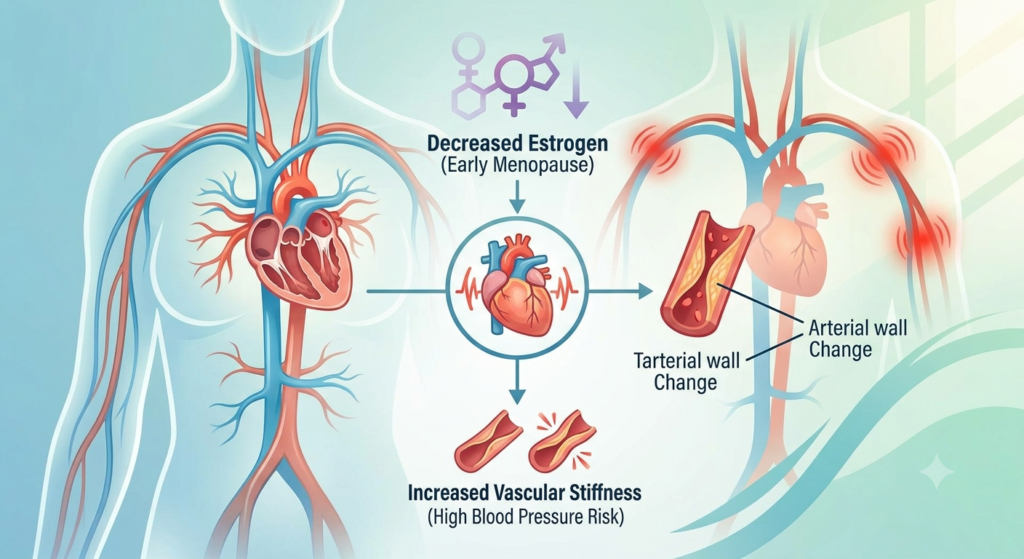
Experts explain that estrogen, a key female hormone, plays an important role in maintaining cardiovascular health.
Before menopause, estrogen helps support healthy blood vessels by contributing to their flexibility and influencing cholesterol balance. When estrogen levels decline significantly during menopause, several changes can occur:
- Blood vessels may become less flexible.
- Cholesterol levels may change.
- Body fat distribution may shift, especially increasing abdominal fat.
- The risk of metabolic problems may rise.
These changes can contribute to an increased risk of high blood pressure and cardiovascular diseases.
The American Heart Association has noted that cardiovascular risk factors can increase during the menopause transition due to hormonal changes, increased abdominal fat, changes in blood pressure, and changes in blood vessel health.
Link Between Early menopausal and High Blood Pressure
High blood pressure, also known as hypertension, occurs when the force of blood against artery walls remains consistently elevated. It is often called a “silent killer” because many people do not experience noticeable symptoms despite having the condition.
Experts suggest that women who experience early menopausal may face a longer period of life with lower estrogen levels, potentially increasing exposure to cardiovascular risk factors.
Research has linked early menopause with higher chances of cardiovascular problems, including coronary heart disease and stroke in some groups of women. A study published through the Multi-Ethnic Study of Atherosclerosis found that early menopause was associated with increased cardiovascular disease risk, including heart disease and stroke outcomes.
However, experts clarify that early menopause does not mean every woman will develop hypertension. Instead, it may act as one factor among several that influence overall cardiovascular risk.
Hormonal Changes After Menopause
During this hormonal transition, the body undergoes several hormonal and metabolic changes.
Declining Estrogen Levels
The reduction in estrogen is one of the most significant changes. Lower estrogen levels may affect:
- Blood vessel function
- Cholesterol levels
- Fat storage patterns
- Blood pressure regulation
Increased Abdominal Fat
Many women notice changes in body composition after menopause. Increased abdominal fat is associated with metabolic syndrome, a condition involving factors such as high blood pressure, high blood sugar, abnormal cholesterol levels, and increased cardiovascular risk.
Changes in Cholesterol
After this stage, some women experience increases in LDL (“bad”) cholesterol and changes in other lipid levels, which may contribute to artery-related problems.
Symptoms of The hormonal change phase Women Should Not Ignore
While menopause symptoms vary from person to person, common signs include:
- Irregular menstrual cycles
- Hot flashes
- Night sweats
- Sleep difficulties
- Mood changes
- Anxiety or emotional changes
- Vaginal dryness
- Changes in energy levels
However, experts caution that cardiovascular changes may occur silently. A woman may not feel changes in blood pressure or cholesterol levels without regular medical check-ups.
Who May Have Higher Risk?
Experts suggest that women should be especially aware of heart health if they experience:
- Menopause before age 45
- Family history of heart disease
- High blood pressure
- Diabetes
- Obesity
- High cholesterol
- Smoking habits
- Low physical activity levels
Women with existing metabolic conditions may need closer monitoring because multiple risk factors can combine and increase cardiovascular risk.
Importance of Regular Blood Pressure Monitoring
Because hypertension often has no obvious symptoms, regular monitoring is essential.
According to WHO, hypertension affects a large number of adults worldwide and is a major cause of preventable heart disease, stroke, and other health complications. Lifestyle changes and medical treatment can significantly reduce risks.
Doctors recommend that women approaching or experiencing The hormonal change phase regularly check:
- Blood pressure
- Blood sugar levels
- Cholesterol levels
- Weight changes
- Overall cardiovascular health
Early detection allows timely intervention.
Lifestyle Changes to Protect Heart Health During Menopause
Experts recommend several healthy habits that may help reduce the risk of hypertension and cardiovascular problems.
Maintain a Balanced Diet
A heart-friendly diet should include:
- Fruits and vegetables
- Whole grains
- Protein-rich foods
- Healthy fats
- Reduced salt intake
Limiting processed foods and excessive sugar intake can also support better heart health.
Stay Physically Active
Regular exercise can help maintain healthy blood pressure, improve metabolism, strengthen the heart, and support mental well-being.
Activities such as walking, yoga, strength exercises, and aerobic workouts can be beneficial when performed regularly.
Manage Stress
Hormonal changes during this period can affect emotional health. Stress management techniques such as meditation, relaxation exercises, and adequate sleep may support overall wellness.
Avoid Smoking and Excess Alcohol
Smoking and excessive alcohol consumption can significantly increase cardiovascular risks and worsen blood pressure problems.
Can Hormone Therapy Help?
Some women consider menopausal hormone therapy to manage severe symptoms. However, experts stress that hormone therapy decisions must be individualized.
Doctors evaluate factors such as:
- Age
- Time since menopause began
- Personal health history
- Cardiovascular risk
- Other medical conditions
Hormone therapy should not be started solely for preventing heart disease, and women should discuss potential benefits and risks with qualified healthcare professionals.
Women should seek medical advice if they experience:
- Menopause symptoms at an unusually young age
- Persistent high blood pressure readings
- Chest discomfort
- Severe headaches
- Sudden changes in health
- Strong family history of cardiovascular disease
Regular medical consultations can help identify risks early and create preventive strategies.
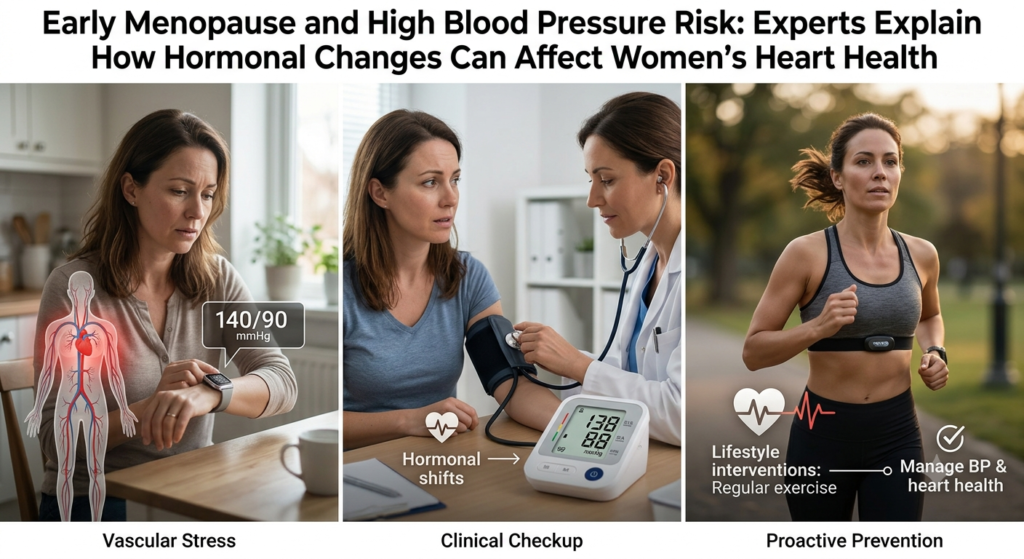
Expert Message: Early Awareness Can Reduce Future Risks
Healthcare professionals emphasize that this phase is not just a reproductive health milestone but also an important stage for long-term health planning.
Women experiencing early hormonal changes should consider it an opportunity to focus more seriously on cardiovascular prevention. Monitoring blood pressure, maintaining healthy lifestyle habits, and undergoing regular health screenings can reduce future complications.
Early hormonal transition may increase the risk of high blood pressure and cardiovascular problems due to hormonal changes, particularly the decline in estrogen levels that influence blood vessel health, metabolism, and heart function. However, early menopause does not guarantee the development of hypertension.
Experts believe awareness, regular health monitoring, balanced nutrition, physical activity, and timely medical guidance can help women protect their heart health during and after menopause.
As more attention is given to women’s cardiovascular health, understanding the connection between menopause timing and hypertension can help millions of women take preventive steps toward a healthier future.