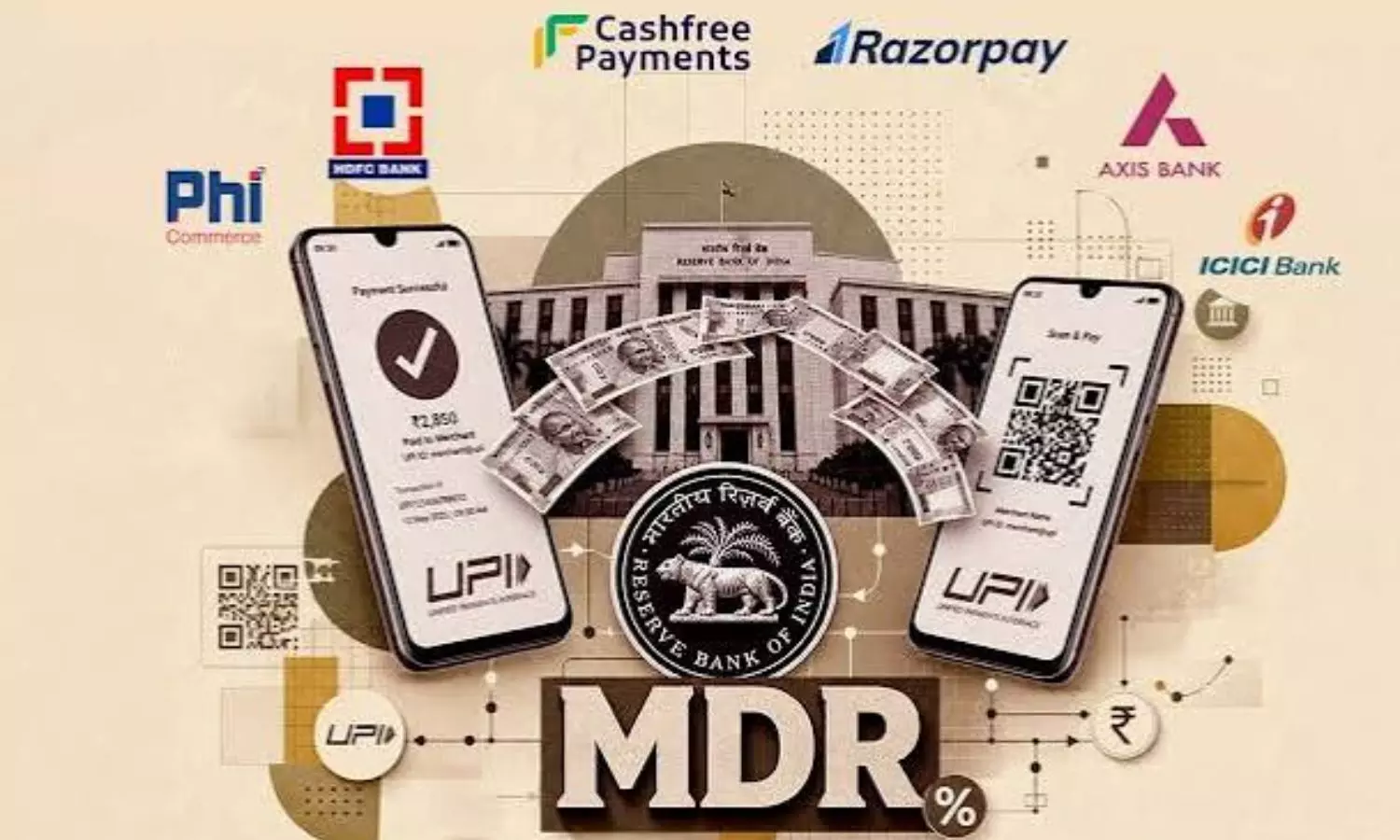
For six years, paying a shopkeeper through UPI cost the shopkeeper nothing. From 15 October 2026, that changes for bigger payments. A new merchant fee is coming to UPI, and if you pay or run a shop, it helps to know exactly who pays what.
Here is a plain-language guide to the new rule, with worked examples, so you can see how it affects everyday payments.
What is changing on 15 October?
The government announced a 0.4% Merchant Discount Rate (MDR) on eligible person-to-merchant UPI payments above ₹2,000. It takes effect on 15 October 2026 and ends more than six years of fee-free UPI processing for these payments. The change follows the Taxation and Other Laws (Amendment) Bill, 2026. We have followed this story from the start, so if you want the background, read our earlier explainers on the bill that could end the zero-MDR rule and what the MDR proposal means for digital payments.
MDR is simply the fee a merchant pays for accepting a digital payment. Card payments have carried it for years. UPI, launched in 2015, ran without it and was supported by government subsidies to banks and payment firms.
Will you, as a customer, pay anything extra?
No. The charge is on the merchant side, not the customer side. NPCI has also said app providers cannot charge customers a platform fee on UPI transactions. Two more things stay free:
- Person-to-person transfers, whatever the amount
- Payments to merchants of ₹2,000 or less
Reports based on NPCI’s statements say more than 95% of merchant transactions will remain free under the new structure.
How much will merchants pay? Worked examples
The standard rate is 0.4% of the payment, with a ceiling of ₹300 for transactions of ₹75,000 and above. Here is how it works out:
| Payment to merchant | Fee to merchant |
|---|---|
| ₹1,500 | ₹0 (free) |
| ₹2,000 | ₹0 (free) |
| ₹3,000 | ₹12 |
| ₹10,000 | ₹40 |
| ₹50,000 | ₹200 |
| ₹75,000 or more | ₹300 (capped) |
Only the ₹3,000 example comes directly from published reporting. The others apply the same 0.4% rate and cap, so treat them as illustrations rather than official figures.
Some categories are reported to follow a flat fee instead. Coverage says railways, telecom, insurance and fuel attract a flat ₹5. Check with your bank or payment provider for the exact list before relying on this.
Why is the government doing this?
UPI has grown far beyond what its designers imagined. In August 2026 it processed 2,451 crore transactions worth about ₹29.9 trillion. NPCI has put the industry cost of running UPI at roughly ₹20,000 crore a year, covering servers, bandwidth, fraud prevention and bank technical support. The government’s allocation for 2026-27 is ₹2,000 crore, well short of that.
Officials say the fee makes UPI more self-sustaining. Analysts point out that payments above ₹2,000 are only about 4% of UPI transactions by number but around 67% by value, which is why the fee is aimed there.
What does it mean for shops and small businesses?
For a small merchant, the effect depends on how many high-value payments you take. A shop that mostly sells items under ₹2,000 will see little change. A jeweller, electronics dealer or furniture store taking large UPI payments will feel it.
A LocalCircles survey of more than 32,000 merchants across 242 districts found that only 17% were willing to bear the 0.4% charge themselves. How shops respond, whether by absorbing the cost, adjusting prices or nudging customers toward other payment modes, remains to be seen. PhonePe and Google Pay together handle about 78% of UPI transactions, so their settlement rules will matter a lot.
What merchants can do now:
- Ask your bank or payment app how and when the fee will be deducted.
- Review how many of your payments cross ₹2,000 and estimate the monthly cost.
- Keep clear records so you can reconcile settlements after 15 October.
What should customers do before 15 October?
Nothing about how you pay changes, but a few habits will save you confusion once the rule starts.
Simple checklist for customers
- Keep paying as usual. You will not see a fee added to your bill for a UPI payment.
- Watch the final amount. If a shop asks you to pay extra for using UPI on a large purchase, ask why. Apps are not allowed to charge customers a platform fee.
- Ask before big purchases. Shops may prefer other modes for larger amounts, so confirm which payment options are accepted.
- Save your payment receipts. Screenshots or app history help if you ever need to dispute a charge.
For more on how the charge was first proposed, read our earlier report on UPI payments above ₹2,000 that may attract charges.
Frequently asked questions
Is UPI still free for sending money to friends and family?
Yes. Person-to-person transfers remain free regardless of the amount.
Do I pay more if I pay a shop ₹2,500 by UPI?
Not directly. The 0.4% fee, which would be ₹10 on ₹2,500, is charged to the merchant, and apps are barred from adding a customer platform fee.
Which payments does the fee apply to?
Eligible person-to-merchant payments above ₹2,000. Payments of ₹2,000 or below are exempt.
What is the maximum fee?
The standard fee is capped at ₹300 for transactions of ₹75,000 and above.
Details of the rollout may be updated by NPCI and banks. This article was last updated on 30 September 2026. Please confirm specifics with your bank or payment provider.
Sources
- Business Standard, “UPI fee: Why government is putting a price on big merchant payments” (16 September 2026)
- Payment Expert, “India sets 0.4% UPI merchant fee on payments over ₹2,000” (16 September 2026)
- The Indian Eye, “UPI Charges to Apply on Large Merchant Payments from October 15” (18 September 2026)
- Vajiram & Ravi, “UPI Merchant Charges Above ₹2,000, New MDR Rules from 15th October”
- NewsBytes, “October 15 2026: merchants to pay UPI fee over ₹2,000”