

The future of Unified Payments Interface (UPI) has once again become the center of national discussion after the Union Government introduced the Taxation and Other Laws (Amendment) Bill, 2026 in Parliament. The proposed legislation, presented by Finance Minister Nirmala Sitharaman, includes amendments to the Payment and Settlement Systems (PSS) Act, 2007, triggering widespread speculation over whether the Merchant Discount Rate (MDR) could return for UPI transactions.
The proposal has left millions of UPI users wondering whether they may soon have to pay transaction charges for digital payments. While the Reserve Bank of India (RBI) has urged caution against drawing conclusions too early, the debate has sparked discussions across the fintech industry, banking sector, merchant community, and among consumers.
Adding clarity to the issue, Rohit Mahajan, Founder and CEO of plutos ONE, explained that the proposed amendments do not necessarily mean consumers will be charged for using UPI. Instead, the discussions largely revolve around creating a sustainable financial model that supports India’s rapidly expanding digital payments infrastructure.
As UPI continues to process record-breaking transaction volumes every month, policymakers face the challenge of balancing affordability for consumers with the long-term sustainability of the digital payments ecosystem.
Table of Contents
Government Introduces Taxation and Other Laws (Amendment) Bill, 2026
Earlier this week, Finance Minister Nirmala Sitharaman introduced the Taxation and Other Laws (Amendment) Bill, 2026 in the Lok Sabha.
The Bill proposes several amendments intended to:
- Encourage foreign investment
- Strengthen India’s manufacturing ecosystem
- Improve the ease of doing business
- Modernize financial regulations
- Enhance the country’s digital payment infrastructure
One of the most closely watched provisions involves proposed amendments to Section 10A of the Payment and Settlement Systems Act, 2007, which governs digital payment systems, including UPI.
Although the proposed amendment itself does not explicitly announce the return of MDR, it has generated significant public interest because of its potential implications for merchant payment charges.

Why the UPI MDR Debate Has Returned
For several years, UPI payments for consumers have remained free, making India one of the world’s most successful digital payment markets.
Unlike traditional debit or credit card transactions that often involve a Merchant Discount Rate, UPI currently operates under a zero-MDR framework for most transactions.
Under this system:
- Consumers pay nothing while making UPI payments.
- Merchants generally receive payments without MDR charges.
- Banks, payment service providers, and fintech companies rely on government incentives and other revenue sources.
As digital transactions continue growing rapidly, industry stakeholders have increasingly questioned whether the zero-MDR model remains financially sustainable.
The proposed legislative amendments have therefore reignited discussions about introducing a revised payment structure.

RBI Governor Calls Speculation Premature
Following the announcement of the Bill, Reserve Bank of India Governor Sanjay Malhotra addressed concerns during the August 2026 Monetary Policy press conference.
Responding to questions regarding MDR on UPI payments, the RBI Governor advised against making early assumptions.
He stated:
“It is very premature to say something on it. Let’s wait and watch for the development. Ultimately it is the consumers who pay, but it may not be the general consumers.”
His remarks indicate that the regulatory framework remains under discussion and no final decision has yet been taken regarding merchant charges or consumer fees.
The Governor’s comments also suggest that if any pricing model is eventually introduced, it may not directly impact ordinary retail customers.
Understanding Merchant Discount Rate (MDR)
Merchant Discount Rate, commonly known as MDR, is a fee that merchants pay to banks or payment service providers for processing digital transactions.
Traditionally, MDR applies to:
- Credit card payments
- Debit card transactions
- Some digital payment systems
The fee helps cover:
- Payment processing costs
- Technology infrastructure
- Cybersecurity
- Fraud prevention
- Network maintenance
- Banking operations
When UPI was promoted nationwide, the Government waived MDR to encourage rapid adoption of digital payments.
The strategy proved remarkably successful.
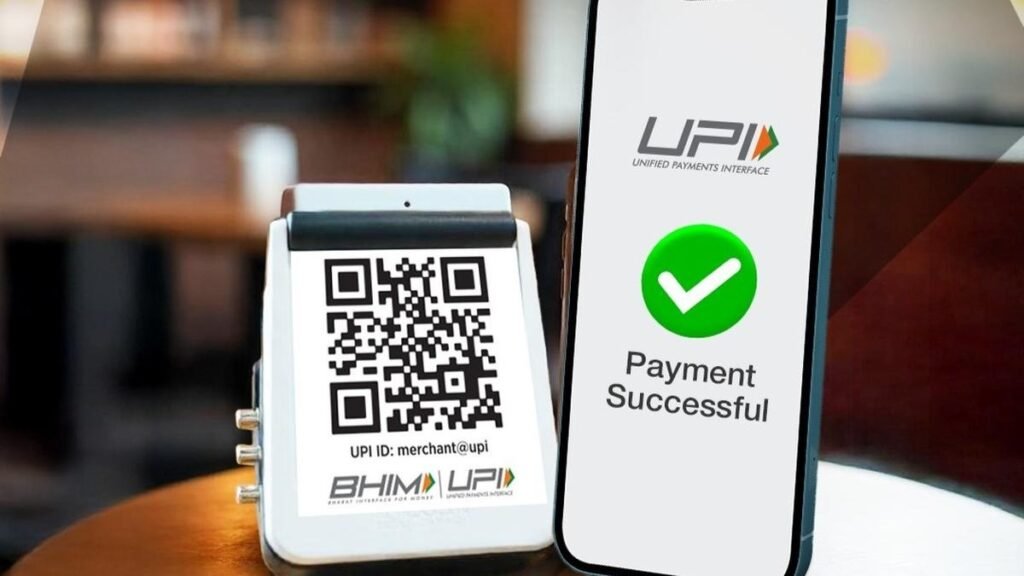
UPI Continues Breaking Transaction Records
India’s digital payment ecosystem has witnessed extraordinary growth over the past few years.
According to recent figures:
- June 2026: 22.72 billion UPI transactions worth ₹28.92 lakh crore
- July 2026: 23.66 billion UPI transactions worth ₹29.88 lakh crore
The July figures represent another all-time high for the platform, highlighting the growing dependence of consumers and businesses on UPI.
From roadside vendors to multinational retailers, UPI has become the backbone of India’s digital economy.
Expert Explains Why Sustainable Funding Matters
According to Rohit Mahajan, Founder and CEO of plutos ONE, maintaining such an enormous payment infrastructure requires continuous investment.
He noted that the proposed amendments should not automatically be interpreted as consumer charges.
Instead, discussions focus on developing a balanced financial model capable of supporting:
- Advanced payment technology
- Cybersecurity improvements
- Fraud detection systems
- Infrastructure upgrades
- Faster transaction processing
- Greater scalability
As transaction volumes continue rising each month, operating and maintaining UPI becomes increasingly expensive.
Industry experts argue that a sustainable revenue model is necessary for long-term growth.
Will Consumers Have to Pay?
One of the biggest concerns among users is whether they will be charged for making UPI payments.
According to Mahajan, the answer remains reassuring.
He explained that:
- Person-to-person (P2P) UPI transfers are expected to remain free.
- Consumers are unlikely to face additional transaction fees.
- The proposed system is not intended to burden ordinary users.
Instead, policymakers appear to be exploring options that preserve the convenience consumers currently enjoy while ensuring the financial viability of payment service providers.
Could Merchants Bear the Cost?
While consumers may remain unaffected, merchants could potentially see changes if a revised MDR structure is introduced.
Mahajan explained that under most digital payment systems worldwide:
- Merchants typically pay processing charges.
- Large businesses often contribute more than smaller merchants.
- Charges may vary depending on transaction size.
Such a differentiated pricing structure could protect:
- Small retailers
- Street vendors
- Local businesses
while asking larger commercial establishments to contribute toward maintaining the digital payments ecosystem.
Differential MDR Could Be the Middle Path
Experts suggest that India may eventually adopt a differential MDR framework rather than imposing a uniform charge.
Such a model could consider factors including:
- Merchant turnover
- Business category
- Transaction value
- Enterprise size
- Payment frequency
This approach would allow policymakers to balance three major objectives:
- Protect consumers.
- Support small businesses.
- Sustain digital payment infrastructure.
Many countries operating real-time payment systems already follow similar merchant pricing models.
Why Infrastructure Investment Is Becoming Essential
UPI’s unprecedented success has dramatically increased operational demands.
The ecosystem now requires continuous investments in:
Cybersecurity
Growing transaction volumes also increase cyber risks.
Financial institutions must invest heavily in fraud monitoring, encryption, artificial intelligence, and security infrastructure.
Technology Upgrades
Payment platforms require:
- Faster servers
- Cloud infrastructure
- AI-powered payment monitoring
- High availability systems
to ensure uninterrupted service.
Scalability
Handling nearly ₹30 lakh crore worth of monthly transactions demands world-class infrastructure capable of supporting future growth.
Innovation
Future UPI services may include:
- International interoperability
- AI-enabled payment services
- Enhanced merchant solutions
- Advanced credit integration
- Cross-border digital payments
Such innovations require sustained financial investment.
UPI’s Role in India’s Digital Economy
Since its launch by the National Payments Corporation of India (NPCI), UPI has transformed India’s financial landscape.
It has enabled:
- Instant money transfers
- QR code payments
- Cashless shopping
- Small business digitization
- Financial inclusion
- Rural digital adoption
Today, UPI powers millions of transactions every minute across:
- Retail stores
- E-commerce platforms
- Hospitals
- Educational institutions
- Government services
- Public transport
- Utility bill payments
Its zero-cost model has played a major role in India’s digital transformation.
Industry Perspective
Many fintech companies believe that introducing a carefully designed merchant pricing mechanism could strengthen the payment ecosystem without affecting customer experience.
Industry stakeholders argue that:
- Banks need sustainable revenue.
- Payment companies require operational funding.
- Cybersecurity investments must increase.
- Innovation depends on long-term financial viability.
However, they also emphasize that any pricing framework should avoid discouraging digital payment adoption.
What Happens Next?
At present, no final decision has been announced regarding MDR on UPI transactions.
The proposed legislative amendments will continue through the parliamentary process before any policy changes are finalized.
The Reserve Bank of India, Ministry of Finance, banks, fintech companies, payment service providers, and industry experts are expected to continue discussions before implementing any revised framework.
Consumers are advised not to rely on speculation and instead follow official announcements from the Government and RBI.
What Should UPI Users Do?
For now, UPI users can continue making digital payments as usual.
There is currently:
- No announcement of consumer transaction fees.
- No official decision on MDR implementation.
- No change in existing UPI payment processes.
Users should stay informed through official government notifications rather than social media rumors or unverified reports.
The ongoing discussion surrounding the UPI Merchant Discount Rate (MDR) reflects the broader challenge of balancing affordability, innovation, and long-term sustainability in India’s rapidly expanding digital payments ecosystem. While the Taxation and Other Laws (Amendment) Bill, 2026 has sparked speculation about potential changes to merchant charges, neither the Government nor the Reserve Bank of India has announced any decision to impose fees on consumers.
Experts believe that if a revised MDR framework is eventually introduced, it is more likely to focus on merchants—particularly larger businesses—rather than individual users. Such a model could help finance critical investments in cybersecurity, payment infrastructure, and technological innovation while preserving the seamless experience that has made UPI one of the world’s most successful real-time payment systems.
With UPI processing nearly ₹30 lakh crore in transactions every month, ensuring its long-term sustainability is becoming increasingly important. As policymakers continue deliberations, consumers can remain confident that UPI transactions remain free for now, while the future of merchant charges will depend on regulatory decisions taken after careful consultation with all stakeholders.