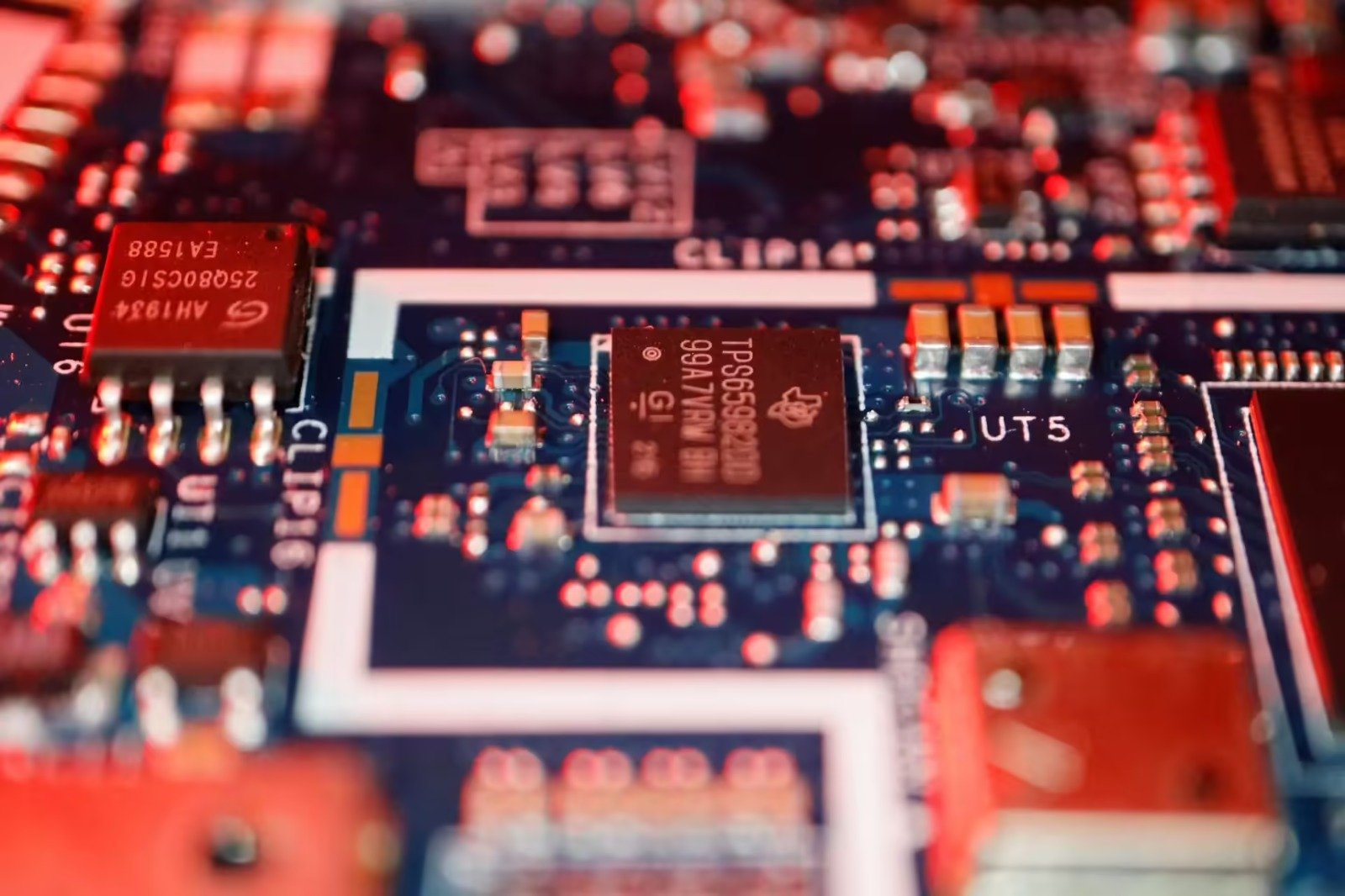
Samsung is significantly expanding its semiconductor manufacturing capacity as the global race to build artificial intelligence (AI) infrastructure accelerates. Alongside SK hynix and Micron Technology, the South Korean technology giant is investing heavily in new fabrication plants, advanced packaging facilities and manufacturing equipment to meet the soaring demand for high-bandwidth memory (HBM) chips that power AI servers. As companies worldwide continue investing billions of dollars in generative AI, cloud computing and high-performance data centres, memory chip manufacturers are facing unprecedented demand that continues to outpace available supply.
Industry experts believe the current AI boom has fundamentally changed the semiconductor market. Rather than responding to temporary demand cycles, leading manufacturers are now preparing for sustained long-term growth as governments, cloud service providers and technology companies continue expanding AI infrastructure.
According to data cited from World Semiconductor Trade Statistics (WSTS), the global semiconductor market is expected to grow by nearly 90 percent this year, reaching an estimated value of approximately USD 1.51 trillion. Even more remarkable is the projected growth of the memory semiconductor segment, which is forecast to increase by around 250 percent to nearly USD 803.9 billion. These figures underline why Samsung and its competitors are accelerating capacity expansion despite the enormous costs involved.
Table of Contents
Samsung Strengthens Manufacturing Network
Samsung has placed semiconductor manufacturing at the centre of its long-term business strategy.
To prepare for future AI demand, Samsung is expanding production through multiple large-scale projects across South Korea. These include new manufacturing facilities in Pyeongtaek and Yongin in Gyeonggi Province, along with the continued development of its integrated semiconductor cluster in Gwangju, South Jeolla Province.
These facilities are designed to increase production of advanced memory chips while improving manufacturing efficiency and supporting next-generation semiconductor technologies.
Unlike conventional expansion projects, Samsung is simultaneously investing in fabrication capacity, advanced packaging technologies and production equipment. This integrated approach allows the company to shorten production timelines while improving overall chip performance.
Industry analysts believe these investments will help Samsung maintain its position among the world’s largest semiconductor manufacturers as AI demand continues rising over the coming years.

Why AI Is Driving Extraordinary Chip Demand
Artificial intelligence systems require enormous computing power to process vast amounts of information.
Unlike traditional software applications, modern AI models perform billions or even trillions of calculations while training and responding to user requests. These complex workloads depend heavily on specialised processors and extremely fast memory systems.
This is where high-bandwidth memory becomes essential.
HBM chips provide significantly higher data transfer speeds than conventional memory while consuming less power. They allow AI processors to access information much faster, improving the performance of large language models, recommendation systems, autonomous technologies and scientific computing.
As technology companies continue deploying larger AI models, demand for HBM has increased dramatically.
Samsung has become one of the leading manufacturers competing to supply these advanced memory chips to global customers developing AI infrastructure.
Memory Market Enters Historic Growth Phase
The semiconductor industry has experienced cycles of rapid growth before, but analysts believe the current expansion is different.
Traditionally, memory demand fluctuated with smartphone sales, personal computers and consumer electronics.
Today, AI data centres have become one of the primary drivers of semiconductor demand.
Every new AI server requires multiple high-performance memory modules capable of processing enormous volumes of information in real time.
Because global cloud providers continue expanding AI services, memory manufacturers such as Samsung are receiving orders that extend years into the future.
The forecast of the memory market growing to more than USD 800 billion demonstrates how AI has reshaped industry priorities.
Rather than waiting for demand to stabilise, manufacturers are increasing production capacity now to avoid future shortages.

Samsung Faces Strong Competition
Although Samsung remains one of the industry’s largest players, competition has intensified.
SK hynix has announced plans to significantly expand its manufacturing capabilities after raising approximately USD 26.5 billion through its Nasdaq listing.
The company intends to increase wafer production while strengthening advanced chip packaging, another critical component of AI semiconductor manufacturing.
Following the successful listing, SK Group Chairman Chey Tae-won revealed that customer demand is already exceeding previous production expansion targets.
According to him, even the company’s earlier plan to double manufacturing capacity within five years may not be sufficient to satisfy future orders.
Meanwhile, Micron Technology is also investing aggressively.
The American semiconductor manufacturer plans to invest more than USD 250 billion in the United States by 2035.
Its strategy includes constructing new memory fabrication plants in New York and Idaho while expanding existing manufacturing facilities in Virginia.
These investments align with broader efforts to strengthen domestic semiconductor production within the United States.

Supply Continues to Lag Behind Demand
One of the biggest challenges facing Samsung and the wider semiconductor industry is that expanding production capacity takes considerable time.
Building a modern semiconductor fabrication plant can require investments worth tens of billions of dollars and several years of construction before production begins.
Even after facilities become operational, companies must install highly specialised equipment, calibrate manufacturing processes and maintain extremely high quality standards.
As a result, increasing supply cannot happen overnight.
Industry experts therefore expect shortages of high-bandwidth memory and advanced DRAM chips to continue despite ongoing investments.
This supply imbalance is expected to support strong demand for manufacturers capable of delivering reliable production volumes.
Advanced Packaging Becomes Increasingly Important
Modern AI chips involve far more than simply manufacturing silicon wafers.
Advanced packaging has become equally important because it determines how processors and memory chips communicate with one another.
Efficient packaging allows faster data movement, lower energy consumption and improved overall system performance.
Recognising this trend, Samsung is investing heavily in packaging technologies alongside traditional chip manufacturing.
Competitors are following a similar strategy, making packaging one of the fastest-growing segments within the semiconductor industry.
Experts increasingly view advanced packaging as a competitive advantage rather than merely a manufacturing process.
Industry Outlook Remains Positive
Although some market observers have questioned whether the AI boom could eventually slow, many semiconductor analysts remain optimistic.
The Korea Herald report notes that industry executives expect supplies of high-bandwidth memory and conventional DRAM to remain constrained for years.
Rather than focusing only on short-term pricing, investors are now evaluating how quickly companies like Samsung can expand manufacturing capacity.
Analysts argue that production capability has become the most valuable competitive advantage.
Park Seung-young, Head of Portfolio Strategy at Hanwha Investment & Securities, summarized this changing market dynamic by stating that supply has become more important than demand in commodity memory markets.
According to him, the industry’s future will depend largely on how rapidly manufacturers can build new production capacity.
AI Infrastructure Continues to Reshape the Semiconductor Industry
The rapid expansion of AI infrastructure has transformed the semiconductor industry into one of the world’s fastest-growing technology sectors.
Every new AI application—from intelligent search engines and virtual assistants to autonomous vehicles and scientific research—requires increasingly powerful computing systems supported by advanced memory chips.
This structural shift explains why Samsung continues investing aggressively despite the enormous financial commitments involved.
As governments, cloud service providers and technology companies race to expand AI capabilities, demand for advanced memory solutions is expected to remain exceptionally strong.
With new manufacturing projects underway, strategic investments in advanced packaging and continued focus on high-bandwidth memory, Samsung is positioning itself to play a central role in meeting the next generation of global AI computing requirements while navigating one of the most significant periods of transformation the semiconductor industry has ever experienced.