The spiritual journey of Shri Premanand Ji Maharaj is often described through his satsangs, teachings and devotion to Shri Radha Rani. But behind the widely recognised saint of Vrindavan is a journey that began much earlier—with a spiritually inclined childhood, questions about the meaning of worldly life, years of intense spiritual practice and, eventually, a deep connection with the Radha-Vallabh tradition.
To understand why Radha Rani occupies such a central place in Premanand Maharaj Ji’s spiritual expression, it is important to look beyond viral clips and social-media quotations. Available biographical accounts from the Shri Hit Radha Keli Kunj tradition and other published sources describe a life shaped by bhakti, vairagya, naam-smaran and satsang.
At the same time, some stories about saints circulate in devotional communities without independent historical verification. A responsible account therefore needs to distinguish between documented biographical information, accounts published by organisations associated with Premanand ji Maharaj , and devotional narratives shared by followers.
Table of Contents
A Childhood Surrounded by Devotion
Premanand Ji Maharaj was born as Aniruddh Kumar Pandey in Akhri village in the Sarsol area of Kanpur, Uttar Pradesh. Accounts published by Shri Hit Radha Keli Kunj describe his family as deeply religious. His grandfather was a sannyasi, his father Shri Shambhu Pandey was devoted to spirituality and later accepted sannyasa, while his mother, Smt. Rama Devi, was known for her reverence towards saints and devotional service. His elder brother’s recitation of the Shrimad Bhagavatam also contributed to the spiritual atmosphere of the household.
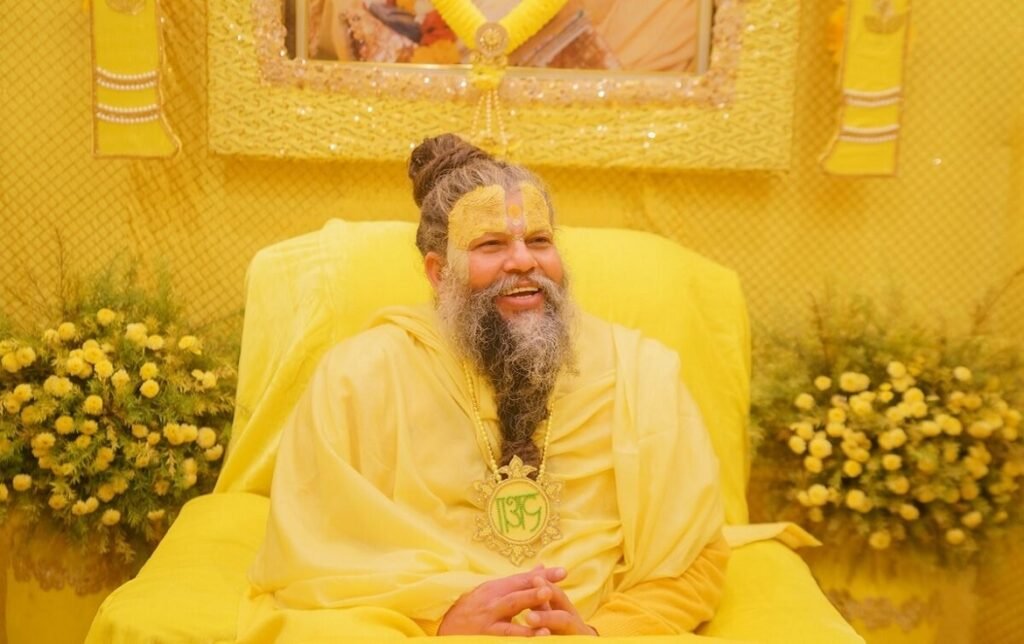
This childhood environment is important because Premanand Ji Maharaj later devotion did not emerge in isolation. According to accounts of his early life, religious discussion, scripture and service to saints were already familiar parts of his surroundings.
For young Aniruddh, however, spirituality gradually became more than a family tradition.
He began thinking about questions that were unusual for a child: What is permanent in life? Why do people become attached to temporary things? What is the true purpose of human existence?
These questions would eventually become central to the direction of his life.
The Young Boy Who Began Searching for Truth
Published accounts differ somewhat in their presentation of the exact chronology of his early renunciation, so claims about individual childhood incidents should be treated carefully. The biography published by Shri Hit Radha Keli Kunj describes a strong spiritual inclination developing at an early age and his eventual decision to leave worldly life while still very young.
Other accounts report that he left home at around the age of 13 and began his spiritual search.
The significance of this episode is not simply that a teenager chose a religious life. It illustrates the intensity of the spiritual questions that, according to these accounts, had begun troubling his mind.
His journey was not presented as an escape into comfort. It involved austerity, uncertainty and searching.
From Kanpur to Kashi: The Years of Shiva Bhakti
Before becoming closely associated with Radha Rani and Vrindavan, Premanand Ji Maharaj’s spiritual journey is described as having an important phase in Varanasi, the ancient city of Lord Shiva.
According to published biographical accounts, he spent time on the banks of the Ganga and engaged in spiritual practices and worship of Shiva. NDTV’s account of his life describes his association with Tulsi Ghat and a period of intense spiritual discipline in Varanasi.
This chapter matters because his later devotion to Radha-Krishna should not be understood as something that suddenly appeared without a spiritual background.
His path moved through different forms of devotion.
In Varanasi, he encountered devotional performances connected with Krishna’s Chaitanya tradition and Rasa Leela. According to biographical accounts, these experiences deeply affected him and awakened an intense attraction towards the devotional world of Radha and Krishna.
That attraction eventually drew him towards Vrindavan.
The Call of Vrindavan
For devotees, Vrindavan is not merely a geographical location. It is regarded as the sacred land associated with the childhood and divine pastimes of Shri Krishna and, especially within many Vaishnava traditions, the loving devotion of Shri Radha.
For Premanand Ji Maharaj, the move to Vrindavan became a decisive turning point.
Accounts describe him walking through the sacred town, visiting temples and engaging in spiritual practice. One published account says that his early encounters included the Banke Bihari Temple and subsequently the Radha Vallabh Temple.
It was in this spiritual environment that his connection with the Radha-Vallabh tradition became increasingly significant.
Why Radha Rani Became the Centre of His Devotion
The deepest part of Premanand Ji Maharaj’s devotional message is not simply the repetition of Radha’s name. It is the idea that prem, or divine love, represents a higher spiritual relationship than worldly attachment.
In the Radha-Vallabh tradition, Shri Radha holds an exceptionally central place in devotional theology. The devotee’s spiritual goal is understood through loving service and surrender rather than merely seeking material benefits.
This helps explain why Premanand Ji Maharaj public teachings so frequently return to Radha Naam, प्रेम, सेवा, विनम्रता and surrender.
For him, devotion is not merely an emotional moment inside a temple. It is supposed to influence how a person lives.
The value of chanting Radha’s name, in this devotional understanding, lies in repeatedly bringing the mind back towards the divine.
The Importance of the Radha Vallabh Tradition
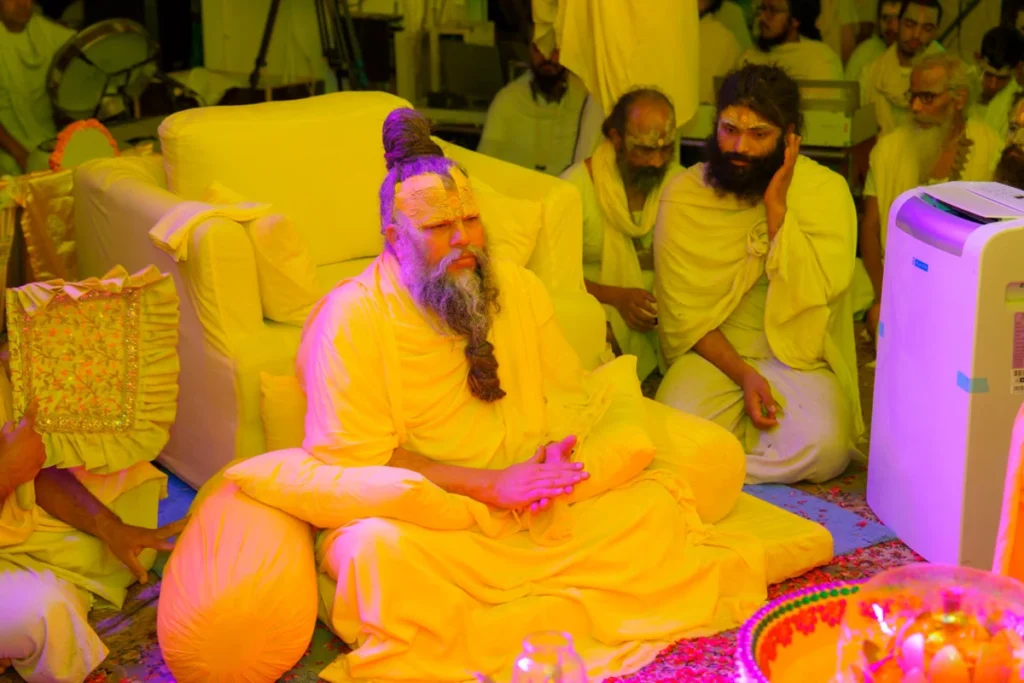
Premanand Ji Maharaj is associated with the Radhavallabh tradition of Vrindavan, and the Shri Hit Radha Keli Kunj ashram describes his spiritual life in that context.
One published account describes an important encounter with Shri Hit Mohit Maral Goswami Ji and a verse from Shri Radha Ras Sudha Nidhi. According to that account, Premanand Ji Maharaj encountered difficulty understanding the deeper devotional meaning of the verse and was encouraged to chant the name of Shri Harivansh. The account says that the name subsequently became part of his spiritual practice.
This episode is significant in understanding the transition described in accounts of his life—from a young ascetic searching for spiritual truth to a practitioner deeply connected with the Radha-Vallabh devotional tradition.
Radha Naam: More Than a Word
For Premanand Ji Maharaj followers, the repeated chanting of “Radha” is not simply a religious slogan.
Naam-smaran—the remembrance and repetition of a divine name—is an ancient practice found across several Indian devotional traditions.
In the devotional worldview associated with Premanand Ji Maharaj, remembering Radha is connected with remembering divine love itself.
That is why his satsangs often place less emphasis on acquiring material possessions and more emphasis on controlling the mind, reducing ego, maintaining purity of intention and cultivating devotion.
His message can be understood through a simple spiritual progression:
Remember the divine → control the mind → reduce attachment → cultivate love → serve with humility.
The Emotional Dimension of His Devotion
What makes Premanand Ji Maharaj’s talks emotionally powerful for many listeners is the way he speaks about devotion.
Rather than presenting spirituality only as philosophy, his message often treats bhakti as a relationship of the heart.
In this devotional perspective, Radha Rani is not approached merely as a figure from a story. She is approached through श्रद्धा, प्रेम और शरणागति.
That emotional vocabulary is central to understanding why devotees connect so strongly with his satsangs.
His teachings frequently encourage people to move away from ego-driven relationships with the world and towards a more selfless understanding of love.
His Life in Vrindavan Today
Today, Shri Hit Radha Keli Kunj in Vrindavan has become closely associated with Premanand Ji Maharaj’s satsangs and spiritual activities. Published reports describe a large number of devotees gathering around the ashram and along his early-morning walking route.
His routine and public interactions have consequently become a significant part of his contemporary spiritual following.
Reports have also described devotees arriving early for darshan and spiritual conversations, reflecting the enormous interest surrounding his teachings.
Yet the central message remains remarkably simple: bhakti should change the heart.
Why His Story Resonates With Young People
One reason Premanand Ji Maharaj story has attracted attention beyond traditional religious audiences is the accessibility of his language.
He frequently discusses subjects that young people encounter every day—relationships, anger, attachment, anxiety, ambition, disappointment and the pressure to succeed.
His answer is usually spiritual rather than materialistic: develop discipline, control the mind, fulfil one’s responsibilities and remember the divine.
This combination of traditional devotion and everyday language has helped his teachings reach a much wider audience.
Radha Rani in the Broader Bhakti Tradition
The emotional devotion to Radha expressed in Premanand Ji Maharaj teachings belongs to a much larger history of Radha-Krishna bhakti.
Across centuries, poets and saints have expressed devotion to Radha and Krishna through poetry, music, kirtan and sacred literature.
The tradition emphasises different dimensions of divine love, including longing, surrender, service and remembrance.
The Bhagavata Purana, later Vaishnava devotional traditions and the poetry of figures such as Chaitanya-associated traditions contributed to the broader cultural landscape in which Radha-Krishna devotion flourished.
Vrindavan subsequently became one of the most important centres of this devotional culture.
Premanand Ji Maharaj’s spiritual identity therefore exists within a much older devotional ecosystem rather than outside it.
Devotion Without Turning Faith Into a Claim of Miracle
When writing about a living spiritual figure, there is an important distinction between faith and verifiable fact.
Devotees may describe experiences as blessings, divine signs or miracles. Those experiences can be deeply meaningful to the people who have them, but they should not automatically be presented as independently established facts.
Similarly, stories about Premanand Ji Maharaj’s childhood or spiritual experiences should be attributed to the biographical or devotional sources in which they appear.
This distinction does not diminish the spiritual importance of the story. Instead, it allows readers to understand both the devotional perspective and the limits of historical verification.
The Heart of His Message: Prem Over Possession
Perhaps the most meaningful way to understand Premanand Ji Maharaj’s devotion to Radha Rani is through the word prem itself.
The spiritual love he speaks about is different from ordinary attachment.
Worldly attachment often comes with expectations: What will I receive? What will this relationship give me?
Bhakti asks a different question:
What can I give? How can I serve? How can I remember the divine even when life does not go according to my wishes?
This is why his teachings repeatedly return to surrender, service and remembrance.
In that sense, Radha Rani represents for devotees not simply an object of worship, but an ideal of divine love and selfless devotion.
A Journey That Began With Questions
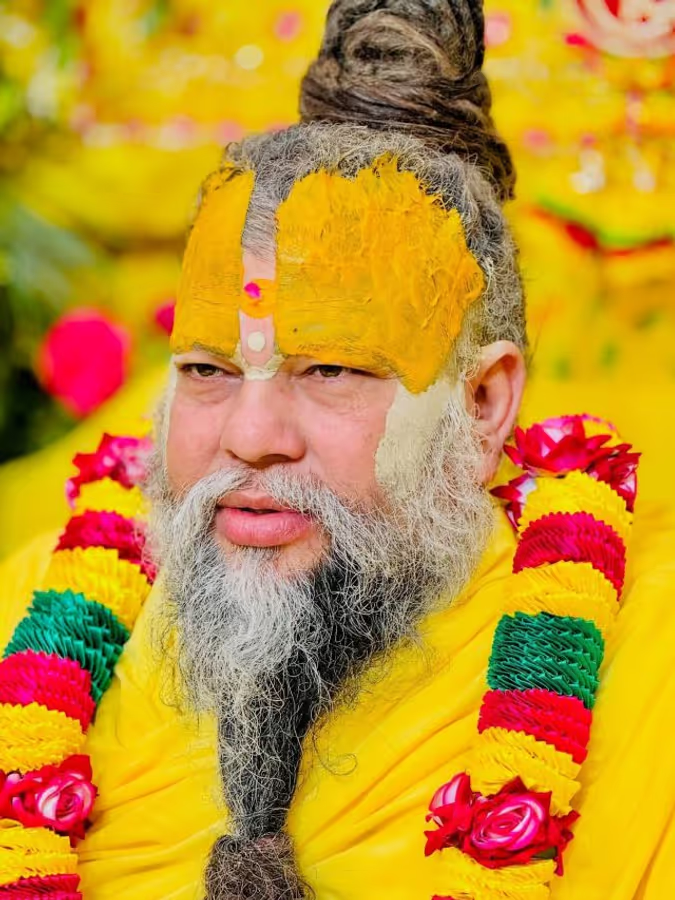
The story of Premanand Ji Maharaj can ultimately be understood as a journey through questions.
A child from a devotional household began questioning the temporary nature of worldly life. A young seeker turned towards renunciation. His spiritual search took him to Varanasi and the path of Shiva bhakti. Encounters with Krishna’s devotional tradition drew him towards Vrindavan. There, his life became increasingly associated with Radha-Vallabh bhakti and Radha Naam.
For his followers, the destination of that journey is not fame.
It is Radha.
Not merely Radha as a name to be spoken, but Radha as the centre of प्रेम, surrender and devotion.
And perhaps that is why his message continues to resonate so strongly: beneath the crowds, viral videos and modern attention surrounding his satsangs lies an ancient spiritual idea—that when worldly achievements feel temporary, the human heart begins searching for something it believes is eternal.