India has delivered a stronger-than-expected economic performance despite a turbulent global backdrop, with real GDP growing 7.8% year-on-year in the April-June quarter of FY2026-27. The figure exceeded the Reserve Bank of India’s 7% forecast and economists’ expectations of around 7.1%.
PM Modi welcomed the numbers, describing the performance as a reflection of the determination and collective effort of Indians. He also pointed to the difficult international environment, including wars, disrupted supply chains and continuing economic uncertainty.
But what explains India’s ability to maintain such rapid growth when the global economy is facing geopolitical tensions, elevated energy costs and trade uncertainty?
The answer lies in a combination of strong domestic consumption, higher investment, manufacturing momentum, resilient services activity and continued infrastructure spending.
India Records 7.8% GDP Growth in First Quarter
According to the latest official figures, India’s real GDP expanded 7.8% during April-June 2026 compared with the same quarter a year earlier. While this was slightly below the revised 8.6% growth recorded in the preceding quarter, it comfortably exceeded expectations.
 The result is particularly significant because the quarter coincided with considerable international uncertainty. The conflict in West Asia created concerns about energy supplies and crude oil prices, while disruptions to global trade and supply chains added further pressure.
The Reserve Bank of India had projected 7% growth for the quarter. The actual number therefore represented a substantial upside surprise.
The latest performance also reinforces India’s position among the fastest-growing major economies.
PM Modi Celebrates India’s Economic Resilience
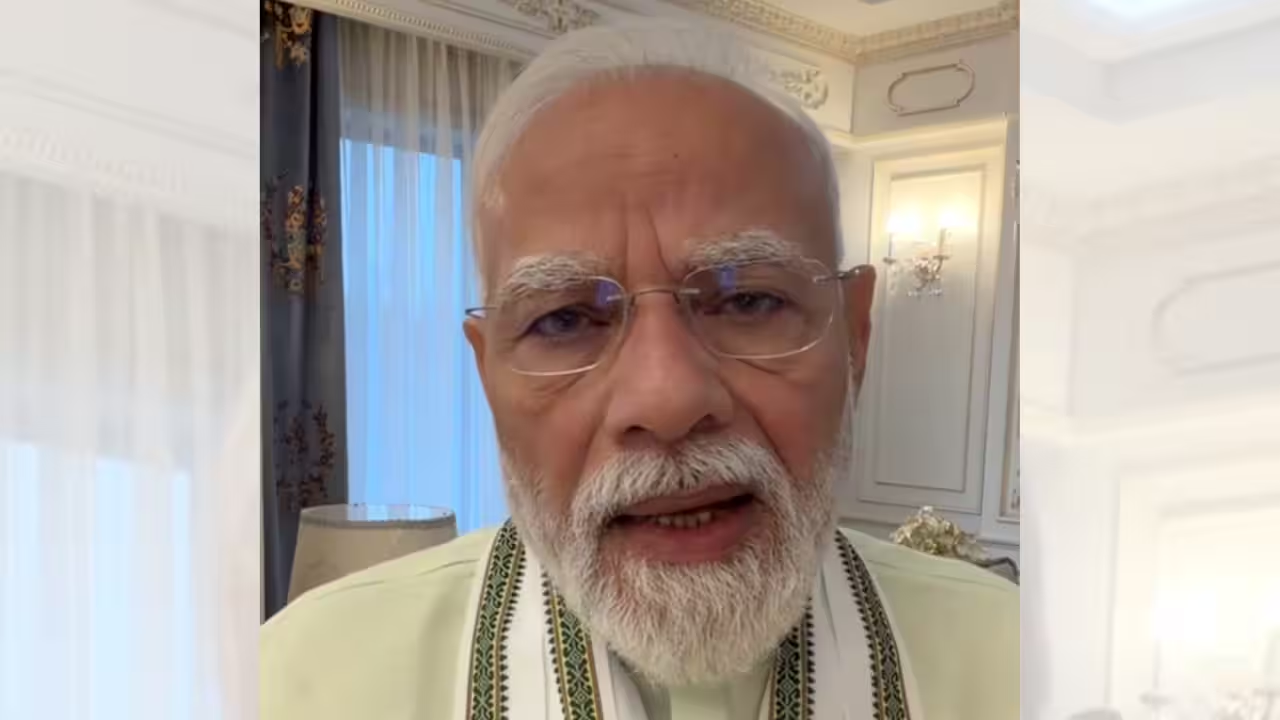
PM Modi responded to the GDP figures by congratulating Indians and highlighting the country’s resilience.
In a video message, he argued that the growth figure was particularly notable because the global environment remains unstable. He referred to wars, disrupted supply chains and the lack of economic stability since the Covid-19 pandemic.
The Prime Minister attributed the performance to the determination and hard work of the country’s citizens. PM Modi also stressed the importance of maintaining the momentum and strengthening India’s economic self-reliance.
The government has continued to emphasise measures aimed at strengthening domestic production, improving infrastructure and encouraging investment. PM Modi has also repeatedly linked economic resilience with stronger domestic capabilities and wider participation in India’s growth story.
So, How Did India Achieve 7.8% Growth?
The headline number becomes more understandable when the individual components of the economy are examined.
Several sectors contributed to the performance, but manufacturing, services, consumption and investment were particularly important.
1. Manufacturing Gains Provide a Major Boost
Manufacturing was one of the strongest contributors to India’s economic expansion.
The sector grew 9.2% during April-June, compared with 8.3% in the corresponding period a year earlier.
The manufacturing recovery is important because it has implications beyond the factory floor. Stronger industrial production can generate demand for transportation, logistics, raw materials, financial services and other supporting industries.
It also fits into India’s broader effort to strengthen domestic production and develop itself as an alternative manufacturing destination amid changes in global supply chains.
The manufacturing performance supports the wider economic strategy promoted by PM Modi, which places considerable emphasis on domestic production, industrial expansion and reducing excessive dependence on imports.
2. Services Continue to Drive the Economy
India’s services sector remained another major pillar of growth.
The broader tertiary sector expanded by around 10% during the quarter, while the financial, real estate, information technology and professional services segment grew by 12.1%.
Services have become central to India’s economic structure over the past several decades. Information technology, financial services, professional services, communications and other knowledge-intensive industries contribute significantly to output and exports.
The continued strength of these sectors helped offset some of the pressures created by global uncertainty.
For PM Modi, the performance also reinforces the importance of maintaining India’s competitiveness in technology, digital services and other high-value sectors.
3. Private Investment Is Making a Comeback
One of the more encouraging aspects of the latest data is the improvement in private investment.
Private investment growth accelerated sharply during the quarter, with investment rising 11.9% and gross fixed capital formation increasing to 34.3% of GDP, compared with 31.4% a year earlier.
This matters because sustained economic expansion requires businesses to invest in factories, technology, machinery, infrastructure and capacity.
A stronger private investment cycle can potentially make economic growth less dependent on government expenditure and household consumption alone.
The improvement is particularly relevant to PM Modi’s economic vision because sustained private-sector participation is essential for creating productive capacity and supporting long-term employment.
4. Domestic Consumption Remains a Key Strength
India’s large domestic market provides an important cushion when international demand becomes uncertain.
Consumer spending remained resilient during the quarter. Income and tax-related measures have also been cited among factors supporting household demand.
Unlike smaller economies that depend heavily on exports, India has a huge internal market. When households continue purchasing goods and services, businesses can maintain production even when overseas markets face disruptions.
This domestic demand has become particularly valuable during periods of geopolitical uncertainty.
The resilience of consumption provides an important foundation for the economic strategy supported by PM Modi, particularly at a time when several major economies are dealing with weaker external demand.
5. Strong Credit Growth Supports Economic Activity
Another factor behind the stronger performance was the expansion of bank credit.
Lending across sectors increased at a strong pace, supporting business activity and household spending.
Credit availability matters because businesses often depend on financing to expand production, purchase equipment and build new facilities. Consumers also use credit for housing, vehicles and other major purchases.
A healthier banking system and stronger credit demand can therefore amplify economic activity.
The improvement in credit conditions can support the investment cycle that PM Modi and policymakers want to see develop into a broader and more sustainable source of economic expansion.
6. Infrastructure Spending Continues to Support Growth
Government infrastructure spending has remained an important part of India’s economic strategy.
Large investments in roads, railways, ports, airports, power infrastructure and digital connectivity generate demand across several industries while improving the country’s long-term productive capacity.
The latest growth data indicate that public investment has continued to provide support even as private investment begins to strengthen.
This combination is important. Government infrastructure spending can create an environment in which private companies become more willing to invest.
The infrastructure push has remained one of the central pillars of the development agenda associated with PM Modi, particularly as India seeks to improve logistics, connectivity and industrial competitiveness.
India Grew Despite the West Asia Conflict
One of the most striking aspects of the 7.8% figure is the timing.
The quarter unfolded against the backdrop of the West Asia conflict, which created concerns about oil supplies and transportation routes.
India remains heavily dependent on imported crude oil. Higher international oil prices can increase the cost of transportation, manufacturing and other economic activities.
The conflict also created uncertainty around global supply chains.
Yet India’s economy continued to expand rapidly. The performance has therefore been interpreted by several economists as evidence of considerable domestic resilience.
For PM Modi, the strong numbers provide an opportunity to underline the importance of economic stability and domestic strength while the international environment remains uncertain.
Energy Prices Remain a Major Risk
The strong GDP number does not mean that India’s economic outlook is free from challenges.
Energy prices remain one of the biggest risks.
India imports a large proportion of its crude oil requirements. A sustained rise in international oil prices could increase India’s import bill and put pressure on inflation.
Higher fuel costs can also feed into transportation and production expenses, potentially affecting businesses and consumers.
The continuing geopolitical uncertainty therefore remains an important factor that policymakers will need to monitor.
The challenge for PM Modi and the broader economic policy team is to protect growth while managing the potential impact of external shocks on households and businesses.
Inflation Could Complicate the Growth Story
Inflation is another concern.
Recent data have shown renewed price pressures, with the impact of higher energy costs potentially feeding into the broader economy. Inflation reaching above the Reserve Bank’s target could create additional challenges for monetary policymakers.
If inflation rises substantially, households could face higher living costs while businesses could experience increased input expenses.
The Reserve Bank of India therefore faces the difficult task of balancing economic growth with price stability.
For PM Modi, maintaining strong growth will ultimately require a balance between expansion, affordability and macroeconomic stability.
The Growth Rate Is Strong, But Challenges Remain
The 7.8% quarterly growth figure is undoubtedly impressive, but economists have also pointed to areas that require attention.
Private investment is improving, but the recovery needs to remain broad-based. Manufacturing must continue creating productive capacity, while the services sector needs to maintain international competitiveness.
Employment is another important issue.
Fast GDP growth does not automatically translate into equally rapid job creation. The quality and distribution of economic growth matter as much as the headline percentage.
For India to achieve its longer-term development ambitions, economic expansion will need to generate opportunities for a large and young workforce.
This remains a central challenge as PM Modi seeks to translate India’s strong macroeconomic performance into wider gains for households, workers and businesses.
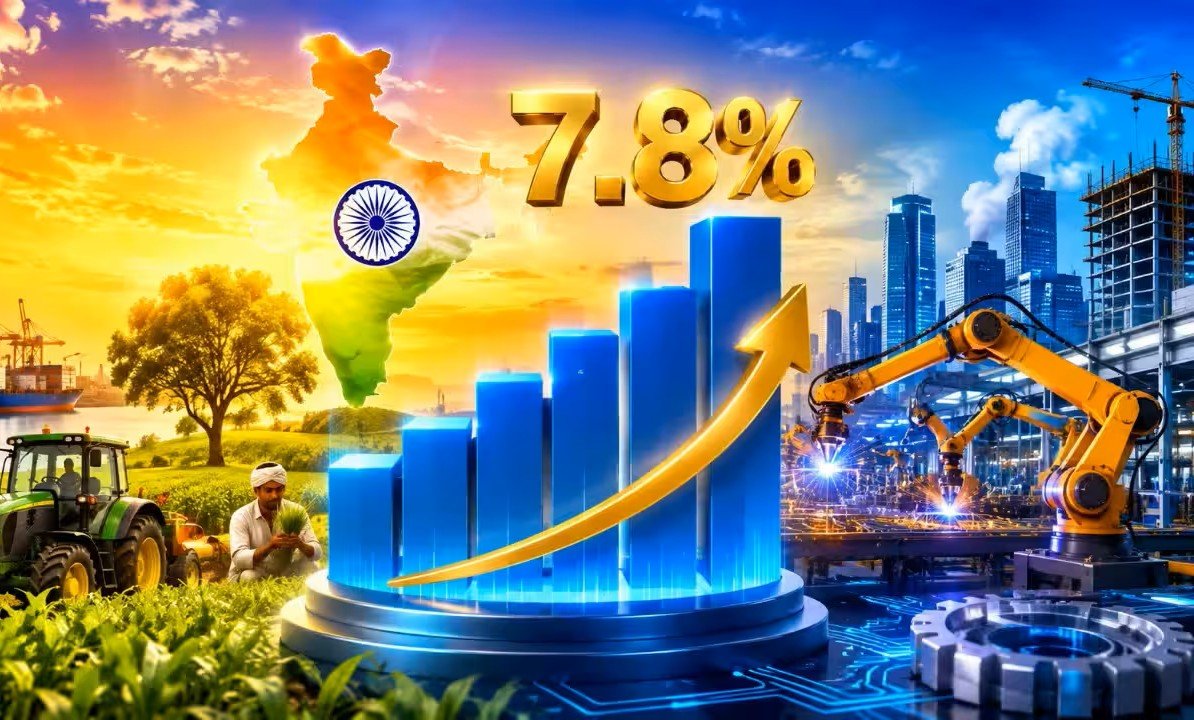 Why the 7.8% Number Matters for India
The latest GDP performance has several implications.
First, it strengthens confidence in the resilience of India’s economy.
Second, it suggests that domestic demand remains capable of supporting growth even when international conditions deteriorate.
Third, the increase in private investment offers the possibility of a broader economic expansion.
Finally, strong manufacturing and services growth could help India strengthen its position in global supply chains.
Technology, artificial intelligence, semiconductors and defence are also increasingly contributing to the country’s investment story.
These trends complement the economic priorities repeatedly highlighted by PM Modi, particularly around technology, manufacturing, infrastructure and strategic industries.
PM Modi’s Self-Reliance Push
Alongside celebrating the GDP figures, PM Modi has renewed his call for greater economic self-reliance.
The Prime Minister has encouraged Indians to prioritise domestic products and reduce certain forms of overseas spending. The broader message is that stronger domestic demand should translate into greater opportunities for Indian businesses.
This approach is connected to the government’s larger Atmanirbhar Bharat vision, which aims to strengthen domestic production and reduce excessive dependence on imports.
However, India’s integration with global trade remains important. The challenge is therefore to combine greater domestic manufacturing capacity with continued participation in international markets.
For PM Modi, self-reliance does not necessarily mean isolation from the global economy. Instead, the broader objective is to strengthen India’s capacity to compete internationally while developing stronger domestic supply chains.
Can India Maintain This Growth Rate?
The next question is whether the 7.8% pace can continue.
The answer will depend on several factors, including global energy prices, inflation, monsoon conditions, private investment, government spending and international trade.
The Reserve Bank has maintained a more cautious full-year growth outlook of around 6.7%, indicating that policymakers do not assume the exceptionally strong quarterly figure will automatically continue throughout the year.
Economists, however, have suggested that the latest data could lead to upgrades in their growth expectations.
For PM Modi and economic policymakers, maintaining momentum will require continued attention to inflation, investment, energy security and global trade conditions.
 A Strong Quarter, But Not the End of the Challenge
India’s 7.8% GDP growth is a significant economic achievement, particularly given the difficult global environment in which it occurred.
The numbers show that the economy is being supported by several engines rather than relying on a single source of demand. Manufacturing is expanding, services remain strong, investment is recovering and domestic consumption continues to provide stability.
At the same time, risks cannot be ignored. Oil prices, inflation, global conflicts, currency pressures and weather conditions could affect the trajectory in coming quarters.
For Prime Minister Narendra Modi and policymakers, the challenge now is not simply to celebrate the 7.8% figure but to convert this momentum into sustained, inclusive and employment-generating growth.
The latest numbers demonstrate that India’s economy has shown considerable resilience amid global turmoil. Whether that resilience can be transformed into a durable high-growth cycle will depend on how effectively the country manages its domestic challenges while navigating an increasingly uncertain global economy.
For PM Modi, the 7.8% growth figure represents both a strong economic signal and a new test: ensuring that the momentum seen in one quarter develops into a longer-term cycle of investment, productivity, employment and broader prosperity.