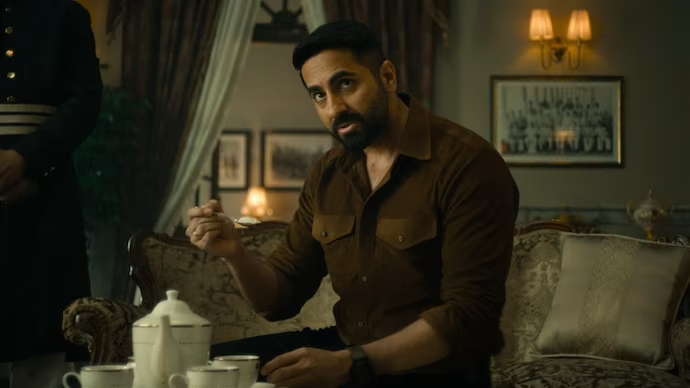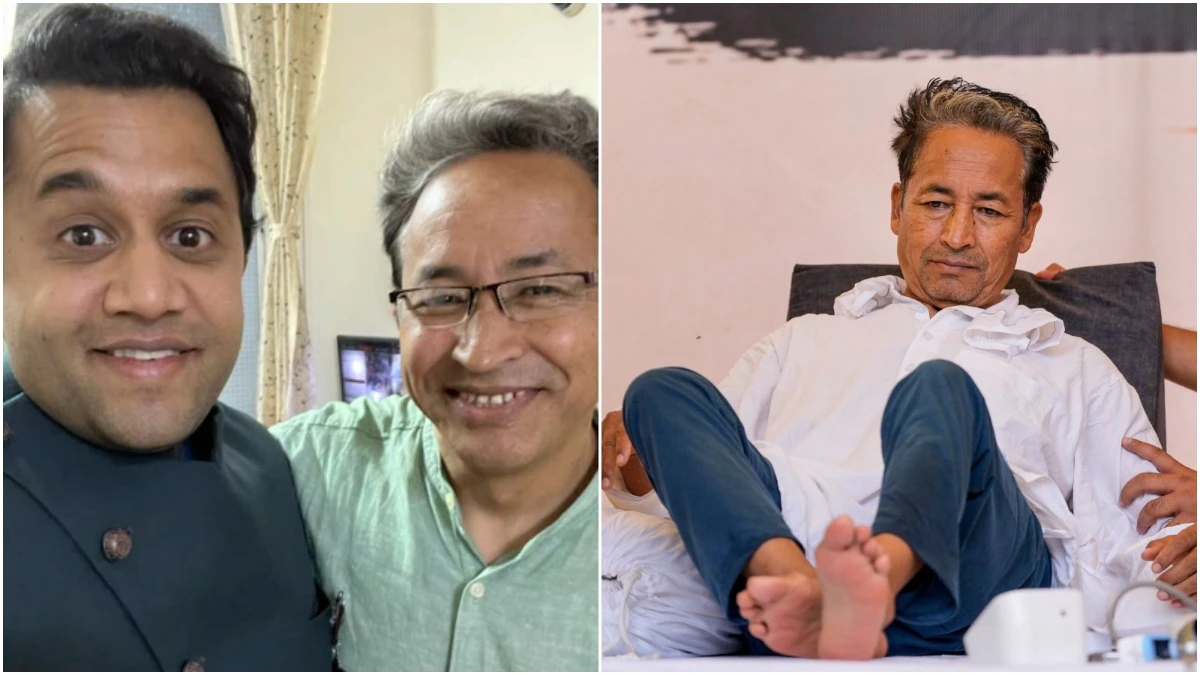
Actor Omi Vaidya, widely remembered for his iconic portrayal of Chatur Ramalingam in the blockbuster film 3 Idiots, has publicly appealed for support for renowned engineer, educator, and climate activist Sonam Wangchuk, expressing deep concern over the activist’s deteriorating health during his ongoing indefinite hunger strike at Delhi’s Jantar Mantar.
Drawing an emotional connection with millions of fans who watched 3 Idiots, Vaidya reminded the public that Aamir Khan’s beloved character Phunsukh Wangdu was inspired by the real-life achievements of Sonam Wangchuk. In a heartfelt video message shared online, the actor urged people to look beyond political differences and focus on the humanitarian aspect of the situation, warning that Wangchuk’s health has reached a critical stage after more than two weeks without food.
Table of Contents
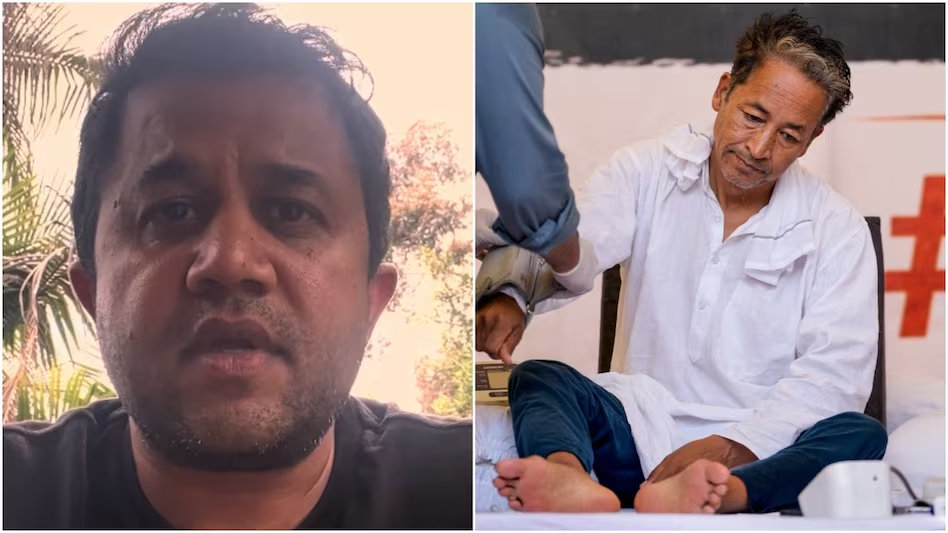
The appeal comes at a time when concerns continue to grow over Wangchuk’s medical condition. Organizers of the protest claim that he has lost nearly nine kilograms since beginning his fast and that his blood sugar levels have fallen significantly. As the hunger strike enters its sixteenth day, supporters fear that prolonged fasting could lead to severe health complications if immediate intervention does not take place.
Omi Vaidya Makes an Emotional Appeal
In his video message, Omi Vaidya introduced himself in a familiar manner that immediately resonated with fans of 3 Idiots.
Addressing viewers, he said that he rarely makes public appeals of this nature but felt compelled to speak because of the seriousness of Wangchuk’s condition. Referring to the film’s inspirational protagonist, he remarked, “I don’t want Phunsukh Wangdu to die.”
The actor intentionally used the iconic movie reference to attract public attention, believing that many people who admired the fictional character may not realize that the character was inspired by a real individual whose contributions to education, innovation, and sustainable development have been widely recognized.
Vaidya stressed that regardless of one’s political views or opinions on the ongoing protest, the health and life of Sonam Wangchuk should remain a matter of concern for everyone.
The Real Inspiration Behind Phunsukh Wangdu
For millions of cinema lovers, Phunsukh Wangdu remains one of the most memorable characters in Indian cinema. However, many viewers are unaware that the character was inspired by Sonam Wangchuk, an engineer, innovator, education reformer, and environmental advocate from Ladakh.
Over the years, Wangchuk has earned international recognition for developing sustainable technologies suited to high-altitude Himalayan regions. His innovations include low-cost educational models, climate-friendly engineering solutions, and the widely acclaimed “Ice Stupa” project, which helps store water for agricultural use in cold desert regions.
Vaidya revealed that he had personally met Wangchuk and described him as an exceptionally humble and inspiring individual.
According to the actor, Wangchuk has achieved remarkable accomplishments that extend far beyond the popular association with 3 Idiots. He encouraged people to learn more about Wangchuk’s work and understand why he has become one of India’s most respected innovators and environmental campaigners.
Omi Vaidya Raises Alarm as Hunger Strike Enters Critical Stage
Sonam Wangchuk joined the ongoing protest at Jantar Mantar on June 28, announcing that he would remain on an indefinite hunger strike until meaningful attention was given to the issues being raised.
Tuesday marked the 16th day of his fast, with protest organizers stating that his physical condition has continued to deteriorate.
According to those managing the protest, Wangchuk has lost approximately nine kilograms since beginning the hunger strike. Medical concerns have reportedly increased due to falling blood sugar levels and prolonged nutritional deprivation.
Health experts generally caution that extended fasting without medical supervision can place significant strain on multiple organs, potentially affecting cardiovascular health, muscle function, immunity, and overall metabolic stability. Continuous monitoring is often recommended during prolonged hunger strikes to reduce health risks.
Although official medical updates remain limited, supporters continue to express concern about the activist’s well-being as each passing day adds to the physical burden of the protest.
Understanding the Protest
The larger protest at Jantar Mantar began on June 20, focusing primarily on allegations of irregularities surrounding the National Eligibility cum Entrance Test (NEET) examination.
Various student organizations and civil society groups have demanded greater accountability regarding the conduct of the examination, transparency in investigations, and stronger measures to restore public confidence in the country’s competitive examination system.
After joining the protest, Sonam Wangchuk expanded the conversation by highlighting broader concerns that include education reforms, environmental protection, and issues relating to Ladakh’s governance and autonomy.
Supporters argue that his participation has brought additional national attention to these concerns, while critics continue to debate the methods being adopted during the protest.
Omi Vaidya Says Health Concerns Should Rise Above Political Differences
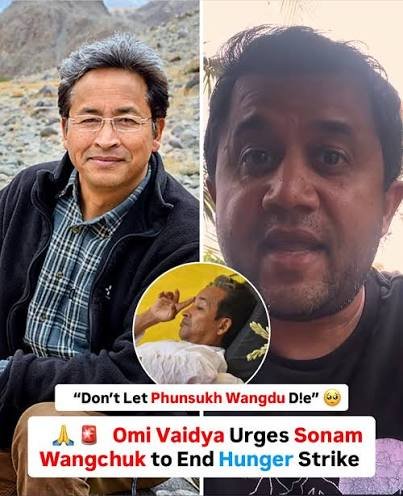
One of the central themes of Omi Vaidya’s appeal was that concern for Wangchuk’s life should rise above political disagreement.
The actor acknowledged that individuals may hold different opinions regarding the protest or its demands. However, he emphasized that the possibility of serious harm to Wangchuk’s health should not become a matter of political division.
He questioned whether sufficient public attention was being given to the activist’s condition and suggested that more awareness was needed about the risks associated with his prolonged hunger strike.
According to Vaidya, understanding the reasons behind Wangchuk’s protest is important, but protecting human life should remain the immediate priority.
Protest Organizers Continue Their Campaign
The protest is being coordinated by the Cockroach Janta Party (CJP) along with supporting organizations.
The group has continued its demonstration despite the passage of more than three weeks since the movement began.
Among its major demands are:
- Resignation of Union Education Minister Dharmendra Pradhan.
- Greater accountability regarding alleged NEET examination irregularities.
- Compensation of ₹1 crore for families of NEET aspirants who allegedly died by suicide in connection with the examination controversy.
- Broader reforms aimed at improving transparency and fairness in competitive examinations.
Organizers have also announced plans to conduct a peaceful march to Parliament on July 20, coinciding with the beginning of the Monsoon Session of Parliament.
Student organizations, activists, and several opposition leaders have expressed support for the planned march, while authorities are expected to closely monitor the situation to ensure law and order.
Sonam Wangchuk’s Contribution Beyond Activism
While current attention is focused on the hunger strike, Sonam Wangchuk’s public reputation has largely been built through decades of work in education and sustainable development.
He has consistently advocated for environmentally responsible technologies, especially in ecologically fragile Himalayan regions.
His educational initiatives have emphasized experiential learning, innovation, and practical problem-solving instead of conventional rote learning methods.
The Ice Stupa project, one of his most internationally recognized innovations, has been praised for offering a practical solution to water scarcity in mountainous regions affected by climate change.
His work has also inspired policymakers, educators, engineers, and environmental researchers around the world.
Omi Vaidya’s Appeal Sparks Growing Public Debate
Following Omi Vaidya’s appeal, the hunger strike has generated widespread discussion… across social media platforms, educational communities, and civil society organizations.
Supporters describe Wangchuk’s protest as a peaceful democratic effort intended to draw attention to important national issues.
Others have raised concerns about the physical risks associated with indefinite fasting and have urged authorities and protest leaders to explore avenues for dialogue before the situation worsens further.
Omi Vaidya’s intervention has also renewed discussions about the role of celebrities in highlighting social issues about the role of public figures in highlighting social issues. Omi Vaidya’s intervention demonstrates how influential personalities can use popular culture to draw public attention toward humanitarian concerns.
Importance of Peaceful Democratic Expression
India has a long tradition of peaceful public demonstrations and non-violent protests as methods of expressing public concerns.
Hunger strikes, while legally permitted under certain circumstances, carry serious health risks and often become symbolic acts intended to attract public and governmental attention.
Observers note that prolonged protests generally achieve more constructive outcomes when accompanied by sustained dialogue between stakeholders, transparent communication, and timely institutional responses.
The ongoing developments surrounding Sonam Wangchuk’s protest continue to be closely watched by students, educators, policymakers, and civil society organizations across the country.
What Lies Ahead After Omi Vaidya’s Appeal
As Sonam Wangchuk’s indefinite hunger strike continues, attention remains focused on both his health and the broader issues raised by the protest. Medical concerns are expected to intensify if the fast continues for an extended period, making regular monitoring increasingly important.
Meanwhile, organizers are preparing for the planned Parliament march while continuing to seek wider public support for their demands.
Omi Vaidya’s emotional appeal has added a new dimension to the movement by connecting the protest with one of Indian cinema’s most beloved characters to the movement by connecting the protest with one of Indian cinema’s most beloved characters. His message has encouraged many people to revisit Wangchuk’s real-life achievements and to understand the motivations behind his activism.
Whether the protest results in policy discussions or broader reforms remains uncertain. However, the combination of growing public attention, increasing concern over Wangchuk’s health, and continued demonstrations ensures that the issue is likely to remain in national focus in the coming days.