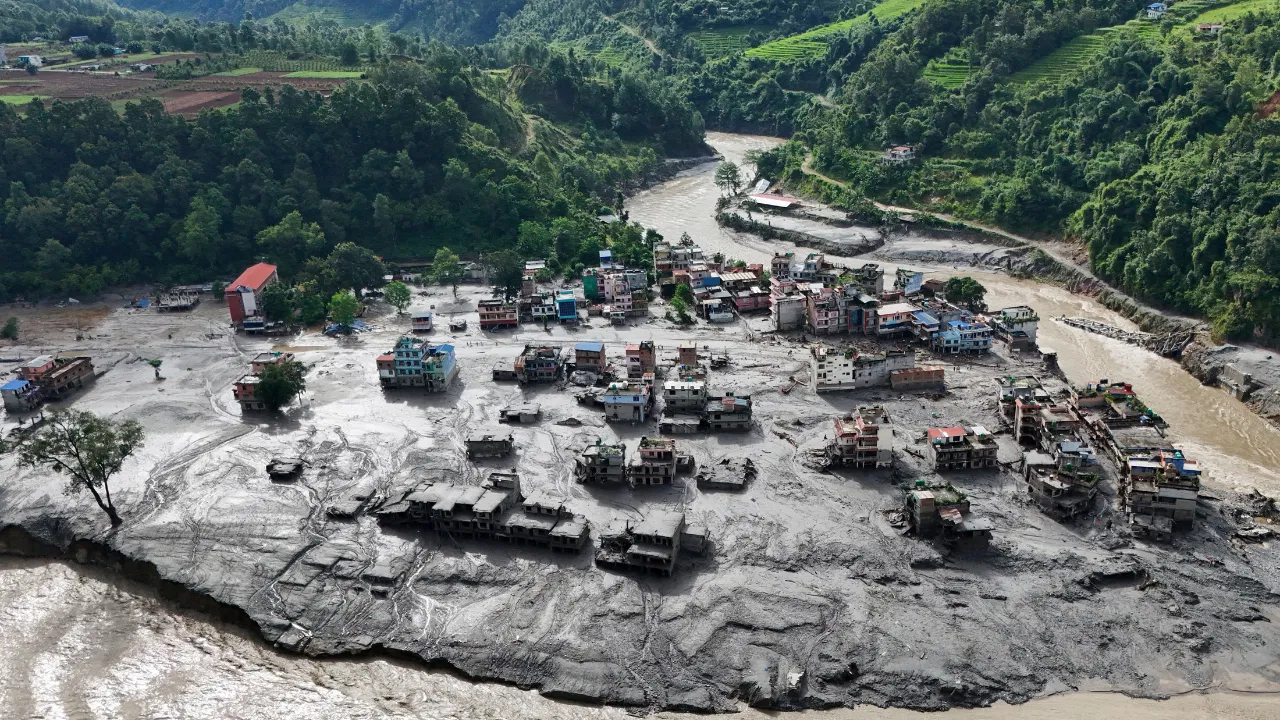
The Nepal flood disaster has renewed urgent concerns about the growing climate risks facing the Hindu Kush Himalayas, one of the world’s most environmentally sensitive mountain regions. UN climate chief Simon Stiell has warned that the catastrophe is a stark reminder of how vulnerable high-mountain ecosystems, infrastructure and communities have become as global temperatures rise.
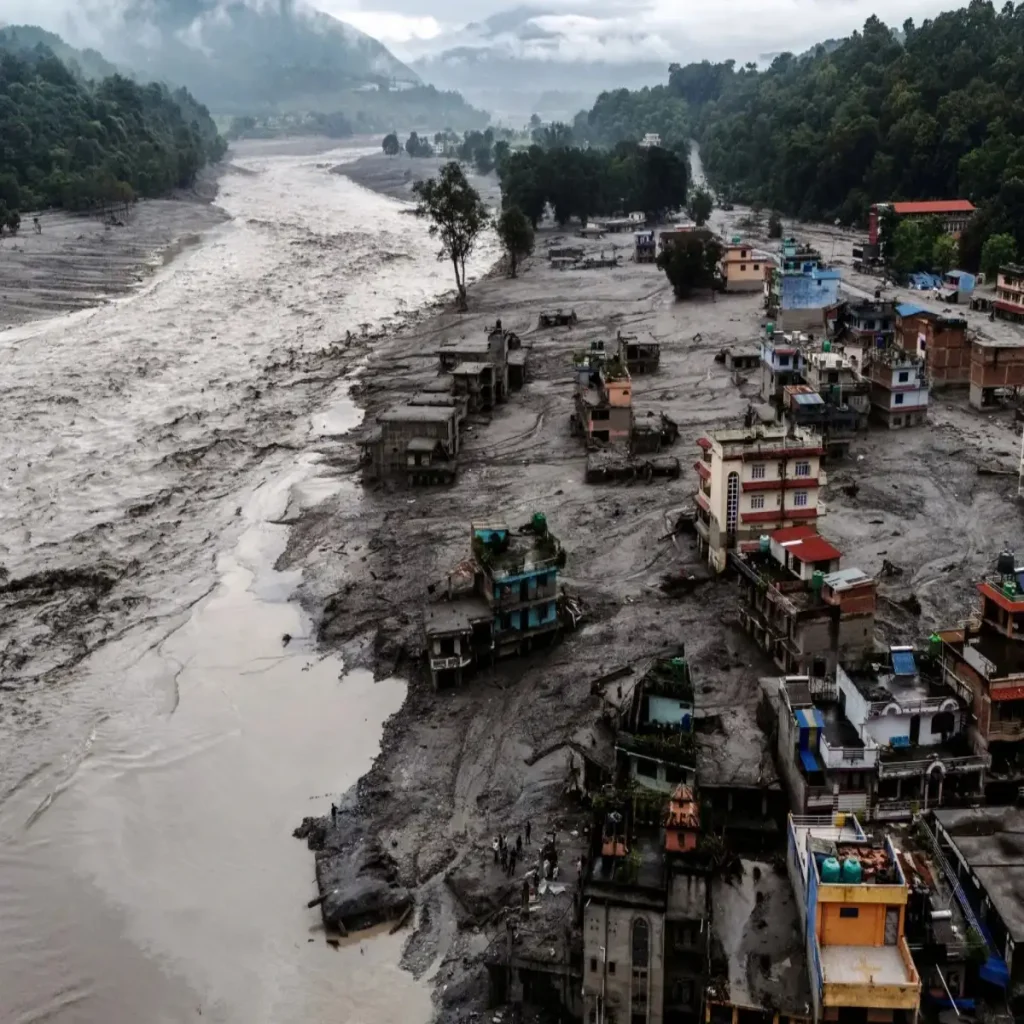
The disaster unfolded along the Nepal-China border after a glacial collapse triggered a powerful flash flood, sending water, ice, rocks and debris through mountain valleys. The scale and speed of the event left communities struggling to respond, while rescue teams continued searching for people reported missing.
Beyond the immediate humanitarian emergency, the catastrophe has highlighted a much broader concern: climate change is altering the physical environment of the Himalayas, increasing the instability of glaciers, slopes and water systems and creating new risks for communities and infrastructure.
Table of Contents
Nepal Flood Disaster Highlights Growing Himalayan Risk
The recent Nepal flood is being viewed not simply as an isolated event but as part of a wider pattern of environmental vulnerability across the Hindu Kush Himalayas.
The region contains some of the world’s largest concentrations of glaciers outside the polar regions. These glaciers feed major river systems and support hundreds of millions of people across South Asia. At the same time, warming temperatures are changing the behaviour of glaciers, snow and frozen ground.
UN climate chief Simon Stiell said the Nepal flood disaster exposed the fragility of the mountain environment and demonstrated the consequences of a warming climate. The warning came as Nepal continued to deal with the enormous human and infrastructure impact of the disaster.
The message from the UN is significant because the Hindu Kush Himalayas are not only important for the countries where the mountains are located. Their rivers provide water for populations, agriculture, hydropower and ecosystems across a much larger part of Asia.
What Triggered the Catastrophic Flood?
Initial reports indicate that the Nepal flood was triggered by a glacial and ice-rock collapse near the Nepal-China border. The resulting material entered a river system and produced an extremely powerful flash flood.
The event demonstrates why mountain hazards can be particularly difficult to predict. A sudden collapse at high altitude can rapidly transform into a destructive flood downstream, leaving little time for communities to evacuate.
The Trishuli River was reported to rise dramatically within a short period during the disaster, illustrating the extraordinary speed at which water levels can change following such an event.
Understanding the precise sequence of events remains important for scientists and authorities because the findings could help improve hazard monitoring and early-warning systems in other vulnerable Himalayan areas.
Climate Change Is Increasing Pressure on the Mountains
Scientists have repeatedly warned that rising temperatures are placing increasing stress on Himalayan glaciers and frozen landscapes.
Climate change does not mean that every individual flood or avalanche can automatically be attributed to global warming. Natural geological processes, rainfall, earthquakes, slope instability and other factors can also contribute to mountain disasters.
However, warming can change the conditions in which these events occur. Glacier retreat, melting ice, thawing frozen ground and unstable slopes can increase the potential for cascading hazards.
Nepal has already experienced significant glacier changes over recent decades as global temperatures have increased. For communities living in high-altitude valleys, these environmental changes can create risks that are difficult to assess using historical patterns alone.
The Nepal flood has therefore intensified discussions about how governments should prepare for hazards that may become more complex as mountain ecosystems change.
Hindu Kush Himalayas: Why the Region Matters
The Hindu Kush Himalayas, commonly abbreviated as HKH, stretch across a vast area of Asia and include some of the world’s highest mountains.
The region is often described as the “water tower of Asia” because its snow and glaciers contribute to major river systems. These rivers support drinking-water supplies, agriculture, hydropower and ecosystems across several countries.
The mountains are also home to communities that have developed livelihoods adapted to challenging terrain and climatic conditions.
But the same geography that makes the region important also makes it vulnerable. Steep valleys can concentrate floodwaters, while remote settlements can be difficult to reach during emergencies.
The destruction of roads and bridges can isolate communities precisely when rescue and medical assistance are most urgently needed.
The Nepal flood has demonstrated how quickly a high-altitude environmental event can become a major humanitarian and infrastructure crisis.
A Disaster With Cross-Border Consequences
The latest Nepal flood also demonstrates that Himalayan environmental risks do not stop at national boundaries.
The affected area lies close to the Nepal-China border, while rivers originating in the high mountains flow through multiple countries. A disaster in one part of the Himalayan system can therefore have consequences far beyond its immediate location.
Reports have also highlighted the importance of cooperation between Nepal and China over glacier monitoring, hydrological information and early-warning systems.
Nepal has been seeking stronger access to information about glacier movements and water levels to improve its ability to prepare for sudden hazards. This makes data-sharing an important component of regional disaster preparedness.
As climate-related risks grow, governments may need to strengthen mechanisms that allow information about rainfall, river levels, glacier conditions and potential hazards to move quickly across borders.
Early Warning Systems Could Save Lives
One of the clearest lessons from the Nepal flood is the importance of early-warning systems.
Flash floods triggered by glacial or geological events can develop extremely quickly. Even a warning issued minutes or hours in advance can potentially give communities more time to move toward safer ground.
Nepal and neighbouring countries therefore face the challenge of expanding monitoring networks in some of the world’s most difficult terrain.
Such systems can include glacier monitoring, river-level sensors, weather stations, satellite observations and communication networks.
But technology alone is not enough. Warnings must reach people quickly and in a form they understand. Communities also need evacuation plans, designated safe areas and regular preparedness exercises.
A successful early-warning system must connect scientific observation with local action. Residents need to know what a warning means, where they should go and how quickly they should respond.
Nepal’s Hydropower Sector Also Faces Major Risks
The Nepal flood has caused serious disruption to hydropower infrastructure, an important part of the country’s economy and electricity supply.
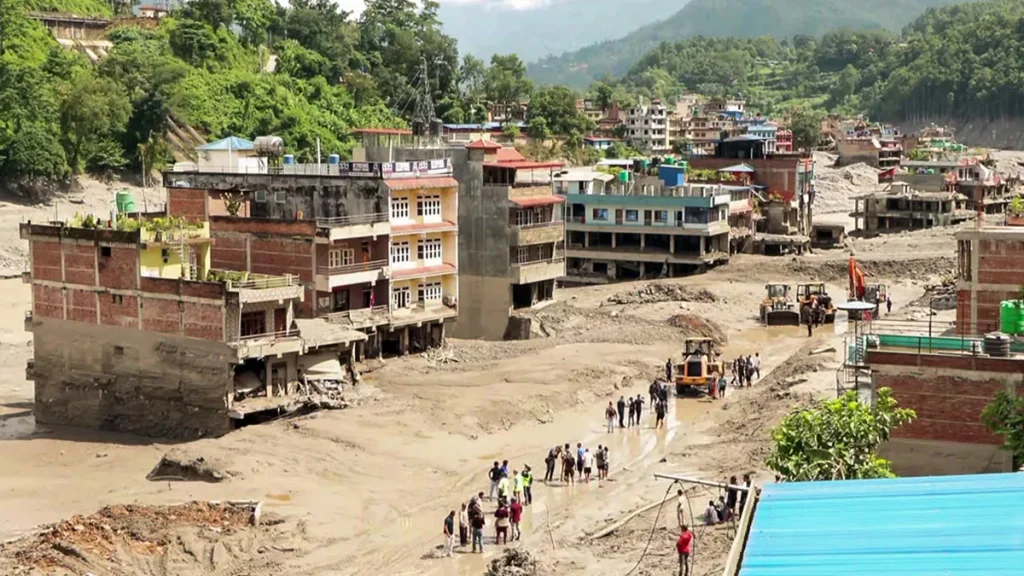
Several hydropower projects in affected areas became major rescue locations as workers were reported missing or trapped. Rescue operations involved Nepalese security forces as well as other teams working in difficult conditions.
The damage has exposed the vulnerability of energy infrastructure located in narrow Himalayan valleys.
Reports indicated that significant power-generation capacity was temporarily affected because of damage in heavily impacted areas. Experts have consequently called for greater attention to climate resilience when designing and locating infrastructure.
The challenge now extends beyond restoring damaged facilities. Authorities will also have to consider whether existing infrastructure is adequately protected against future floods, landslides and other climate-related hazards.
The Human Cost Remains the Central Concern
While climate science and infrastructure resilience are important parts of the discussion, the immediate priority remains the people affected by the Nepal flood disaster.
Rescue teams have faced difficult terrain, damaged roads and continuing risks while searching for survivors and people reported missing.
Families have been left waiting for information about relatives, while communities have lost homes, workplaces and essential infrastructure.
The disaster has also affected workers at hydropower facilities and people travelling through the mountainous region.
The humanitarian consequences are likely to continue long after floodwaters recede because rebuilding roads, bridges, homes, electricity infrastructure and other essential services will require substantial time and resources.
Why Rebuilding Must Include Climate Resilience
Experts say reconstruction after the Nepal flood provides an opportunity to rethink how infrastructure is designed in vulnerable mountain environments.
Simply rebuilding structures exactly as they existed before may leave communities exposed to similar hazards in the future.
Climate-resilient rebuilding could include stronger bridges, improved drainage, safer locations for critical facilities and better protection for electricity and communication networks.
It could also mean using multiple energy sources so that damage to one hydropower corridor does not cause such widespread disruption.
Risk assessments should also consider how different hazards can interact. A glacier-related event may trigger flooding, which can damage roads and power facilities and subsequently make emergency response more difficult.
The Role of Regional Cooperation
Because the Hindu Kush Himalayas cross several national borders, climate adaptation cannot be handled by one country alone.
Nepal, China, India, Bhutan, Pakistan, Bangladesh and other countries connected to the region’s mountain and river systems share an interest in monitoring environmental changes and preparing for disasters.
The Nepal flood has reinforced the need for cooperation involving satellite information, glacier observations, rainfall data and river-level measurements.
Regional agencies could benefit from greater access to real-time information and stronger communication networks during emergencies.
The sharing of scientific data can help countries understand risks earlier and coordinate responses more effectively.
A Warning Beyond Nepal
The UN climate chief’s warning carries significance beyond the current Nepal flood disaster.
The Hindu Kush Himalayas are experiencing environmental changes that can affect water security, agriculture, energy production and human settlements across South Asia.
The recent catastrophe shows how several hazards can interact. A change in glacier conditions can contribute to an avalanche or collapse; that event can generate a flash flood; the flood can destroy roads and bridges; and the loss of transportation infrastructure can then make rescue operations more difficult.
This kind of cascading disaster is particularly dangerous in remote mountain regions.
What the Nepal flood Disaster Teaches the World
The Nepal flood offers several important lessons for governments and communities facing climate risks.
First, climate adaptation cannot be delayed. Mountain environments are changing, and infrastructure must be designed for future conditions rather than only historical weather patterns.
Second, early warnings need to reach communities. Scientific information has little value if people at risk do not receive timely alerts.
Third, cross-border cooperation is essential. Rivers, glaciers and mountain hazards do not follow political boundaries.
Fourth, infrastructure planning must account for environmental risks. Hydropower projects, roads, bridges and settlements need stronger assessments of flood, landslide and glacier-related hazards.
Finally, climate-vulnerable countries need international support. Nepal contributes relatively little to global greenhouse-gas emissions but faces significant consequences from a warming climate.
A Critical Moment for the Hindu Kush Himalayas
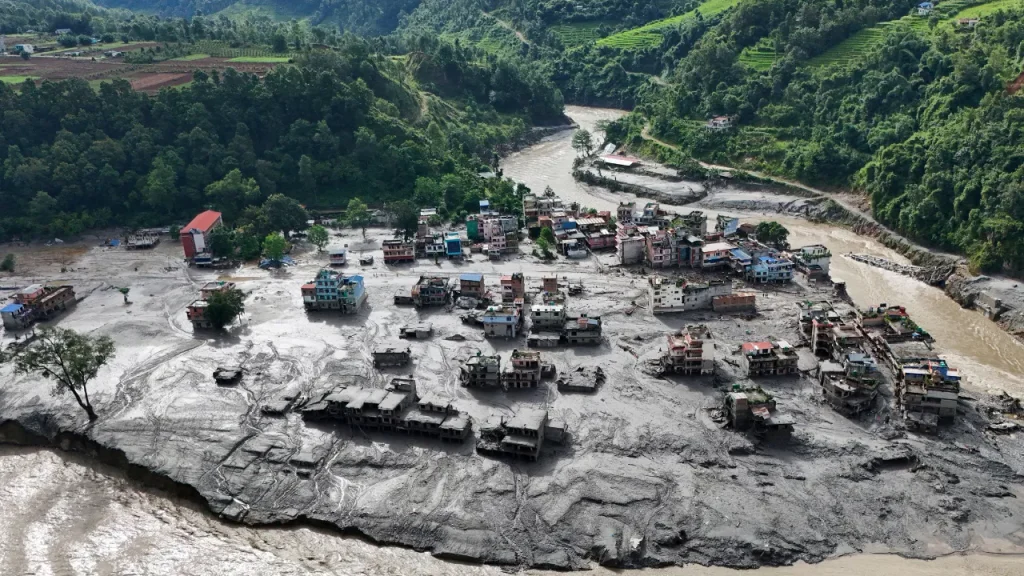
The Nepal flood disaster has become a powerful reminder of the growing risks facing the Hindu Kush Himalayas.
The immediate task is to rescue missing people, support survivors and restore essential services. But the longer-term challenge is much broader: governments, scientists and international organisations must work together to understand how rapidly the mountain environment is changing and prepare communities for increasingly complex hazards.
Simon Stiell’s warning that the disaster exposes the fragility of the Himalayan environment underscores the urgency of that task.
The mountains are vital to the region’s water, energy and ecosystems, yet they are becoming increasingly vulnerable to warming temperatures and environmental instability.
For Nepal, the disaster is a devastating human tragedy. For the wider region, the Nepal flood is also a warning that climate resilience, early-warning systems, scientific cooperation and safer infrastructure can no longer be treated as long-term ambitions. They are becoming immediate necessities.
As recovery efforts continue, the central question will not only be how Nepal rebuilds after this catastrophe, but whether the country and its neighbours can build a Himalayan region better prepared for the hazards of a rapidly changing climate.