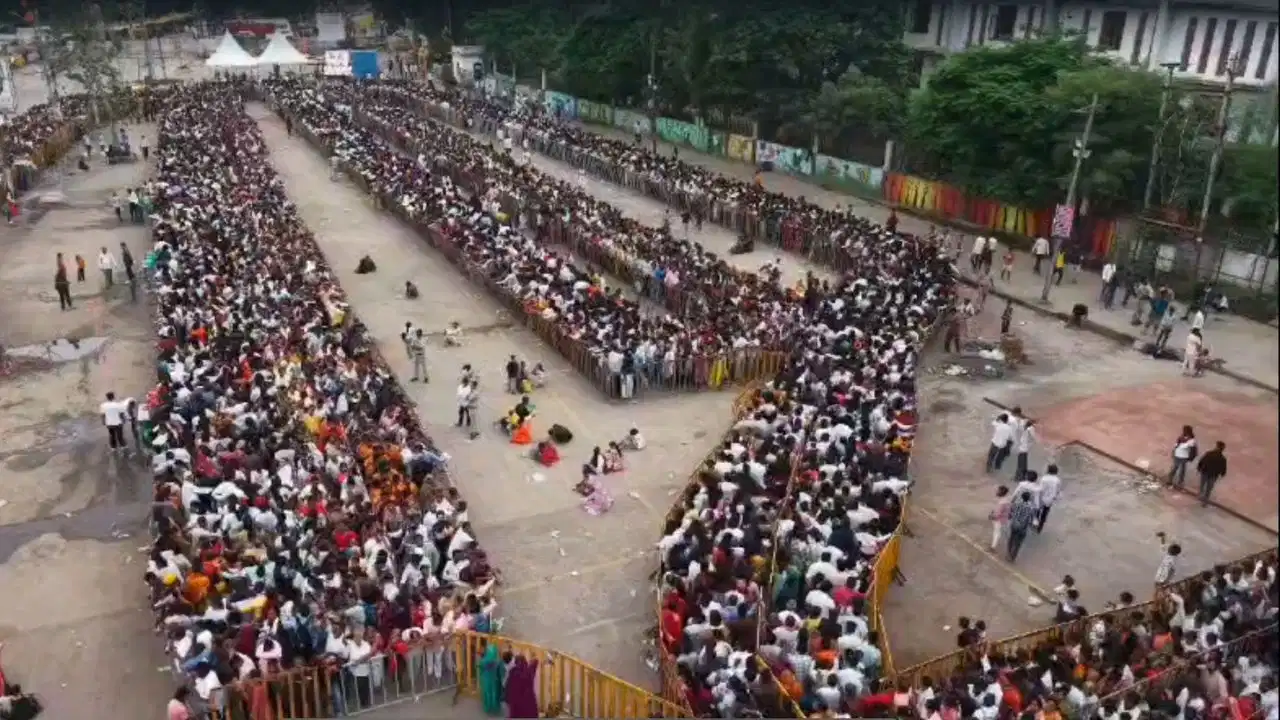
A stampede-like situation occurred near the Nagchandreshwar Temple in Ujjain, Madhya Pradesh, on Monday as a heavy rush of devotees gathered for darshan during the holy Shravan period and Nag Panchami celebrations. Several devotees were injured amid the sudden crowd surge and were taken to hospital for treatment.
The incident took place in the Mahakaleshwar Temple complex, where the Nagchandreshwar Temple shrine is located above the main Mahakaleshwar sanctum. Early reports indicate that panic spread after rumours concerning an electrical current near the queue area. The resulting movement of people created a dangerous crowd situation.
There are differing descriptions of the incident. Some reports have described it as a stampede-like situation, while a temple committee member reportedly disputed descriptions of an actual stampede and said arrangements remained in place. This distinction is important while authorities establish the exact sequence of events.
Table of Contents
Heavy Devotee Rush at Nagchandreshwar Temple
The incident occurred at a time when Ujjain was witnessing a particularly heavy influx of pilgrims.
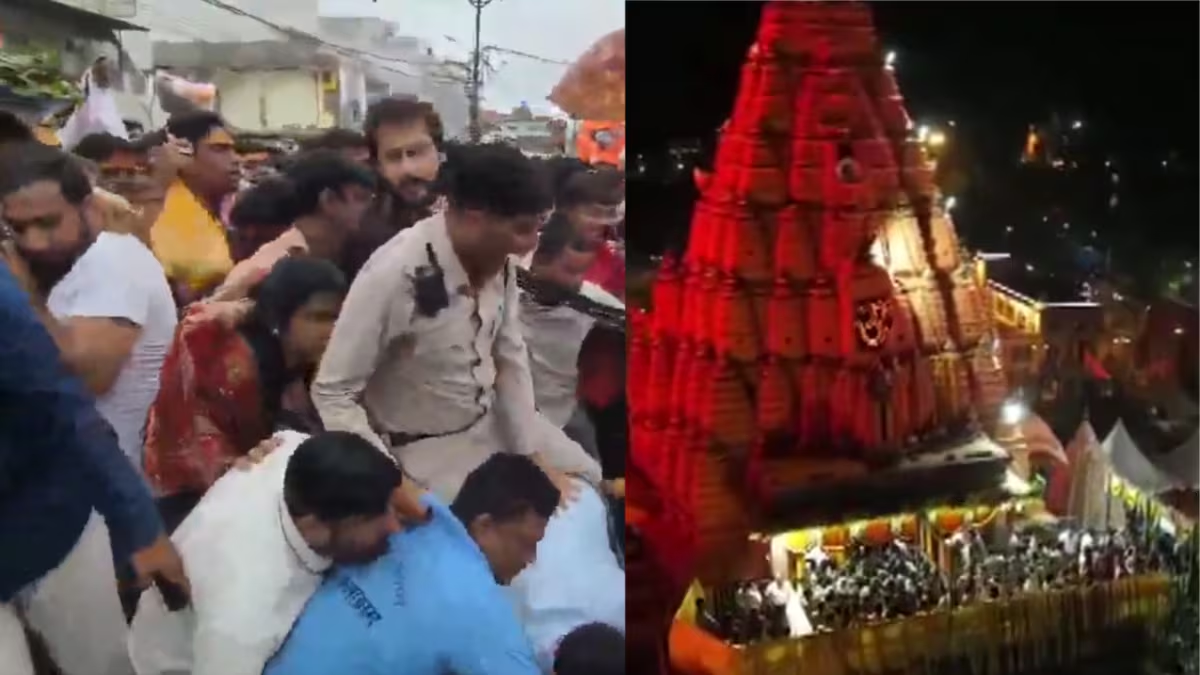
The Nagchandreshwar Temple is an exceptionally important destination for devotees because its shrine has a distinctive annual tradition. The idol is available for darshan to devotees on Nag Panchami, making the occasion one of the busiest periods around the Mahakaleshwar Temple complex.
The rush was particularly significant this year because the festival coincided with the ongoing Shravan period, when large numbers of devotees visit Ujjain to offer prayers to Lord Shiva and associated deities.
Reports from Ujjain have highlighted the extraordinary number of visitors arriving in the city around this period. The Mahakaleshwar temple recorded a very high footfall even before the latest incident, with officials reporting 6.57 lakh devotees on Independence Day.
Such large gatherings create significant challenges for authorities responsible for queues, barricades, movement routes and emergency response.
What Happened Near the Nagchandreshwar Temple?
According to preliminary reports, panic broke out among devotees waiting in the queue after rumours spread about an electrical current near a power distribution point.
The rumour reportedly caused people to move suddenly, resulting in pushing and a crowd surge. Several devotees fell or collided with barricades during the commotion.
Some reports have described the situation as a stampede-like incident rather than confirming a full-scale stampede.
The exact cause and sequence remain important because crowd incidents can develop rapidly when people believe that an immediate danger exists. Even when the original threat is unconfirmed, sudden movement within a tightly packed queue can result in injuries.
Authorities and security personnel present at the site intervened and brought the situation under control. Darshan arrangements were reportedly disrupted temporarily before being restored.
Several Devotees Taken for Medical Treatment
Several people suffered injuries during the incident.
Initial reports vary regarding the exact number. One report said at least three devotees were injured, while other reports said around 13 people were taken for medical treatment.
The variation reflects the fact that information was still developing when the first reports were published.
Some injured devotees were taken to Charak Hospital for treatment. News reports also said that at least one devotee sustained serious injuries to the legs after colliding with barricades during the commotion.
Authorities are expected to provide a clearer assessment of the number and nature of injuries as information is verified.
Why Is Nagchandreshwar Temple So Important?
The Nagchandreshwar Temple is located within the Mahakaleshwar Temple complex and occupies a distinctive position above the main shrine.
The Mahakaleshwar temple complex has multiple levels. The Nagchandreshwar Temple shrine is located on an upper level, with the Omkareshwar shrine situated between it and the main Mahakaleshwar shrine.
The temple is particularly famous because the doors of the NagchandreshwarTemple shrine are traditionally opened for devotees only once a year on Nag Panchami.
This makes the festival especially significant for pilgrims. Devotees travel from different parts of India to seek darshan, resulting in exceptionally large crowds around the temple.
A historical account describes the Nagchandreshwar Temple idol as an 11th-century image featuring Nagchandreshwar Temple with seven serpent hoods, along with representations associated with Lord Shiva and his family.
The combination of religious importance and restricted annual access naturally creates enormous demand for darshan on the designated day.

Nag Panchami Brings Massive Crowds
Nag Panchami is traditionally associated with the worship of serpents in Hindu religious practice.
At Ujjain’s Nagchandreshwar Temple, the festival has an additional significance because devotees receive an opportunity to visit a shrine that is generally not open for regular darshan throughout the year.
As a result, crowd management becomes particularly important.
Officials had already undertaken preparations before the festival. Among the measures reported was a load-bearing test of a newly constructed foot overbridge near the Mahakaleshwar temple. More than 300 security guards reportedly participated in the unusual test to assess the structure ahead of the expected heavy footfall.
The preparation demonstrates the scale of the expected crowd and the logistical challenge involved in managing devotees during the festival.
Nagchandreshwar Temple Committee Disputes Stampede Description
While several news reports described the incident as a stampede-like situation, a member of the Mahakaleshwar Temple Management Committee disputed that characterization.
According to the Free Press Journal, committee member Pratham Kaushik said reports of a stampede-like incident were based on rumours and maintained that arrangements were in place.
This creates an important distinction between a confirmed stampede and a dangerous crowd surge.
Videos reportedly showed devotees pushing amid the heavy rush, while reports also described people being taken to hospitals after the incident.
Until officials complete their assessment, it is appropriate to describe the event as a stampede-like situation or crowd surge, rather than presenting disputed details as established facts.
Police and Officials Bring Situation Under Control
Police and administrative officials were present at the location and moved to control the situation after the crowd became unsettled.
The immediate priority was to prevent further crowd movement and ensure that injured devotees could receive medical attention.
Darshan was reportedly stopped briefly following the incident. Once the situation was brought under control, arrangements were restored and devotees were able to continue with the pilgrimage process.
The incident highlights the importance of having emergency personnel close to areas where large numbers of people are concentrated.
Crowd Management Becomes a Major Concern
Large religious gatherings require careful planning because even a small rumour can cause thousands of people to react simultaneously.
In a densely packed queue, people may have limited room to move. If some individuals suddenly move backwards or sideways, others can be pushed into barricades or neighbouring sections.
This is why crowd-management systems generally rely on controlled entry, clearly marked routes, sufficient security personnel, emergency exits and continuous communication with devotees.
The Ujjain incident has once again placed these issues under attention.
The authorities had already anticipated significant crowds at Nagchandreshwar Temple, which is why additional infrastructure and security preparations were undertaken before Nag Panchami.
Ujjain Witnessing Exceptional Pilgrim Footfall
The incident also comes amid a broader increase in pilgrimage activity in Ujjain.
Mahakaleshwar is one of the 12 Jyotirlingas, making it one of the most important Shiva temples in India. The temple’s religious significance attracts visitors throughout the year, while festivals such as Shravan and Nag Panchami can produce exceptionally high footfall.
The reported 6.57 lakh devotees visiting Mahakaleshwar on Independence Day illustrates the scale of the crowds authorities are managing.
For local authorities, this means crowd management is not simply a festival-day responsibility. It increasingly requires long-term planning involving infrastructure, transport, accommodation, medical facilities and emergency response.
Importance of Clear Communication During Crowded Events
One of the most significant lessons from the incident is the importance of quickly communicating accurate information to large crowds.
If an unverified rumour spreads among thousands of people, panic can move through a crowd faster than officials can physically intervene.
Clear announcements, trained personnel and visible emergency-response teams can help reassure devotees and prevent unnecessary movement.
In the Ujjain case, reports indicate that the situation was brought under control after police and administrative officials intervened.
Future large-scale religious events may therefore require continued emphasis on communication systems alongside physical crowd-control measures.
What Happens Next?
The immediate focus remains on the condition of the injured devotees and verification of the circumstances surrounding the incident.
Authorities will need to establish what caused the sudden movement in the crowd, whether the electrical-current rumour had any factual basis and how the crowd responded.
They will also need to assess whether existing barricades, queues and emergency arrangements functioned as intended.
Because early reports contain different accounts of the incident and different injury figures, the final assessment should rely on official information rather than unverified social-media claims.
The Nagchandreshwar Temple incident in Ujjain has highlighted the challenges of managing enormous crowds during major religious occasions. Several devotees were injured after a stampede-like situation developed amid a heavy rush near the Mahakaleshwar Temple complex.
The situation reportedly began after rumours about an electrical current caused panic among people waiting for darshan. Police and administrative officials intervened, and the situation was brought under control.
At the same time, the temple management has disputed descriptions of an actual stampede, making it important to distinguish between confirmed facts and preliminary reports.
The Nagchandreshwar Temple’s unique annual darshan tradition makes Nag Panchami one of the busiest occasions at the Mahakaleshwar complex. With hundreds of thousands of devotees visiting Ujjain during peak periods, robust crowd management, accurate communication and rapid emergency response remain essential to keeping pilgrims safe.