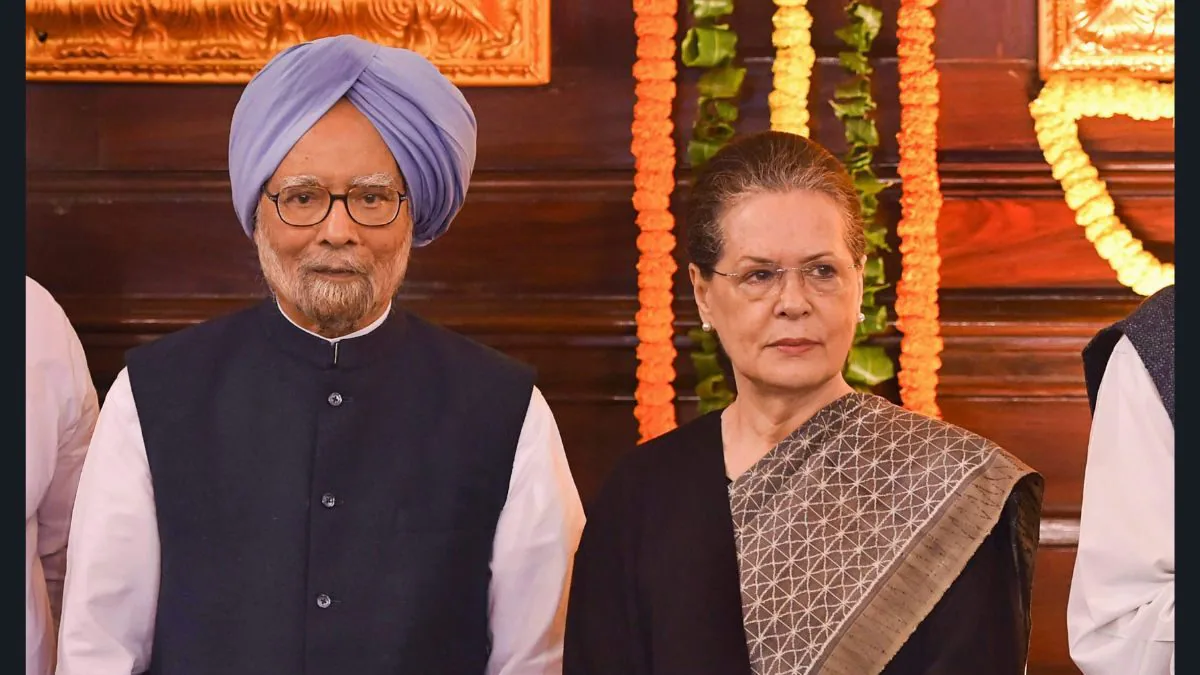
The legacy of former Prime Minister Manmohan Singh has come under renewed public and political discussion after the Supreme Court upheld the Central Bureau of Investigation’s (CBI) clean chit to him in the coal block allocation case. Congress Parliamentary Party chairperson Sonia Gandhi described the development as an important moment for Singh’s reputation and argued that history would ultimately judge the former prime minister kindly.
In an article published in The Indian Express, Gandhi said the Supreme Court decision brought an end to what she characterised as a prolonged political campaign against Singh. Her remarks have reopened a broader conversation about the former prime minister’s record in office, the controversies surrounding coal block allocations and the way Singh’s tenure has been assessed over the years.
The development is significant not only because it concerns a case involving a former prime minister, but also because Singh died in December 2024 after serving as India’s prime minister for two consecutive terms from 2004 to 2014. His political legacy has remained a subject of debate, particularly over the contrast between his reputation as an economist and his government’s struggles with corruption allegations during the later years of the UPA era.
Table of Contents
Supreme Court Decision Brings Coal Case Back Into Focus
The latest development centres on the coal block allocation controversy that emerged during the UPA government. The allocation of coal blocks to private and public entities became a major political issue and eventually resulted in investigations and several legal proceedings.

The CBI had investigated allegations concerning the allocation process. Singh’s name became associated with the broader controversy because the coal ministry was under his charge for periods during his tenure as prime minister.
The Supreme Court’s recent decision upholding the CBI’s clean chit has consequently renewed attention on the specific allegations against him and the distinction between political responsibility and criminal culpability.
Reports on the judgment describe the decision as upholding the CBI’s position that there was insufficient basis to proceed against Singh in the matter.
The development does not erase the wider political controversy surrounding coal allocations, but it is significant in relation to the allegations specifically examined against Singh.
Sonia Gandhi Defends Manmohan Singh’s Record
Reacting to the Supreme Court development, Sonia Gandhi strongly defended Singh’s personal integrity and record.
Gandhi argued that Singh had faced years of criticism despite his reputation for honesty and his long public-service career. She presented the court’s decision as an important correction to the narrative that had surrounded him.
Her intervention also placed the legal development within a wider political context. Gandhi contrasted the criticism directed at Singh with her assessment of his conduct in public office, arguing that his contribution to the country should be evaluated in the context of the circumstances in which he governed.
The statement has particular resonance because Gandhi and Singh worked closely during the 10 years of the UPA government. Singh was prime minister while Gandhi served as Congress president and chaired the United Progressive Alliance.
Their political partnership became one of the defining features of Indian politics between 2004 and 2014.
Who Was Manmohan Singh?
Manmohan Singh was one of India’s most prominent economists and policymakers before entering the highest political office.
He served as India’s finance minister during the early 1990s and played a central role in the economic reforms introduced under the P.V. Narasimha Rao government. Those reforms helped move India toward greater economic liberalisation and transformed the country’s approach to trade, investment and industrial policy.
Singh later became prime minister in 2004 after the Congress-led UPA formed the government.
He remained prime minister for two terms, leading the country from 2004 until 2014.
His leadership style was generally associated with a low-key public persona, economic expertise and an emphasis on institutional decision-making.
At the same time, his government faced major political challenges during its second term, including corruption allegations and controversies involving telecommunications, coal allocations and other policy decisions.
The Coal Allocation Controversy
Coal allocation became one of the most politically sensitive issues of the UPA period.
For years, coal blocks were allocated through a process that did not involve competitive auctions in the manner later adopted by the government. Questions were subsequently raised about transparency and whether the allocation process had resulted in undue benefits to certain companies.
In 2012, the Comptroller and Auditor General of India (CAG) published a report examining coal block allocations and estimated a potential financial benefit associated with the absence of competitive auctioning.
The issue became politically explosive.
Opposition parties accused the government of failing to protect public resources, while the UPA government defended the policy and its decision-making process.
The controversy eventually reached the Supreme Court.
Supreme Court’s 2014 Coal Block Judgment
In 2014, the Supreme Court examined the coal allocation process and cancelled allocations of coal blocks that it found had been made through an arbitrary and illegal process.
That judgment had far-reaching consequences for India’s coal sector.
The court’s decision led to a major restructuring of the coal allocation framework. Parliament subsequently introduced legislation to facilitate fresh allocation through a more transparent process.
The legal developments surrounding the coal issue continued for years after the original allocations were cancelled.
The latest Supreme Court development concerning Singh therefore needs to be understood separately from the broader 2014 judgment. The earlier judgment dealt with the legality of the allocation process as a whole, while the current development concerns the criminal investigation and allegations specifically involving the former prime minister.
Why the Clean Chit Matters
The clean chit is politically significant because Singh’s name was repeatedly associated with the coal controversy during and after his tenure.
For supporters, the development reinforces the argument that allegations against him were politically exaggerated.
For critics, however, questions surrounding administrative responsibility and the broader functioning of the government remain part of the historical debate.
The Supreme Court’s decision addresses the legal position in the specific case. Political assessments of Singh’s tenure remain a separate matter.
That distinction is important when examining the significance of the latest development.
Sonia Gandhi Calls the Decision a Moment of Justice
Gandhi’s response went beyond welcoming the court decision.
She framed it as an opportunity to reassess how Singh was treated during his political career and argued that his reputation would ultimately benefit from a clearer understanding of the facts.
Her reference to history is also notable because Singh himself had famously expressed confidence that history would judge him more favourably than contemporary critics.
During a 2014 press conference, Singh said he believed history would be kinder to him than the media or opposition parties had been. That statement has acquired renewed attention following the latest legal development.
The phrase has increasingly become associated with the former prime minister’s belief that his record would eventually be assessed in a broader historical context.
Singh’s Reputation as an Economist
One of the most important aspects of Singh’s legacy is his role in India’s economic transformation.
As finance minister in 1991, Singh helped introduce a series of reforms at a time when India faced a severe balance-of-payments crisis.
The reforms included changes to industrial licensing, trade policy and the broader economic framework.
Supporters of Singh often point to this period as evidence of his long-term contribution to India’s economic development.
As prime minister, he continued to be closely associated with economic policy, although the scale and nature of the challenges facing his government were very different from those of the early 1990s.

Two Terms as Prime Minister
Manmohan Singh became prime minister in 2004 after the Congress-led alliance secured the numbers to form the government.
His first term included several major policy initiatives and was followed by the UPA’s return to power in 2009.
The second term was more politically difficult.
A series of corruption allegations and controversies affected the government’s public image. The coal allocation controversy became one of the most prominent among them.
The opposition repeatedly attacked the government over its handling of natural resources and demanded greater accountability.
Despite these challenges, Manmohan Singh remained prime minister until 2014.
A Leadership Style Different From Conventional Politics
Manmohan Singh’s political style was markedly different from that of many Indian political leaders.
He rarely relied on highly confrontational rhetoric and was often described as reserved and technocratic.
His supporters saw this as evidence of seriousness and institutional discipline.
His critics, meanwhile, argued that his quiet leadership style sometimes made it difficult for him to assert political authority over the wider coalition and his ministers.
This difference in interpretation has remained central to debates about his legacy.
The latest Supreme Court development has therefore reopened a larger question: how should Manmohan Singh’s 10 years as prime minister ultimately be remembered?
Congress Uses the Development to Reassess His Legacy
For the Congress party, the court’s decision provides an opportunity to highlight Manmohan Singh’s reputation for personal integrity.
Gandhi’s statement reflects this approach.
By focusing on the legal outcome, Congress leaders can argue that accusations that damaged Manmohan Singh’s public image should be reconsidered.
The development also allows the party to emphasise the distinction between Manmohan Singh’s personal conduct and controversies involving the wider government.
That argument is likely to remain politically relevant as Congress continues to defend the record of the UPA period.
Legal Findings and Political Accountability Are Different
The case also highlights an important principle in public life: legal culpability and political accountability are not necessarily identical.
A clean chit in a criminal investigation means investigators and the courts have not found sufficient grounds to establish the relevant criminal allegations against the individual.
Political responsibility can involve broader questions about policy decisions, administrative systems and government functioning.
Therefore, the Supreme Court development does not automatically settle every historical debate about coal policy or the UPA government’s decision-making.
Instead, it clarifies the legal position concerning the allegations examined against Manmohan Singh.
Manmohan Singh’s Legacy After His Death
Manmohan Singh died in December 2024 at the age of 92.
His death prompted tributes from political leaders across the political spectrum, with many recognising his contribution to India’s economic policy and public life.
Since then, discussions about his legacy have continued.
The coal case has now added another dimension to those discussions.
For supporters, the Supreme Court development strengthens the argument that Manmohan Singh should be remembered primarily for his economic expertise, public service and personal integrity rather than the controversies that surrounded the final years of his government.
For critics, the broader political record remains open to debate.
A Legacy Still Being Debated
Historical reputations are rarely formed around a single court case or political statement.
Manmohan Singh’s legacy includes the economic reforms of the early 1990s, two terms as prime minister, the expansion of several social programmes during the UPA years, the India-US civil nuclear agreement and the political controversies that marked his second term.
The coal allocation controversy is only one component of that larger record.
The Supreme Court’s latest decision is nevertheless important because it addresses a legal cloud that had remained associated with his name.
What Sonia Gandhi’s Statement Means
Sonia Gandhi’s statement is ultimately both a defence of Manmohan Singh and a broader argument about how political leaders should be judged.
By saying that history will remember him kindly, she is asking for his record to be viewed beyond the political battles of the period in which he served as prime minister.
The court’s decision provides an important legal development supporting that argument, although political and historical assessments will continue to differ.
For Congress, the moment is also an opportunity to reaffirm its association with Manmohan Singh’s economic legacy and his reputation for personal integrity.
The Supreme Court’s decision upholding the CBI’s clean chit to former Prime Minister Manmohan Singh in the coal block allocation case has brought renewed attention to one of the most debated periods of his political career.
Sonia Gandhi has welcomed the development as an important vindication of Manmohan Singh and has argued that his reputation will ultimately be judged favourably by history. Her remarks have reopened discussions about the former prime minister’s leadership, economic contributions and the controversies that surrounded his government.
The coal allocation controversy remains an important chapter in India’s political and legal history. However, the latest court development concerns the specific allegations examined against Manmohan Singh and should be distinguished from broader questions about the coal allocation policy and the functioning of the UPA government.
For Manmohan Singh’s supporters, the ruling offers an opportunity to separate his personal record from the controversies that defined much of the political debate surrounding his second term. For others, his broader governance record will continue to be assessed through both achievements and shortcomings.
What remains clear is that Manmohan Singh’s legacy is still being debated years after he left office. The latest Supreme Court development has added another significant chapter to that discussion — one that Sonia Gandhi believes will ultimately strengthen the historical assessment of the former prime minister.