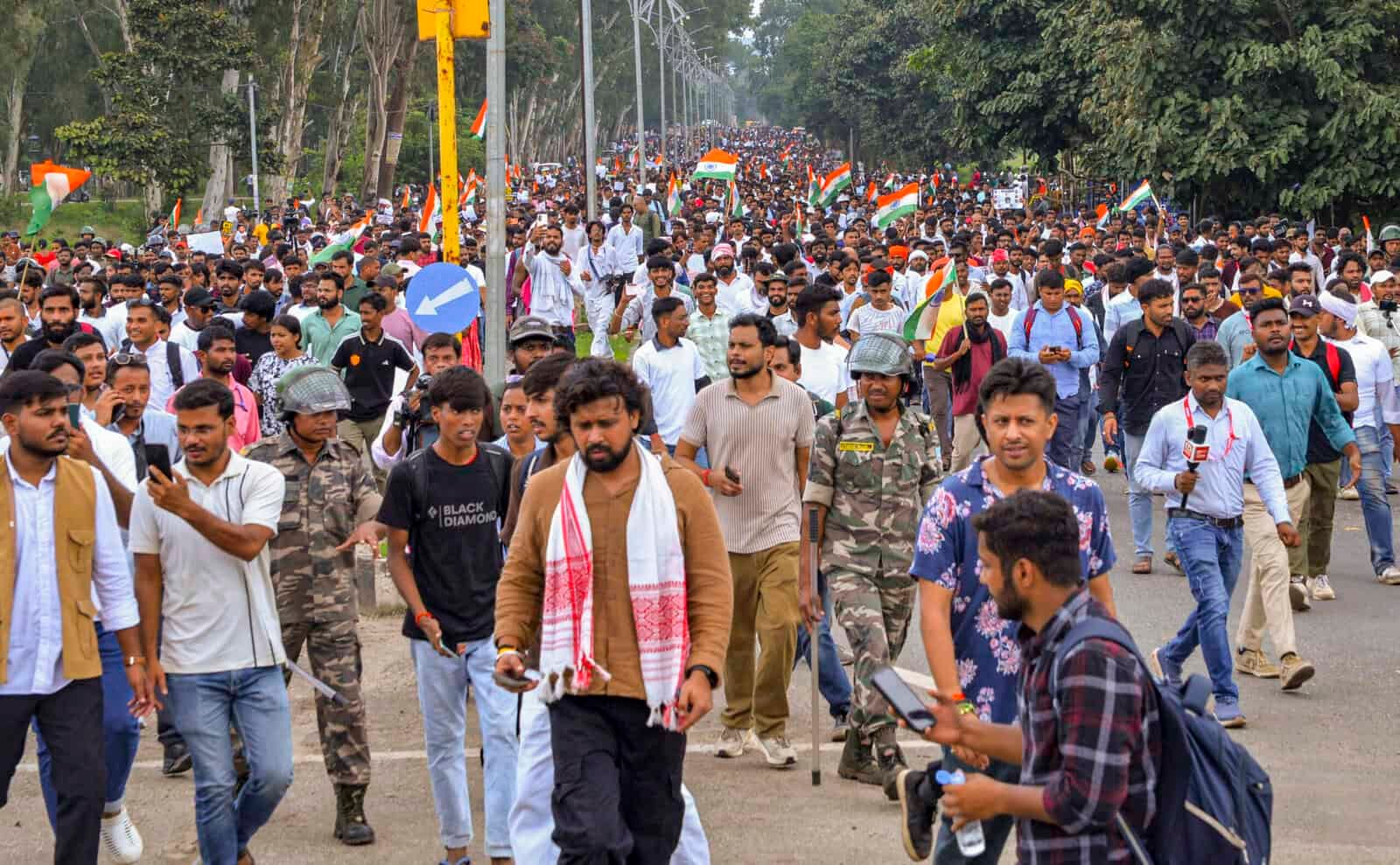
The Jharkhand protest entered a new phase on Tuesday, August 11, amid an escalating dispute over alleged irregularities in recruitment examinations and police action against protesting students. The Bharatiya Janata Party (BJP) called the bandh to protest what it described as police excesses against job aspirants, while the ruling Jharkhand Mukti Morcha (JMM) accused the opposition of turning a student issue into a political campaign.
The confrontation follows weeks of agitation by candidates preparing for recruitment examinations conducted through the Jharkhand Public Service Commission (JPSC) and Jharkhand Staff Selection Commission (JSSC). The Jharkhand protest has continued for 18 days as the BJP stepped up its support for the agitators and called for a statewide shutdown.
The ongoing Jharkhand protest has now developed into a larger political confrontation involving questions over examination procedures, recruitment, police action and the government’s handling of students’ demands.
Table of Contents
Jharkhand Protest: Why Is the State Undergoing a Bandh?
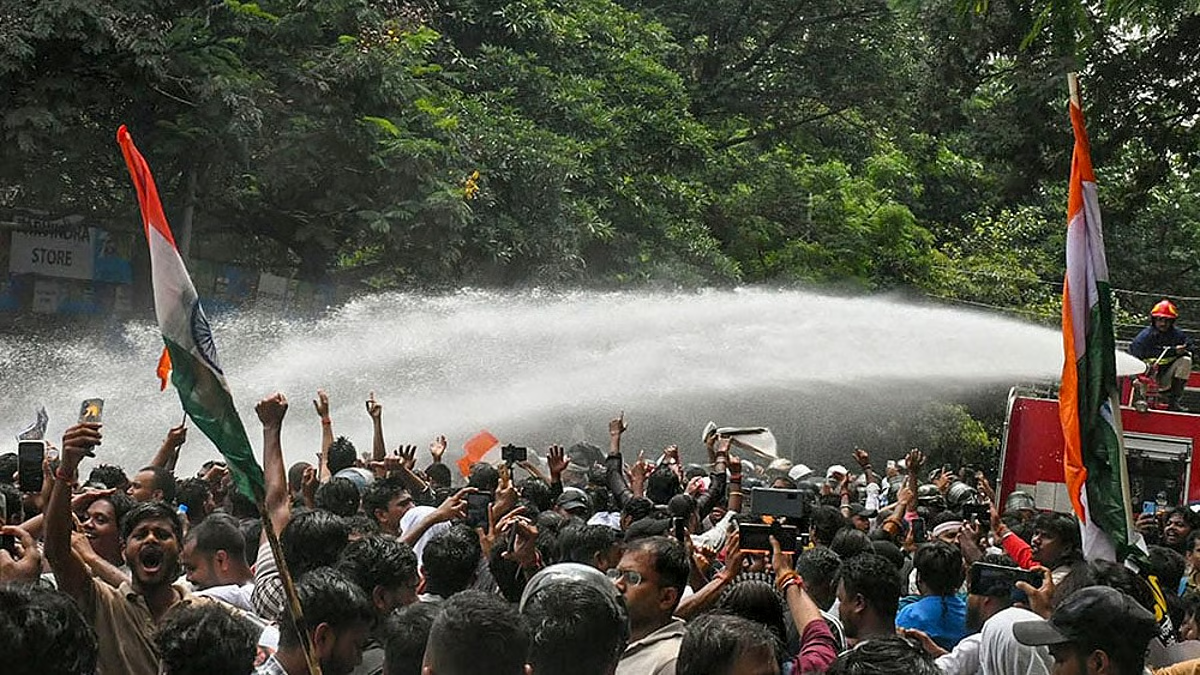
The immediate trigger for the bandh was the police action during the Jharkhand protest in Ranchi on Monday.
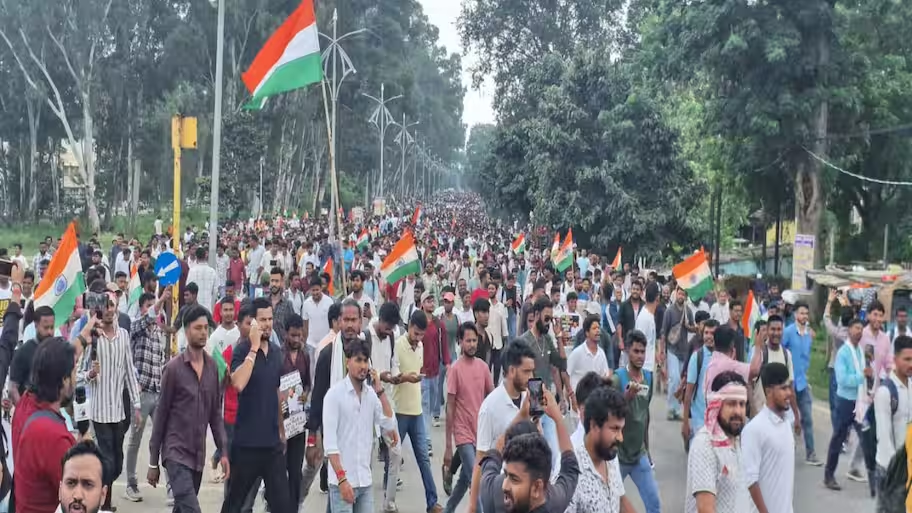
Students and recruitment-exam aspirants have been continuing their Jharkhand protest over alleged irregularities in the state’s recruitment examination system. Their agitation has continued for more than two weeks, with protesters demanding action on their concerns and greater clarity from the authorities.
The situation intensified after police intervened during the demonstration. The BJP subsequently announced the statewide bandh, describing the police action as an unacceptable response to students raising their concerns.
The development has shifted the focus from an examination-related dispute to a wider political debate over the rights of students to protest and the government’s response to public demonstrations.
BJP Backs Jharkhand Protesters
The BJP has positioned itself firmly behind the Jharkhand protest and the students involved in the agitation.
The opposition party has criticised the Jharkhand government over the police response and has demanded accountability from the administration. BJP leaders have also targeted Chief Minister Hemant Soren, arguing that the government should address the grievances of job aspirants rather than use force against them.
The bandh is therefore being presented by the BJP as a protest against the treatment of students as well as against the government’s broader handling of the recruitment-examination controversy.
BJP workers were reported to have blocked roads in Ranchi during the shutdown, including Ratu Road, as supporters sought to enforce the bandh.
The party’s decision to back the students has given the agitation a stronger political dimension.
JMM Accuses Opposition of Politicising the Issue
The ruling JMM has taken a sharply different position on the Jharkhand protest.
According to reports, The party has accused the opposition of using the Jharkhand protest for political purposes. The ruling party’s argument is that genuine concerns raised by students should be addressed through dialogue and institutional mechanisms rather than being converted into a statewide political confrontation.
The competing narratives have created a clear political divide.
The BJP says it is standing with students who are protesting over recruitment examinations and police action. The JMM, meanwhile, argues that opposition parties are attempting to gain political mileage from the agitation.
This disagreement is likely to remain at the centre of the political debate as the government responds to the continuing protests.
Recruitment Exams at the Heart of Jharkhand Protest
At the heart of the Jharkhand protest are recruitment examinations and the concerns of job aspirants.
Students preparing for government employment examinations invest considerable time and resources in the process. Any allegations of irregularities can therefore have a direct impact on their confidence in the recruitment system.
The current agitation involves aspirants associated with the JPSC and JSSC examination processes. Reports indicate that the protest has continued for 18 days, showing the depth of dissatisfaction among sections of the candidates.
For the government, resolving the issue requires addressing both the substantive examination concerns and the growing political controversy surrounding them.
The continuing Jharkhand protest has increased pressure on the government to provide clarity
Police Action Becomes a Major Flashpoint
The police response to the student demonstration has become one of the most contentious aspects of the dispute.
The BJP has described the action as an instance of police excess and used it as the immediate justification for calling the bandh.
The government’s response, meanwhile, has emphasised the need to maintain order while dealing with the protests. Chief Minister Hemant Soren appealed for dialogue after the police action, according to reports.
The contrasting positions highlight a familiar challenge for governments dealing with large demonstrations: balancing the right to protest with the responsibility of maintaining public order.
ABVP Marches Amid the Agitation
The student movement has also involved the Akhil Bharatiya Vidyarthi Parishad (ABVP), which marched towards the Jharkhand Assembly as the BJP observed the statewide bandh.
The participation of a prominent student organisation has further increased attention on the dispute.
At the same time, the presence of political organisations has prompted debate over whether the agitation remains primarily a student-led movement or is increasingly becoming part of the state’s wider political contest.
That question has become particularly relevant because the BJP has openly supported the bandh while the JMM has accused the opposition of politicising the issue.
Ranchi Emerges as the Main Centre of the Protest
Ranchi, the state capital, has remained at the centre of the developments.
The capital has witnessed student demonstrations, political mobilisation and road blockades connected with the bandh. Reports from Tuesday indicated BJP workers blocking Ratu Road as part of the shutdown.
The concentration of demonstrations in Ranchi is significant because major state-level administrative and political institutions are located there, including the Jharkhand Assembly.
Any prolonged disruption in the capital can therefore have wider implications for government activity, transportation and daily life.
Political Stakes for Hemant Soren Government
The controversy presents a political challenge for the Hemant Soren-led government.
The administration must now deal with two interconnected issues: the grievances of recruitment-exam aspirants and the opposition’s campaign over the police response.
The BJP has already used the situation to attack the state government and demand political accountability.
For the JMM, the challenge is to demonstrate that the government is willing to listen to students while resisting what it sees as an attempt by opposition parties to exploit the situation.
How the government handles the next phase of the agitation could influence the political narrative around employment, examinations and youth concerns in Jharkhand.
Employment Concerns Give the Protest Wider Importance
Government recruitment examinations carry particular importance in states where public-sector employment is a major aspiration among young people.
A recruitment dispute can therefore quickly develop into a larger social issue.
For candidates, the examination process represents more than a test. It is often a route towards stable employment and long-term financial security. Allegations of irregularities can consequently lead to frustration and demands for transparency.
The Jharkhand protests reflect these wider concerns.
The longer the dispute continues, the greater the pressure on authorities to provide clear information about examination procedures and respond to candidates’ complaints.
Opposition Versus Government: Two Competing Narratives
The political battle has produced two competing narratives.
The BJP’s narrative centres on student grievances and alleged police excesses. The party argues that the government should listen to protesting job aspirants and has used the bandh to put pressure on the administration.
The JMM’s narrative focuses on political motivation. The ruling party has accused opposition forces of using the student agitation to attack the government and gain political advantage.
Both narratives are now competing for public attention, making the student protest an increasingly significant political issue.
The Role of Dialogue
Chief Minister Hemant Soren’s reported appeal for dialogue is important because negotiations could provide a way to separate the students’ examination concerns from the wider political confrontation.
A dialogue-based approach could allow authorities to hear specific complaints from candidates, explain the examination process and determine which concerns require investigation or administrative action.
For the students, a transparent mechanism for raising grievances could also help restore confidence in the recruitment system.
The success of such an approach would depend on whether discussions lead to concrete steps rather than remaining limited to political statements.
What Happens Next?
The immediate focus will be on the government’s response to the continuing student agitation and the political pressure generated by the bandh.
Authorities will have to assess the grievances raised by recruitment aspirants while also managing demonstrations and maintaining public order.
The BJP is expected to continue pressing the government over the issue, while the JMM is likely to defend its handling of the situation and challenge the opposition’s political narrative.
The student groups, meanwhile, remain central to the dispute. Their demands and response to any government initiative will determine whether the agitation continues or moves towards a resolution.
A Student Issue That Has Become a Political Flashpoint
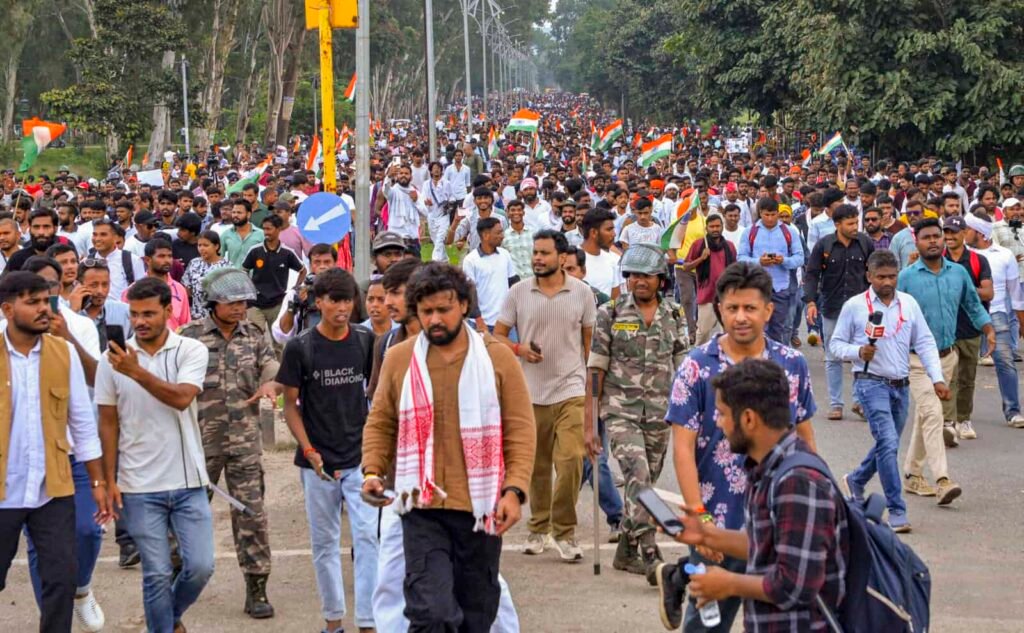
What began as a dispute involving recruitment examinations has now developed into a major political confrontation in Jharkhand.
The continuing protests have brought questions about examination transparency and recruitment procedures to the forefront. Police action against demonstrators has added another layer to the controversy, while the BJP’s decision to call a statewide bandh has transformed the issue into a direct confrontation with the JMM-led government.
At the same time, the JMM’s accusation that the opposition is politicising the agitation reflects the government’s effort to shift attention towards the political dimension of the bandh.
For students and job aspirants, however, the central concern remains the recruitment system itself.
The Jharkhand protest and statewide bandh on August 11, 2026, mark a significant escalation in the ongoing dispute over recruitment examinations and student grievances.
The BJP has backed the protesting aspirants and called the shutdown in response to the police action, while the JMM has accused opposition parties of turning the students’ grievances into a political campaign.
With the agitation having continued for 18 days, the pressure on the state government is increasing. The administration faces the difficult task of addressing allegations surrounding recruitment examinations while maintaining public order and responding to the opposition’s political offensive.
The coming days will be important for determining whether dialogue can resolve the students’ concerns or whether the dispute will develop into a longer political confrontation.
For Jharkhand’s young job aspirants, the most important outcome will ultimately be whether their concerns about recruitment examinations receive a clear, transparent and credible response.