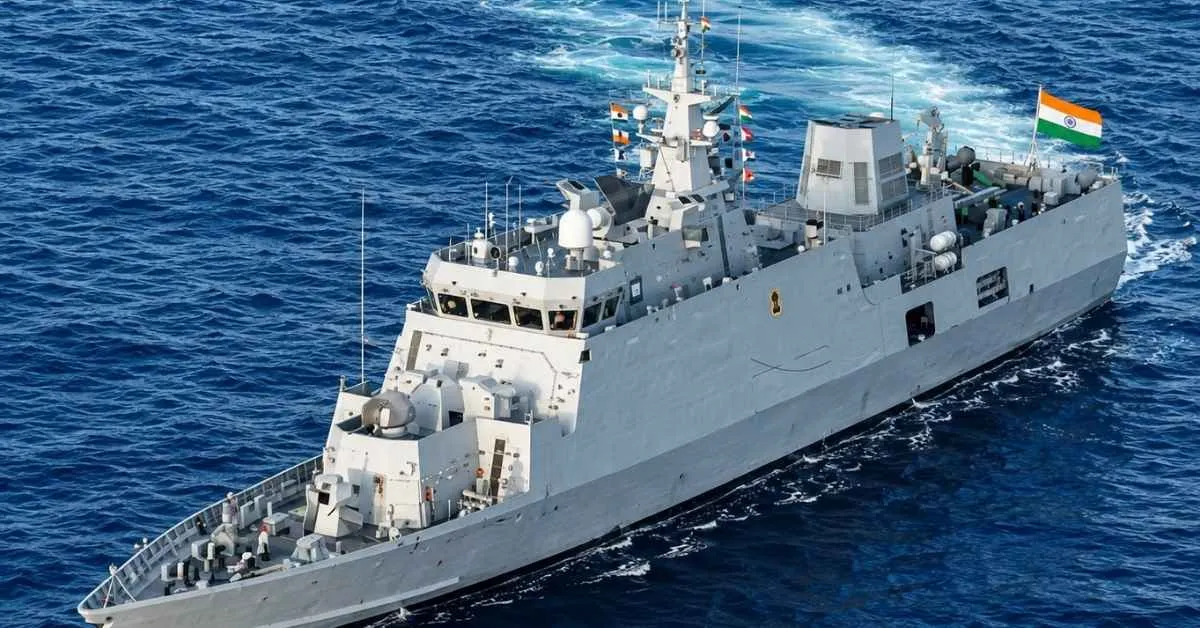
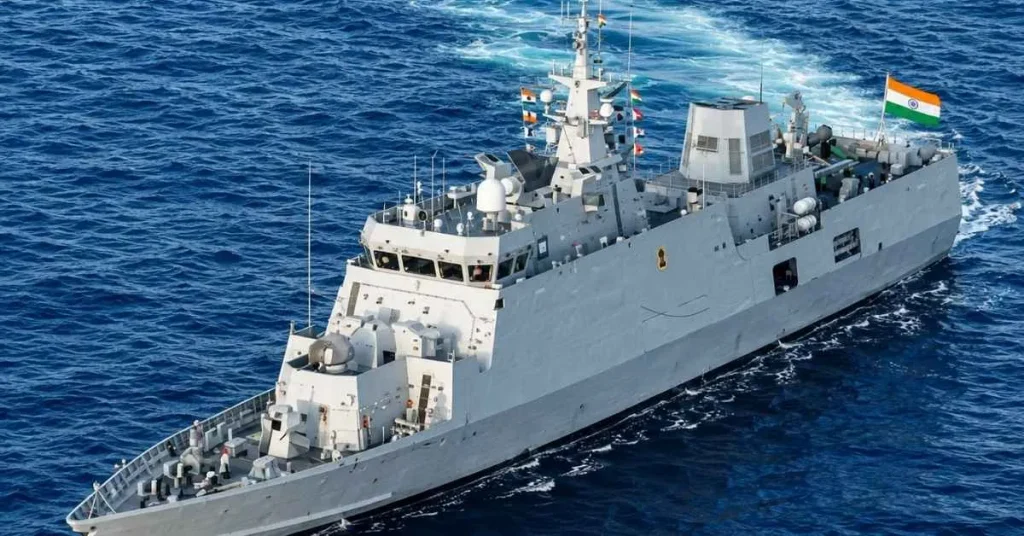
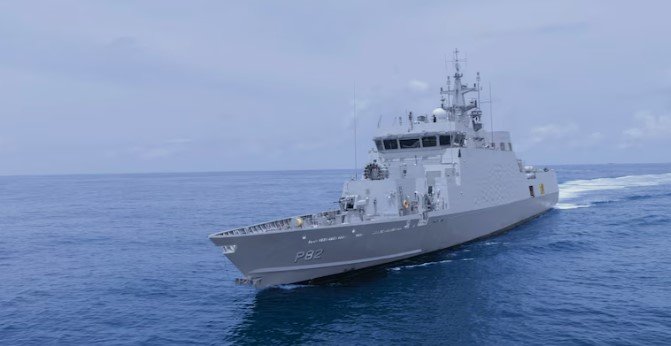
Indian Navy has commissioned INS Mangrol, its third Anti-Submarine Warfare Shallow Water Craft (ASW-SWC), marking a significant step in strengthening India’s maritime defence capabilities, particularly in coastal waters. Built by Cochin Shipyard Limited (CSL) in Kochi, the vessel has more than 80 per cent indigenous content and reflects India’s expanding capabilities in warship construction, advanced sensor integration and indigenous defence manufacturing.
The commissioning ceremony was held on Monday and presided over by Vice Admiral Sanjay Vatsayan, Flag Officer Commanding-in-Chief of the Western Naval Command. The induction of INS Mangrol is expected to improve the Navy’s ability to detect, track and counter underwater threats in shallow waters, including areas around ports, harbours and important coastal approaches.
As maritime security challenges continue to evolve, anti-submarine warfare has become an important component of naval preparedness. Submarines can operate underwater with limited visibility to conventional surveillance systems, making specialised detection equipment, coordinated maritime surveillance and rapid response capabilities essential.
INS Mangrol has been designed specifically for operations in coastal and shallow-water environments, where larger warships may face operational limitations. Equipped with modern sonar technology, lightweight torpedoes, an indigenous anti-submarine rocket launcher and the Maareech Advanced Torpedo Decoy System, the vessel will contribute to the Indian Navy’s broader efforts to secure India’s maritime interests.
Beyond its operational role, the ship also highlights India’s push towards self-reliance in defence production, with domestic shipbuilding and indigenous equipment playing an increasingly important role in naval modernisation.
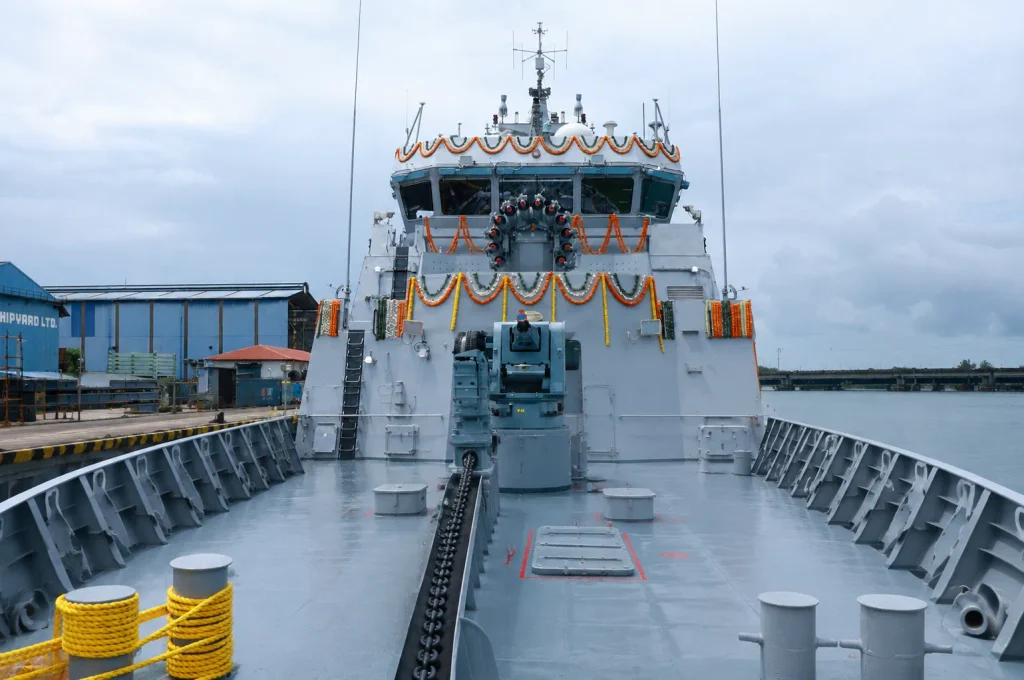
Table of Contents
INS Mangrol: A New Addition to India’s Anti-Submarine Warfare Fleet
INS Mangrol belongs to the Anti-Submarine Warfare Shallow Water Craft category, a class of vessels developed to address underwater threats in relatively shallow maritime environments. Unlike larger warships designed for a broad range of missions across the open sea, these specialised vessels are intended to operate close to the coastline, strengthening the Indian Navy’s ability to monitor important coastal areas.
India has an extensive coastline, with commercial ports, naval facilities, fishing harbours and important maritime routes requiring continuous protection. Shallow coastal waters present operational challenges because underwater conditions can complicate submarine detection and tracking. Dedicated anti-submarine warfare platforms can help the Indian Navy respond to these challenges more effectively.
The commissioning of INS Mangrol will add another specialised vessel to the Indian Navy’s capabilities. Its role will include supporting underwater surveillance and contributing to the detection and countering of submarine threats in coastal waters.
The ship can operate alongside maritime patrol aircraft, helicopters and other naval vessels. Such coordination is important because anti-submarine warfare often requires multiple platforms to share information, monitor large areas and respond to potential threats. This integrated approach supports the Indian Navy’s broader maritime surveillance efforts.
Rather than operating in isolation, INS Mangrol is expected to contribute to a wider network of maritime surveillance and naval operations.
Why Shallow-Water Anti-Submarine Warfare Matters
Anti-submarine warfare involves detecting, tracking and countering hostile submarines. It is a specialised naval function because submarines can remain concealed underwater and approach strategically important locations without being easily detected through conventional visual surveillance. The Indian Navy therefore requires specialised platforms capable of operating in different maritime environments.
Coastal regions are especially important in this context. Ports and harbours support commercial shipping, naval logistics and other maritime activities. Protecting these locations requires the ability to monitor potential underwater threats while maintaining awareness of activity across surrounding waters.
Shallow-water environments can make submarine detection challenging. Water depth, seabed characteristics, background noise and other environmental conditions can affect sonar performance. The Indian Navy needs equipment and platforms suited to these specific operating conditions.
INS Mangrol has been designed for these operational requirements. Its specialised equipment and manoeuvrability are intended to support anti-submarine missions in coastal areas, complementing the capabilities of larger vessels.
The ship’s induction could strengthen the Indian Navy’s ability to monitor coastal approaches and contribute to the protection of important maritime infrastructure. It also adds capacity to a specialised segment of the fleet, helping the service organise its resources according to different operational requirements.
Advanced Weapons and Sensors on INS Mangrol
INS Mangrol is equipped with a combination of sonar technology, anti-submarine weapons and defensive systems. Together, these systems are intended to support underwater detection and response operations and contribute to the Indian Navy’s coastal defence capabilities.
Abhay Hull-Mounted Sonar
One of the key systems identified by the Indian Navy is the Abhay Hull-Mounted Sonar. Sonar systems use sound waves to detect and assess objects underwater, making them an important part of anti-submarine warfare.
A hull-mounted system is installed on the vessel itself, allowing it to support underwater surveillance while the ship is operating. Information gathered through sonar can help naval personnel assess underwater contacts and determine whether further monitoring or action is necessary.
The performance of sonar depends on factors such as water conditions, background noise and the characteristics of the object being detected. Its effectiveness also depends on the crew’s ability to interpret information and coordinate with other surveillance assets.
The inclusion of the Abhay sonar system gives INS Mangrol a dedicated underwater detection capability, an essential requirement for its intended role within the Indian Navy.
Lightweight Torpedoes
INS Mangrol is also equipped with lightweight torpedoes, which form part of its anti-submarine warfare weaponry.
Torpedoes are underwater weapons designed to engage targets beneath the surface. Lightweight variants are used in specific naval applications and can be integrated into platforms designed for anti-submarine missions.
Their presence on INS Mangrol provides the ship with an additional means of responding to underwater threats after detection and assessment. The broader effectiveness of an anti-submarine mission depends on the integration of sensors, operational decision-making and coordination between participating platforms, including those operated by the Indian Navy.
Indigenous Anti-Submarine Rocket Launcher
The vessel also carries an indigenous anti-submarine rocket launcher. This system adds another element to its underwater warfare capabilities while highlighting the contribution of domestically developed equipment to India’s naval modernisation.
Indigenous defence systems can help reduce dependence on imported equipment and strengthen the domestic industrial base supporting the armed forces. They can also contribute to the development of technical expertise in system design, production, integration and maintenance.
For the Indian Navy, the use of indigenous equipment on newly commissioned warships is closely linked to the broader objective of building greater self-reliance in defence manufacturing.
Maareech Advanced Torpedo Decoy System
Another important component is the Maareech Advanced Torpedo Decoy System.
Torpedo decoy systems are designed to help protect a vessel against incoming torpedo threats by creating a diversion or presenting an alternative target for the weapon’s guidance system. Such systems form part of a ship’s defensive measures and complement its broader operational capabilities.
The inclusion of Maareech adds a defensive element to INS Mangrol’s equipment package. While sonar and weapons support the ship’s anti-submarine mission, defensive systems are intended to improve its ability to respond to certain threats against itself. These capabilities support the Indian Navy’s efforts to equip its vessels for complex maritime operations.
Together, these systems demonstrate the importance of integrating detection, response and protection capabilities on specialised naval platforms.
Three Diesel Engines and Waterjet Propulsion Improve Manoeuvrability
INS Mangrol is powered by three diesel engines and uses waterjet propulsion. This configuration is intended to support the ship’s operations in shallow waters, where manoeuvrability is an important consideration for the Indian Navy.
Waterjet propulsion works by drawing in water and expelling it at high speed to generate thrust. Depending on the vessel’s design, the system can provide useful manoeuvring characteristics in confined operating areas.
For a ship tasked with coastal surveillance and anti-submarine warfare, the ability to navigate effectively in comparatively restricted waters is particularly relevant. Ports, harbours and coastal approaches may require a vessel to operate in spaces where larger ships have fewer options for movement.
The three-engine arrangement provides the vessel’s propulsion system with its specified power configuration, while the waterjets support its intended operational role.
The available source material does not provide detailed figures for INS Mangrol’s speed, displacement, endurance or range. Those specifications should therefore be confirmed through official Navy or shipbuilder information rather than inferred from the propulsion configuration.
More Than 80 Per Cent Indigenous Content Highlights Defence Self-Reliance
A major feature of INS Mangrol is its reported indigenous content of more than 80 per cent. This reflects India’s efforts to expand domestic participation in the design, construction and equipment integration of naval platforms supporting the Indian Navy.
Warship construction involves several interconnected areas, including hull fabrication, propulsion, electrical systems, sensors, communications, weapons integration and onboard support equipment. Building domestic expertise across these areas can strengthen the industrial capabilities required to maintain and modernise a naval fleet.
The participation of Indian shipyards and equipment manufacturers can also create opportunities for domestic suppliers, engineering teams and specialist industries. Indigenous production may help strengthen the country’s ability to support its vessels throughout their operational lives.
However, indigenous content alone does not establish the performance of a warship. Operational effectiveness also depends on the reliability of its systems, crew training, maintenance, logistics and integration with the wider fleet.
INS Mangrol’s commissioning is significant on two levels: it adds a purpose-built platform to the Indian Navy’s anti-submarine warfare capabilities and demonstrates the growing role of domestic industry in supplying equipment for India’s maritime forces.
Cochin Shipyard Limited’s Role in Naval Shipbuilding
INS Mangrol was built by Cochin Shipyard Limited (CSL) in Kochi, Kerala. The shipbuilder is an important part of India’s domestic maritime manufacturing sector, with experience in constructing and maintaining vessels for different requirements.
The construction of specialised naval ships requires close coordination between shipbuilders, equipment suppliers, designers and the Indian Navy. Systems must be installed and integrated into the vessel, followed by the necessary testing and preparation before the ship can enter service.
For a warship equipped with sonar, torpedoes, defensive systems and specialised propulsion, the integration of these components is particularly important. The vessel must be able to operate as a coordinated platform rather than as a collection of separate systems.
The completion and commissioning of INS Mangrol underline the role of Indian shipyards in supporting naval expansion. Domestic shipbuilding capacity is strategically important because it allows India to develop specialised vessels while building experience in complex maritime engineering.
The ship’s reported indigenous content of over 80 per cent further underscores the contribution of domestic production to the Indian Navy’s modernisation programme.
Naming INS Mangrol: Continuing a Naval Legacy
The name INS Mangrol has a historical connection with the Indian Navy. The vessel takes its name from Mangrol, a coastal town and prominent fishing harbour in Gujarat’s Junagadh district.
The name also recalls the former INS Mangrol (M85), a minesweeper that served the Indian Navy until April 2004.
Minesweepers and anti-submarine warfare vessels perform different roles. Minesweepers are designed to address naval mines, while anti-submarine warfare ships focus on underwater threats posed by submarines. Despite the difference in their missions, both types of vessels contribute to maritime security.
Reusing the name of a former warship is a way of maintaining continuity within the Indian Navy’s history. It connects a newly commissioned platform with an earlier chapter of naval service while giving the name a renewed operational context.
For the new INS Mangrol, the connection reflects both the legacy of the former vessel and the changing requirements of India’s maritime defence environment.
Vice Admiral Sanjay Vatsayan Presides Over Commissioning Ceremony
The commissioning ceremony was presided over by Vice Admiral Sanjay Vatsayan, Flag Officer Commanding-in-Chief of the Western Naval Command.
Commissioning marks the formal induction of a vessel into naval service. It represents an important stage in the transition from ship construction and preparation to operational service within the Indian Navy.
Following induction, a ship’s contribution to the fleet depends on the completion of relevant preparations, the readiness of its crew and its integration into naval operations. Its capabilities are then employed according to operational requirements and the Navy’s broader deployment plans.
INS Mangrol’s commissioning adds to the service’s specialised coastal warfare assets and supports its efforts to maintain maritime awareness across important coastal regions.
Strengthening India’s Wider Maritime Security Framework
India’s maritime security requirements extend from coastal waters and major ports to sea routes that support trade and economic activity. Protecting these areas requires a combination of ships, aircraft, surveillance systems and trained personnel. The Indian Navy plays a central role in coordinating these capabilities to safeguard the country’s maritime interests.
INS Mangrol is expected to contribute to this framework by supporting anti-submarine operations in shallow waters. Its ability to work alongside maritime patrol aircraft, helicopters and other naval vessels is particularly relevant because underwater surveillance can require information from multiple sources.
A specialised coastal vessel can complement larger warships by undertaking tasks suited to its operating environment. This allows naval resources to be used according to the requirements of different missions.
The induction of an additional ASW-SWC also adds to the Indian Navy’s capacity in a field where specialised platforms and advanced sensors are important. Nevertheless, the overall effectiveness of India’s anti-submarine warfare posture will depend on the capabilities of the entire fleet, the availability of surveillance assets, training and coordination.
Conclusion: INS Mangrol Advances India’s Indigenous Naval Capabilities
The commissioning of INS Mangrol represents an important addition to the Indian Navy’s anti-submarine warfare capabilities, particularly in shallow and coastal waters. Built by Cochin Shipyard Limited in Kochi, the vessel combines specialised sensors, anti-submarine weapons, a torpedo decoy system and waterjet propulsion for its intended operational role.
Its more than 80 per cent indigenous content also highlights India’s continuing efforts to strengthen domestic defence manufacturing and shipbuilding. The vessel’s name preserves the legacy of the former INS Mangrol, connecting naval history with the requirements of modern maritime security.
As India continues to develop its naval capabilities, specialised platforms such as INS Mangrol can play an important role in monitoring coastal approaches, supporting maritime surveillance and responding to underwater threats. Its commissioning reinforces the importance of combining indigenous technology, specialised warships and coordinated operations in safeguarding India’s maritime interests.