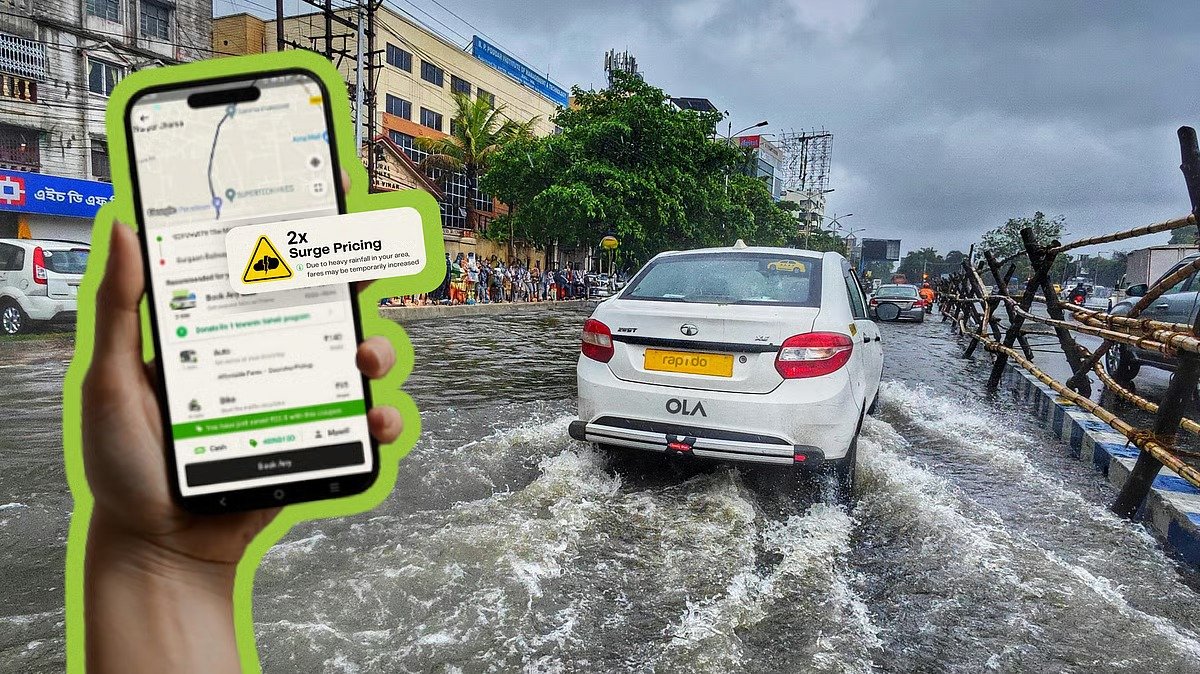
Delhi Rains Pricing has become one of the biggest concerns for commuters in Delhi-NCR after continuous heavy rainfall disrupted normal transportation across the region. As roads remained waterlogged and traffic congestion worsened, ride-hailing platforms such as Uber, Ola, Rapido, and other cab services witnessed a sharp rise in demand, leading to significant increases in fares.
Many commuters reported that the cost of booking a cab had doubled, tripled, and in some cases even increased up to five times the normal rate. Delhi Rains The sudden jump in Pricing has added financial pressure on office-goers, students, and daily travelers who were already dealing with long traffic delays caused by the monsoon.
The rainfall has highlighted how quickly transportation costs can change when demand outpaces the number of available drivers, making app-based cab services considerably more expensive during adverse weather conditions.
Table of Contents
Heavy Rain Creates Demand Shock for Cab Services
The past two days of relentless rain across Delhi, Noida, Gurugram, and nearby areas have disrupted daily life. Waterlogged roads, reduced visibility, and slow-moving traffic have made commuting increasingly difficult for residents.
As public transport experienced delays and many commuters preferred avoiding crowded buses or metro connections that required walking through flooded streets, demand for app-based taxis increased sharply. This sudden rise in bookings immediately affected Pricing, with ride-hailing platforms applying surge fares across numerous routes.
Unlike fixed transportation systems, app-based cab services use dynamic pricing models that automatically adjust fares according to real-time demand and driver availability. When more people request rides than drivers can accommodate, prices increase until supply and demand become balanced.
During periods of severe weather, this adjustment often becomes much more noticeable.
Commuters Witness Fares Rising Up to Five Times
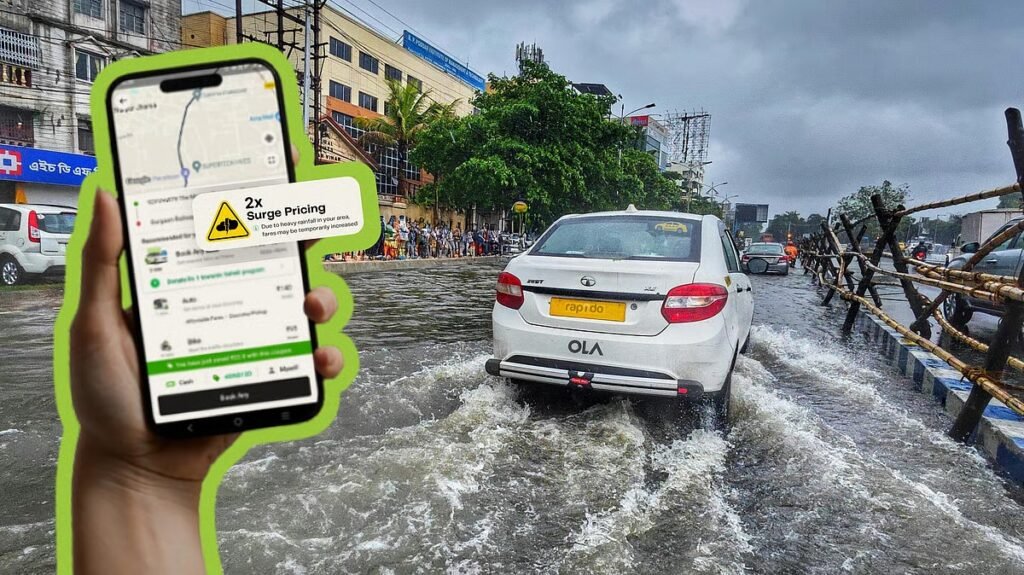
The increase in Pricing became particularly visible on popular commuting routes across Delhi-NCR.
For instance, a journey from Noida Extension to Film City, which generally costs between ₹270 and ₹300 under normal conditions, was reportedly being displayed at prices ranging from ₹700 to ₹900 during peak rainfall hours.
Similar fare increases were observed across several routes connecting residential areas with business districts, railway stations, metro hubs, and airports.
For many passengers, the sudden rise in transportation expenses created an unexpected burden, especially for those who rely on ride-hailing platforms for their daily commute.
Office employees travelling during morning and evening rush hours were among the worst affected, with some choosing to postpone travel or explore alternative transport options due to exceptionally high Pricing.
Why Pricing Increases During Heavy Rain
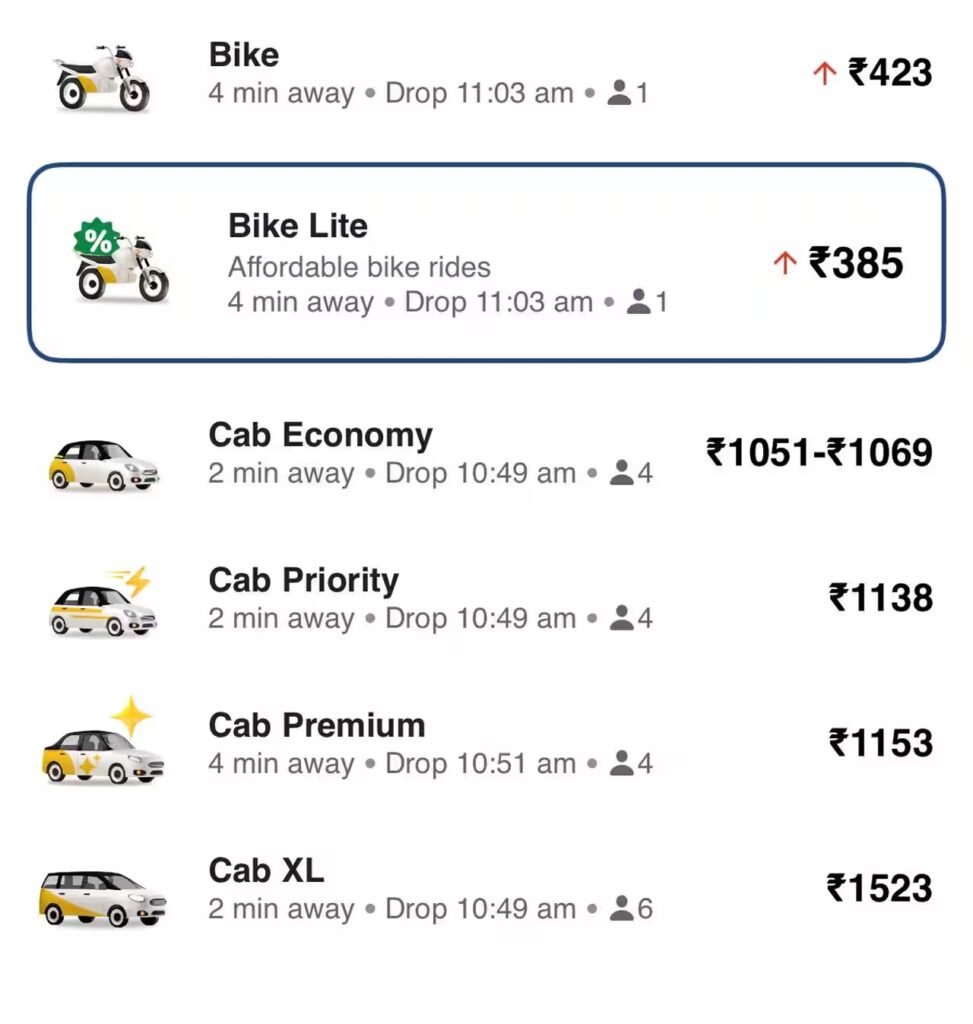
The sharp rise in Pricing during periods of heavy rainfall is primarily driven by dynamic fare systems used by ride-hailing platforms.
These systems continuously monitor several factors, including:
- Passenger demand
- Number of available drivers
- Distance to pickup location
- Traffic congestion
- Estimated travel time
- Weather conditions
When rainfall causes thousands of additional booking requests within a short period, the available driver network struggles to meet demand.
At the same time, many drivers either temporarily stop accepting rides or become unavailable because of flooded roads, traffic jams, or concerns about vehicle safety.
With demand increasing while supply decreases, the pricing algorithm automatically Delhi Rains raises fares to encourage more drivers to accept bookings.
Although this mechanism helps balance supply and demand, it often results in passengers paying substantially higher fares during emergencies or adverse weather.
Traffic Congestion Makes Every Ride Longer
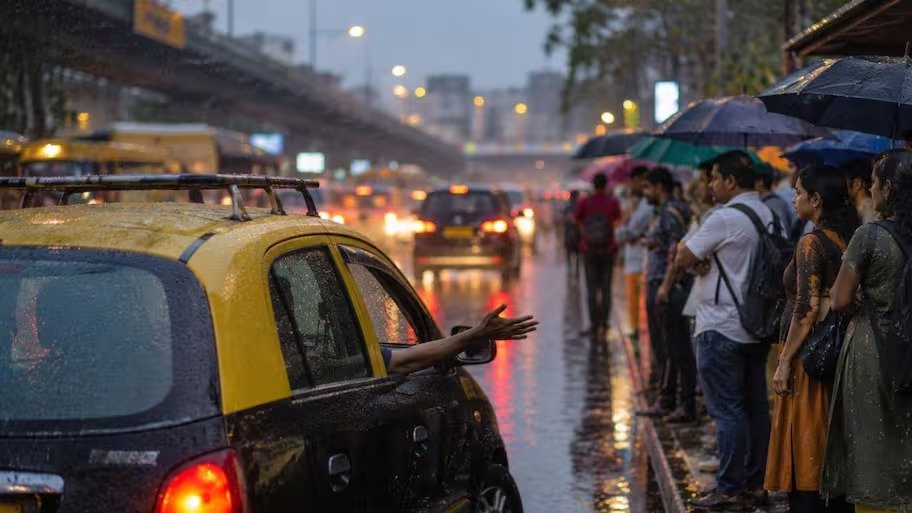
Heavy rainfall has not only increased Pricing but has also extended travel durations throughout Delhi-NCR.
Several roads witnessed severe waterlogging, forcing vehicles to move at extremely slow speeds. In many areas, Delhi Rains traffic crawled for hours as vehicles navigated flooded intersections and congested roads.
For drivers, longer journey times mean completing fewer trips throughout the day.
Instead of making multiple rides during peak hours, drivers may spend considerably more time completing a single booking.
This reduced efficiency directly affects driver availability across the city, contributing further to higher Pricing on ride-hailing applications.
Longer trips also increase fuel consumption and vehicle wear, making drivers more selective about the rides they choose to accept.
Driver Availability Declines During Monsoon
One of the biggest reasons behind increased Pricing is the decline in active drivers during heavy rainfall.
Flooded roads create additional risks for vehicles, including engine damage, stalled cars, and accidents. Many drivers avoid travelling through severely affected areas where road conditions remain uncertain.
Others reject bookings that involve heavily flooded neighbourhoods or locations known for persistent traffic congestion.
This reduction in available vehicles creates a shortage precisely when commuter demand reaches its highest level.
Passengers frequently experience longer waiting times before being matched with a driver. In some cases, drivers accept bookings but later cancel after assessing road conditions or expected delays.
These repeated cancellations further increase booking demand, pushing Pricing even higher.
Ride Cancellations Add to Passenger Frustration
Apart from higher fares, commuters have also reported frequent ride cancellations during the ongoing rainfall.
Drivers sometimes cancel trips after discovering heavy traffic on the selected route or estimating that reaching the pickup point would take too long.
In other situations, passengers themselves cancel bookings after noticing rapidly increasing fares or excessively long waiting times.
This cycle creates additional pressure on the ride-hailing ecosystem.
Every cancelled booking returns to the platform’s request queue, increasing demand once again and contributing to further adjustments in Pricing.
As a result, even passengers willing to pay higher fares may struggle to secure rides during peak monsoon hours.
Daily Commuters Face Growing Financial Pressure
The impact of higher Pricing is particularly significant for individuals who depend on app-based taxis for everyday transportation.
Working professionals travelling between home and office now face transportation expenses that are considerably higher than usual.
Students attending colleges, patients travelling to hospitals, business travelers heading to airports, and families with urgent travel requirements are among those experiencing increased commuting costs.
For someone making multiple trips in a single day, transportation expenses can rise substantially whenever surge pricing remains active for extended periods.
This situation becomes even more challenging during consecutive days of rainfall, when elevated fares continue throughout morning and evening peak hours.
Dynamic Pricing Remains a Key Feature of Ride-Hailing Platforms
Ride-hailing companies have long relied on dynamic Pricing systems to manage fluctuating demand.
The objective is to encourage more drivers to operate during periods of exceptionally high demand by offering them greater earning opportunities.
Supporters of this model argue that without dynamic pricing, passengers might find it even harder to secure rides because drivers would have little incentive to remain on the roads during difficult conditions.
However, Delhi Rains critics believe that significant fare increases during emergencies place an unfair financial burden on commuters who have limited transportation alternatives.
The debate surrounding dynamic Pricing often resurfaces whenever cities experience extreme weather events, festivals, or large public gatherings.
Public Transport Also Faces Weather Challenges
While many commuters considered switching to buses or metro services, heavy rainfall created challenges across the broader transportation network as well.
Waterlogged roads slowed bus operations in several parts of the city, while last-mile connectivity remained a concern for passengers travelling between metro stations and their destinations.
These difficulties encouraged more people to rely on app-based cab services despite higher Pricing, creating even greater demand for available vehicles.
The combination of weather disruptions Delhi Rains , slower traffic movement, and limited transport alternatives intensified pressure on the entire urban mobility system.
Weather Continues to Influence Urban Mobility
The recent rainfall demonstrates how closely weather conditions influence transportation patterns in large metropolitan cities like Delhi.
Heavy rain affects road infrastructure, traffic flow, public transport efficiency, and driver availability simultaneously, creating a ripple effect across the entire mobility network.
As demand for private transportation rises during adverse weather, Delhi Rains Pricing on ride-hailing platforms responds almost immediately through automated fare adjustment systems.
With monsoon activity expected to continue in many parts of northern India, commuters may continue experiencing fluctuating Pricing, longer waiting periods, and limited driver availability whenever heavy rainfall disrupts normal traffic conditions.