Delhi Protest: With marches and public demonstrations posing challenges for the national capital, Delhi Police has adopted a detailed planning approach to crowd management, traffic coordination and law-and-order preparedness. The report highlights a system in which preparations begin well before protesters assemble at a designated location. From estimating crowd sizes and assessing traffic disruptions to coordinating with other police units and preparing contingency arrangements, the process involves multiple stages designed to address potential risks.
The planning received renewed attention ahead of the October 10 protest called by the Cockroach Janta Party (CJP), which sought the resignation of Chief Election Commissioner Gyanesh Kumar over issues surrounding the Special Intensive Revision (SIR) of electoral rolls.
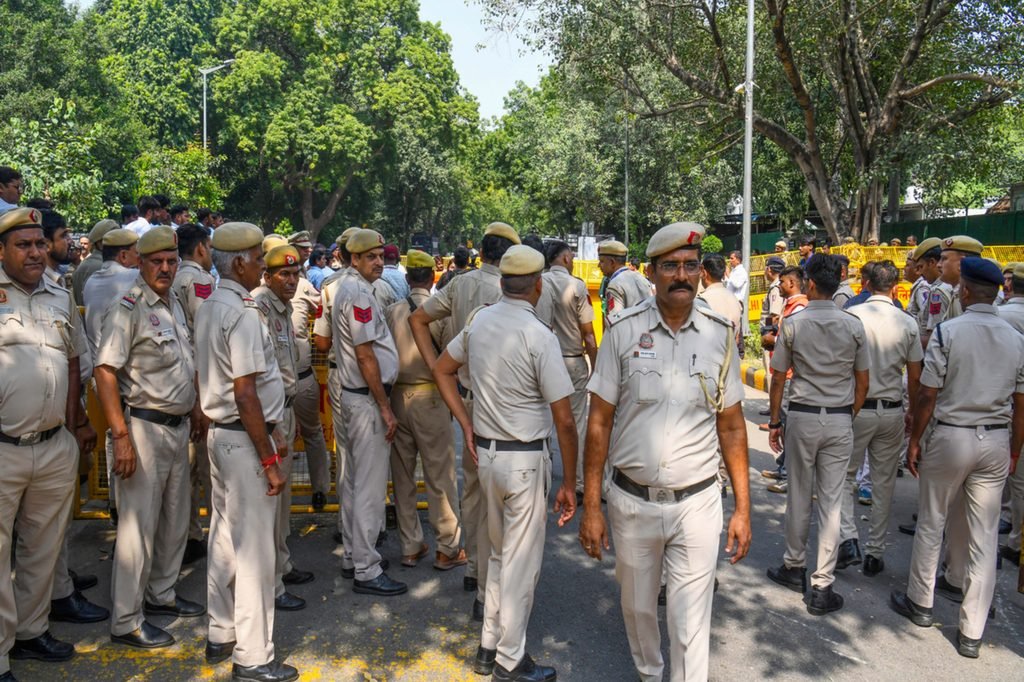
Table of Contents
Delhi Police Handles a Growing Number of Public Gatherings
Delhi Police dealt with an increase in several categories of public gatherings during the first eight months of 2026 compared with the corresponding period in 2025. The figures provide context for how authorities prepare for a Delhi protest and other public gatherings.
The number of dharnas increased from 1,235 in 2025 to 1,306 in 2026. Processions rose from 1,672 to 1,908, while marches and rallies increased from 273 to 304. Strikes also went up from 207 to 232 during the period.
However, the report recorded declines in other categories. Protests and miscellaneous activities decreased from 2,172 to 2,032, meetings fell from 1,104 to 914, and demonstrations dropped from 808 to 279. These figures highlight the changing demands placed on police personnel during a Delhi protest and similar events.
Each event can present different challenges depending on the expected turnout, location, duration and possible impact on surrounding roads. Consequently, planning for a small gathering may require a different approach from preparations for a large march involving thousands of participants.
Advance Planning Begins Before Protesters Reach the Venue
One of the key aspects of Delhi Police’s crowd-management system is its emphasis on gathering information before an event begins. This preparation is particularly important when authorities anticipate a large Delhi protest that could affect traffic and public movement.
According to the report, officers coordinate with organisers to understand the expected number of participants, the proposed venue, the timing and duration of the programme, the presence of prominent attendees and the purpose of the gathering.
These details help authorities assess the possible effects on traffic movement, public safety, security arrangements and the overall law-and-order situation. Such assessments are important when preparing for a Delhi protest in a busy part of the national capital.
The information also helps police determine the personnel and resources required for an event. A gathering expected to attract a large crowd may require additional deployment, coordination with traffic police and arrangements for managing movement around the venue.
Police decisions regarding permissions are assessed in the context of possible traffic obstruction, public safety concerns and the potential disturbance of public tranquillity, the report stated.
This advance assessment allows authorities to identify potential problems before they develop into larger challenges and prepare more effectively for a Delhi protest.
Designated Protest Venues Help Manage Crowd Sizes
The report also outlines the role of designated venues in organising public demonstrations in Delhi. Selecting an appropriate location is an important part of preparing for a Delhi protest, particularly when organisers expect a substantial turnout.
Under the arrangements described by The Times of India, Jantar Mantar is designated for programmes involving up to 1,000 people, Ramlila Maidan for gatherings of between 1,000 and 50,000 participants, and Burari for events expected to attract more than 50,000 people.
The purpose of allocating venues according to expected crowd size is to match a gathering with a location capable of accommodating it.
Large demonstrations can affect nearby roads, commercial areas and public transport services. Selecting an appropriate venue and estimating attendance in advance can help authorities plan entry and exit arrangements, manage traffic and determine the required security deployment during a Delhi protest.
The report also noted that the rules for demonstrations at Jantar Mantar do not permit marches towards sensitive locations. Organisers are expected to ensure that participants gather and disperse peacefully from the designated location.
Such arrangements form part of the wider framework used to manage public demonstrations while considering the safety and movement of people in surrounding areas.
Coordination Across Police Units Strengthens Preparedness
Managing a major protest is not the responsibility of a single police station or team. It requires coordination among different units, including district police and traffic police. This coordination becomes especially important when a Delhi protest involves participants arriving from different parts of the country.
According to the report, preparations can become more complex when participants travel to Delhi from other states. In such cases, police coordinate with their counterparts in other states and remain in contact with organisers to gather information about the gathering and its participants.
Once the information is assessed, deployment arrangements are planned accordingly.
Other preparations may include mobilising personnel, identifying locations where additional forces could be required and arranging food and water for officers working on the ground. Authorities also make provisions for handling situations in which legal violations or disturbances require further action.
This coordination allows different units to work towards a common operational plan rather than responding independently to developments. It can help officers respond more systematically when a Delhi protest creates additional demands on local policing resources.
Traffic police also play an important role because demonstrations can affect road movement far beyond the immediate protest site. Advance coordination can help officers identify vulnerable points, anticipate congestion and plan traffic arrangements around important routes.
Social Media Monitoring and Contingency Planning
The report identifies unplanned gatherings as a particular challenge for law-enforcement agencies because authorities may have less time to assess the situation and prepare appropriate arrangements. This is especially relevant when a Delhi protest is organised at short notice.
Delhi Police monitors social media for calls for demonstrations and other public gatherings, according to the report. The objective is to identify potential events and assess whether they could lead to gatherings in restricted or sensitive locations.
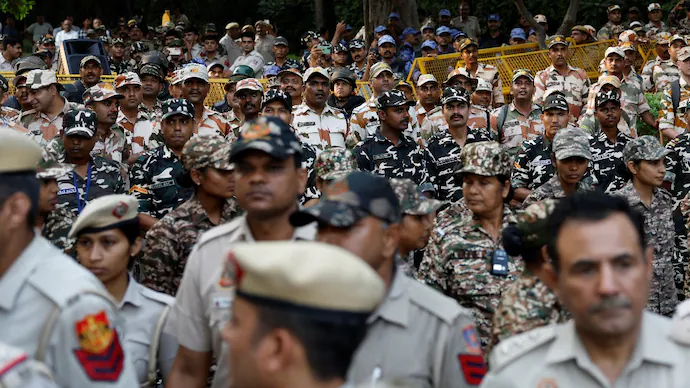
Police also maintain deployments at sensitive points, with additional personnel available when required. An officer quoted in the report said forces are positioned at sensitive locations and additional personnel can be mobilised if a crowd moves towards a restricted area.
This approach reflects the importance of contingency planning in crowd management. Even when a Delhi protest begins peacefully, its size, movement or surrounding circumstances may change. Having additional personnel available can help authorities respond to unexpected developments.
At the same time, the handling of any gathering depends on the circumstances on the ground, the applicable rules and the conduct of both officials and participants.
Preparations Ahead of the October 10 Protest
Delhi Police’s planning came into focus ahead of the CJP’s proposed October 10 protest, which called for the resignation of Chief Election Commissioner Gyanesh Kumar over the SIR of electoral rolls.
In a separate report published on October 9, The Times of India said police had sought additional Central Armed Police Forces (CAPF) personnel for deployment during the period surrounding the proposed demonstration.
Joint Commissioner of Police Madhur Verma also called on personnel to exercise restraint and use minimum force while managing crowds. In a statement reported by the newspaper, he emphasised discipline, dignity and protecting peace while carrying out policing duties during the Delhi protest.
The preparations included multi-layered barricading, enhanced surveillance and heightened vigilance at several entry points into Delhi. Officials also discussed the use of CCTV cameras and face-recognition cameras as part of the security arrangements, according to the report.
The measures reflected the scale of the anticipated security operation. However, the existence of a detailed plan does not by itself establish how successfully every measure worked in practice; that assessment requires evidence from the event itself.
Balancing Public Safety with the Right to Protest
Public demonstrations are an important part of democratic life, allowing citizens to express their views and raise concerns about government decisions and public policy. At the same time, authorities have responsibilities relating to public safety, traffic movement and the protection of people and property.
For Delhi Police, the challenge is to manage these responsibilities while applying the relevant rules consistently, particularly during a Delhi protest that attracts a large crowd.
Advance communication with organisers, appropriate venue selection, coordination between police units and clear instructions to personnel can contribute to a more orderly process. Transparent communication about restrictions and the reasons behind them can also help people understand the arrangements.
Equally important is ensuring that security measures remain proportionate to the situation and that peaceful participants can exercise their lawful rights. Police conduct, including the use of force and the treatment of people in custody, must remain subject to applicable law and accountability mechanisms.
A well-planned security operation should therefore be assessed not only by the number of personnel deployed or barricades installed, but also by how effectively it protects people, manages disruption and respects legal rights.
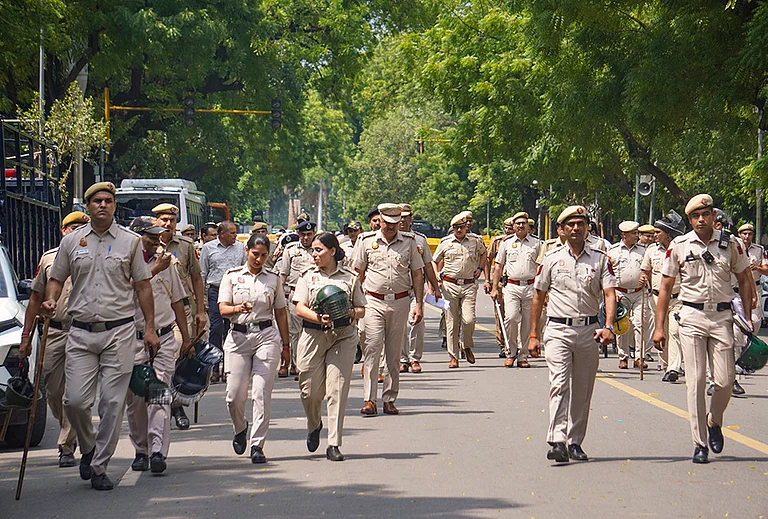
Professionalism and Restraint Remain Central to Crowd Management
The recent reports underline the preparation and coordination involved in managing demonstrations in Delhi. Crowd assessment, communication with organisers, traffic planning, inter-unit coordination and contingency arrangements are all parts of the process described by The Times of India.
The emphasis on restraint by senior police officials is also significant. Effective crowd management depends not only on physical deployment and security equipment but also on the judgement and conduct of personnel dealing directly with the public.
As the capital continues to host demonstrations on political and public issues, the ability to prepare for different scenarios remains an important responsibility for law-enforcement agencies.
Ultimately, the effectiveness of Delhi Police’s approach will depend on how well its planning translates into safe and orderly conditions on the ground. A balanced assessment must consider both the operational challenges faced by officers and the rights, safety and everyday needs of citizens affected by protest-related restrictions.