The visit to the Police Headquarter was marked by the felicitation of dedicated Traffic Praharis, the induction of new disaster response vehicles, and the launch of a fleet of scooties for women traffic police personnel. The occasion also provided an opportunity for senior officers to present a detailed overview of the functioning of the Traffic Unit, showcasing the various initiatives undertaken to maintain order on Delhi’s busy roads.
Delhi’s commitment to improving road safety and modernizing traffic management received a significant boost as Honorable Lieutenant Governor Shri Taranjit Singh Sandhu visited the Delhi Traffic Police Headquarter at Todapur. The visit highlighted the continuous efforts being made by the Delhi Traffic Police to strengthen enforcement, improve emergency response capabilities, and enhance public service through technology and better infrastructure.
The event reflected the Delhi Police’s broader vision of combining efficient policing with modern equipment, community participation, and quick response systems. It also reinforced the importance of recognising personnel who work tirelessly to make roads safer for millions of commuters every day.
Table of Contents
Lieutenant Governor Reviews the Working of the Police Headquarter
During his visit to the Police Headquarter, Lieutenant Governor Shri Taranjit Singh Sandhu was given a comprehensive presentation on the functioning of the Delhi Traffic Police. Senior officials briefed him about the unit’s overall operations, explaining how traffic regulation, enforcement, prosecution, and public engagement are coordinated across the national capital.
The Police Headquarter serves as the command centre for planning and monitoring traffic management throughout Delhi. From handling daily congestion and ensuring smooth traffic movement to implementing road safety campaigns and enforcing traffic laws, the headquarters plays a vital role in keeping one of India’s busiest road networks operational.
Officials explained how the Traffic Unit combines field operations with technology-driven monitoring to identify violations, respond to emergencies, and ensure compliance with traffic regulations. Such integrated functioning has become increasingly important as Delhi continues to witness rapid growth in vehicle numbers and urban mobility.
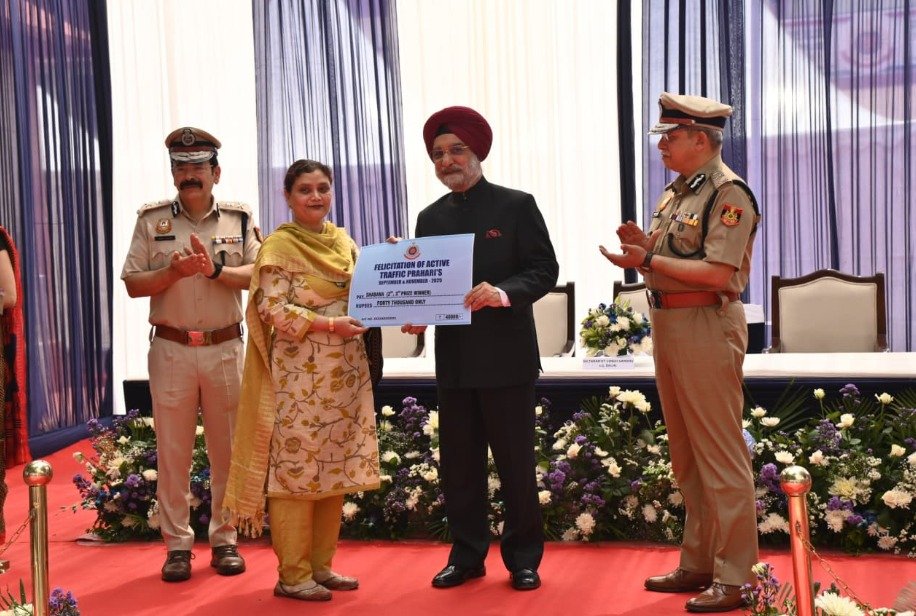
Honouring Traffic Praharis for Their Contribution
One of the highlights of the visit to the Police Headquarter was the felicitation of Traffic Praharis who have made notable contributions towards promoting road discipline through enforcement activities.
Traffic Praharis work alongside the Delhi Traffic Police as responsible citizens who actively support road safety initiatives. Their involvement helps strengthen public participation in traffic management by encouraging compliance with traffic rules and spreading awareness about responsible driving practices.
Recognising these individuals sends a strong message that road safety is not solely the responsibility of law enforcement agencies but also requires active cooperation from the public. Their efforts in reporting violations, promoting safe road behaviour, and assisting in awareness campaigns contribute significantly to creating a safer traffic environment.
The appreciation extended during the event reflected Delhi Police’s belief that effective traffic management is achieved through partnerships between enforcement agencies and citizens.
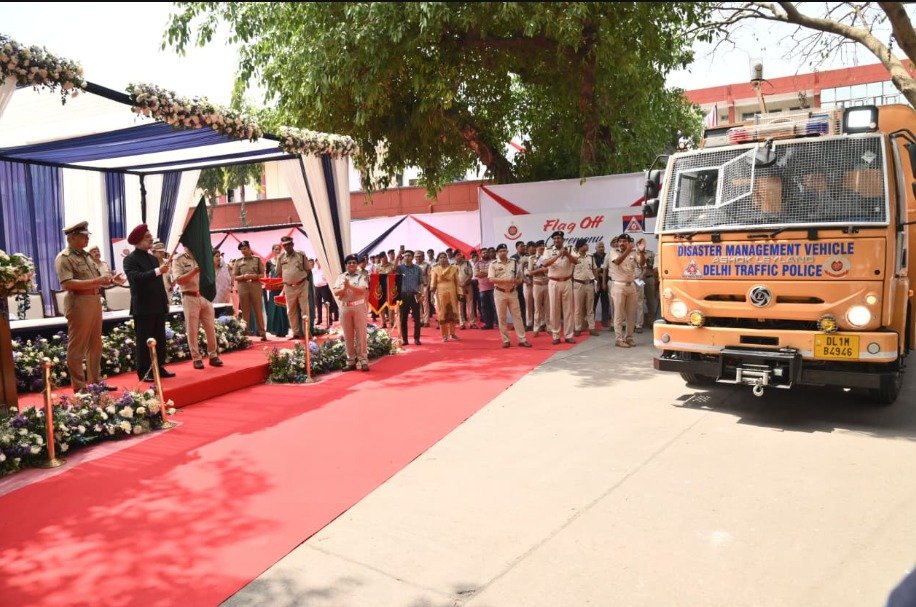
Disaster Response Vehicles Added to the Police Headquarter Fleet
A major announcement during the visit was the flagging off of two newly procured disaster response vehicles that will become part of the operational resources available at the Police Headquarter.
These specialised vehicles are expected to play an important role during emergencies such as road accidents, severe weather conditions, vehicle breakdowns, and other incidents that disrupt normal traffic movement.
In a city like Delhi, where thousands of vehicles travel on major roads every hour, even minor incidents can quickly lead to significant traffic congestion. Rapid deployment of disaster response vehicles enables traffic personnel to clear accident sites more efficiently, restore traffic flow, and assist stranded commuters.
The induction of these vehicles demonstrates the Delhi Traffic Police’s growing focus on preparedness and emergency management. Instead of responding only after congestion develops, dedicated response teams equipped with specialised vehicles can intervene quickly, reducing inconvenience for the public and ensuring faster restoration of normal traffic conditions.
Strengthening emergency response infrastructure at the Police Headquarter also supports better coordination between traffic personnel and other emergency services during large-scale incidents.
New Scooties to Enhance Mobility of Women Traffic Personnel
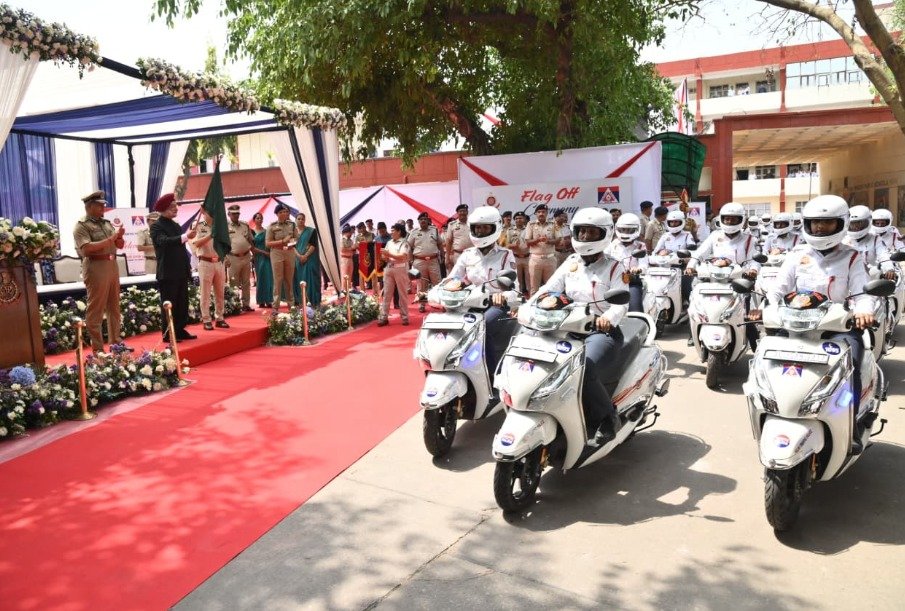
Another significant development during the visit to the Police Headquarter was the launch of a new fleet of 38 scooties dedicated to women traffic police personnel.
The addition of these vehicles is expected to improve operational mobility, enabling officers to reach congestion points, accident sites, and enforcement locations more quickly.
Traffic policing often requires rapid movement across crowded urban roads where larger vehicles may face delays. Scooties provide greater flexibility and allow officers to respond efficiently in areas with heavy traffic or narrow lanes.
The initiative also reflects the Delhi Police’s continued efforts to empower women personnel by providing them with modern resources necessary for effective policing. Women officers have increasingly taken on leadership roles in traffic regulation, enforcement drives, awareness campaigns, and public assistance, making mobility an important aspect of their daily responsibilities.
The new fleet will strengthen field operations while also encouraging greater participation of women in frontline policing assignments.
Technology and Enforcement Remain Central to Modern Traffic Policing
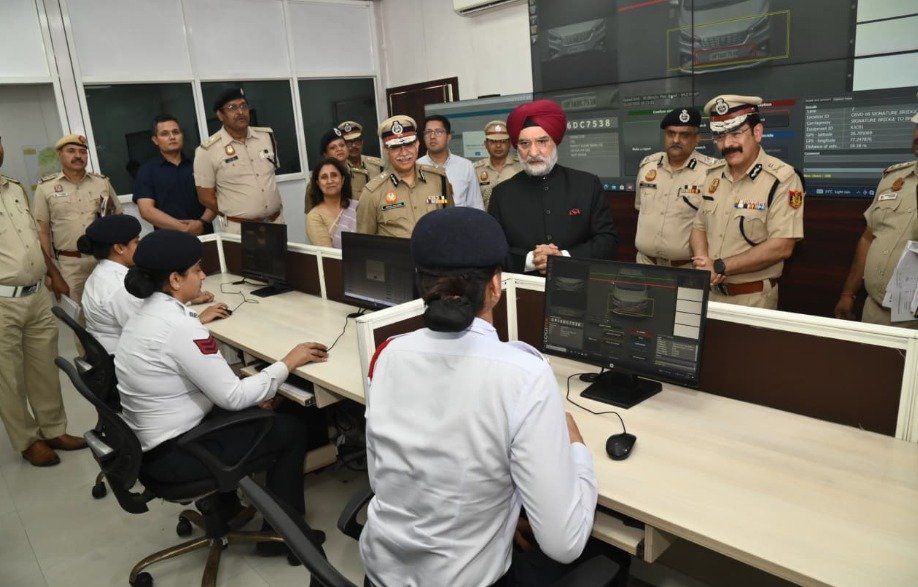
During the visit to the Police Headquarter, the Lieutenant Governor reviewed various operational divisions responsible for ensuring effective traffic management across Delhi.
Among them was the Enforcement Unit, which plays a crucial role in ensuring compliance with traffic laws. This unit monitors violations, conducts enforcement drives, issues challans, and implements measures aimed at reducing dangerous driving practices.
Modern traffic enforcement increasingly relies on digital technologies such as surveillance cameras, automated number plate recognition systems, and electronic challan mechanisms. These systems help improve transparency while ensuring that violations are detected objectively and efficiently.
The Police Headquarter continues to integrate technology with traditional policing methods to improve both enforcement accuracy and public convenience.
Public Interface Unit Strengthens Citizen Services
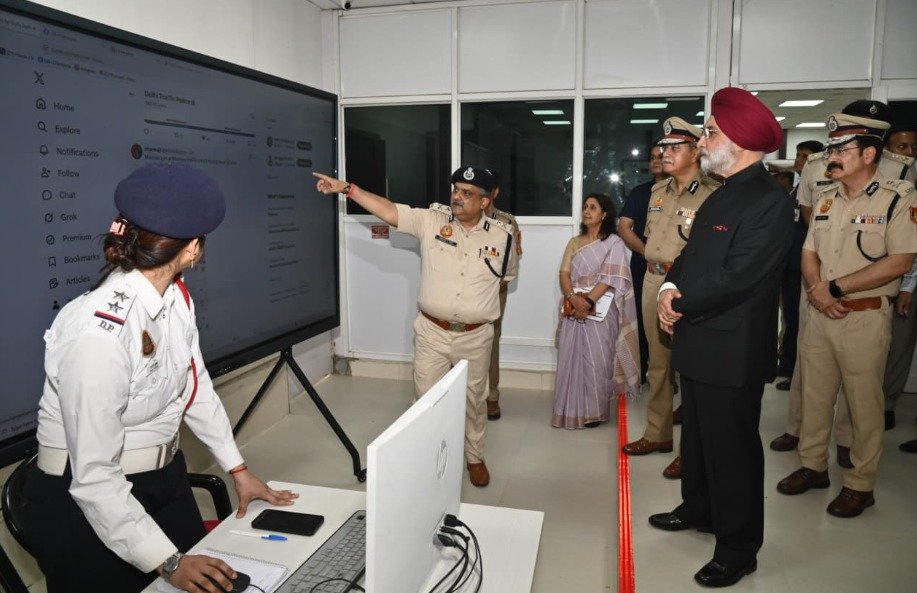
The Lieutenant Governor also reviewed the functioning of the Public Interface Unit at the Police Headquarter, which serves as an important bridge between the Delhi Traffic Police and the public.
The unit focuses on addressing public grievances, providing traffic-related information, conducting awareness programmes, and encouraging citizen engagement in road safety initiatives.
Effective communication between police and the public has become increasingly important in urban traffic management. Citizens frequently require assistance regarding traffic advisories, road diversions, parking regulations, accident reporting, and enforcement-related queries.
By maintaining an accessible public interface, the Police Headquarter ensures that people receive timely information while also allowing authorities to gather valuable public feedback for improving traffic services.
Appreciating the Commitment of Delhi Traffic Police
The visit also served as recognition of the dedication displayed by Delhi Traffic Police personnel who perform demanding duties under challenging conditions throughout the year.
Managing traffic in the national capital involves far more than regulating vehicle movement. Officers regularly handle accident response, festival traffic arrangements, VIP movements, emergency diversions, public events, weather-related disruptions, and awareness campaigns, often while working long hours in extreme heat, heavy rain, and severe winter conditions.
Their consistent efforts contribute directly to reducing congestion, improving commuter safety, and maintaining orderly movement across one of India’s most complex urban road networks.
The initiatives showcased at the Police Headquarter reflect an organisation that continues to evolve with changing urban needs by investing in technology, mobility, disaster preparedness, and community engagement. The recognition of Traffic Praharis, deployment of specialised disaster response vehicles, induction of scooties for women personnel, and continued emphasis on transparent enforcement collectively demonstrate Delhi Police’s commitment to building a safer, smarter, and more responsive traffic management system for the capital.