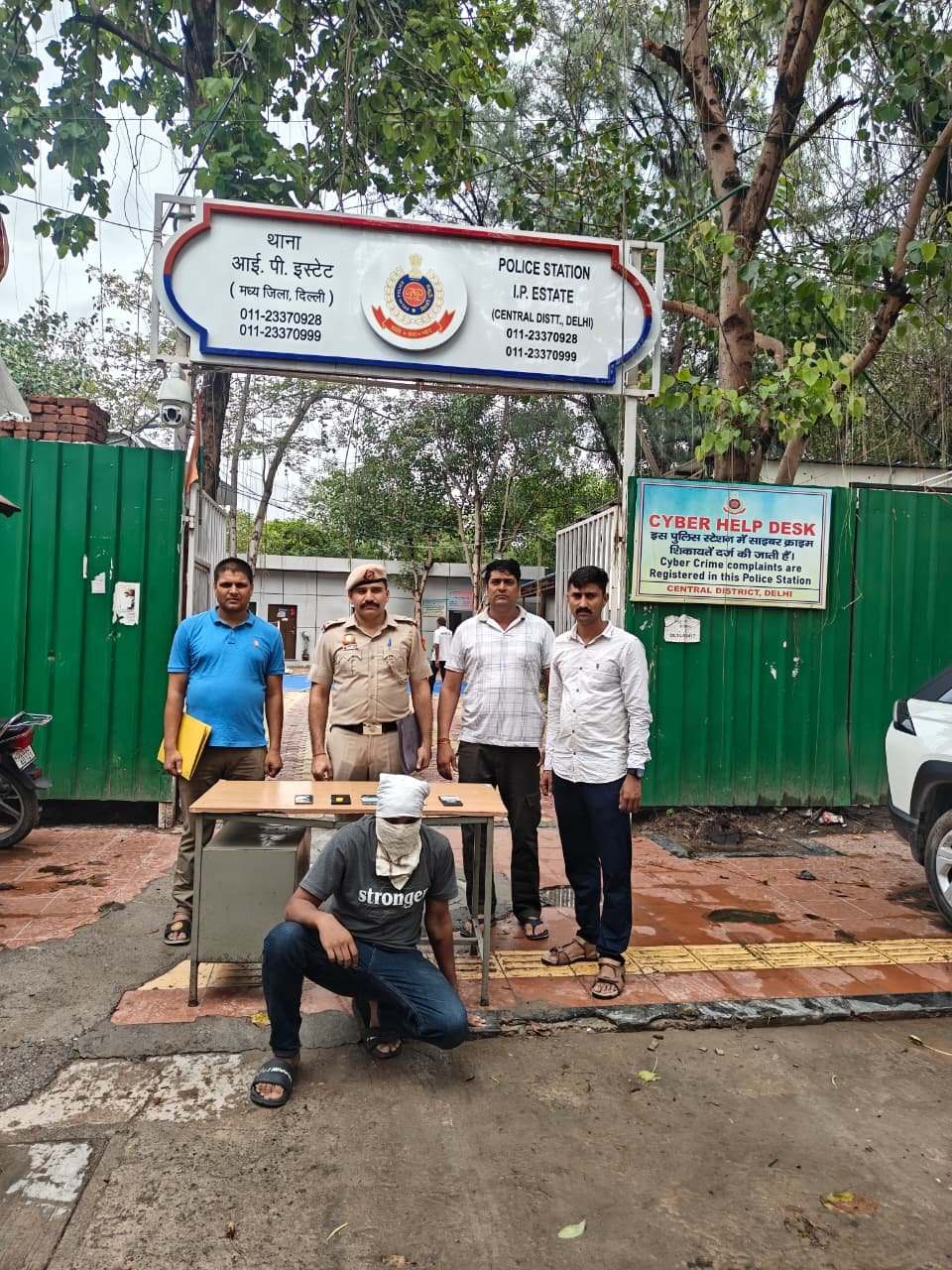
Snatcher networks operating across Delhi have suffered a major setback after the Central District Police arrested a notorious repeat offender allegedly involved in a long series of mobile phone snatching, robbery and theft cases. The arrest of 26-year-old Shahrukh, an active Bad Character (BC) of Shastri Park and a declared “Delhi-Out” criminal, marks a significant breakthrough in the investigation of multiple mobile snatching incidents reported across Delhi and the National Capital Region (NCR).
The operation, carried out by Police Station IP Estate under the Central District, not only led to the arrest of a key Snatcher but also resulted in the recovery of five stolen mobile phones linked to various theft and snatching cases. More importantly, investigators believe the arrest has helped dismantle an organised criminal gang that had been targeting commuters on busy roads, flyovers and highways across the city.
The case also highlights the growing use of technology in policing, with investigators analysing footage from more than 750 CCTV cameras, supported by technical surveillance and secret intelligence, before identifying and arresting the accused.
Table of Contents
A serial snatching spree triggered the investigation
The investigation began on June 27, 2026, when Police Station IP Estate received a PCR call from a victim whose mobile phone had been snatched while he was travelling on a Rapido motorcycle near the IP Flyover, from ITO towards Kashmiri Gate.
According to the complaint, two motorcycle-borne assailants approached from behind, snatched his OnePlus Nord-4 smartphone and escaped before anyone could react.
Police immediately registered a case and launched an investigation.
However, what initially appeared to be a single incident soon revealed a much larger pattern.
Investigators found that four separate mobile snatching incidents had occurred within nearly one hour in the same ITO-IP Estate corridor. The repeated attacks suggested that the offences were not isolated crimes but part of a coordinated operation carried out by an organised Snatcher gang.
The incidents had created fear among commuters who regularly travel through one of Delhi’s busiest road networks.
Technology played a decisive role
Recognising the seriousness of the crimes, Delhi Police formed a dedicated investigation team that combined conventional policing with modern investigative techniques.
Rather than relying only on eyewitness accounts, officers carried out an extensive digital investigation.
More than 750 CCTV cameras installed across entry points, exit routes, intersections and possible escape corridors were examined in painstaking detail.
Every movement of the suspects was reconstructed using surveillance footage.
Investigators also relied on technical surveillance, local intelligence and information received from confidential informers.
The combination of digital evidence and field intelligence eventually led police to identify the gang members responsible for the repeated offences.
The investigation reflects how modern policing increasingly depends on technology, particularly in urban environments where surveillance systems can provide crucial evidence.
Earlier arrests led investigators closer to the gang
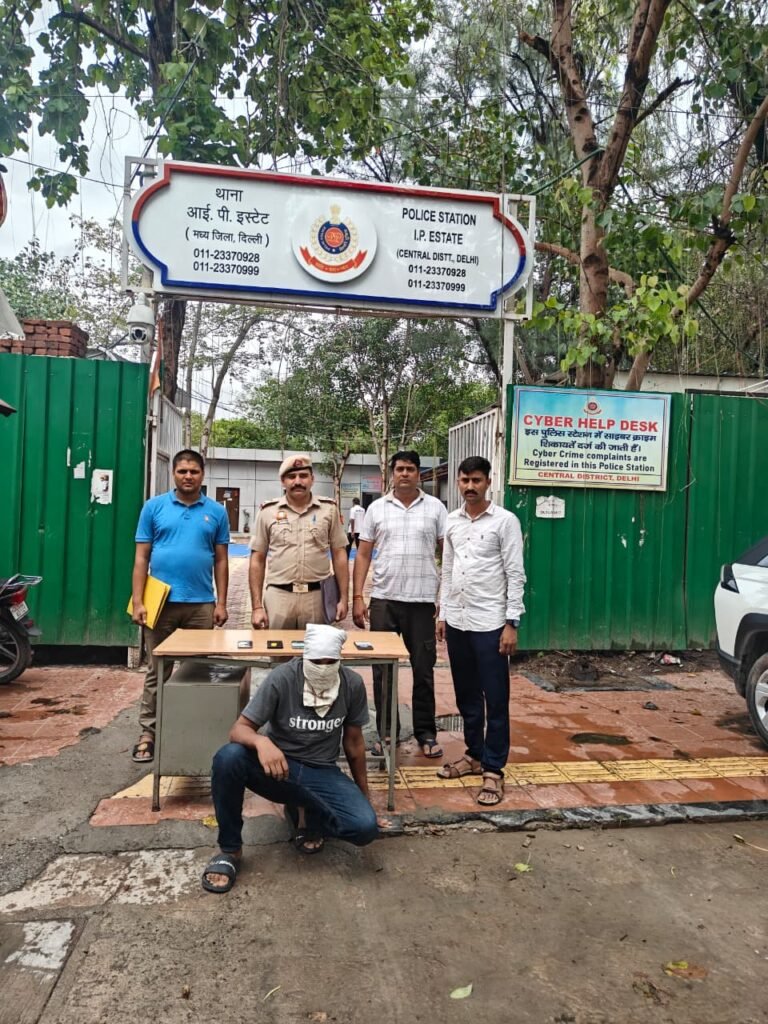
During the initial phase of the investigation, police had already arrested two accused identified as Asif and Tarik alias Danish.
Based on the evidence collected during their interrogation, investigators invoked Section 112 of the Bharatiya Nyaya Sanhita (BNS) relating to organised crime.
Further investigation established that Shahrukh was an active member of the organised criminal group and allegedly played a significant role in planning and executing repeated snatching incidents.
This development transformed the investigation from a routine theft case into a larger probe targeting an organised Snatcher network operating across multiple districts.
Secret information leads to arrest
The breakthrough came after police received specific intelligence indicating that Shahrukh would visit the area outside Tis Hazari Courts.
Acting swiftly, the investigation team laid a carefully planned trap.
The operation was executed with precision, leaving the accused with no opportunity to flee.
Following his arrest, police conducted a lawful search of his residence.
The search resulted in the recovery of five stolen or suspected stolen mobile phones, many of which were later linked to theft and mobile snatching cases registered in different police stations across Delhi and NCR.
The successful operation demonstrated the patience and professionalism of Delhi Police, whose systematic investigation ultimately led to the arrest of the alleged Snatcher despite the gang’s attempts to evade law enforcement.
Five stolen mobile phones recovered
Police recovered the following mobile phones during the search:
- OPPO A6
- Samsung Galaxy F15
- Samsung Galaxy A2
- Samsung Galaxy F15
- Samsung Galaxy M23
Verification established that these devices were connected with theft and snatching cases registered at different police stations in Delhi and neighbouring NCR regions.
The recovery not only strengthens the prosecution’s case but also provides an opportunity for several victims to recover their stolen property.
Recovering stolen electronic devices often becomes difficult because organised criminal groups quickly sell them through illegal receivers or transport them outside the city.
The timely recovery therefore represents another important achievement for the investigation team.
How the gang operated
According to police, the accused disclosed several details regarding the functioning of the gang during sustained interrogation.
Investigators found that the organised Snatcher group primarily targeted commuters travelling on motorcycles, scooters and app-based taxi services.
Busy roads, highways, flyovers and crowded intersections were selected because victims often remained focused on traffic, making sudden snatching easier.
The gang generally used stolen motorcycles to avoid identification.
One snatcher accused drove the motorcycle while the pillion rider carried out the actual snatching.
Within seconds, the duo would escape through pre-planned routes before victims could seek help.
Police also stated that stolen mobile phones were either sold to receivers operating in Delhi and NCR or hidden temporarily until they could be disposed of safely.
Such organised methods explain why mobile snatching cases often become difficult to solve without detailed surveillance and intelligence gathering.
Involvement in multiple criminal cases
Verification conducted by Delhi Police revealed that Shahrukh is not a first-time offender.
According to investigators, he has been involved in around 30 criminal cases, including offences related to mobile snatching, robbery, theft and receiving stolen property.
Police records further show that he is an Active Bad Character (BC) and snatcher of Police Station Shastri Park and has previously remained lodged in Tihar Jail and Mandoli Jail.
The accused had allegedly been declared “Delhi-Out” by the North-East District Police due to his criminal activities.
Such a lengthy criminal history demonstrates why habitual offenders remain a major concern for law enforcement agencies.
Repeat offenders often possess extensive knowledge of police procedures, making investigations significantly more challenging.
Organized crime angle strengthens investigation
One of the notable aspects of the case is the invocation of Section 112 BNS, which deals with organised crime.
The inclusion of organised crime provisions suggests that investigators believe the offences were not isolated incidents committed for personal gain but formed part of a structured criminal enterprise.
Organised Snatcher gangs usually operate with clearly defined roles.
Some members carry out the theft.
Others arrange transportation.
Additional associates dispose of stolen property through illegal receivers.
This organised structure allows criminal groups to commit repeated offences while attempting to remain hidden from law enforcement agencies.
By investigating the snatcher gang as an organised network rather than focusing only on individual offences, Delhi Police can identify additional members, receivers and financiers connected to the illegal operation.
Several cases solved across Delhi and NCR
The arrest has reportedly helped investigators work out several pending cases registered in Delhi and neighbouring areas.
Police stated that the accused’s involvement has been linked to cases registered at:
- Sunlight Colony
- Mandawali
- IP Estate
- Jama Masjid
- Indirapuram in Ghaziabad
Working out multiple cases through a single arrest reflects the importance of detailed investigations.
When organised snatcher offenders are arrested, investigators often solve several pending cases simultaneously by analysing recovered property, digital evidence and disclosure statements.
Appreciating Delhi Police’s investigation
The successful operation deserves appreciation for its methodical execution and professional investigation.
Instead of relying solely on routine patrols, Delhi Police adopted a comprehensive strategy involving digital surveillance, technical analysis, intelligence collection and coordinated field operations.
Analysing more than 750 CCTV cameras required considerable effort, patience and attention to detail.
The investigation also demonstrates the importance of teamwork, as officers combined field intelligence with technological resources to identify and arrest a habitual Snatcher who had allegedly been operating across multiple jurisdictions.
The snatcher recovery of stolen mobile phones further highlights the effectiveness of the investigation and increases the possibility of returning valuable property to victims.
Mobile snatching remains a major urban policing challenge
Mobile phones have become one of the most frequently targeted valuables in urban crime because of their high resale value and constant public use.
Snatcher often exploit crowded roads, traffic signals and slow-moving vehicles where commuters remain distracted.
Organised Snatcher gangs typically complete offences within seconds before escaping through interconnected road networks.
Such crimes snatcher not only result in financial losses but also expose victims to risks involving identity theft, banking fraud and misuse of personal information stored on smartphones.
This makes prompt police action particularly important.
Following the arrest, the accused was produced before the competent court and remanded to judicial custody.
Investigators are continuing efforts to identify remaining gang members, trace receivers involved in purchasing stolen mobile phones and recover additional stolen property connected to the organised Snatcher network.
The recovered evidence, digital surveillance records and disclosures made during interrogation are expected to assist Delhi Police in expanding the investigation into other similar offences reported across Delhi and the National Capital Region, while further strengthening the crackdown on organised street crime.