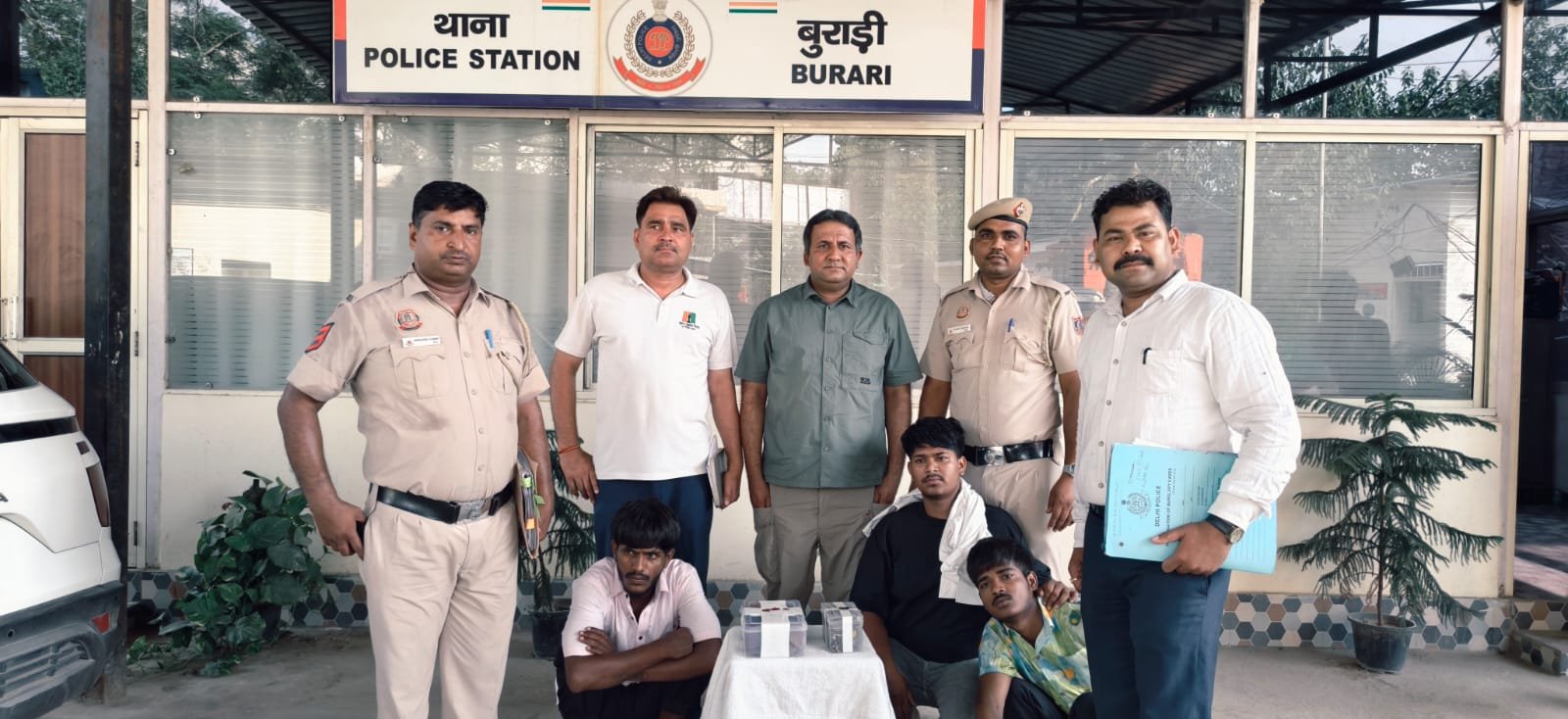
Burglars Busted, In a major success against organized property crime, Delhi Police has busted an interstate gang of notorious burglars allegedly responsible for a series of house break-ins across North Delhi. The operation, carried out by the Burari Police Station team, resulted in the arrest of three adult accused and the apprehension of one Child in Conflict with Law (CCL), leading to the recovery of stolen gold and silver jewellery worth approximately ₹14–15 lakh.
The case is being seen as a significant achievement because the accused were not ordinary offenders but members of the infamous Rajan Gang, a criminal group allegedly involved in multiple burglary and robbery cases across Delhi and Uttar Pradesh. According to police, the gang members were known for carrying firearms and knives during their operations, making them dangerous criminals capable of attacking anyone who attempted to resist.
The successful operation not only led to the recovery of valuables stolen from victims but also helped solve six burglary and theft cases registered at Burari Police Station. The investigation reflects the importance of intelligence-based policing, technical surveillance and coordinated interstate operations in tackling organized crime.
Table of Contents
Burglary Complaint Sets the Investigation in Motion
The operation began after a resident of Kamal Vihar in Burari approached police on June 21, 2026, reporting a major burglary at his residence.
According to the complaint, unknown persons had broken into the locked house and escaped with gold and silver jewellery along with cash amounting to ₹50,000. The incident was registered as an e-FIR under the relevant provisions of the Bharatiya Nyaya Sanhita, and investigators immediately began treating the matter as a priority because of the substantial loss suffered by the complainant.
House burglaries continue to remain a challenge in densely populated urban areas, particularly when criminals carefully monitor residential neighbourhoods before striking. In this case, investigators suspected from the beginning that experienced offenders were involved because the burglary appeared to have been executed with planning rather than by opportunistic thieves.
Special Investigation Team Formed by Burari Police
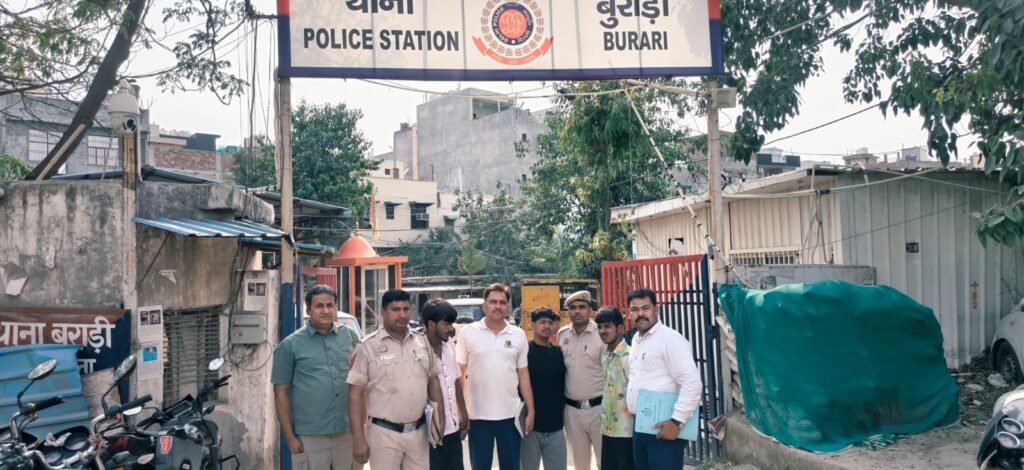
Recognising the seriousness of the offence, senior officers at Burari Police Station constituted a dedicated investigation team comprising experienced personnel under the supervision of the Station House Officer and senior district officers.
Rather than relying on routine investigation alone, the team adopted a comprehensive strategy that combined traditional policing methods with modern investigative techniques. Officers simultaneously examined CCTV footage, collected local intelligence, questioned residents, analyzed movement patterns and verified criminal records of known offenders operating in the area.
This multi-pronged approach proved crucial in identifying the suspects within a short period.
The operation is another example of how Delhi Police continues strengthening intelligence-led policing to dismantle organized criminal networks rather than merely solving isolated incidents.
CCTV Footage Provides the First Breakthrough
One of the most important developments came after investigators carefully analysed CCTV cameras installed near the crime scene.
Hours of footage were reviewed to reconstruct the movements of suspicious individuals before and after the burglary.
Police identified four men moving towards the complainant’s residence before the crime took place. Their behaviour and subsequent movements immediately attracted investigators’ attention.
Although the footage did not reveal every detail of the burglary itself, it provided investigators with clear visuals of the suspects, allowing police to circulate their photographs and begin identification through local intelligence sources.
The CCTV evidence became the foundation upon which the rest of the investigation was built.

Local Intelligence Points Towards the Rajan Gang
Once the suspects’ photographs were circulated among police informers and local intelligence networks, investigators began receiving crucial information linking the incident to the Rajan Gang.
According to police, the Rajan Gang had developed a reputation for carrying out carefully planned burglaries across different parts of Delhi while frequently changing locations to avoid detection.
Unlike casual offenders, the gang allegedly conducted detailed reconnaissance before selecting their targets. They preferred locked houses where occupants had been away for extended periods, thereby reducing the chances of confrontation during the burglary.
With this fresh intelligence, investigators shifted their attention towards known members of the gang and began conducting raids at their residences and suspected hideouts across Delhi.
However, by the time police reached these locations, the suspects had already fled.
Their disappearance suggested that the accused were aware police had begun searching for them, forcing investigators to expand the operation beyond Delhi.

Interstate Search Intensifies as Gang Members Go Underground
The investigation soon extended into neighbouring Uttar Pradesh after police gathered information that the gang leader maintained strong links with his native village in Shahjahanpur.
Police teams travelled to the district and conducted multiple searches at locations associated with the accused.
Despite sustained efforts, the suspects remained untraceable.
Instead of limiting the investigation to conventional searches, officers continued gathering local intelligence by interacting with residents, confidential sources and people familiar with the movements of the accused.
These efforts proved invaluable because they eventually generated the breakthrough that investigators had been waiting for.
The determination shown by the investigating officers ensured that the trail remained active despite the gang’s repeated attempts to evade arrest.

Secret Information Changes the Direction of the Case
A major turning point came on June 23 when police received specific intelligence regarding one member of the group.
Acting swiftly on the information, investigators apprehended a Child in Conflict with Law from the Mukundpur area of Delhi.
During questioning, the juvenile reportedly revealed important details about the burglary and identified the remaining members involved in the crime.
More significantly, investigators learnt that a community feast, or bhandara, was scheduled to take place on June 25 in the native village of the alleged gang leader at Katiya Bujurg in Shahjahanpur.
According to the information received, all three adult accused were expected to attend the gathering.
This intelligence provided investigators with an opportunity that could finally bring the burglars busted prolonged operation to a successful end.
Police Lay a Carefully Planned Trap in Uttar Pradesh
Without wasting time, Delhi Police immediately dispatched a team to Shahjahanpur and discreetly monitored the identified location.
Rather than conducting a hurried raid that could alert the suspects, officers patiently laid a trap and maintained surveillance around the village.
Their patience paid off when the three accused allegedly arrived at the location as anticipated.
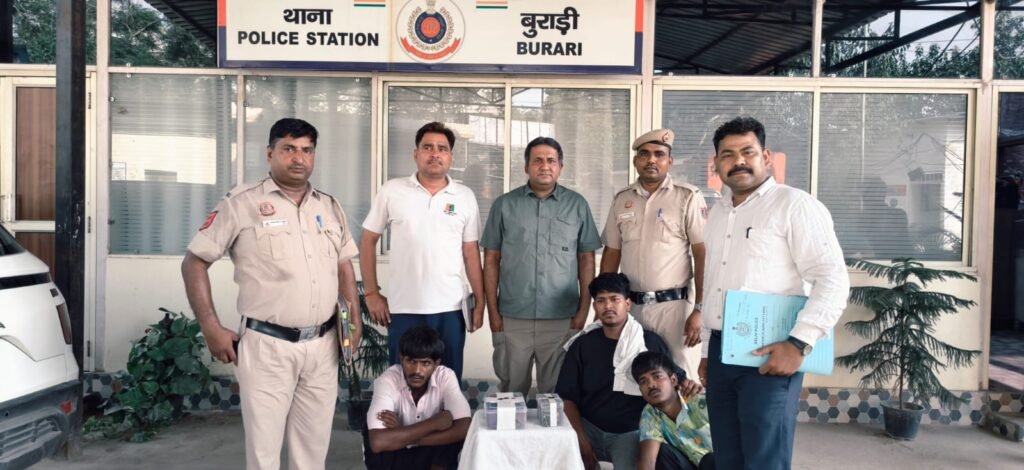
Police moved in swiftly and arrested burglars busted Rajan, Sumit alias Gullu and Sandeep alias Noni without allowing them any opportunity to escape.
The successful arrests marked the culmination of several days of continuous surveillance, intelligence gathering and interstate coordination.
The operation once again demonstrated the effectiveness of strategic policing, where patience and planning often produce better results than immediate action.
Hidden Jewellery Worth Lakhs Recovered
Following the arrest, investigators questioned the accused regarding the stolen property.
Based on disclosures made during interrogation, police conducted searches at the residence of the alleged gang leader in Shahjahanpur.
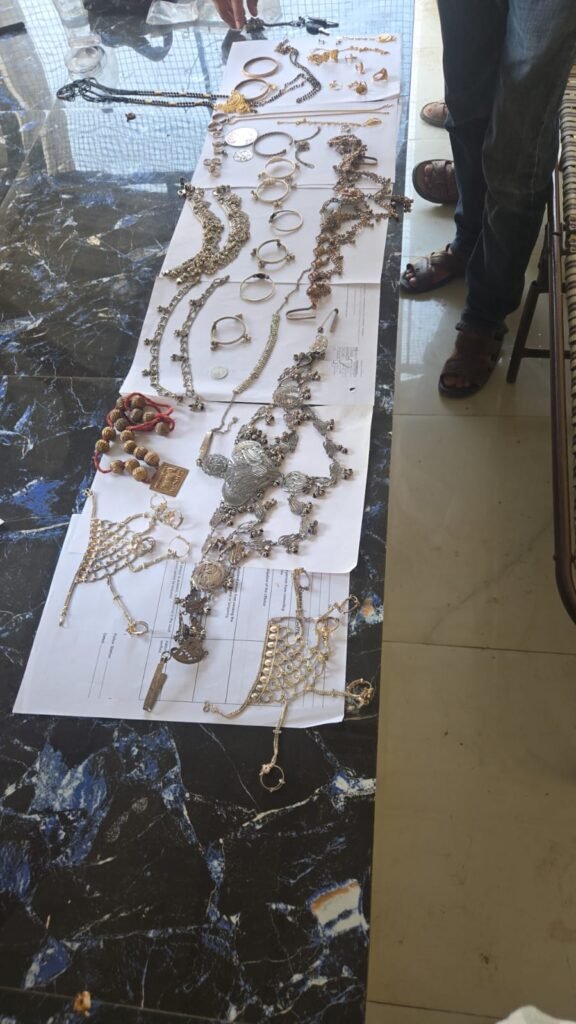
Investigators recovered a large quantity of stolen jewellery that had allegedly been hidden inside a pit dug within the house.
According to Delhi Police, the recovered ornaments—including gold rings, gold chain, gold bangles, mangal sutra, gold locket, nose pins, silver bangles and silver waist belts—are collectively burglars busted valued at approximately ₹14–15 lakh.
The recovery represents one of the most significant achievements of the operation because stolen jewellery often gets melted or disposed of quickly, burglars busted making recovery extremely difficult.
Police also seized clothing allegedly worn by the accused during the commission of the burglary, which may serve as additional evidence during the investigation.
Burglars Busted as Police Uncover the Gang’s Criminal Strategy
During sustained interrogation, investigators claim the accused revealed how they carefully selected their targets before committing burglaries.
According to police, the gang would roam around residential colonies in Burari, Mukundpur and nearby localities during late-night hours looking for houses burglars busted that appeared locked.
Instead of striking immediately, they allegedly revisited the selected houses multiple times over the following days to confirm that the occupants remained away.
Only after satisfying themselves that the house would remain vacant burglars busted would they execute the burglary using specialised house-breaking tools.
Police further stated that gang members allegedly carried firearms and knives during their operations so they could threaten or attack anyone who attempted to intervene.
Such methods underline why experienced burglars busted continue to pose a serious threat despite advances in surveillance technology.
Investigation Links the Gang to Multiple Cases
The investigation did not stop with the recovery of stolen property.
During interrogation, police reportedly gathered information linking the accused to several other burglary and theft incidents committed in the Burari area.
Further verification enabled investigators to connect the gang with five additional criminal cases, taking the total number of solved cases to six.
For investigators, this was perhaps the biggest achievement of the operation.
Rather than solving a single burglary complaint, Delhi Police dismantled an organized criminal network that had allegedly been targeting burglars busted residential neighbourhoods over an extended period.
The Burglars Busted operation therefore represents not merely the arrest of individual offenders but the disruption of a larger pattern of organized property crime that had affected multiple victims.
The investigation is continuing as police examine additional evidence and verify the gang’s possible involvement in other offences across Delhi and neighbouring states.