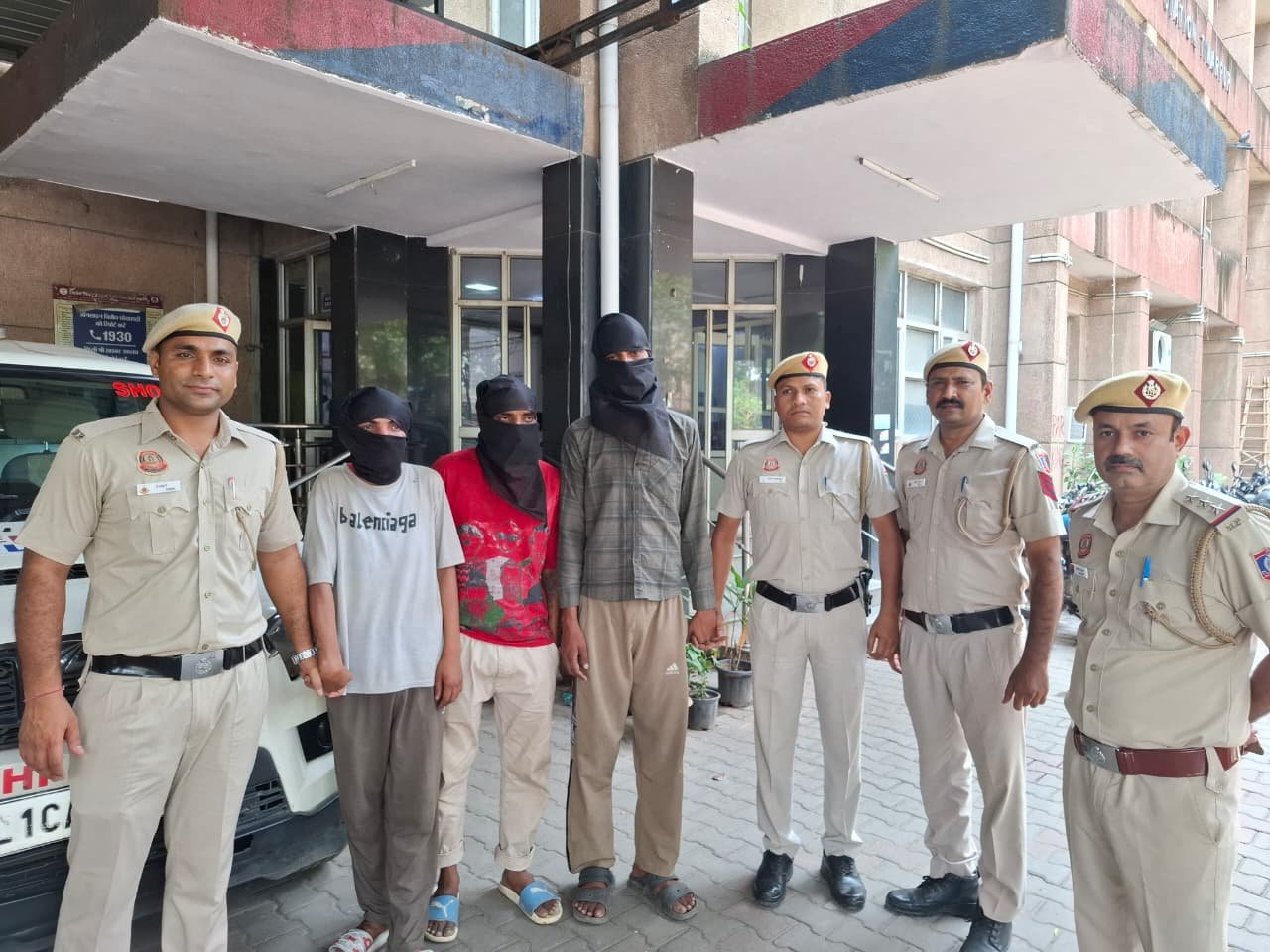
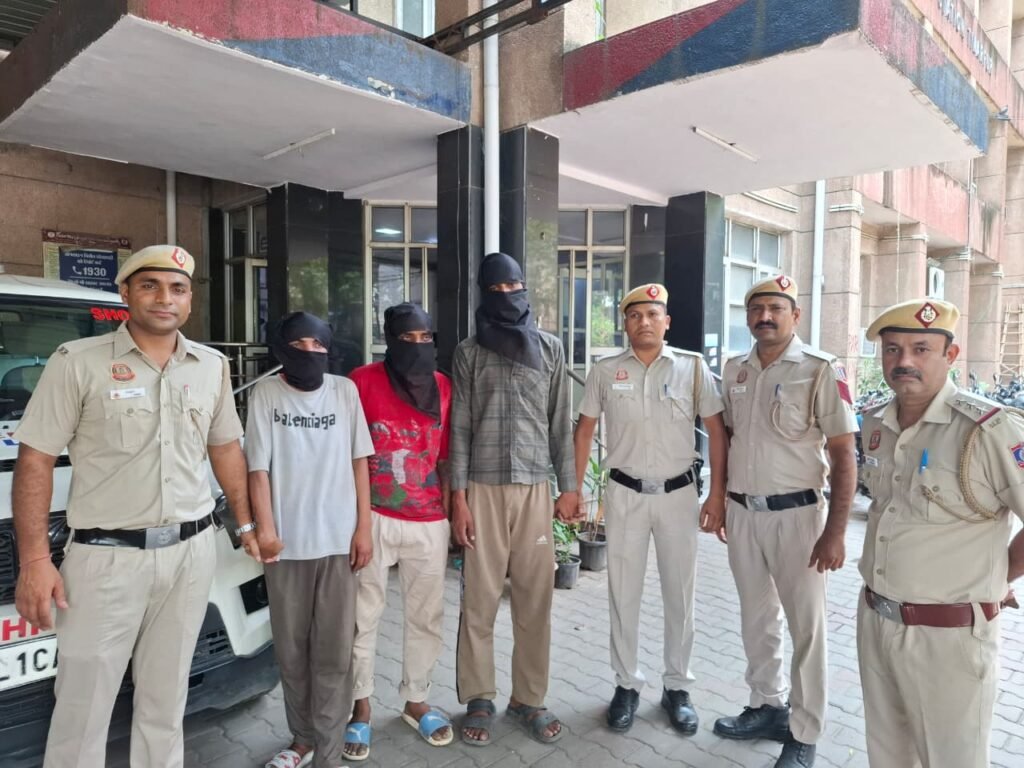
A major breakthrough has been achieved in a Blind Murder Case that had baffled investigators for weeks after an unidentified man’s body was discovered in Delhi’s Wazirabad area. Through meticulous investigation, technical surveillance and coordinated operations spanning multiple states, Delhi Police arrested all three accused allegedly involved in the murder. The successful detection of the case highlights the force’s growing reliance on technology, intelligence gathering and coordinated field operations to solve complex crimes.
According to police, the investigation began with virtually no eyewitnesses and only a few physical clues. Despite these challenges, investigators patiently reconstructed the victim’s final movements, established the motive and tracked the accused across several states before finally apprehending them.
Table of Contents
Unidentified Body Found in Yamuna Khadar Raises Alarm
The Blind Murder Case came to light on May 21, 2026, when a PCR call alerted Wazirabad Police Station about a body lying in the Yamuna Khadar area near Jagat Pur Pushta Road. A police team immediately rushed to the location and discovered the body of a man bearing multiple stab injuries caused by a sharp-edged weapon.
The injuries were so severe that facial identification became nearly impossible, making the investigation considerably more difficult from the outset. Officers secured the crime scene, called forensic experts and began collecting every possible piece of evidence that could help establish both the identity of the victim and the sequence of events leading to his death.
A Tattoo Helps Police Identify the Victim
With no identification documents available and the victim’s face badly damaged, investigators searched for alternative clues. During the examination of the body, officers noticed distinctive tattoos featuring names and symbols on the victim’s hand.
Photographs highlighting these tattoos were circulated across the local area, eventually leading to the identification of the deceased as 34-year-old Chandan Saini, a resident of Nehru Vihar in North Delhi.
Once his identity was confirmed, police registered a murder case under the Bharatiya Nyaya Sanhita and launched a full-scale investigation into the Blind Murder Case.
Delhi Police Forms Special Investigation Teams
Recognising the seriousness of the crime, senior officers constituted two specialised investigation teams comprising officials from Wazirabad Police Station and the North District’s Anti Auto Theft Squad (AATS).
The teams worked simultaneously on multiple aspects of the investigation. While one group focused on forensic evidence, witness examination and local intelligence, the other concentrated on technical surveillance, CCTV analysis and tracing the suspects’ movements.
This coordinated approach allowed investigators to pursue multiple leads at the same time without losing valuable time.
CCTV Footage Reconstructs the Victim’s Final Hours
One of the biggest breakthroughs came after investigators examined hours of CCTV footage collected from the areas surrounding the victim’s residence.
The footage showed an auto-rickshaw arriving outside the victim’s house during the night of May 20-21. The victim was seen voluntarily boarding the vehicle before it left the area.
Although the vehicle’s registration number could not be captured due to camera limitations, investigators now had a crucial timeline establishing the victim’s last known movements before the murder.
The CCTV evidence became one of the most significant developments in the Blind Murder Case.
Old Enmity Points Investigators Towards Prime Suspect
As police questioned individuals associated with the deceased, investigators uncovered a long-standing rivalry between the victim and a local resident identified as Tarun, also known as Tanni.
Police learnt that tensions between the two groups had existed for some time and had intensified following an alleged altercation involving Tarun’s brother just two days before the murder.
Investigators suspected that the earlier confrontation may have triggered a revenge plan, making Tarun the prime suspect in the Blind Murder Case.
Suspects Disappear, Prompting Multi-State Search
When police raided Tarun’s residence, they discovered he had already disappeared.
Further enquiries revealed that Tarun’s cousin Sunny, who had travelled from Punjab, and another associate, Dheeraj, had also gone missing immediately after the crime.
The disappearance of all three suspects indicated a coordinated attempt to evade arrest.
Delhi Police subsequently launched a large-scale search operation extending across Maharashtra, Punjab, Jammu, Uttarakhand, Uttar Pradesh and neighbouring parts of the National Capital Region.
Weeks of Surveillance Finally Lead to Breakthrough
Rather than remaining at one location, investigators found that the accused were constantly shifting their hideouts, making the search operation particularly challenging.
Police continued monitoring technical evidence while simultaneously developing human intelligence through local sources.
Their persistence finally yielded results after intelligence inputs placed one of the suspects in the Loni area of Ghaziabad.
Following several days of surveillance, police successfully apprehended Dheeraj on July 5.
Three Accused Arrested in Coordinated Operation
After Dheeraj’s arrest, investigators questioned him extensively, leading to crucial information about the whereabouts of the remaining accused.
Blind Murder case , Police immediately launched another operation and arrested Tarun and Sunny later the same day from North Delhi.
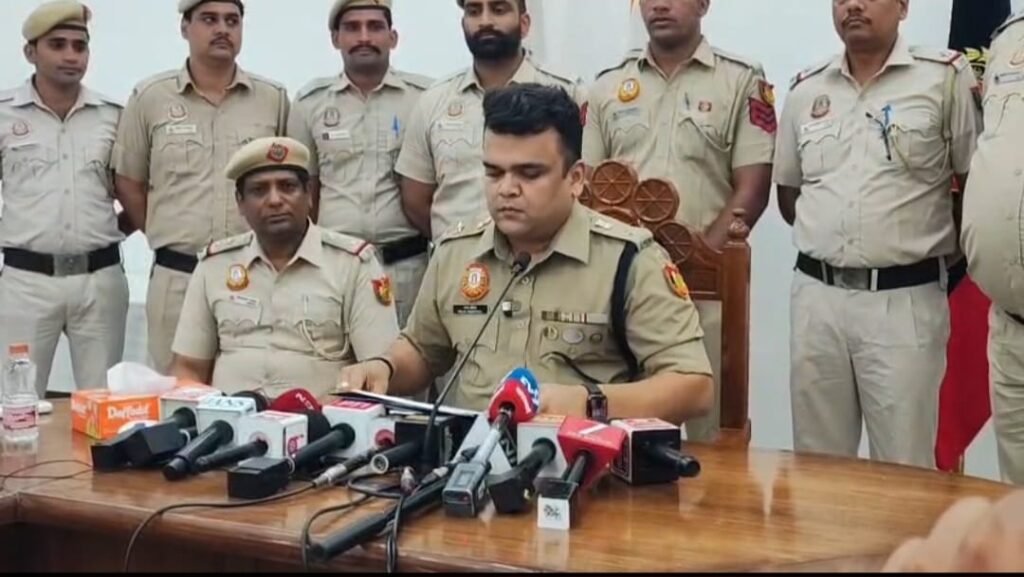
With these arrests, Delhi Police officially solved the Blind Murder Case that had remained under investigation for several weeks.
Police Reveal Alleged Revenge Plot
During interrogation, police said the accused allegedly confessed that the murder was planned as an act of revenge following the earlier dispute involving Tarun’s brother.
Investigators believe the victim was persuaded to accompany the accused in an auto-rickshaw under the pretext of consuming alcohol.
The victim, who knew the accused personally, reportedly entered the vehicle without suspicion.
Police allege that he was assaulted during the journey before being taken to an isolated area in Yamuna Khadar, where he was repeatedly stabbed.
Key Evidence Recovered During Investigation
As part of the investigation, Delhi Police recovered the auto-rickshaw allegedly used during the commission of the Blind Murder Case.
Investigators also recovered a broken knife from the crime scene and are continuing efforts to trace the remaining weapon allegedly used in the attack.
Police officials stated that forensic examination of the recovered evidence will further strengthen the prosecution’s case.
Technology, Teamwork and Persistence Crack the Blind Murder Case
The successful detection of this Blind Murder Case demonstrates how modern policing increasingly depends on technology alongside traditional investigative methods.
CCTV footage, technical surveillance, intelligence gathering, field enquiries and inter-state coordination collectively helped investigators reconstruct the crime despite the absence of eyewitnesses.
Equally important was the determination shown by the investigating teams, who continued tracking the accused across multiple states even as they repeatedly changed locations in an attempt to evade arrest.
The operation reflects the professionalism and dedication of Delhi Police personnel, whose systematic approach transformed what began as a mysterious Blind Murder Case into a successfully solved investigation with all three accused behind bars. Further investigation is continuing as police work to recover additional evidence and complete the legal process.