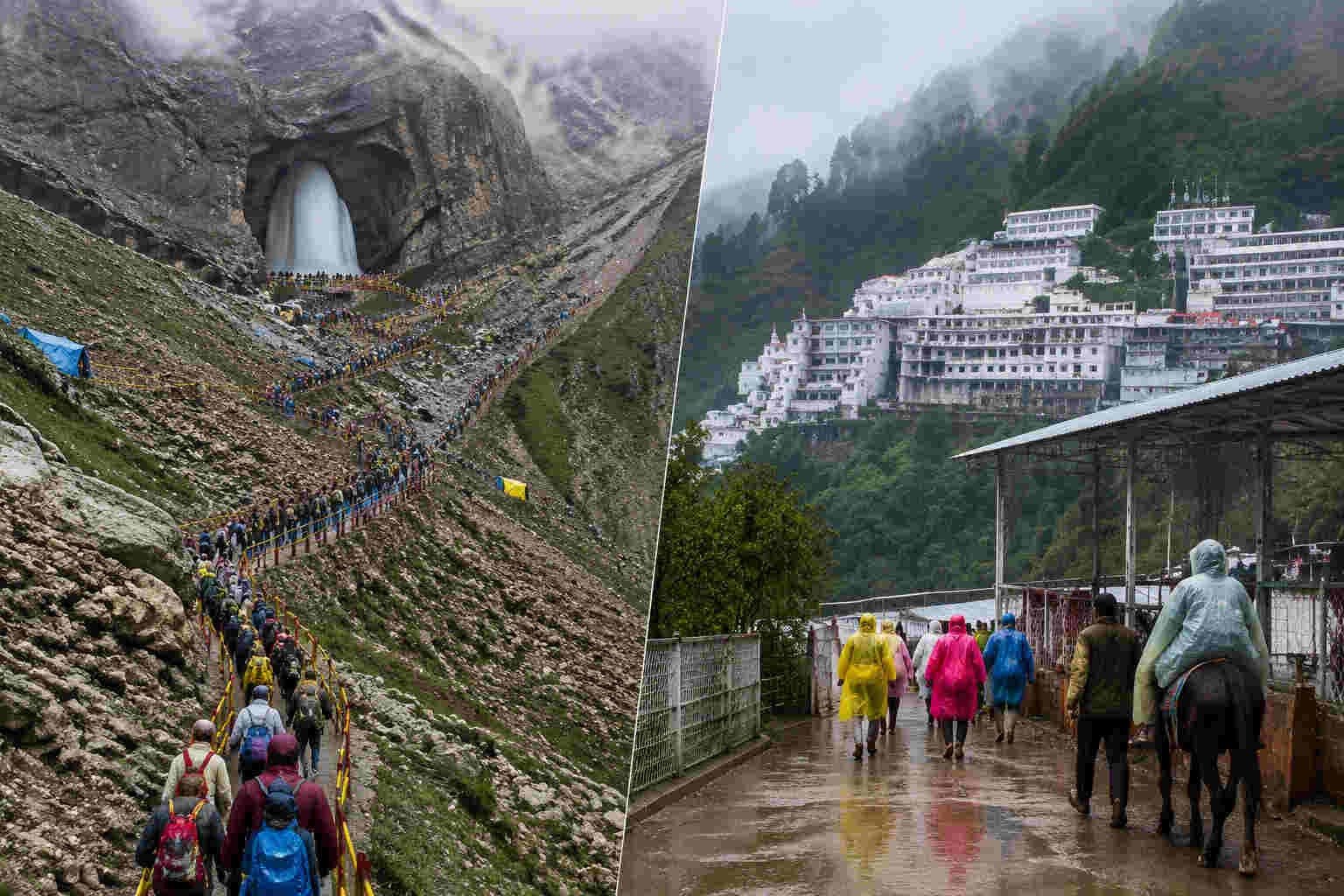
Yatra activities to the Amarnath Cave Shrine and Shri Mata Vaishno Devi have been temporarily suspended after persistent rainfall and severe weather conditions affected parts of Jammu and Kashmir. The precautionary decision comes as the India Meteorological Department (IMD) issued warnings of heavy to extremely heavy rainfall across several states, raising concerns over flash floods, landslides, waterlogging, and travel safety in mountainous regions.
Authorities suspended the Yatra on both the traditional Pahalgam route and the shorter Baltal route, while the Vaishno Devi Yatra from Katra was also halted because of continuous rainfall in the Trikuta Hills. Officials said the suspension was necessary to ensure the safety of thousands of pilgrims travelling through difficult mountain terrain during the peak monsoon season.
The weather situation has placed disaster management agencies, police, and local administrations on high alert as they monitor changing conditions and prepare for possible emergencies.
Table of Contents
Heavy Rain Forces Suspension of Yatra
The ongoing Yatra to the holy Amarnath Cave, which began on July 3 and is scheduled to continue until August 28, has witnessed one of its biggest weather-related interruptions this season.
Officials decided to suspend the Yatra after forecasts indicated heavy to very heavy rainfall accompanied by thunderstorms, lightning, and strong winds across Jammu and Kashmir. The decision applies to both major pilgrimage routes—Pahalgam in Anantnag district and Baltal in Ganderbal district.
The Shri Mata Vaishno Devi Yatra has also been temporarily stopped due to adverse weather conditions around Katra and the Trikuta Hills, where continuous rainfall has increased the risk of slippery pathways and landslides.
Authorities stressed that the suspension is purely precautionary and will remain in place until weather conditions improve sufficiently to ensure safe movement of pilgrims.
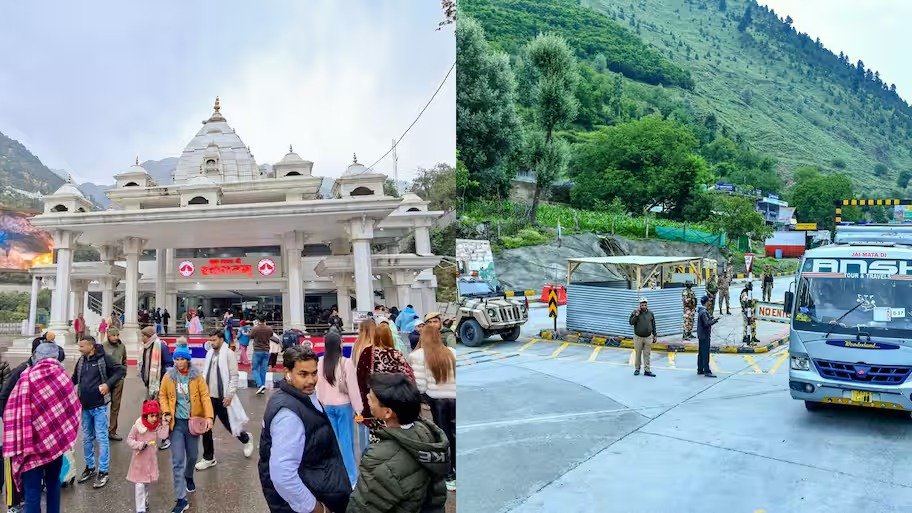
IMD Issues Heavy Rain Alert for 15 States
The India Meteorological Department has issued heavy rainfall alerts covering 15 states, with Jammu and Kashmir and Himachal Pradesh among the most affected regions.
According to the latest forecast, Jammu and Kashmir is expected to receive extremely heavy rainfall along with thunderstorms and lightning on July 20 and July 21. Very heavy rainfall is also likely on July 22, with widespread showers continuing over the following days.
In neighbouring Himachal Pradesh, the Meteorological Centre in Shimla has issued an Orange Alert from July 19 to July 23.
Meteorologists attribute the intense rainfall to the combined influence of an active southwest monsoon and a fresh Western Disturbance moving across northern India. This weather pattern has significantly increased the likelihood of prolonged rainfall across Himalayan regions.
Such forecasts become particularly important during the annual Yatra season, when thousands of pilgrims travel daily through steep mountain roads and high-altitude trekking routes.
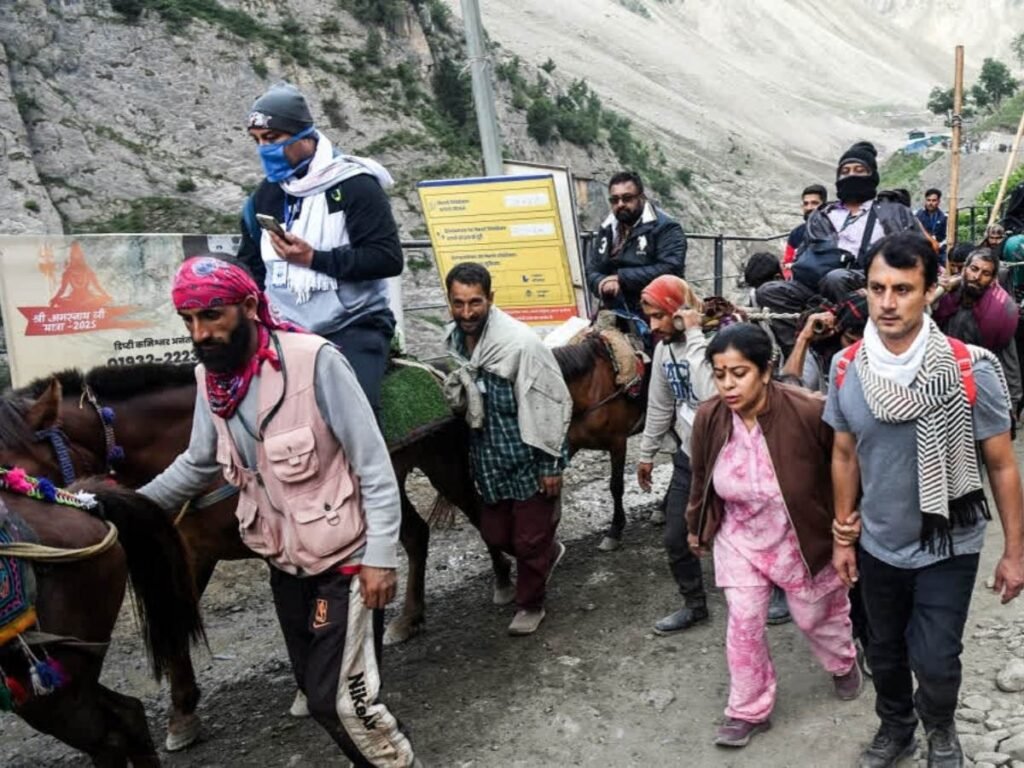
Authorities Warn of Flash Floods and Landslides
One of the primary reasons behind suspending the Yatra is the increased possibility of natural hazards associated with heavy rainfall.
The IMD has warned that continuous downpours may trigger flash floods in vulnerable areas, particularly near mountain streams and river channels. Landslides remain another major concern, especially along highways and trekking routes connecting pilgrimage destinations.
Waterlogging in low-lying areas could further affect transportation and emergency response operations.
Disaster management authorities have advised pilgrims, local residents, and tourists to avoid unnecessary travel in landslide-prone regions. Travellers have also been urged to stay away from rivers, streams, and unstable hill slopes until weather conditions improve.
Emergency response teams remain prepared to respond quickly should any weather-related incidents occur during the ongoing Yatra season.
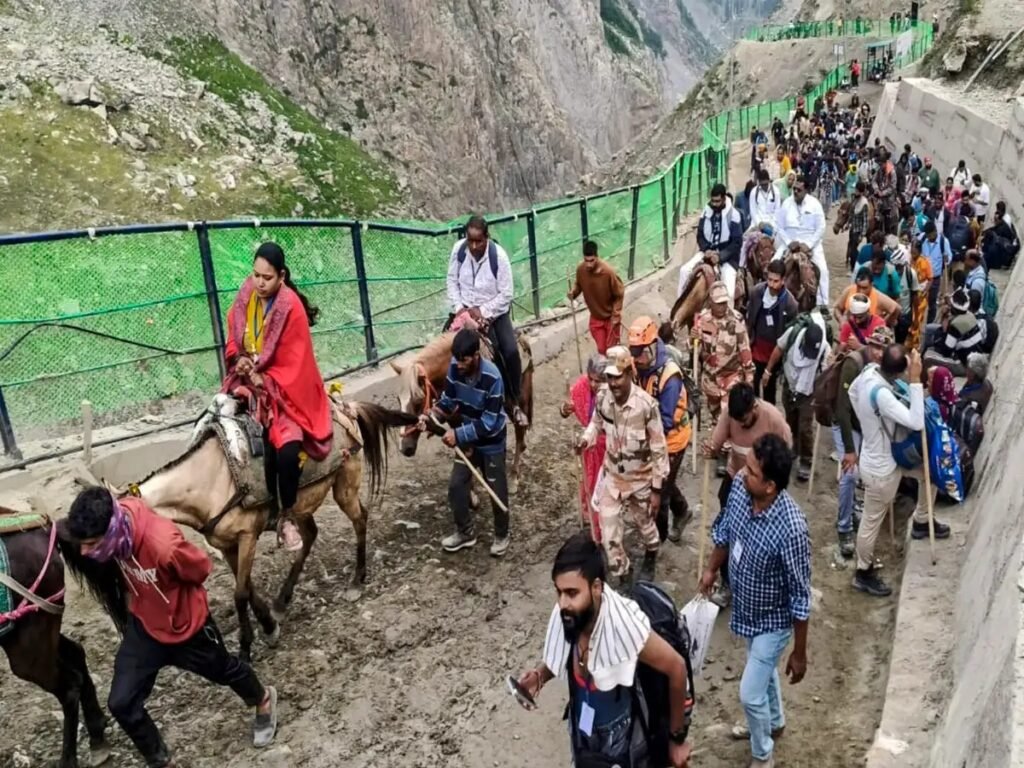
Pilgrims Left Waiting as Safety Takes Priority
The suspension has disappointed many devotees who had travelled from different parts of India to undertake the sacred Yatra.
Several pilgrims had already reached Jammu, Katra, Baltal, or Pahalgam before authorities announced the temporary halt.
Among them was Rekha, a devotee from Gujarat’s Jamnagar district, who expressed disappointment after learning that the pilgrimage had been suspended because of continuous rainfall. She said her family had travelled with great faith and hope for darshan but understood that public safety must come first.
Many pilgrims are now waiting for official announcements regarding the resumption of the Yatra while staying in designated accommodation centres and transit camps.
Authorities have advised all registered pilgrims to rely only on official updates before planning further travel.
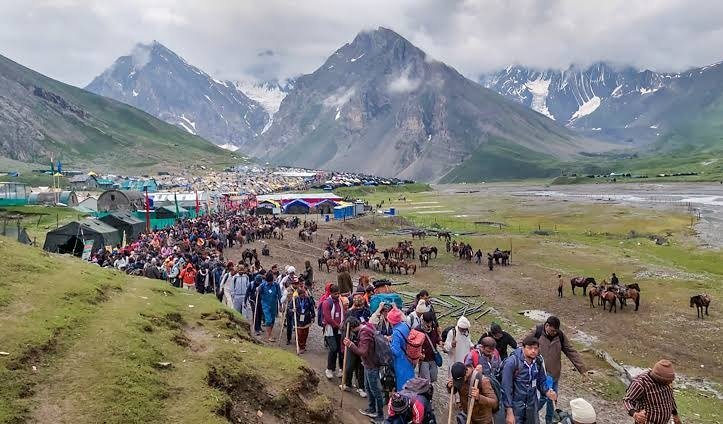
Why Weather Plays a Critical Role During the Yatra
Every year, the annual Amarnath Yatra attracts hundreds of thousands of devotees from across India. However, the pilgrimage passes through mountainous terrain located at high altitude, where weather conditions can change rapidly.
Heavy rainfall often increases the risk of landslides, falling rocks, slippery trekking paths, and flash floods.
Mountain roads connecting Jammu, Srinagar, Baltal, and Pahalgam are especially vulnerable during the monsoon season. Even short periods of intense rainfall can block highways and delay rescue operations if emergencies occur.
Similarly, the Vaishno Devi Yatra involves climbing hilly routes leading to the holy shrine situated in the Trikuta Hills. Persistent rainfall can make walking tracks dangerous for elderly pilgrims and children.
Because of these challenges, weather monitoring remains one of the most important aspects of pilgrimage management every year.
Disaster Management Teams on High Alert
Following the IMD warning, disaster management authorities across Jammu and Kashmir have intensified preparedness measures.
Officials are continuously monitoring rainfall, river levels, road conditions, and vulnerable locations prone to landslides.
Emergency response personnel, including police, civil administration, and disaster response teams, remain deployed across key Yatra routes to assist pilgrims if required.
Authorities have also increased surveillance of mountain roads and bridge crossings while coordinating with meteorological experts for real-time weather updates.
Such preventive measures are intended to minimise risks during periods of severe weather while ensuring that the Yatra can resume safely once conditions improve.
Recent Road Accidents Added to Safety Concerns
The temporary suspension of the Yatra also comes shortly after two separate road accidents involving Amarnath pilgrims.
On Saturday, four pilgrims sustained injuries after their vehicle collided with a stationary truck on the Jammu-Srinagar National Highway in Udhampur district.
Earlier, on July 13, another accident occurred near Chanderkote in Ramban district when two buses and a car collided. The incident left 18 pilgrims injured, all of whom were shifted to hospitals for treatment.
Although these accidents were not directly linked to the latest weather conditions, they reinforced concerns regarding travel safety during the ongoing pilgrimage season.
Officials believe that preventing further movement during periods of heavy rainfall is essential to reducing additional risks on already challenging mountain roads.
Pilgrims Advised to Wait for Official Updates
Authorities have requested all pilgrims planning the Yatra to remain patient and avoid attempting travel until official permission is granted.
Weather conditions in the Himalayan region can improve or deteriorate rapidly, making continuous monitoring essential before reopening pilgrimage routes.
Officials have assured devotees that the suspension is temporary and solely intended to protect lives. Once weather conditions become favourable and routes are inspected for safety, the Yatra is expected to resume under the supervision of local authorities and disaster management teams.
With the IMD forecasting continued rainfall over the next several days, administrations across Jammu and Kashmir and Himachal Pradesh remain focused on ensuring public safety while closely monitoring the evolving weather situation during this year’s pilgrimage season.