Call of Duty maker Activision reportedly pitched a Halo project, while Microsoft continues to consider outside studios for future entries in the iconic Xbox franchise
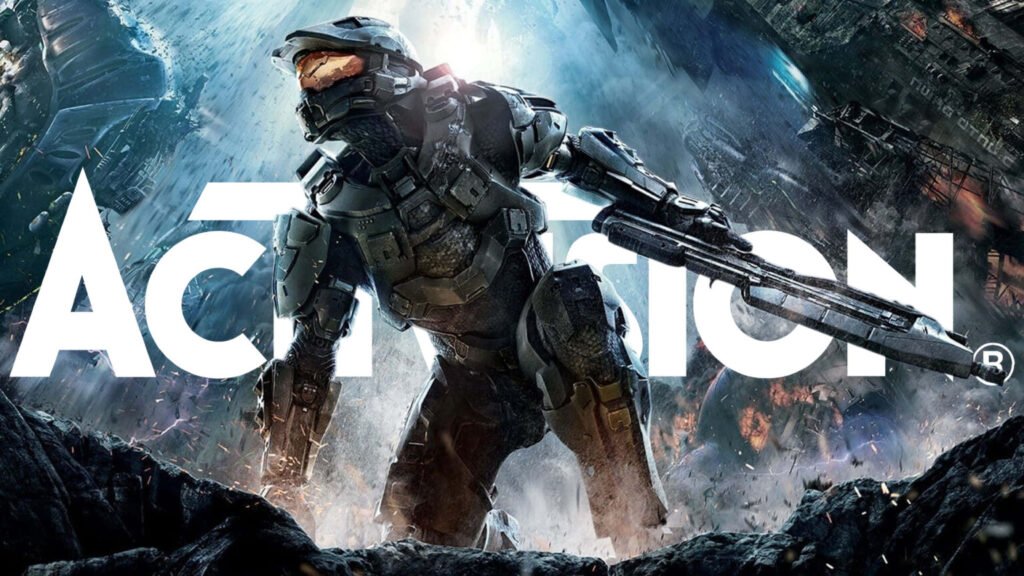
Activision is reportedly being considered by Microsoft as a potential development partner for future Halo games, with the Call of Duty maker and its studios possibly being brought into the franchise’s development pipeline.
According to information attributed to Halo insider Rebs Gaming, Microsoft has considered a proposal that would see Activision help develop future Halo projects. The possibility reportedly includes involving Sledgehammer Games, the studio known for its work on Call of Duty, on a future Halo multiplayer title.
The report suggests that Activision began testing an early prototype for a Halo project in June as part of a pitch to Microsoft. However, the prototype was reportedly cancelled by Microsoft in early July before the project moved beyond an early development stage.
Importantly, the cancellation of that prototype does not reportedly mean Microsoft has abandoned the wider idea of Activision working on Halo. According to the source cited by Rebs Gaming, Microsoft remains open to the proposition, although no project involving Activision has been officially approved.
The development comes as Microsoft appears to be considering a broader outsourcing strategy for the Halo franchise. Future projects could involve a larger number of external studios, a model that has already been used on recent Halo projects.

Table of Contents
Activision Reportedly Tested an Early Halo Prototype
The most significant revelation in the report is the claim that Activision had already begun work on an early Halo prototype.
According to Rebs Gaming’s source, development activity began in June as Activision tested a pitch for a new Halo project. The prototype was reportedly still in the blockout phase, meaning developers were working on foundational elements such as player movement and early gameplay mechanics rather than a finished game.
This type of prototype is generally used to determine whether a core concept is worth pursuing further.
At such an early stage, developers can experiment with movement systems, combat ideas, level layouts and multiplayer mechanics without committing to full production.
The reported cancellation therefore does not necessarily indicate that a complete Halo game was cancelled.
Instead, it appears that Microsoft decided not to continue with that particular prototype in its existing form.
The report also suggests that the cancellation did not close the door on future cooperation between Microsoft and Activision.
Sledgehammer Games Could Be Involved in Halo Multiplayer
The reported Activision proposal becomes particularly interesting because of the possible involvement of Sledgehammer Games.
Sledgehammer is widely associated with the Call of Duty franchise and has experience developing large-scale first-person shooter experiences.
According to the report, one proposal under consideration involved Sledgehammer Games helping develop a Halo multiplayer title.
Such a collaboration would represent a notable development for the Halo franchise.
Halo has traditionally been closely associated with its own first-party development teams and Xbox ecosystem. Bringing in a major Call of Duty studio could therefore signal a willingness by Microsoft to draw on expertise from across its wider game-development portfolio.
Multiplayer development is also an area where Sledgehammer’s experience could be particularly relevant.
Call of Duty’s multiplayer games require complex weapon systems, movement mechanics, competitive balancing, maps and live-service support. Those areas overlap with several of the fundamental requirements of a modern Halo multiplayer experience.
However, the reported proposal remains unconfirmed, and Microsoft has not officially announced a Sledgehammer-developed Halo game.
Prototype Cancellation Does Not End the Idea
One of the more important details in the report is that the cancellation of the early prototype reportedly does not mean Microsoft has rejected Activision’s involvement altogether.
According to the source cited by Rebs Gaming, Microsoft remains interested in exploring the possibility of Activision working on Halo projects in the future.
At this stage, however, nothing has been greenlit.
That distinction is important because game development frequently involves multiple pitches and prototypes that never become full projects.
An internal prototype can be cancelled for many reasons, including changes in strategy, scheduling, staffing, creative direction or production priorities.
The reported situation could therefore represent a pause or reassessment rather than a complete rejection of the broader concept.
For now, the information suggests that Microsoft is still evaluating how its future Halo development model should work.
Microsoft Could Outsource More Future Halo Projects
The report goes beyond Activision and suggests that Microsoft could outsource a significant portion of development on future Halo projects.
That would represent a broader strategy rather than a one-off partnership.
According to the report, Microsoft could rely more heavily on external development studios for upcoming Halo games, potentially using multiple teams to handle different parts of a project’s production.
There is already precedent for this approach within the franchise.
The recently launched Halo: Campaign Evolved reportedly involved a large number of external studios working alongside the franchise’s core development structure.
That project illustrates how Microsoft’s current approach can spread production responsibilities across multiple teams.
Halo: Campaign Evolved Demonstrates the Outsourcing Model
Halo: Campaign Evolved provides an important example of how outside studios can contribute to the franchise.
According to the supplied material, major elements of development for the Halo: Combat Evolved remake were outsourced to studios including Virtuos, Ninja Theory, Turn 10 Studios and Rare.
The project reportedly lists as many as 15 development studios in its credits.
That suggests outsourcing is already a meaningful component of Halo development rather than a completely new idea.
The difference would be that future projects could potentially rely even more heavily on external teams.
For Microsoft, such a model could make it easier to distribute workloads, bring in specialised expertise and potentially develop multiple projects simultaneously.
At the same time, managing numerous studios on a single franchise can create significant coordination challenges.
Project Ekur Shows Another Example of External Development
Project Ekur is another important example cited in the report.
The cancelled multiplayer project was reportedly intended to become the next major multiplayer entry in the Halo franchise.
Certain Affinity initially worked on Project Ekur before Halo Studios took over development.
According to Rebs Gaming’s previous reporting, the project was eventually cancelled.
The history of Project Ekur demonstrates both the potential and difficulties associated with using outside development teams.
External studios can provide additional expertise and production capacity, but projects can still be redirected, transferred or cancelled as the strategic priorities of the publisher change.
The case also illustrates how Microsoft’s approach to Halo development has already involved significant collaboration between different teams.
Halo Studios Is Working on Multiple Projects
Halo Studios remains responsible for the franchise and is reportedly developing multiple Halo projects.
The studio was previously known as 343 Industries before adopting the Halo Studios name.
According to the supplied material, the studio is believed to be working on several projects, including unconfirmed remakes of Halo 2 and Halo 3.
However, Halo Studios has not officially revealed detailed information about its next mainline Halo game.
That has left considerable uncertainty around the franchise’s future direction.
If Microsoft increasingly relies on external studios, Halo Studios could potentially take on a more supervisory or franchise-management role while outside teams handle individual projects.
Exactly how that structure would work remains unclear.
What Outsourcing Could Mean for Halo
Greater outsourcing could potentially provide Microsoft with several advantages.
First, it could allow the company to access a larger pool of developers and specialists.
Second, different studios could potentially work on separate projects at the same time.
For a major franchise such as Halo, this could help Microsoft expand the number of games or experiences being produced without requiring a single internal studio to handle every project.
Outsourcing could also allow Microsoft to bring in teams with specific expertise.
A studio experienced in multiplayer development could contribute to a competitive Halo game, while another team could work on a campaign remake or another type of experience.
This modular approach could make the franchise more flexible.
But a Multi-Studio Strategy Also Creates Challenges
The model also comes with risks.
Halo is a franchise with a distinctive gameplay identity, visual style and established fan expectations.
When multiple studios become involved, maintaining consistency across different projects can become more difficult.
Coordination between teams is another major challenge.
Large games already require extensive collaboration between designers, programmers, artists, writers and producers. Adding several external studios can make communication and project management more complex.
Microsoft would therefore need strong franchise oversight to ensure that different Halo projects retain a coherent identity.
Activision’s Experience Could Be Valuable
From Microsoft’s perspective, Activision brings significant experience in first-person shooters.
The company’s portfolio includes Call of Duty, one of the world’s most established shooter franchises.
That experience could potentially make Activision an attractive partner for future Halo projects.
Multiplayer design, weapons, movement systems, competitive mechanics and large-scale online infrastructure are all areas where Activision-owned studios have substantial experience.
A partnership could therefore allow Microsoft to combine Halo’s established identity with development knowledge accumulated through Call of Duty.
The reported Sledgehammer proposal would be particularly interesting because the studio already specialises in shooter development.
The Call of Duty and Halo Franchises Could Remain Distinct
Even if Activision were eventually involved in developing Halo, the franchise would still need to maintain its own identity.
Halo and Call of Duty have different gameplay philosophies, pacing, visual styles and player communities.
A successful collaboration would therefore require developers to understand what makes Halo different rather than simply importing Call of Duty mechanics.
The objective would presumably be to use Activision’s development expertise while preserving the qualities that define Halo.
That could make external collaboration more of an opportunity than a threat if Microsoft manages the process effectively.
Microsoft Has Yet to Confirm Any Activision Halo Project
Despite the reports, it is important to stress that Microsoft has not officially announced an Activision-developed Halo game.
The reported prototype was allegedly cancelled in July, and there is no confirmation that another project has entered production.
Similarly, the possibility of Sledgehammer Games working on Halo remains part of the reported exploration rather than an announced project.
Halo fans should therefore treat the information as an indication of Microsoft’s potential strategy rather than confirmation of a future release.
Until Microsoft or Halo Studios makes an official announcement, the exact structure of future Halo development remains uncertain.
The Future of Halo Could Look Very Different
The reported Activision discussions come at a significant moment for the franchise.
Halo remains one of Microsoft’s most recognisable gaming properties, but the company appears to be examining how the series should be developed in the future.
The potential move towards greater outsourcing suggests that Microsoft may be looking for a more flexible production model.
Instead of relying on a single studio to manage every aspect of the franchise, the company could distribute development across several teams, each handling different projects or specialised areas.
This could potentially accelerate production and allow Microsoft to explore multiple directions for Halo.
What Fans Can Expect Next
For now, the immediate future of Halo remains largely unconfirmed.
Halo Studios is reportedly developing multiple projects, but details about the next mainline game remain limited.
The status of the reported Halo 2 and Halo 3 remakes is also unclear, while Project Ekur has been cancelled.
Meanwhile, Microsoft’s reported willingness to consider Activision involvement suggests that the company is actively evaluating new ways to develop the franchise.
The next official announcement from Microsoft or Halo Studios could therefore provide important clues about whether the company is moving towards a more outsourced development model.

The possibility of Activision helping develop future Halo games highlights a potentially significant change in Microsoft’s strategy for the franchise.
According to reporting from Halo insider Rebs Gaming, Activision tested an early Halo prototype in June, with Sledgehammer Games reportedly involved in a proposal for a multiplayer project. Microsoft cancelled that prototype in July, but the broader idea of Activision working on Halo has reportedly remained under consideration.
At the same time, Microsoft could be moving towards greater outsourcing across future Halo projects.
Halo: Campaign Evolved already demonstrates a multi-studio development approach, with numerous external teams contributing to the project. Project Ekur also involved outside development before eventually being cancelled.
For Activision, a Halo collaboration could provide an opportunity to bring its considerable first-person-shooter experience to one of Xbox’s most important franchises.
For Microsoft, outsourcing could provide greater development capacity and allow different teams to work on different aspects of the Halo universe.
However, the strategy would also present challenges involving consistency, coordination and maintaining Halo’s unique identity.
For now, no Activision-developed Halo title has been officially announced. The reported prototype was cancelled, and no future project has been greenlit. But the fact that Microsoft is reportedly exploring the possibility suggests that the next era of Halo development could look considerably different from the franchise’s past.