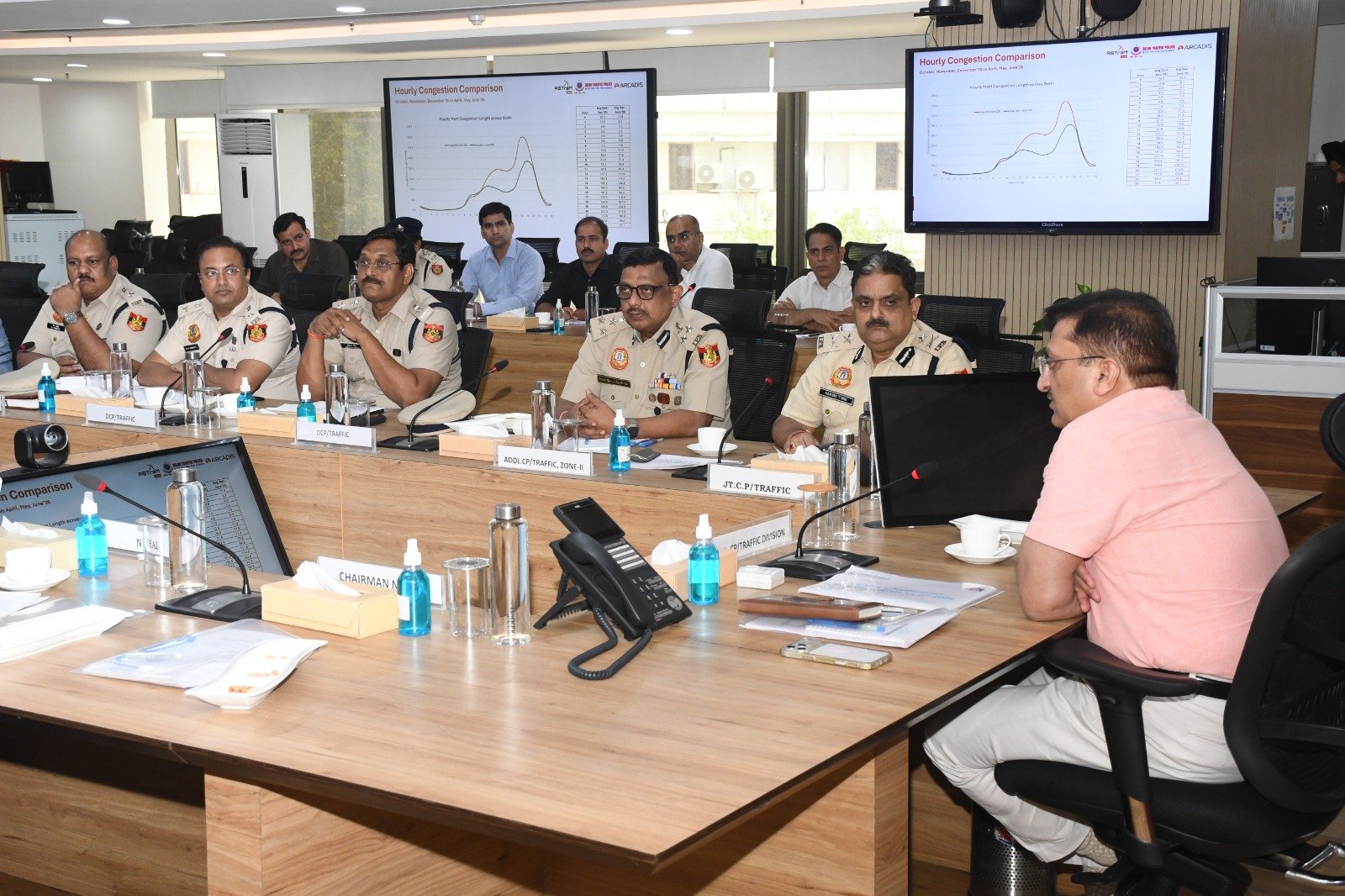
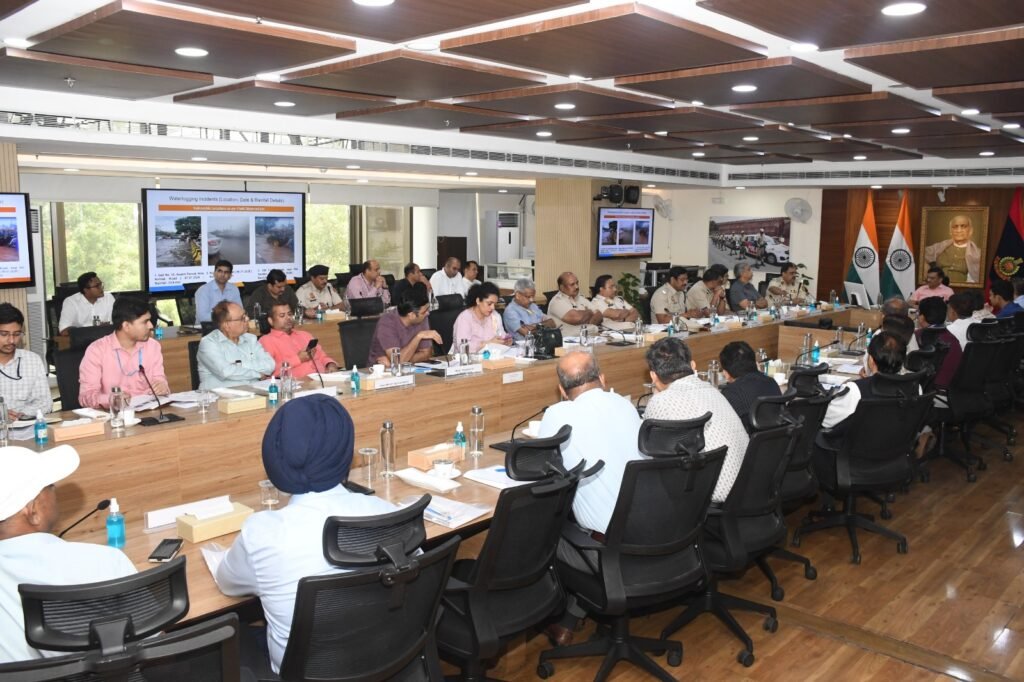
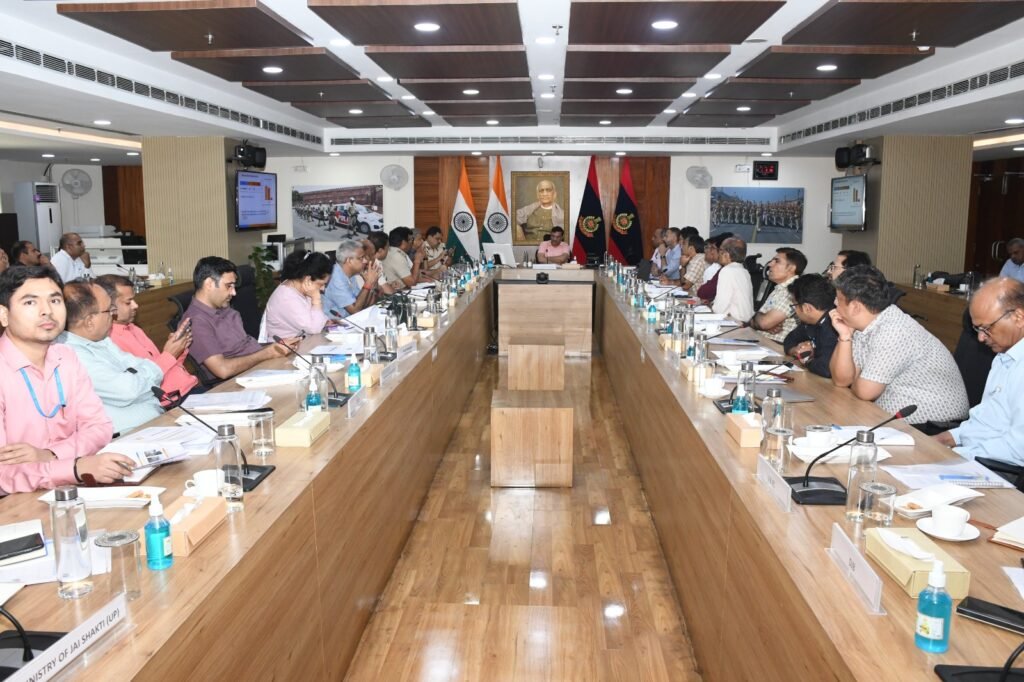
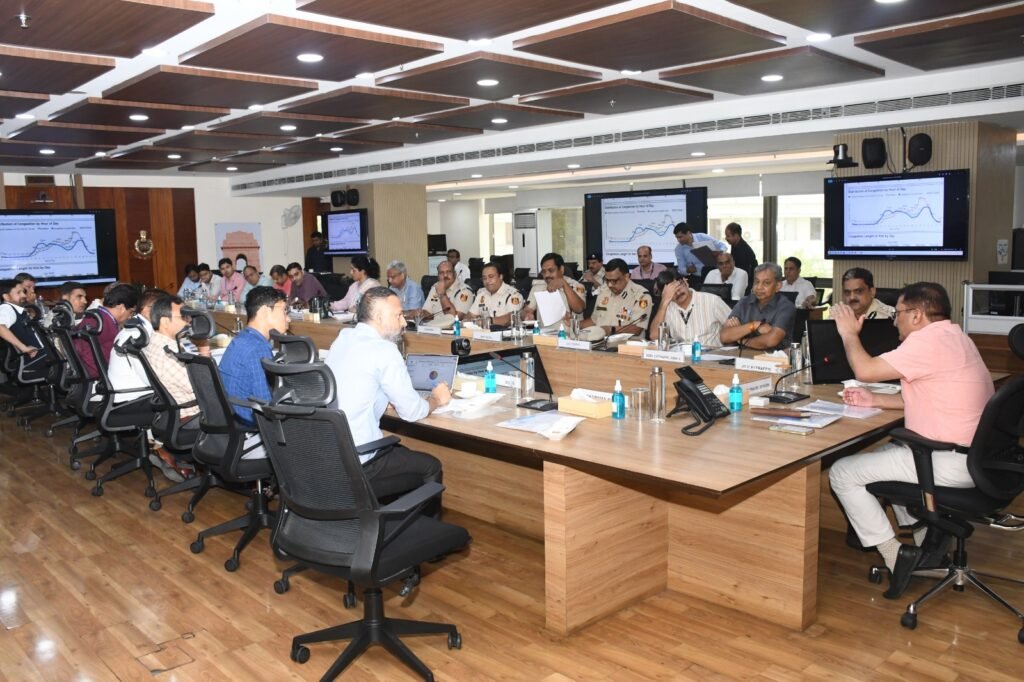
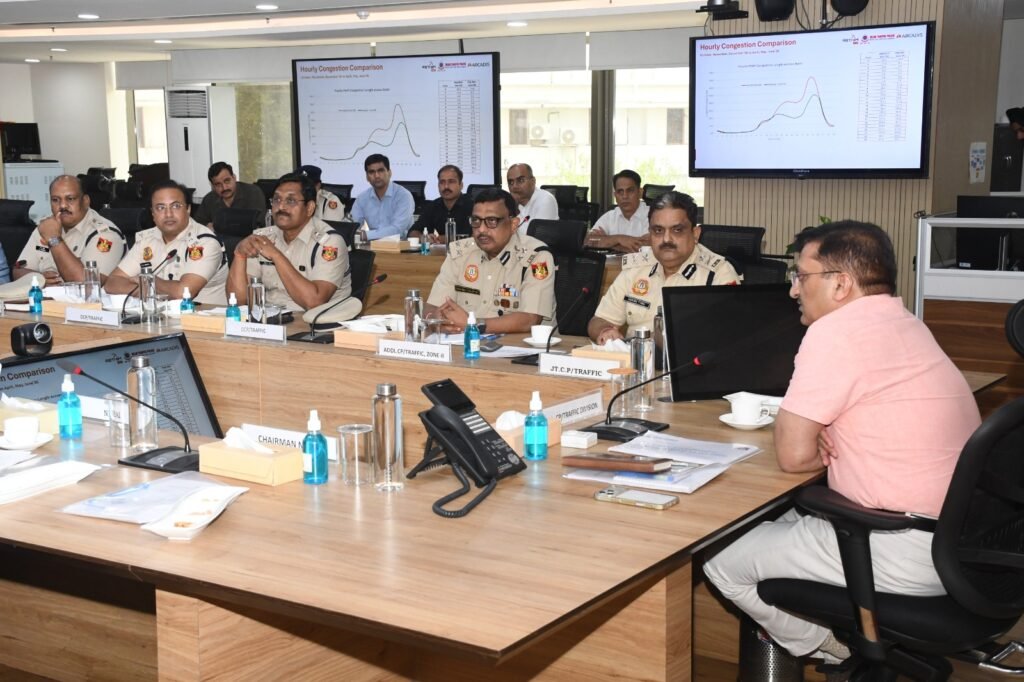
In a significant step towards improving road mobility and ensuring smoother traffic movement across the national capital, the Delhi Traffic Police convened a high-level multi-agency coordination meeting on July 15, 2026, to review the progress of ongoing congestion mitigation measures, monsoon preparedness, and key traffic management initiatives. The meeting, chaired by Special Commissioner of Police (Traffic) Manish Agarwal, IPS, brought together senior officials from several government departments and infrastructure agencies to strengthen inter-agency coordination and accelerate projects aimed at easing traffic congestion across Delhi.
Held at the Vimarsh Conference Hall, Police Headquarters (PHQ), the meeting served as an important platform for evaluating the status of various traffic improvement projects, discussing operational challenges, and ensuring timely implementation of measures designed to improve road safety, reduce bottlenecks, and minimize disruptions caused by seasonal waterlogging during the monsoon.
Table of Contents
The review reflected the Delhi Traffic Police’s continued commitment to adopting a collaborative approach by working closely with multiple civic and infrastructure agencies responsible for maintaining the city’s roads, transport systems, utilities, and public services.
High-Level Meeting Focuses on Improving Traffic Flow Across Delhi
The coordination meeting was chaired by Manish Agarwal, IPS, Special Commissioner of Police (Traffic) and witnessed participation from senior officers of the Delhi Traffic Police, including:
- Sanjay Tyagi, IPS, Joint Commissioner of Police (Traffic)
- Dinesh Gupta, IPS, Additional Commissioner of Police (Traffic)
- S.K. Singh, Deputy Commissioner of Police (Traffic – HQ-II & Road Safety Cell)
- Other senior officers of the Delhi Traffic Police
The meeting also saw active participation from officials representing several major government agencies responsible for Delhi’s transport and urban infrastructure ecosystem.
Representatives from the following organizations attended the review meeting:
- National Highways Authority of India (NHAI)
- Delhi Metro Rail Corporation (DMRC)
- Transport Department
- Delhi Transport Corporation (DTC)
- Public Works Department (PWD)
- Municipal Corporation of Delhi (MCD)
- Tata Power Delhi Distribution Limited (TPDDL)
- Delhi Jal Board (DJB)
The presence of multiple agencies highlighted the integrated approach required to tackle Delhi’s complex traffic challenges, many of which involve infrastructure, utilities, public transport, and civic maintenance.
Comprehensive Review of Congestion Mitigation Measures
One of the primary objectives of the meeting was to assess the progress made in addressing traffic congestion at several identified bottlenecks across Delhi.
Traffic congestion remains one of the biggest challenges faced by commuters in the capital, particularly during peak office hours when heavy vehicular movement often results in long delays.
Officials reviewed the status of various interventions undertaken by different departments to improve traffic movement at critical junctions and high-density corridors.
The discussions covered:
- Existing congestion points.
- Infrastructure improvements.
- Road widening initiatives.
- Signal optimization.
- Junction redesign.
- Diversion planning.
- Traffic engineering solutions.
Officials emphasized that congestion mitigation requires continuous monitoring as traffic patterns evolve due to urban expansion and increasing vehicle ownership.
PowerPoint Presentation Highlights Progress
During the meeting, Delhi Traffic Police delivered a detailed PowerPoint presentation summarizing the work carried out in collaboration with different stakeholder agencies.
The presentation included:
- Issues previously raised with various departments.
- Action taken on pending proposals.
- Status of ongoing infrastructure works.
- Timeline for project completion.
- Challenges affecting implementation.
- Areas requiring inter-agency cooperation.
Officials noted that several proposed interventions have already produced encouraging results, reflecting the effectiveness of coordinated planning and execution.
The review also helped identify projects requiring additional attention to ensure timely completion.
Delhi Traffic Police Reviews Monsoon Preparedness
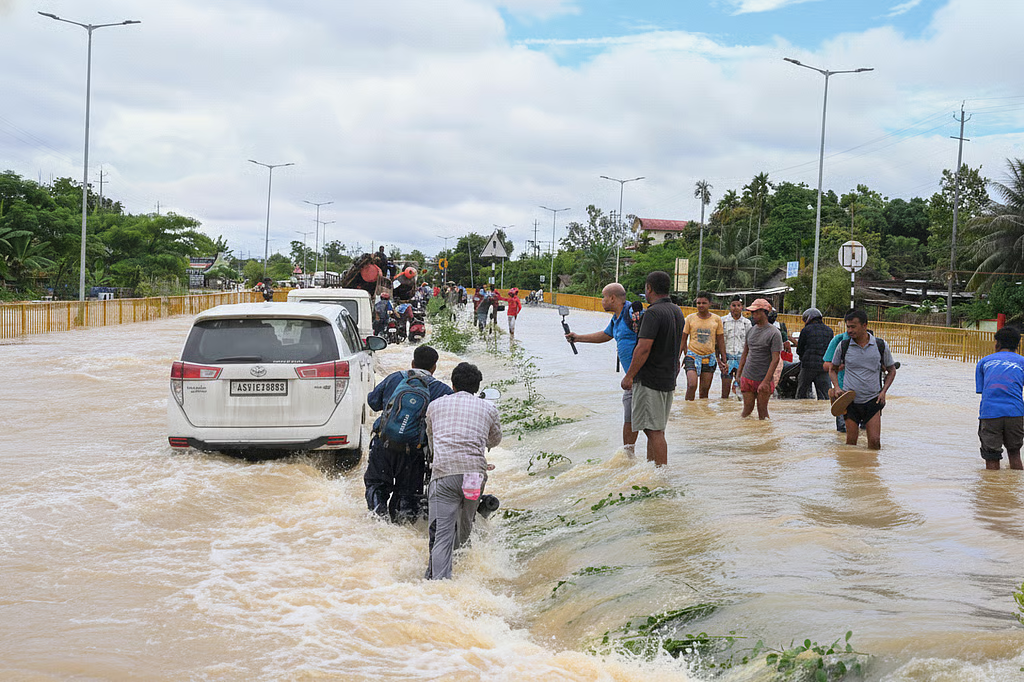
With Delhi currently in the monsoon season, preparedness for heavy rainfall and waterlogging emerged as another major agenda during the meeting.
Seasonal water accumulation often leads to severe traffic congestion by reducing road capacity, damaging road surfaces, and slowing vehicular movement.
Officials reviewed preventive measures undertaken by various civic agencies to reduce monsoon-related disruptions.
The discussions included:
- Drain cleaning operations.
- Waterlogging-prone locations.
- Emergency traffic diversion plans.
- Deployment of field staff.
- Coordination during heavy rainfall.
- Real-time monitoring of vulnerable stretches.
Delhi Traffic Police stressed the importance of rapid communication between agencies whenever heavy rainfall affects road conditions.
Timely intervention can significantly reduce congestion and improve commuter safety during adverse weather.
Collaborative Governance at the Core
A key message emerging from the meeting was the importance of collaborative governance.
Traffic management in a city as large and densely populated as Delhi cannot be handled by a single department alone.
Instead, it requires coordinated action involving multiple organizations responsible for:
- Roads.
- Flyovers.
- Metro construction.
- Public transport.
- Drainage systems.
- Electricity infrastructure.
- Water supply.
- Urban maintenance.
The meeting demonstrated how continuous coordination between agencies helps resolve issues more efficiently than isolated departmental efforts.
Officials agreed that regular dialogue remains essential for ensuring smooth project implementation.
Infrastructure Projects Under Review
Several ongoing infrastructure projects that directly influence traffic movement were also discussed.
Although specific project names were not disclosed, officials reviewed progress on works involving:
- Road improvements.
- Flyover connectivity.
- Junction redesign.
- Metro-related construction.
- Utility shifting.
- Public transport infrastructure.
- Highway connectivity.
Such projects often require simultaneous work by multiple agencies.
Any delay by one department can impact the timelines of others.
The coordination meeting sought to minimize such delays through better planning and communication.
Importance of Data-Driven Traffic Management
Delhi Traffic Police has increasingly relied on traffic data and field assessments to identify congestion hotspots requiring intervention.
Officials indicated that congestion management is becoming more technology-driven, supported by:
- Traffic volume studies.
- Vehicle movement analysis.
- CCTV monitoring.
- Incident reporting.
- Real-time traffic observations.
These assessments help authorities prioritize locations where engineering improvements can generate the greatest benefits for commuters.
The collaborative review allows different agencies to align their planning with actual traffic conditions.
Addressing Inter-Agency Challenges
Large infrastructure projects often involve overlapping responsibilities among multiple departments.
During the meeting, officials discussed pending issues requiring inter-agency coordination, including:
- Utility relocation.
- Construction sequencing.
- Permission clearances.
- Road restoration.
- Traffic diversion planning.
- Maintenance responsibilities.
Resolving such issues promptly is considered essential for preventing unnecessary delays that could worsen traffic congestion.
Officials reaffirmed their commitment to improving coordination mechanisms.
Public Transport Agencies Participate
The participation of agencies such as the Delhi Metro Rail Corporation (DMRC), Delhi Transport Corporation (DTC), and the Transport Department reflected the importance of integrating public transport into overall traffic planning.
Efficient public transportation helps reduce dependence on private vehicles, thereby easing congestion.
Discussions included coordination relating to:
- Metro construction activities.
- Bus movement.
- Passenger safety.
- Road occupancy.
- Connectivity improvements.
Officials emphasized that improving traffic flow also supports more reliable public transport services.
Focus on Long-Term Urban Mobility
While immediate congestion relief remains important, the meeting also highlighted the need for long-term planning.
Delhi continues to experience rising vehicle ownership, urban expansion, and increasing travel demand.
Authorities therefore aim to combine short-term operational measures with long-term infrastructure development.
Key priorities include:
- Sustainable mobility.
- Better traffic engineering.
- Integrated transport planning.
- Smart traffic management systems.
- Road safety improvements.
- Efficient public transport connectivity.
Such initiatives are expected to improve overall urban mobility over the coming years.
Delhi Traffic Police Commits to Regular Review Meetings
At the conclusion of the Delhi Traffic Police meeting, all participating agencies reiterated their commitment to maintaining close coordination for the successful implementation of ongoing projects.
Officials agreed to:
- Complete infrastructure projects on schedule.
- Resolve pending inter-agency issues quickly.
- Continue reviewing congestion points.
- Improve monsoon response.
- Strengthen traffic management strategies.
Delhi Traffic Police also announced that similar review meetings will continue to be held regularly to monitor progress and ensure accountability among participating departments.
Why Congestion Management Matters
Traffic congestion has significant social and economic consequences.
Extended travel times increase fuel consumption, contribute to air pollution, reduce productivity, and create inconvenience for millions of commuters.
Efficient traffic management helps:
- Reduce travel time.
- Improve emergency response.
- Enhance road safety.
- Lower vehicle emissions.
- Increase economic efficiency.
- Improve commuter satisfaction.
Authorities believe that sustained coordination among civic bodies is essential to achieving these objectives.
Strengthening Public Confidence Through Coordination
The latest multi-agency review demonstrates Delhi Traffic Police’s proactive approach to solving urban mobility challenges.
Rather than reacting only after problems arise, the department is focusing on preventive planning, continuous monitoring, and collaborative governance.
Officials believe this strategy will enable faster implementation of infrastructure improvements while ensuring smoother coordination during emergencies such as heavy rainfall.
Delhi Traffic Police Looking Ahead
As Delhi continues to expand and traffic volumes grow, effective coordination among government agencies will remain critical for maintaining efficient transportation networks.
The July 15 coordination meeting marks another important step toward creating a more organized, safer, and commuter-friendly road network across the national capital.
By reviewing congestion mitigation projects, strengthening monsoon preparedness, addressing infrastructure bottlenecks, and fostering greater collaboration among departments, Delhi Traffic Police aims to build a more resilient traffic management system capable of meeting the city’s evolving transportation needs. Continued cooperation between law enforcement, civic authorities, and infrastructure agencies is expected to play a vital role in improving daily travel experiences for millions of residents while supporting Delhi’s long-term urban development goals.