Ajanta Caves stand among India’s greatest cultural and archaeological treasures, attracting historians, art lovers, architects, spiritual seekers, and tourists from across the globe. Nestled in the Sahyadri Hills of Maharashtra’s Chhatrapati Sambhajinagar division, these ancient rock-cut caves represent one of the finest examples of Buddhist art, architecture, and craftsmanship ever created. Recognised as a UNESCO World Heritage Site, Ajanta Caves preserve centuries of India’s rich cultural heritage through remarkable paintings, sculptures, monasteries, and prayer halls carved directly into solid basalt rock.
Despite being over two thousand years old, Ajanta Caves continue to amaze visitors with their artistic excellence and engineering precision. Every cave tells a story of devotion, creativity, and human achievement, offering valuable insights into the religious, social, and artistic life of ancient India. Their historical significance extends far beyond tourism, making them one of the country’s most important archaeological monuments.
Table of Contents
A Journey Through More Than 2,000 Years of History
The history of Ajanta Caves dates back to the 2nd century BCE when Buddhist monks began carving simple prayer halls and monasteries into the horseshoe-shaped cliffs overlooking the Waghora River. Construction continued in different phases until around the 6th century CE, resulting in an extraordinary complex that reflects several centuries of Buddhist development.
Historians generally divide the construction into two major periods. The earliest caves belong to the Hinayana phase of Buddhism, where the Buddha was represented through symbols such as footprints, the Bodhi tree, or the stupa rather than in human form. Several centuries later, during the Vakataka dynasty, the Mahayana phase introduced magnificent sculptures and paintings depicting the Buddha in human form, Bodhisattvas, and elaborate religious narratives.
This gradual evolution makes Ajanta Caves a valuable historical record of changing artistic traditions and religious beliefs across nearly 800 years.
Hidden for Centuries Before a Remarkable Rediscovery
One of the most fascinating chapters in the history of Ajanta Caves is their rediscovery.
After Buddhism gradually declined in many parts of India, the caves were abandoned and slowly became hidden beneath dense forests and vegetation. For centuries, the site remained largely forgotten.
In 1819, British Army officer John Smith accidentally discovered one of the cave entrances while hunting in the forest. His unexpected discovery brought Ajanta Caves back into public attention and eventually led to detailed archaeological studies, restoration efforts, and international recognition.
Today, the caves are protected by the Archaeological Survey of India (ASI), ensuring that this priceless heritage survives for future generations.
Thirty Rock-Cut Caves That Showcase Extraordinary Engineering
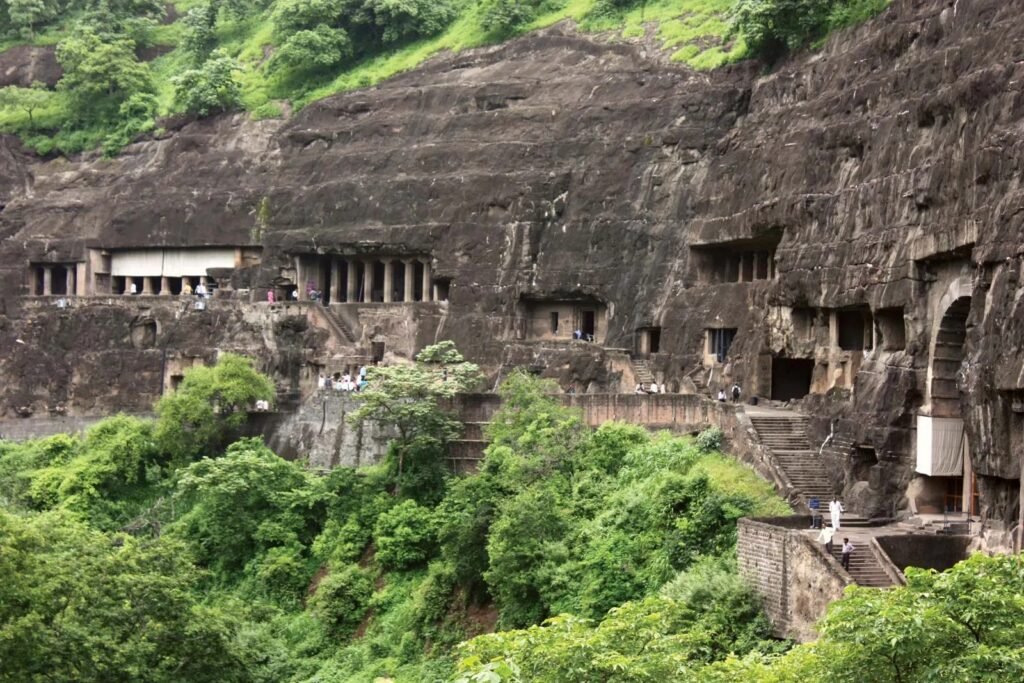
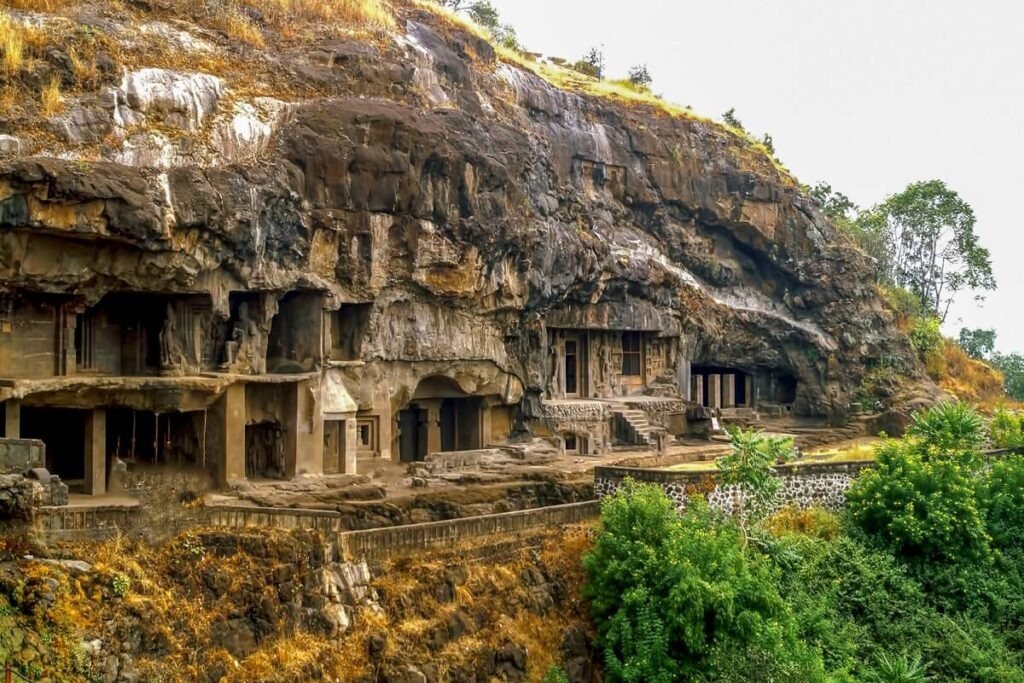
Ajanta Caves consist of 30 excavated caves carved into a steep horseshoe-shaped cliff overlooking a deep valley.
These caves are not naturally formed but were painstakingly created by skilled craftsmen using simple hand tools. Workers carved directly into hard volcanic basalt, removing enormous quantities of rock while carefully shaping pillars, halls, shrines, ceilings, and sculptures.
The caves are mainly divided into two architectural categories:
- Chaityas, which served as prayer halls where monks gathered for worship.
- Viharas, which functioned as monasteries providing living quarters, meditation spaces, and teaching centres.
Several caves display impressive columns, intricately carved entrances, decorative ceilings, and spacious assembly halls that continue to surprise engineers and architects with their precision.
Considering that the work was completed without modern machinery, the achievement reflects an exceptional level of planning, mathematics, and craftsmanship.
World-Famous Murals Preserve Ancient Indian Life
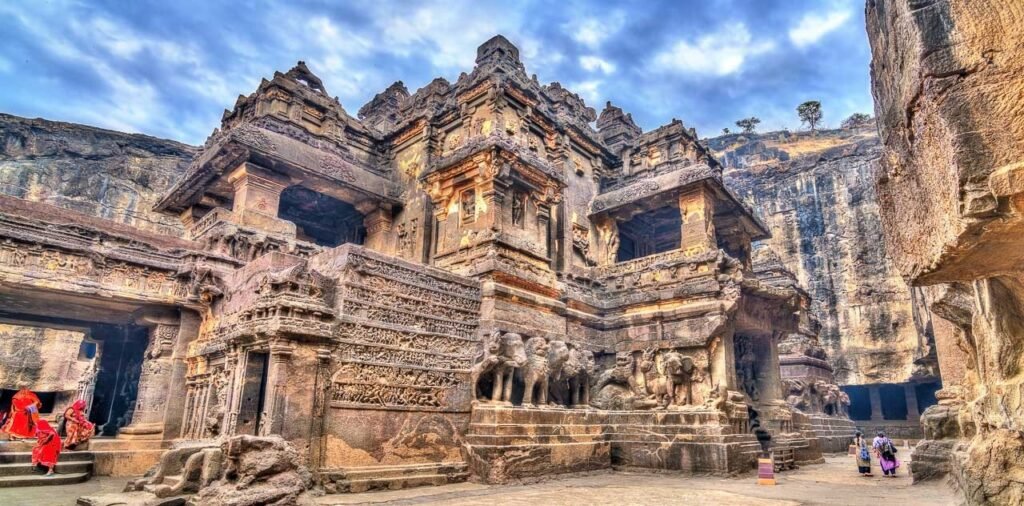
Perhaps the greatest attraction of Ajanta Caves is their extraordinary wall paintings.
These murals are among the oldest surviving paintings in India and are considered masterpieces of ancient world art. Created using natural minerals and plant-based pigments, many paintings have retained remarkable detail despite surviving for over fifteen centuries.
The paintings mainly illustrate stories from the Jataka Tales, which narrate the previous lives of Lord Buddha. Each story highlights virtues such as compassion, generosity, sacrifice, honesty, patience, and wisdom.
Beyond religious themes, the paintings also provide a rare glimpse into everyday life during ancient India. Visitors can observe royal courts, merchants, dancers, musicians, forests, animals, villages, palaces, clothing, jewellery, and cultural traditions.
For historians, these artworks serve as valuable visual records that reveal how people lived, dressed, celebrated festivals, and practised religion centuries ago.
Sculptures Reflect Spiritual Excellence
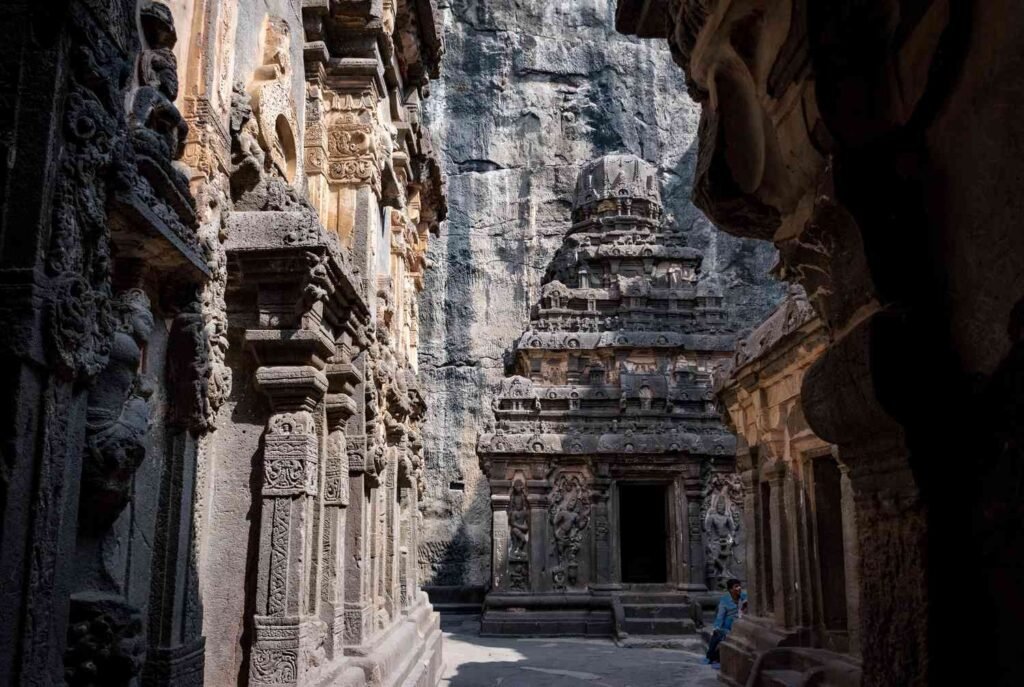
In addition to paintings, Ajanta Caves feature remarkable stone sculptures that demonstrate the artistic brilliance of ancient Indian craftsmen.
Many caves house beautifully carved statues of Lord Buddha seated in meditation, delivering sermons, or entering Mahaparinirvana. Bodhisattvas, celestial beings, guardians, and decorative carvings further enrich the interiors.
Among the most admired works is the famous Bodhisattva Padmapani painting, regarded as one of the greatest achievements in Indian art history. Equally impressive are the massive Buddha statues carved directly into the cave walls, displaying peaceful expressions and graceful proportions.
The combination of painting and sculpture creates an immersive spiritual atmosphere that continues to inspire visitors regardless of their religious background.
UNESCO Recognition Highlights Global Importance
The international importance of Ajanta Caves was formally recognised in 1983 when UNESCO declared the site a World Heritage Site.
UNESCO described the caves as an outstanding example of Buddhist religious art that significantly influenced artistic traditions across Asia.
The site’s universal value lies not only in its artistic excellence but also in its contribution to understanding the spread of Buddhism, ancient Indian civilisation, architecture, education, and cultural exchange.
Today, Ajanta Caves attract visitors from dozens of countries every year, making them one of India’s most respected heritage destinations.
A Centre of Buddhist Learning and Meditation
Ajanta Caves were far more than places of worship.
For centuries, they functioned as important centres of education, meditation, and philosophical discussion. Buddhist monks lived inside these monasteries, studying scriptures, teaching disciples, copying manuscripts, and practising meditation.
The peaceful location, surrounded by forests and flowing rivers, created an ideal environment for spiritual learning.
The architecture itself reflects this purpose. Living quarters, meditation halls, prayer chambers, and teaching spaces were carefully integrated into each monastery, allowing monks to live self-sufficient religious lives.
This educational role helped spread Buddhist philosophy across different regions of India and beyond.
Conservation Remains a Constant Challenge
Although Ajanta Caves have survived for centuries, preserving them remains a major responsibility.
The ancient paintings are highly sensitive to moisture, heat, artificial lighting, dust, and even the carbon dioxide produced by visitors. Overcrowding can accelerate deterioration of the delicate artwork.
To address these challenges, the Archaeological Survey of India regularly carries out scientific conservation projects. Visitor movement inside certain caves is carefully monitored, photography restrictions help protect paintings, and environmental conditions are continuously observed.
Modern conservation techniques focus on preserving the original artwork without altering its historical authenticity.
Experts also encourage responsible tourism, reminding visitors that protecting heritage requires public cooperation as much as government efforts.
Tourism Supports the Regional Economy
Ajanta Caves play an important role in Maharashtra’s tourism industry.
Thousands of domestic and international tourists visit the site every year, supporting hotels, restaurants, transportation services, local guides, handicraft markets, and nearby businesses.
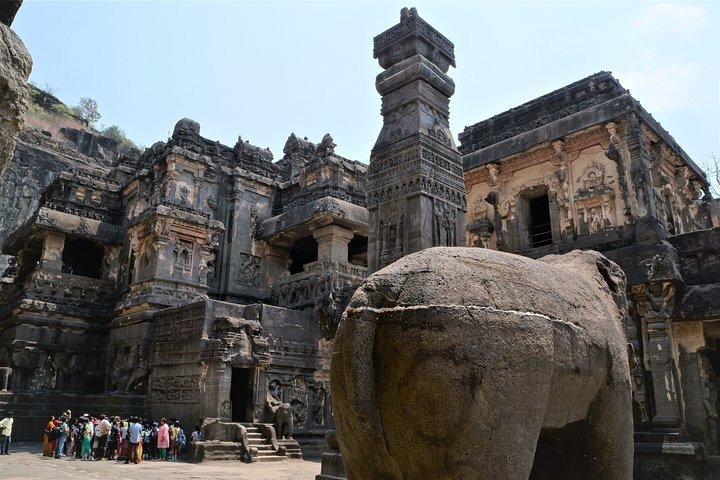
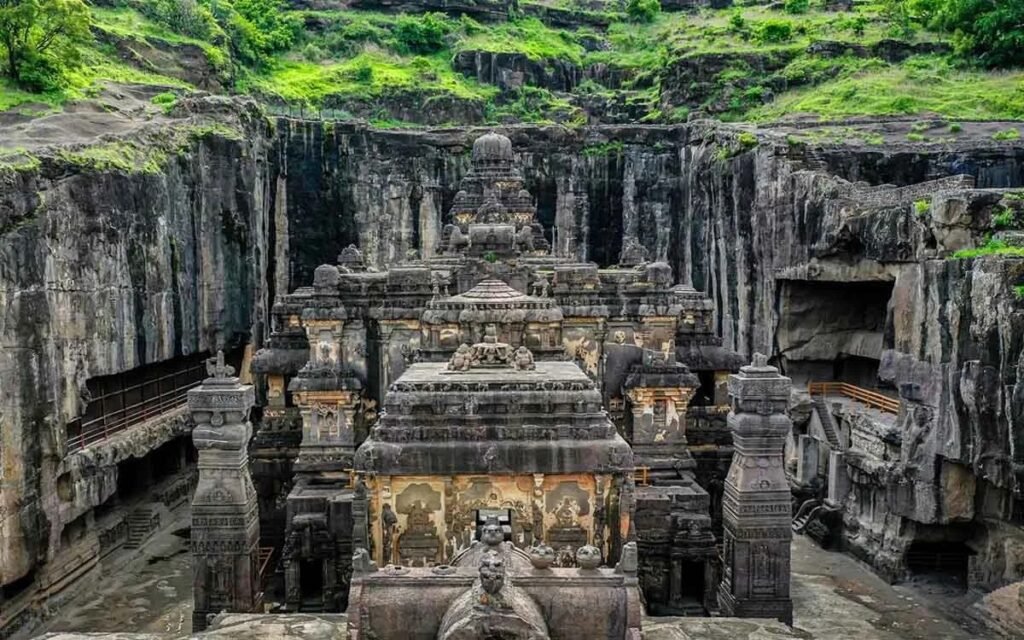
The caves are commonly included in travel itineraries alongside Ellora Caves, another UNESCO World Heritage Site located in Maharashtra.
Improved road connectivity, visitor facilities, interpretation centres, and digital information services have made exploring Ajanta Caves more convenient while helping tourists better understand their historical significance.
Heritage tourism generated by Ajanta Caves also creates employment opportunities for local communities, demonstrating how cultural preservation can contribute to economic development.
Why Ajanta Caves Continue to Fascinate the World
The enduring appeal of Ajanta Caves lies in the remarkable combination of history, spirituality, architecture, engineering, and artistic excellence found within a single location.
Unlike ordinary monuments, the caves preserve complete stories carved and painted into stone, allowing modern visitors to experience the thoughts, beliefs, and creativity of people who lived more than two millennia ago.
Every corridor, sculpture, mural, and prayer hall reflects extraordinary patience and craftsmanship that remain difficult to replicate even today. The paintings continue to educate historians, the sculptures inspire artists, and the architecture amazes engineers, making Ajanta Caves one of India’s finest examples of cultural heritage and one of the world’s most treasured archaeological sites.