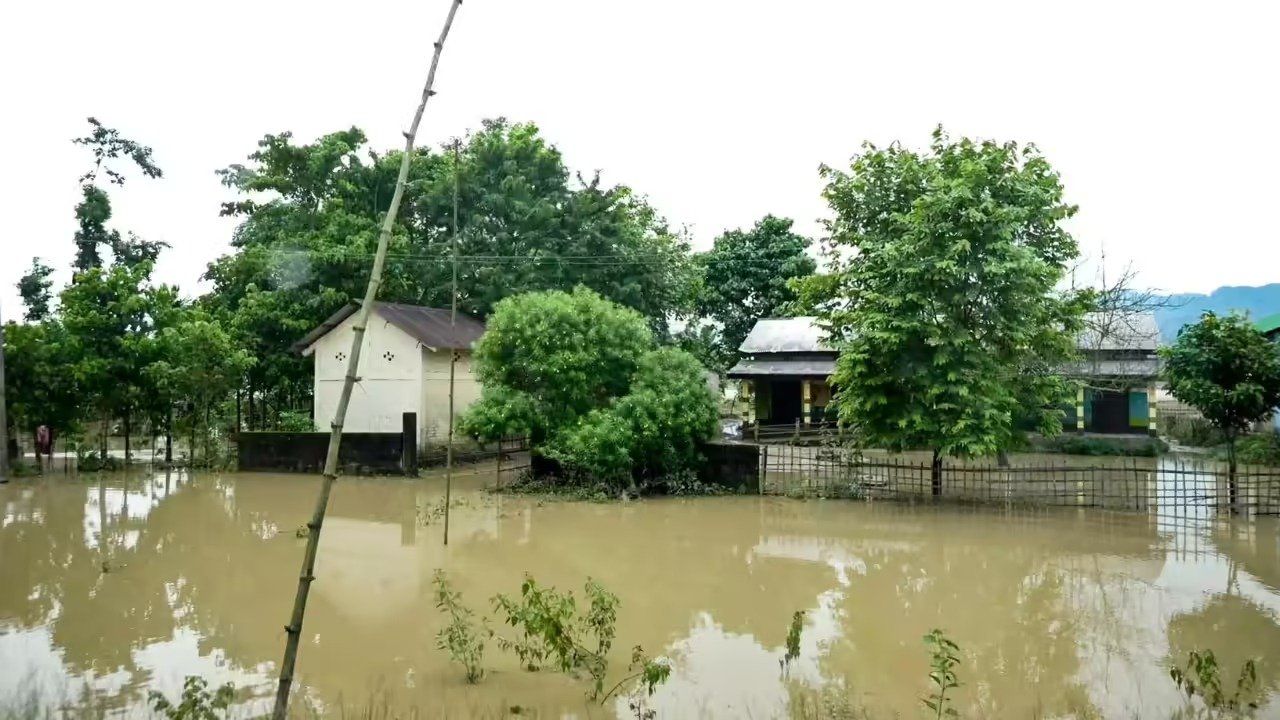
Assam Flood has once again disrupted normal life in several parts of the state, with more than 37,000 people affected across six districts as continuous rainfall, overflowing rivers, and severe water logging create fresh challenges for residents. According to the latest report released by the Assam Disaster Reporting and Information Management System (DRIMS), thousands of families are struggling with inundated homes, damaged farmland, disrupted transport links, and the growing risk of erosion.
Although the state’s major rivers are currently flowing below the danger mark, the impact of floodwaters remains significant. Large areas of agricultural land continue to remain submerged, while several villages are dealing with damaged roads, isolation, and displacement. Authorities have begun relief operations in the affected districts, but many communities continue to face uncertainty as changing weather conditions threaten to worsen the situation.
Table of Contents
More Than 37,000 People Impacted Across Six Districts
The latest official assessment shows that Assam Flood has affected a total of 37,032 people spread across six districts. These include Sonitpur, Dibrugarh, Lakhimpur, Dhemaji, Jorhat, and Sivasagar.
Floodwaters have entered 99 villages located in 12 revenue circles, disrupting everyday activities and forcing many residents to depend on government assistance. Along with residential areas, the flood has also caused serious damage to agriculture, leaving farmers worried about crop losses during the important cultivation season.
Officials reported that over 1,103 hectares of cropland remain underwater. This not only affects current agricultural production but may also have long-term consequences for farmers who rely entirely on seasonal crops for their income.
Despite the widespread flooding, authorities stated that none of the state’s rivers are currently flowing above the danger level or highest flood level. However, local flooding caused by heavy rainfall and overflowing tributaries continues to create serious problems in low-lying regions.

Lakhimpur Emerges as the Worst-Hit District
Among all the affected districts, Lakhimpur has recorded the highest number of flood victims. Out of the total affected population, 35,696 people belong to Lakhimpur alone, making it the epicentre of the current Assam Flood situation.
The district has witnessed extensive flooding across villages located near riverbanks and low-lying areas. Continuous rainfall combined with rising water levels has forced many families to shift temporarily while waiting for water levels to recede.
Sonitpur has reported 1,178 affected residents, while Dhemaji has recorded 158 people impacted by the floods. Though the numbers in other districts remain comparatively lower, local authorities continue to monitor conditions closely as rainfall patterns remain unpredictable.
Officials are carrying out regular assessments to identify newly affected villages and ensure relief reaches vulnerable communities without delay.
Relief Distribution Underway Across Flood-Affected Areas
To support residents facing hardship due to Assam Flood, the state government has established 20 relief distribution centres across the affected districts.
According to the latest figures, around 6,984 people are currently receiving food, drinking water, essential supplies, and other forms of assistance through these centres.
Interestingly, while relief distribution is actively taking place, no formal relief camps have been opened so far. This indicates that many affected families are either staying with relatives, living on higher ground, or continuing to remain inside partially flooded homes while depending on government support for daily necessities.
District administrations are coordinating with disaster management teams to monitor local conditions and provide assistance wherever required. Essential services, including drinking water supply and healthcare, remain key priorities in the ongoing relief effort.
One Fatality Reported During Current Flood Spell
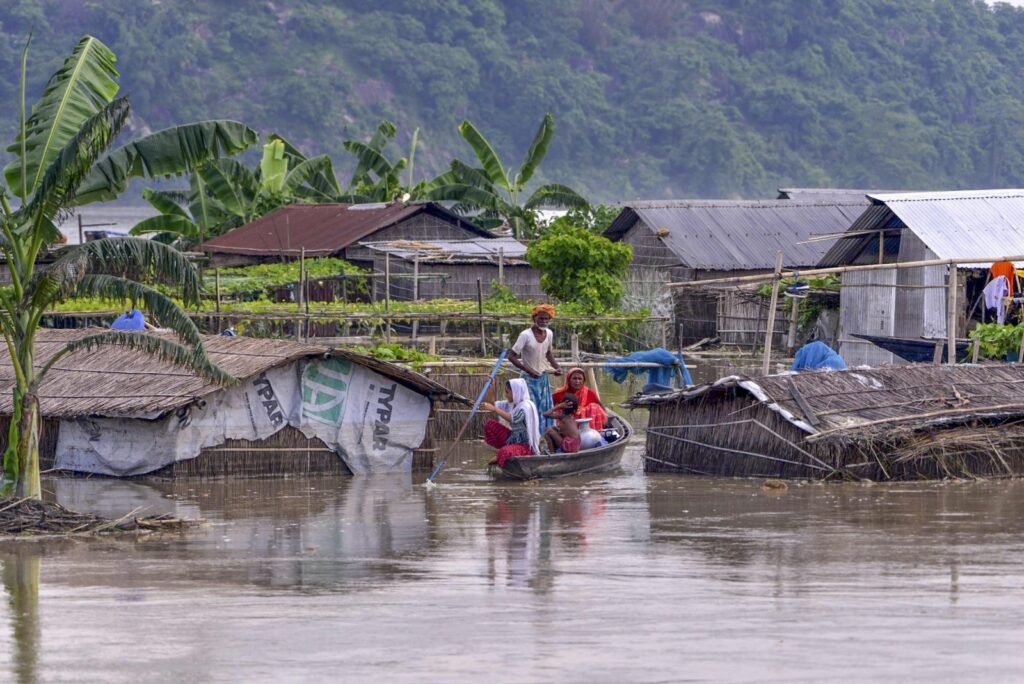
The latest Assam Flood report has confirmed one flood-related death in Sonitpur district.
While authorities have not released detailed information regarding the incident, the report stated that no person is currently missing due to the floods.
Although the death toll remains relatively low compared to previous years, disaster management officials continue urging residents living near rivers and flood-prone areas to remain cautious, particularly during periods of heavy rainfall and sudden increases in river discharge.
Early warning systems, local administration alerts, and continuous monitoring remain essential to reducing the risk of further casualties.
Agriculture Faces Significant Losses
One of the biggest concerns arising from the ongoing Assam Flood is the damage to agriculture.
More than 1,103 hectares of cropland remain submerged under floodwater. Large sections of cultivated land have been affected at a time when farmers are engaged in seasonal agricultural activities.
For thousands of farming families across Assam, flooding does not simply mean temporary inconvenience. Crop damage often results in months of financial hardship, reduced income, increased debt, and uncertainty regarding the next planting cycle.
Assam Flood ,Waterlogging also damages soil quality, delays harvesting, and affects livestock in many rural communities. Recovery from agricultural losses often takes much longer than the floodwaters themselves.
Agricultural experts have frequently highlighted that repeated flooding in Assam makes climate-resilient farming practices increasingly important. Improved drainage systems, flood-resistant crop varieties, and better irrigation planning are considered essential for reducing future losses.
Water Released from NHPC Dam Adds to Local Flooding
Another significant development in the current Assam Flood situation emerged along the Majuli-Lakhimpur border.
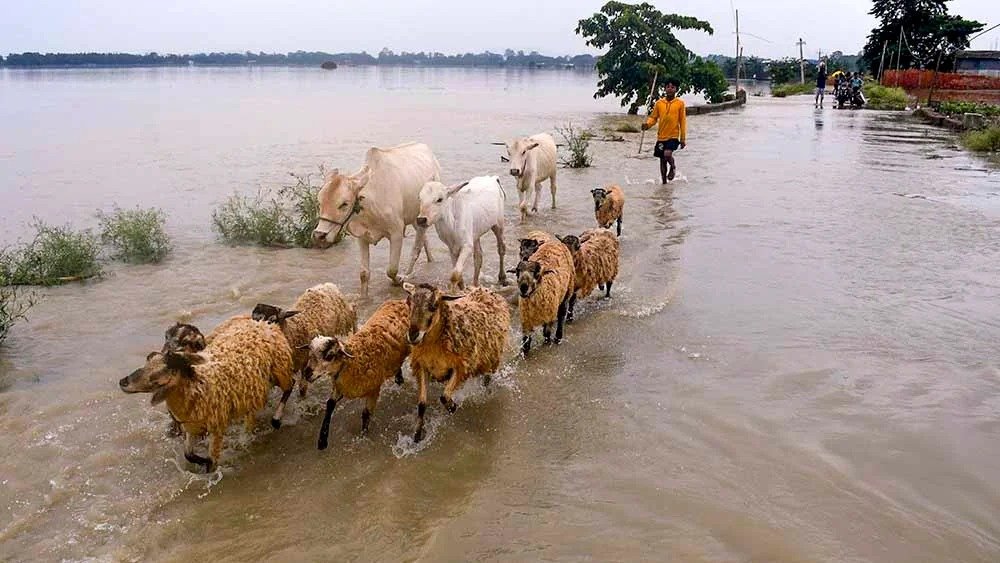
Rising water levels in the Subansiri River following the opening of gates at the NHPC dam led to flooding in more than 20 villages situated along the border region.
Residents reported rapid increases in water levels, leaving several villages partially submerged within a short period. Such sudden inflows often provide limited time for local communities to shift belongings or livestock to safer locations.
The increased discharge also caused damage to infrastructure. Portions of the under-construction Chelek-Dhunaguri road were washed away at three separate locations, disrupting transportation and making movement difficult for local residents.
Damage to road infrastructure creates additional challenges during flood situations because emergency services, relief vehicles, and essential supplies often struggle to reach isolated villages.
Temporary Drainage Measures Introduced in Sivasagar
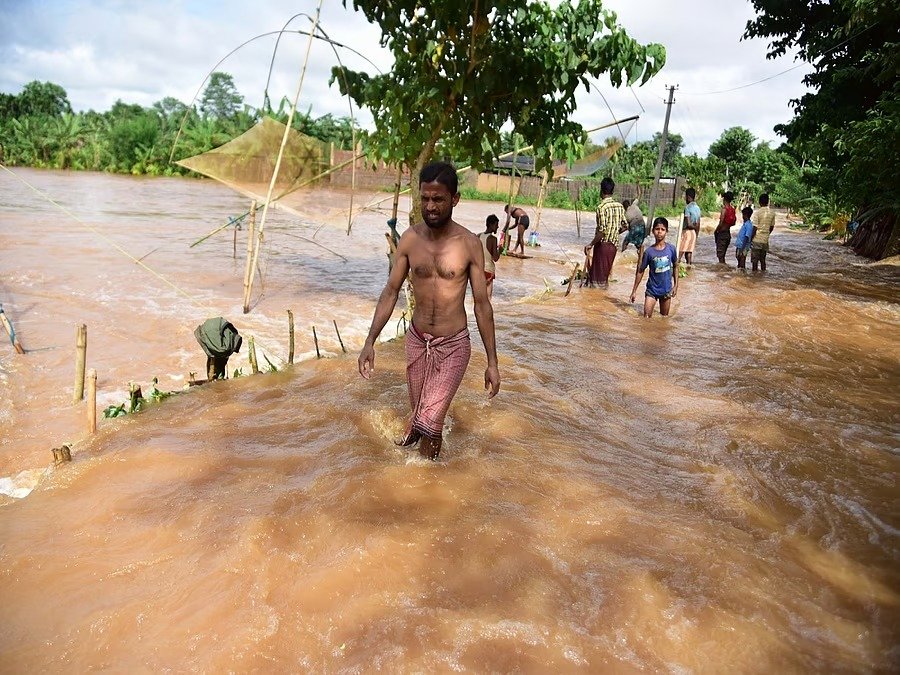
Authorities in Sivasagar district have started temporary measures to reduce waterlogging caused by Assam Flood.
Officials carried out excavation of kutcha drains while installing Hume pipes in several waterlogged locations to improve drainage and help stagnant water flow out more quickly.
Although these are temporary solutions, they offer immediate relief to residents experiencing prolonged water accumulation in residential areas.
Urban flooding and waterlogging remain recurring issues in several districts whenever heavy rainfall coincides with poor drainage systems. Local administrations often rely on emergency engineering measures until permanent drainage infrastructure can be strengthened.
Soil Erosion Creates Fresh Crisis in Chirang
While floodwaters remain the primary concern in several districts, Chirang district is facing another equally serious disaster—riverbank erosion.
Following heavy rainfall, the Nangal Bhanga River swelled significantly, triggering severe erosion in Nangalbhanga village and surrounding areas.
Unlike flooding, erosion permanently removes land, often destroying homes, farmland, roads, and public infrastructure. Several families have reportedly lost their houses after large portions of land collapsed into the river.
Many affected residents have been displaced and are now facing uncertainty regarding shelter and livelihood.
Riverbank erosion has remained one of Assam’s most persistent environmental challenges for decades. Every monsoon season, numerous villages located along riverbanks face the possibility of losing valuable land within hours due to strong river currents.
Assam Flood ,Experts have repeatedly stressed the need for stronger embankments, scientific river management, and long-term erosion control measures to reduce recurring damage.
Flood Monitoring Continues as Weather Remains Uncertain
Officials continue to monitor rainfall patterns, river levels, and flood conditions across Assam as weather forecasts remain closely watched.
Although no major Assam Flood river has crossed the danger mark at present, authorities remain alert because continuous rainfall in upstream areas can quickly change the situation. Local administrations are maintaining coordination with disaster management agencies to ensure timely evacuation, relief distribution, and emergency response if conditions deteriorate further.
For thousands of residents Assam Flood across Lakhimpur, Sonitpur, Dhemaji, Dibrugarh, Jorhat, Sivasagar, and nearby regions, the ongoing Assam Flood remains a daily challenge. With farmland submerged, roads damaged, villages inundated, and erosion threatening more communities, authorities continue their efforts to minimise losses while providing assistance to those affected.