In a major step toward strengthening the country’s railway infrastructure, Indian Railways has approved several key railway projects across different zones to improve line capacity, passenger convenience, freight transportation, and operational efficiency. The newly sanctioned projects, covering multiple states, include track doubling, third-line construction, and a new chord line, with investments amounting to several thousand crores of rupees.
These projects are aimed at easing congestion on heavily utilized rail corridors, supporting industrial growth, enhancing multimodal connectivity, and preparing the railway network to meet future transportation demands.
Table of Contents
Arakkonam–Chengalpattu Doubling Project Approved (₹993 Crore | 68 km)
Indian Railways has approved the Arakkonam–Chengalpattu Doubling Project on the Southern Railway network at an estimated cost of ₹993 crore. The project involves the construction of a 68-kilometre double line, forming part of the important Chennai Suburban Circular Railway Network that connects Chennai Beach, Tambaram, Chengalpattu, and Arakkonam.
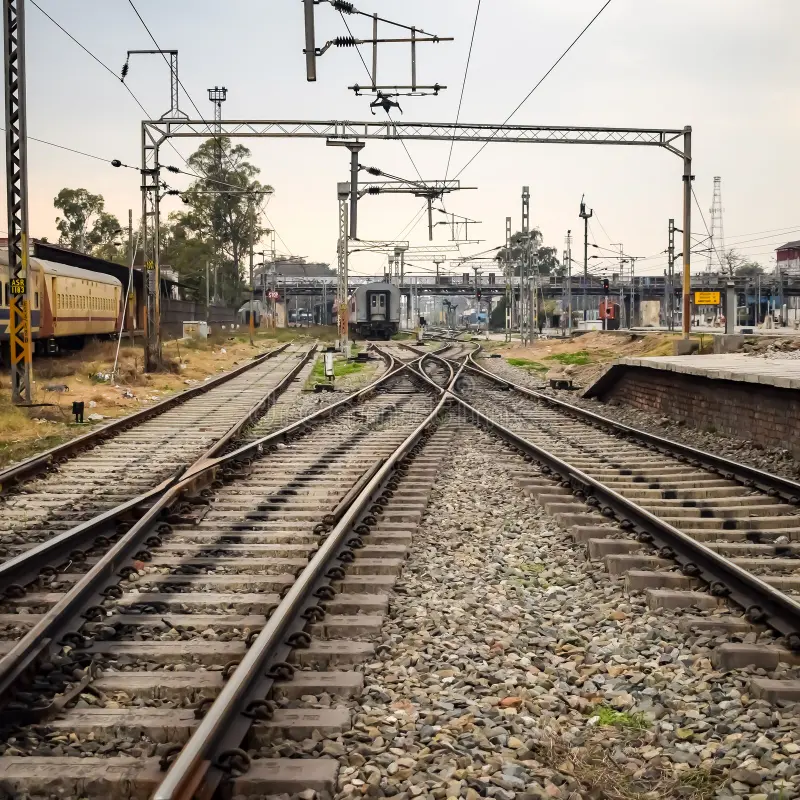
According to the Railway Minister, the project will play a crucial role in reducing congestion on Chennai’s busy suburban rail network while improving punctuality, operational efficiency, and overall passenger services.
The upgraded corridor will also strengthen freight movement by facilitating the transportation of key commodities such as cement, automobiles, food grains, iron, and steel.
At present, the existing double line is operating at full capacity, with traffic expected to increase significantly in the coming years. The expansion is therefore essential to accommodate future passenger and freight demand.
The route also connects several major industrial and economic hubs, including:
- Mahindra World City
- Sriperumbudur
- Oragadam
- Irungattukottai
Additionally, the proposed Parandur International Airport near Kanchipuram lies close to this corridor, further increasing its strategic importance.
Kiul–Jhajha Third Line Project Approved (₹962 Crore | 54 km)
Indian Railways has also approved the Kiul–Jhajha Third Line Project, spanning 54 kilometres, at an estimated cost of ₹962 crore.
The project forms a vital part of the heavily utilized Howrah–Delhi Railway Corridor, one of India’s busiest railway routes.
The Railway Minister stated that the project will substantially increase transportation capacity while improving train punctuality and operational efficiency.
Currently, the existing double-line section between Kiul and Jhajha is operating beyond its designed capacity. The addition of a third line will reduce congestion and ensure smoother movement of both passenger and freight trains.
The project is also expected to strengthen connectivity between Patna and Kolkata while improving freight transportation between major industrial and logistics centers in eastern and northern India.
The corridor provides an important railway connection between:
- Kolkata Port
- Haldia Port
- Raxaul
- Nepal
It also serves major industrial establishments, including:
- Barh Super Thermal Power Plant
- Jawahar Super Thermal Power Plant
- Birgunj Inland Container Depot (ICD)
Due to its heavy traffic volume, this rail section has been identified as one of Indian Railways’ High-Density Network Corridors.
Mararikulam–Alappuzha Doubling Project Approved (₹220 Crore | 10.65 km)
Indian Railways has sanctioned the Mararikulam–Alappuzha Doubling Project on the Southern Railway network at an estimated cost of ₹220 crore.
The project covers 10.65 kilometres and aims to eliminate the last remaining single-line section on the Ernakulam–Turavur–Alappuzha–Ambalappuzha–Kayamkulam corridor, where most other sections have already been doubled or are currently under construction.
Upon completion, the project is expected to facilitate the operation of:
- Nine additional passenger trains daily in each direction
- 2.88 million tonnes of additional freight annually
The increase in passenger and freight traffic is projected to generate an additional annual net revenue of approximately ₹3.08 crore.
The project has been identified under Mission 3000 MT and the High-Density Traffic Network Corridor initiative.
From an economic perspective, the project is also considered highly viable, with:
- Financial Internal Rate of Return (FIRR): 3.99%
- Economic Internal Rate of Return (EIRR): 22.30%
The completed project will improve operational efficiency while supporting regional economic growth.
Adipur–Bhuj Doubling Project Approved (₹493 Crore | 49 km)
Indian Railways has approved the Adipur–Bhuj Doubling Project on the Western Railway network at an estimated cost of ₹493 crore.
The 49-kilometre strategically important section will significantly improve railway connectivity in the Kutch region while supporting future growth in passenger and freight transportation.
The Adipur–Bhuj route forms part of the Gandhidham–Naliya Corridor, where traffic is expected to increase due to several ongoing railway infrastructure projects, including:
- Bhuj–Naliya Gauge Conversion
- Extension of the Naliya–Vayor Line
- New railway lines connecting:
- Naliya–Jakhi
- Vayor–Lakhpat
- Deshalpar–Luna
Once these projects are completed, both passenger and freight traffic on the Bhuj–Adipur section are expected to increase substantially.
The project will enable:
- Two additional passenger train services daily in both directions
- Approximately 12 million tonnes of additional freight annually
Current utilization of this railway section is expected to reach 123% by 2029–30, making timely capacity expansion essential.
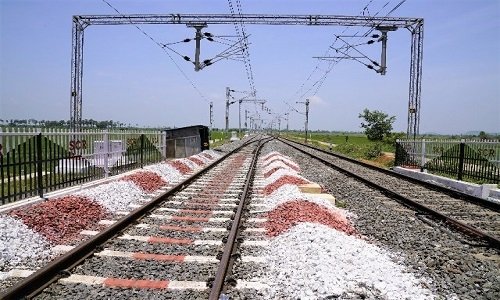
Railway Infrastructure: Somatane–Chikhli Chord Line Approved (₹172 Crore | 3.7 km)
To strengthen Railway Infrastructure, Indian Railways has approved the Somatane–Chikhli Chord Line under Central Railway at an estimated cost of ₹172 crore.
The new 3.7-kilometre chord line will bridge a critical missing rail link between:
- Chikhli on the Karjat route
- Somatane on the Roha route
The new connection will enable trains to travel directly between the Karjat and Roha corridors without entering the heavily congested Panvel Junction or requiring locomotive reversal.
Panvel is one of the busiest railway junctions in the Mumbai Metropolitan Region, handling traffic towards:
- Roha
- JNPT Port
- Karjat
- Diva
Currently, freight trains operating between Karjat, Jasai, and Roha must enter Panvel Junction before changing locomotives and continuing their journey.
After completion of the chord line, freight trains will bypass Panvel Junction entirely.
Expected benefits include:
- Saving approximately 110 minutes per freight train
- Faster turnaround time
- Improved logistics efficiency
- Additional freight capacity of 9 million tonnes annually
The project complements previously approved elevated chord lines connecting JNPT with Karjat and Roha.
Railway Infrastructure: Champa–Korba Third Rail Line Approved (₹755 Crore | 42 km)
Further boosting Railway Infrastructure, Indian Railways has approved the Champa–Korba Third Rail Line Project under the South East Central Railway (SECR) at an estimated cost of ₹755 crore.
The project involves construction of a 42-kilometre third railway line between Champa and Korba, excluding the already approved Madwarani–Saragbundia section.
The project has been identified under:
- Mission 3000 MT
- High-Density Network (HDN) Corridor
Both initiatives aim to strengthen freight movement and support India’s growing energy requirements.
Korba, widely known as the “Energy Capital of India,” houses several major thermal power plants and serves as one of India’s largest coal transportation hubs.
The Champa–Korba section plays a vital role in connecting coal mines operated by:
- South Eastern Coalfields Limited (SECL)
- Mahanadi Coalfields Limited (MCL)
to the national railway network and the Mumbai–Howrah High-Density Corridor.
Currently, the section handles approximately:
- 10 pairs of passenger trains daily
- 55 pairs of freight trains daily
The combined coal production capacity of SECL and MCL currently stands at approximately 247 million tonnes per annum (MTPA) and is expected to increase to nearly 450 MTPA.
This growth is projected to generate an additional 200 million tonnes of coal traffic in the coming years.
Upon completion, the project will facilitate:
- Two additional passenger trains daily in each direction
- Additional freight movement of approximately 5.95 MTPA
The project is also expected to generate approximately ₹85 crore in additional annual revenue, including:
- ₹82 crore from freight operations
- ₹3 crore from passenger services
The third line will also reduce freight train detention and operational delays.
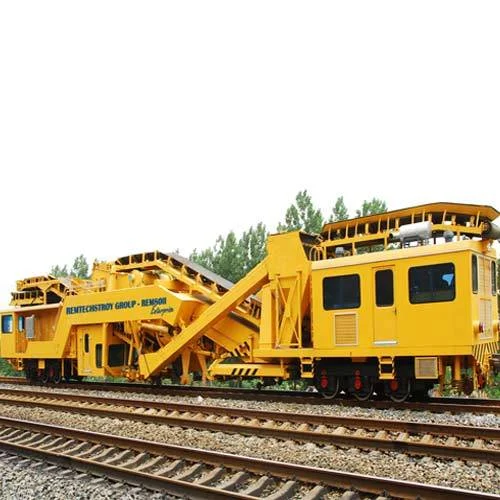
Strengthening India’s Railway Infrastructure
With these approvals, Indian Railways continues to prioritize capacity expansion, multimodal connectivity, freight efficiency, and passenger convenience across the country.
The projects are expected to:
- Reduce congestion on high-density routes.
- Improve train punctuality.
- Increase freight handling capacity.
- Support industrial growth.
- Strengthen regional connectivity.
- Enhance logistics efficiency.
- Generate additional railway revenue.
- Promote sustainable transportation.
- Support future passenger demand.
- Accelerate economic development.
Collectively, these infrastructure investments reinforce Indian Railways’ long-term commitment to building a modern, efficient, and future-ready transportation network capable of supporting India’s rapidly growing economy and logistics requirements.