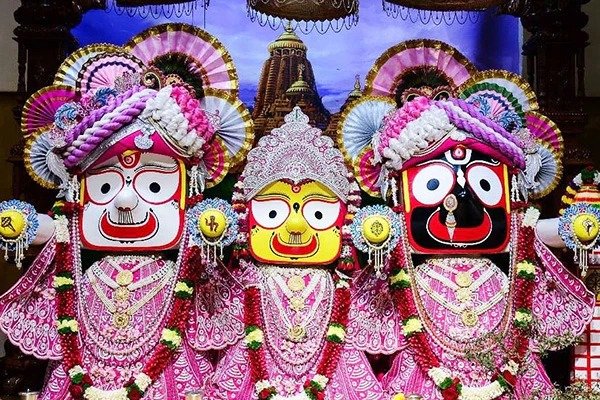
Jagannath Rath Yatra is one of India’s most sacred and spectacular religious festivals, celebrated with immense devotion in the holy city of Puri, Odisha. Every year, millions of devotees from India and abroad gather to witness the grand procession of Lord Jagannath, Lord Balabhadra, and Devi Subhadra as they travel from the famous Jagannath Temple to the Gundicha Temple. The centuries-old tradition is not only a major religious event but also a symbol of faith, equality, and devotion that transcends geographical and cultural boundaries.
In 2026, Jagannath Rath Yatra will begin on July 16, while several important ceremonies associated with the festival will commence much earlier. The celebrations will continue until Niladri Bije on July 27, marking the ceremonial return of the deities to the Jagannath Temple after their annual journey.
Recognised as the world’s oldest and largest chariot festival, Jagannath Rath Yatra attracts lakhs of pilgrims, saints, tourists, scholars, and spiritual seekers every year. The festival has remained an integral part of India’s religious heritage for centuries and continues to inspire millions through its unique traditions and deep spiritual meaning.
Table of Contents
What is Jagannath Rath Yatra?
Jagannath Rath Yatra is the annual ceremonial journey of Lord Jagannath, his elder brother Lord Balabhadra, and sister Devi Subhadra from the Jagannath Temple to the Gundicha Temple, situated nearly three kilometres away in Puri.
Unlike most Hindu festivals where devotees visit temples to seek blessings, Jagannath Rath Yatra symbolises the Lord stepping out of the temple to meet devotees from every section of society. This makes the festival unique because everyone, irrespective of caste, religion, social background, or nationality, gets an opportunity to witness the deities during the procession.
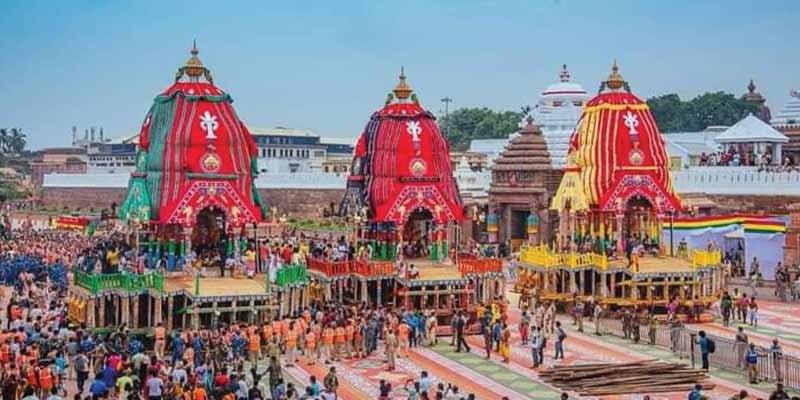
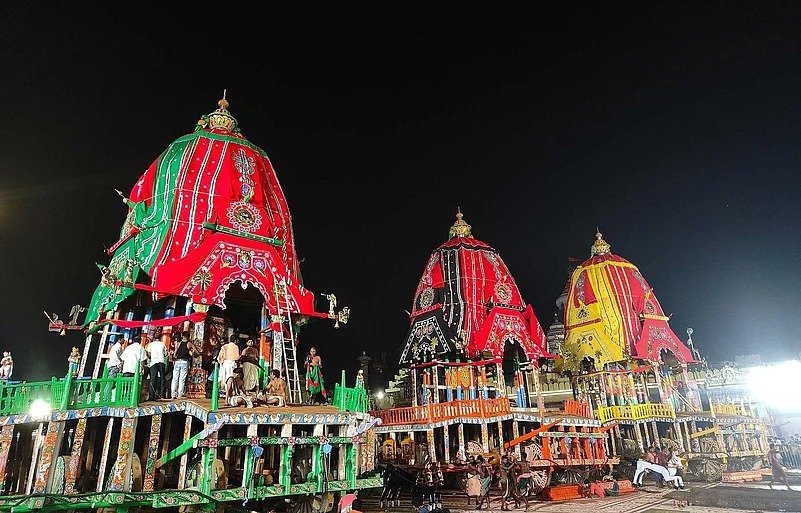
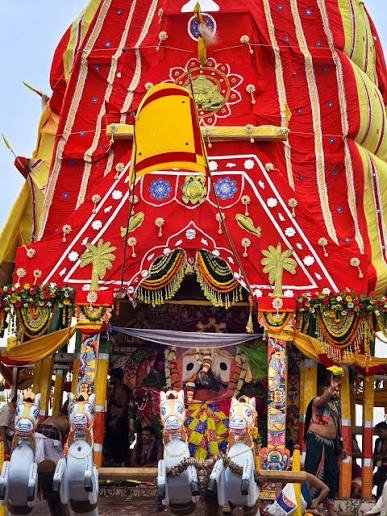
The journey is performed using three magnificent wooden chariots that are newly constructed every year following centuries-old architectural traditions preserved by skilled artisans in Odisha.
Each deity travels in a separate chariot:
- Nandighosa – Chariot of Lord Jagannath
- Taladhwaja – Chariot of Lord Balabhadra
- Darpadalan (Devadalana) – Chariot of Devi Subhadra
These enormous chariots become the centre of attraction as thousands of devotees pull them through the streets of Puri amid devotional chants, music, and celebrations.
Jagannath Rath Yatra 2026: Important Dates
The celebrations associated with Jagannath Rath Yatra extend over several weeks, with each ritual carrying its own religious importance.
The complete schedule for 2026 is as follows:
- Snana Yatra: June 29, 2026
- Nava Yauvana Darshan / Netrotsava: July 14, 2026
- Jagannath Rath Yatra (Main Procession): July 16, 2026
- Hera Panchami: July 20, 2026
- Bahuda Yatra (Return Journey): July 24, 2026
- Suna Besha: July 25, 2026
- Adhara Pana: July 26, 2026
- Niladri Bije: July 27, 2026
Each ceremony forms an essential part of the festival and reflects different aspects of Jagannath worship.
Spiritual Significance of Jagannath Rath Yatra
Jagannath Rath Yatra is deeply rooted in Hindu traditions and is closely associated with Lord Vishnu, of whom Lord Jagannath is considered a revered manifestation.
The Jagannath Temple in Puri is one of the four sacred Char Dham pilgrimage sites established in Hindu tradition, making it one of the most important centres of worship in the country.
According to religious beliefs, Lord Jagannath visits the Gundicha Temple every year to honour Queen Gundicha’s devotion. The annual journey symbolises love between the deity and devotees while reminding followers that the divine is accessible to everyone.
Another important belief associated with Jagannath Rath Yatra is that the return journey takes place shortly before Devshayani Ekadashi, the day when Lord Vishnu is believed to enter Yoga Nidra, or divine sleep, for four months during Chaturmas.
For devotees, participating in the festival is considered an act of immense spiritual merit that brings inner peace, blessings, and positive energy.
Snana Yatra Begins the Festivities
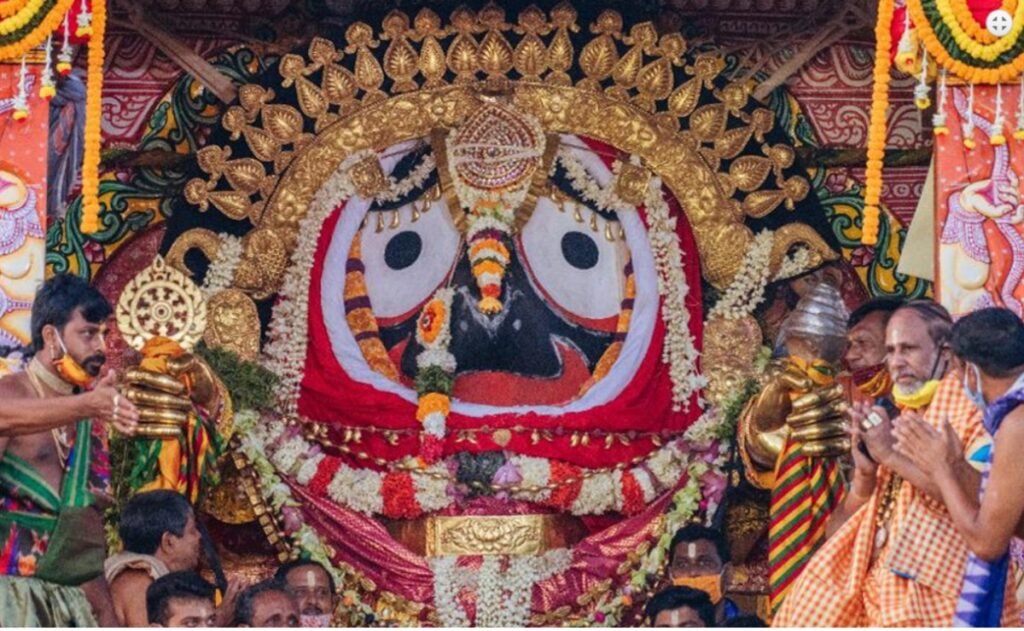
The first major ritual connected with Jagannath Rath Yatra is Snana Yatra.
Held on June 29 in 2026, this ceremonial bathing festival involves bathing the three deities with 108 pitchers of sacred water.
Following this elaborate ritual, the deities are believed to fall ill due to the extensive bathing ceremony.
During this period, known as Anasara, the deities remain away from public view while they symbolically recover.
This tradition reflects the human aspect of Lord Jagannath and strengthens the emotional connection between devotees and the deity.
Nava Yauvana Darshan and Netrotsava
After recovering from the symbolic illness, devotees receive the first glimpse of the deities during Nava Yauvana Darshan, also known as Netrotsava.
Scheduled for July 14, this ceremony marks the rejuvenated appearance of Lord Jagannath before the beginning of Jagannath Rath Yatra.
Thousands of devotees eagerly await this occasion, believing that witnessing the deities after Anasara is especially auspicious.
The Grand Chariot Procession
The highlight of Jagannath Rath Yatra is undoubtedly the grand procession held on July 16.
Before the chariots begin moving, an important ritual called Chhera Pahanra is performed by the Gajapati Maharaja of Puri.
The king ceremonially sweeps the platforms of the chariots with a golden broom while sprinkling sandalwood water.
This ritual symbolises equality before God and demonstrates that every individual, regardless of status, is a servant of the divine.
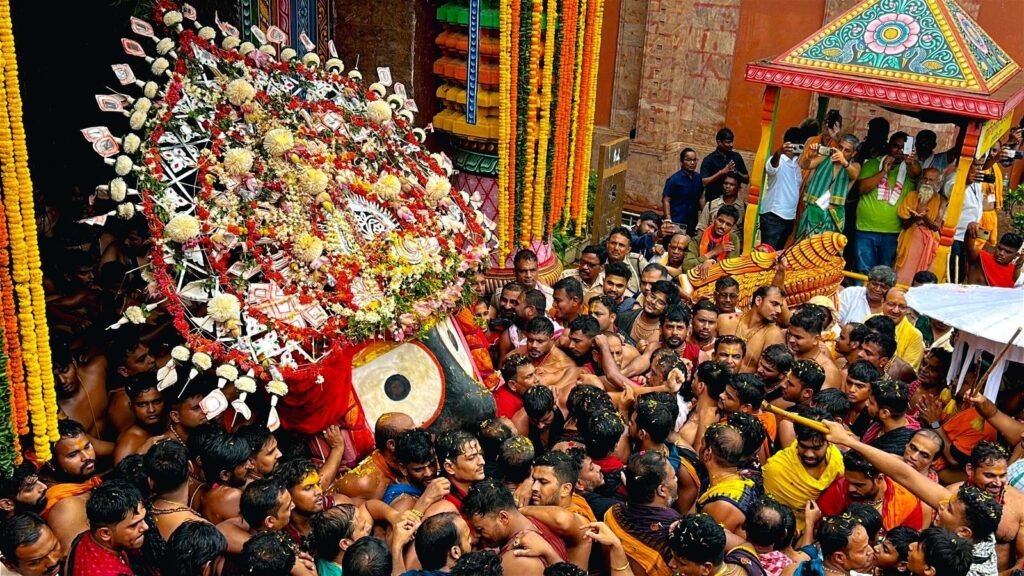
Once this ceremony concludes, devotees begin pulling the giant wooden chariots using massive ropes.
The sight of thousands of people pulling the chariots together while chanting devotional hymns creates one of the most remarkable religious gatherings in the world.
Why Pulling the Chariots Is Considered Sacred
One of the defining traditions of Jagannath Rath Yatra is the participation of devotees in pulling the chariots.
According to popular belief, helping pull the sacred chariots washes away past sins, brings prosperity, and grants divine blessings.
Although the physical act appears simple, it carries deep symbolic meaning.
It represents surrender to the divine, collective faith, and the willingness to participate in the Lord’s journey.
For many devotees, even touching the ropes used to pull the chariots is considered spiritually rewarding.
Bahuda Yatra Marks the Return Journey
After spending several days at the Gundicha Temple, Lord Jagannath, Lord Balabhadra, and Devi Subhadra begin their return journey during Bahuda Yatra on July 24.
This procession follows the same route back to the Jagannath Temple.
Like the main procession, Bahuda Yatra also attracts enormous crowds as devotees gather to welcome the deities back to their permanent abode.
Suna Besha: The Golden Attire
One of the most visually stunning rituals associated with Jagannath Rath Yatra is Suna Besha, scheduled for July 25.
On this occasion, the three deities are adorned with magnificent gold ornaments, crowns, jewellery, and ceremonial weapons.
Thousands of devotees gather to witness this rare appearance, which is considered one of the most sacred moments of the festival.
The elaborate golden decoration symbolises divine glory, prosperity, and spiritual abundance.
Adhara Pana and Niladri Bije
The celebrations continue with Adhara Pana on July 26.
During this ritual, a traditional sweet beverage is offered to the deities in large earthen pots as part of ancient temple customs.
The final ceremony of Jagannath Rath Yatra is Niladri Bije on July 27, when Lord Jagannath ceremonially re-enters the sanctum of the Jagannath Temple.
According to temple traditions, this ritual also includes symbolic exchanges between Lord Jagannath and Goddess Lakshmi, adding another important dimension to the festival’s religious significance.
Why Jagannath Rath Yatra Continues to Inspire Millions
Jagannath Rath Yatra is much more than a religious procession. It represents India’s living cultural heritage, preserving traditions that have continued uninterrupted for centuries.
The festival demonstrates values of equality, devotion, community participation, and spiritual inclusiveness.
Its unique rituals, magnificent wooden chariots, centuries-old craftsmanship, and overwhelming public participation have made Jagannath Rath Yatra one of the most recognised Hindu festivals in the world.
Every year, the celebrations also contribute significantly to Odisha’s economy by promoting tourism, traditional crafts, hospitality, transport, and local businesses.
As preparations for Jagannath Rath Yatra 2026 gather momentum, millions of devotees are expected to once again assemble in Puri to witness one of the world’s most extraordinary spiritual celebrations, where faith, tradition, devotion, and culture come together in a timeless expression of reverence for Lord Jagannath.