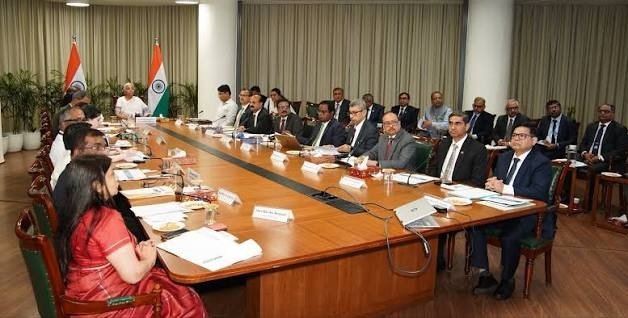
Nirmala Sitharaman on Monday reviewed the progress of the Reserve Bank of India’s special foreign currency mobilization schemes and urged banks to strengthen their engagement with the global Non-Resident Indian (NRI) community. The review reflects the government’s broader strategy to attract foreign currency inflows, enhance India’s foreign exchange reserves and maintain stability in the country’s external financial position amid an evolving global economic environment.
The high-level meeting, held in New Delhi, brought together Managing Directors and Chief Executive Officers of Public Sector Banks (PSBs), Public Financial Institutions (PFIs), senior officials from the Reserve Bank of India (RBI), the Department of Financial Services, the Department of Economic Affairs, the Department of Revenue and the Chief Economic Advisor. The discussions focused on evaluating the response to the RBI’s recently launched swap facility schemes and identifying ways to further increase participation from overseas Indians.
Nirmala Sitharaman emphasized that Indian banks should continue expanding their outreach beyond traditional banking channels by adopting digital engagement, personalized financial products and stronger communication strategies for the NRI community. The Finance Minister underlined that maintaining the momentum generated during the initial months of the schemes would be critical for achieving their intended objectives.
Table of Contents

Why the RBI Introduced the Swap Schemes
The RBI announced the special swap facilities in its Monetary Policy Statement on June 5, 2026, as part of a broader effort to attract foreign capital into India.
These measures were introduced at a time when global financial markets continued to witness uncertainty arising from changing interest rates, geopolitical tensions and fluctuations in international capital flows. By encouraging NRIs and overseas investors to bring foreign currency into India, the RBI aims to strengthen the country’s foreign exchange reserves while providing banks with access to stable long-term funding.
The scheme primarily covers three categories:
- Foreign Currency Non-Resident (Bank) or FCNR(B) deposits
- External Commercial Borrowings (ECBs)
- Overseas Foreign Currency Borrowings (OFCBs)
Each of these instruments serves a different purpose but collectively contributes to increasing India’s foreign currency resources.
Understanding FCNR(B) Deposits
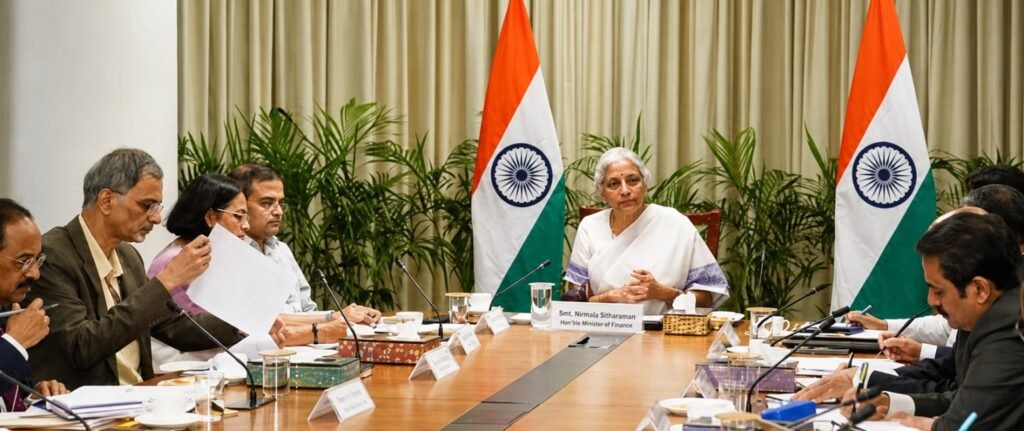
One of the major topics discussed during the meeting chaired by Nirmala Sitharaman was the encouraging response to FCNR(B) deposits.
An FCNR(B) deposit is a fixed deposit account maintained by Non-Resident Indians in designated foreign currencies such as the US Dollar, Pound Sterling, Euro, Japanese Yen, Australian Dollar and Canadian Dollar. Unlike ordinary deposits, these accounts protect depositors from exchange rate fluctuations because both the principal and interest remain in foreign currency.
To make these deposits more attractive, the RBI temporarily removed the interest rate ceiling on fresh FCNR(B) deposits under the current scheme. This decision has enabled banks to offer more competitive returns, especially on five-year deposits, making them increasingly attractive for overseas Indians seeking safe investment opportunities.
Banks informed Nirmala Sitharaman that this policy change significantly improved investor sentiment and generated healthy demand from NRIs across multiple countries.
Strong Response from Overseas Indians
According to participating banks, the RBI’s initiatives have received an encouraging response from Indian communities living abroad.
Particularly strong interest has emerged from NRIs residing in:
- Singapore
- Hong Kong
- West Asian countries
- United Kingdom
- United States
- Several other international financial centres
Bank executives explained that many overseas Indians view India as a stable long-term investment destination while also wishing to maintain financial connections with their home country.
The attractive returns offered under the revised FCNR(B) framework, combined with India’s relatively strong macroeconomic fundamentals, have encouraged greater participation in these schemes.
Nirmala Sitharaman appreciated the positive response but stressed that banks should not become complacent. Instead, they should continue reaching out to new customers while deepening relationships with existing NRI clients.
Banks Plan Digital Outreach
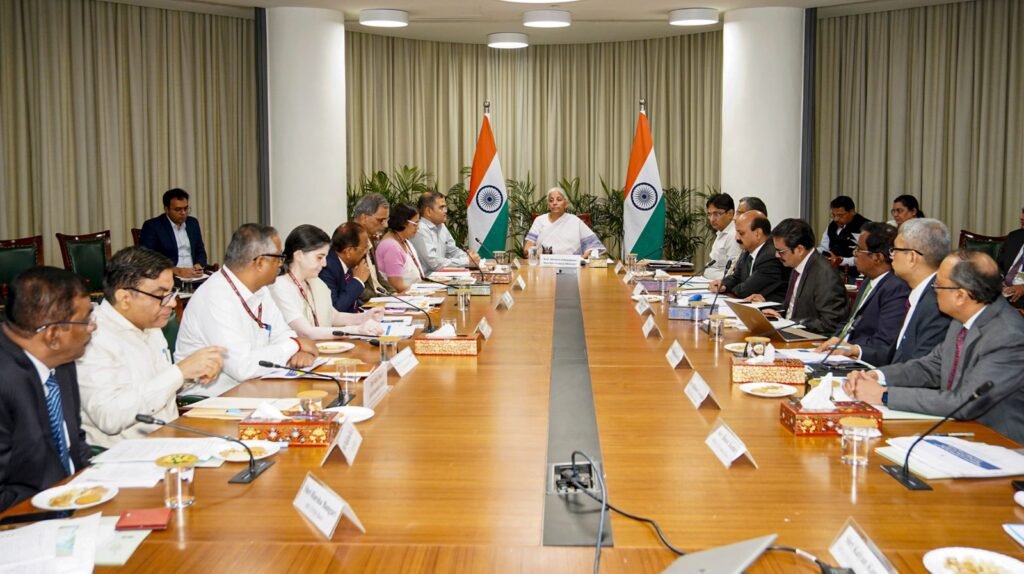
During the review meeting, bank chiefs informed Nirmala Sitharaman that they are preparing customized outreach programmes to further increase awareness of the RBI’s schemes.
Rather than relying solely on physical branches, banks plan to use digital platforms extensively to connect with overseas Indians.
These strategies include:
- Digital banking campaigns
- Online financial advisory sessions
- Dedicated NRI relationship managers
- Personalized investment communication
- Region-specific financial products
The objective is to simplify account opening, improve customer experience and make investment decisions easier for NRIs irrespective of their country of residence.
Financial institutions also expressed confidence that mobilisation under External Commercial Borrowings is likely to accelerate during the third quarter of the current financial year, particularly between October and December 2026.
Growing Importance of GIFT City
Another significant point discussed during the meeting was the expanding role of India’s International Financial Services Centre (IFSC) at GIFT City in Gujarat.
Banks highlighted that their International Banking Units (IBUs) located within GIFT City have become valuable platforms for raising funds from international markets.
These units operate under a globally competitive regulatory environment and allow banks to conduct cross-border financial activities more efficiently.
Recognising this potential, Nirmala Sitharaman encouraged banks to maximise the available institutional infrastructure at GIFT City and use it as a gateway for attracting capital from multiple global jurisdictions.
The government’s continued focus on developing GIFT City reflects its ambition to establish India as a major international financial hub capable of competing with established global financial centres.

RBI Assures Continued Support
The RBI Deputy Governor assured participants that the central bank remains fully committed to supporting banks throughout the implementation of these schemes.
According to RBI officials, banks are receiving continuous operational assistance to mobilise fresh deposits and facilitate eligible borrowings.
The central bank has also introduced a daily reporting mechanism that allows authorities to monitor mobilisation in real time.
Such transparent reporting helps policymakers assess the effectiveness of the schemes while enabling quick adjustments if necessary.
Nirmala Sitharaman The coordination between the Finance Ministry and the RBI demonstrates a unified approach towards strengthening India’s external financial position.
Why Foreign Currency Mobilisation Matters
The discussions led by Nirmala Sitharaman go beyond banking operations. Foreign currency mobilisation plays a crucial role in India’s broader economic stability.
When banks attract higher foreign currency deposits and overseas borrowings, Nirmala Sitharaman the country benefits in several important ways.
First, larger foreign exchange reserves improve India’s ability to manage external shocks such as sudden increases in oil prices or volatility in international financial markets.
Second, stable foreign currency inflows help support the balance of payments by increasing available foreign exchange resources.
Third, stronger reserves often improve investor confidence because they demonstrate a country’s ability to meet its international financial obligations.
Nirmala Sitharaman Finally, diversified funding sources reduce dependence on volatile short-term capital flows, contributing to overall macroeconomic resilience.
These objectives explain why Nirmala Sitharaman has repeatedly encouraged banks to maintain momentum under the RBI’s special schemes.
Timeline of the RBI Schemes
The current swap facilities operate under clearly defined timelines.
Fresh FCNR(B) deposits remain eligible under the scheme until September 30, 2026.
Meanwhile, eligible External Commercial Borrowings and Overseas Foreign Currency Borrowings can continue to access the concessional swap facility until December 31, 2026.
With these deadlines approaching over the coming months, banks are expected to intensify their mobilisation efforts and expand their engagement with overseas Indians.
Nirmala Sitharaman has directed financial institutions to introduce innovative deposit products, strengthen customer outreach and fully utilise available financial infrastructure so that Nirmala Sitharaman India can continue attracting foreign capital while reinforcing the country’s external financial strength during the remainder of the scheme period.