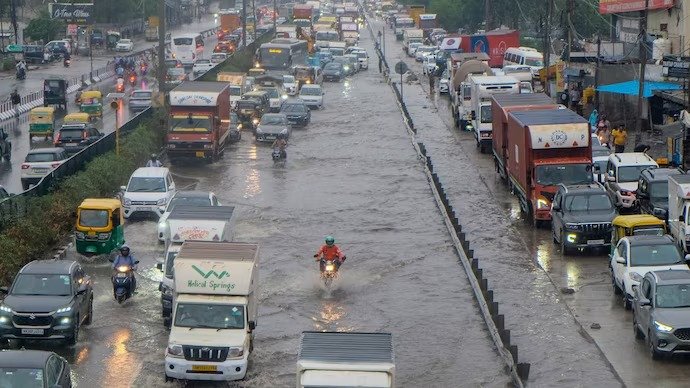
Delhi Weather remains the biggest concern for residents as the national capital experiences another spell of intense monsoon activity. After two days of continuous rainfall that brought traffic to a standstill and caused widespread waterlogging across Delhi-NCR, the India Meteorological Department (IMD) has issued an orange alert for the city, warning that heavy rain is expected to continue through Friday. While weather conditions are likely to improve gradually from 11 July, authorities have advised people to remain cautious as intermittent heavy showers, strong winds, and reduced visibility may continue throughout the day.
The latest Delhi Weather update comes at a significant time, as the IMD has officially confirmed that the Southwest Monsoon has now covered the entire country, completing its journey across India on 9 July. The monsoon reached the remaining parts of Rajasthan, Haryana, Punjab, and the north Arabian Sea just one day later than its normal arrival date of 8 July, marking the full onset of the rainy season nationwide.
Table of Contents
Heavy Rain Continues Across Delhi-NCR
The changing Delhi Weather pattern has brought much-needed relief from the intense summer heat that dominated the region for weeks. Residents woke up to cloudy skies, cooler temperatures, and refreshing winds after persistent rainfall reduced daytime temperatures and improved overall weather conditions.
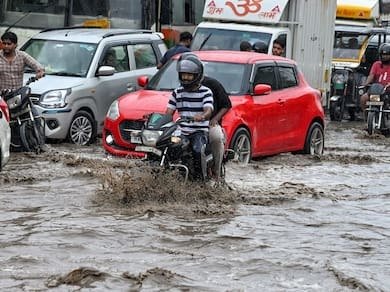
However, the pleasant weather has also created several challenges. Continuous rainfall has led to water accumulation on major roads, slower traffic movement, and disruptions in daily commuting across several parts of Delhi and the National Capital Region. The IMD has advised residents to avoid unnecessary travel during periods of heavy rain and to remain alert in low-lying areas where waterlogging is common.
An orange alert indicates the possibility of heavy rainfall that could affect normal life. While it does not necessarily mean dangerous flooding everywhere, it serves as an important warning for people to stay prepared and monitor official weather updates regularly.
What the IMD Forecast Says
According to the India Meteorological Department, the current spell of Delhi Weather is expected to remain active throughout Friday. Heavy showers may occur at different times during the day, accompanied by thunderstorms in isolated areas.
Meteorologists expect rainfall intensity to decrease from 11 July onwards, although scattered showers are likely to continue as part of the active monsoon season. Such weather patterns are common during July when the monsoon becomes fully established over northern India.
Experts explain that the current rainfall is being supported by strong monsoon winds carrying abundant moisture from both the Arabian Sea and the Bay of Bengal. When these moisture-laden winds interact with local weather systems over northern India, they create conditions favorable for widespread rainfall.
Traffic and Daily Life Affected
The recent Delhi Weather conditions have once again highlighted the impact of heavy monsoon rainfall on urban infrastructure.
Several roads in Delhi-NCR witnessed slower traffic movement due to accumulated rainwater. In neighboring cities such as Noida and Ghaziabad, continuous showers over the past two days resulted in severe waterlogging at multiple locations, making commuting difficult for office-goers and school transport.
The situation was equally challenging in Gurugram, where traffic congestion stretched across major roads for several hours. The disruption became so significant that a number of private companies allowed employees to work from home to reduce travel-related inconvenience.
These recurring challenges underline the need for improved drainage systems and better urban planning, especially during the peak monsoon months when heavy rainfall can occur within a short period.

Uttar Pradesh Faces the Highest Rainfall Risk
While Delhi Weather remains under an orange alert, neighboring Uttar Pradesh is facing an even more serious situation.
The IMD has issued a red alert for several districts, indicating the possibility of extremely heavy rainfall. Districts under the highest warning include Muzaffarnagar, Bijnor, Moradabad, Bareilly, Pilibhit, Badaun, Sambhal, and Jyotiba Phule Nagar.
A red alert is the highest level of weather warning issued by the IMD and suggests that weather conditions may become hazardous if proper precautions are not taken.
In addition, Delhi Weather orange alerts remain in force for districts including Sitapur, Hardoi, Bulandshahr, Saharanpur, Kushinagar, Lakhimpur Kheri, Shahjahanpur, and Hapur, where heavy rainfall is also expected.
The widespread rainfall across northern India reflects the strong influence of the active southwest monsoon system currently covering the region.
Maharashtra Sees Gradual Improvement
Unlike the situation reflected in the latest Delhi Weather forecast, conditions across much of Maharashtra are expected to become relatively calmer.
The IMD predicts that rainfall intensity will reduce across several districts, with only light showers expected in many areas. However, Pune and Satara continue to remain under an orange alert due to the possibility of localized heavy rainfall.
Meanwhile, a yellow alert has been issued for districts including Raigad, Kolhapur, Buldhana, Akola, Amravati, Nagpur, Chandrapur, and Gadchiroli, where moderate rainfall may continue.
Although rainfall is expected to decrease, local authorities have advised residents to remain cautious, particularly in flood-prone and hilly regions where sudden weather changes remain possible.
Southwest Monsoon Completes Its Journey Across India
One of the most important developments accompanying the latest Delhi Weather update is the official confirmation that the Southwest Monsoon has now covered the entire country.
According to the IMD, the monsoon advanced into the remaining parts of Rajasthan, Haryana, Punjab, and the north Arabian Sea on 9 July, completing its seasonal progression across India.
Normally, the monsoon covers the entire nation by 8 July, making this year’s arrival only one day behind its long-term average. Weather experts consider this a nearly normal progression and an encouraging sign for agriculture, groundwater recharge, and water reservoirs across many regions.
The southwest monsoon is responsible for nearly 70 percent of India’s annual rainfall, making it one of the country’s most important weather systems. Delhi Weather Millions of farmers depend on timely rainfall for sowing crops such as rice, maize, soybean, pulses, and cotton. Good monsoon distribution also plays a major role in maintaining water supplies, supporting hydroelectric power generation, and reducing extreme summer temperatures.
Residents Advised to Stay Updated
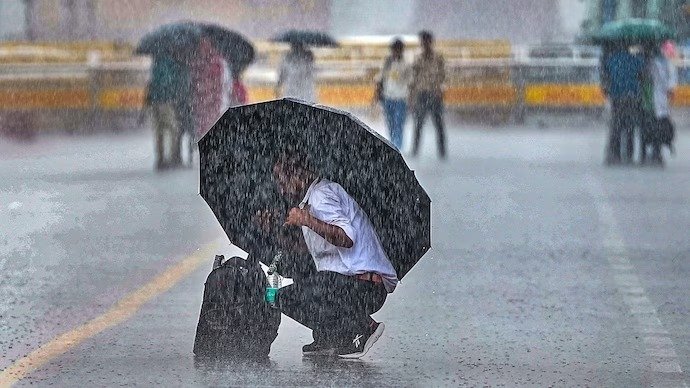
As the active monsoon phase continues, Delhi Weather is expected to remain dynamic over the coming days. Residents are advised to monitor official weather bulletins before planning travel, avoid waterlogged roads whenever possible, and exercise caution during periods of heavy rainfall and thunderstorms.
With the Delhi Weather monsoon now fully established across India, weather conditions are likely to remain changeable throughout July, bringing alternating spells of sunshine and rainfall. While the showers have provided welcome relief from intense heat, they also serve as a reminder of the importance of preparedness during the peak monsoon season, particularly in densely populated urban areas like Delhi and the surrounding NCR.