
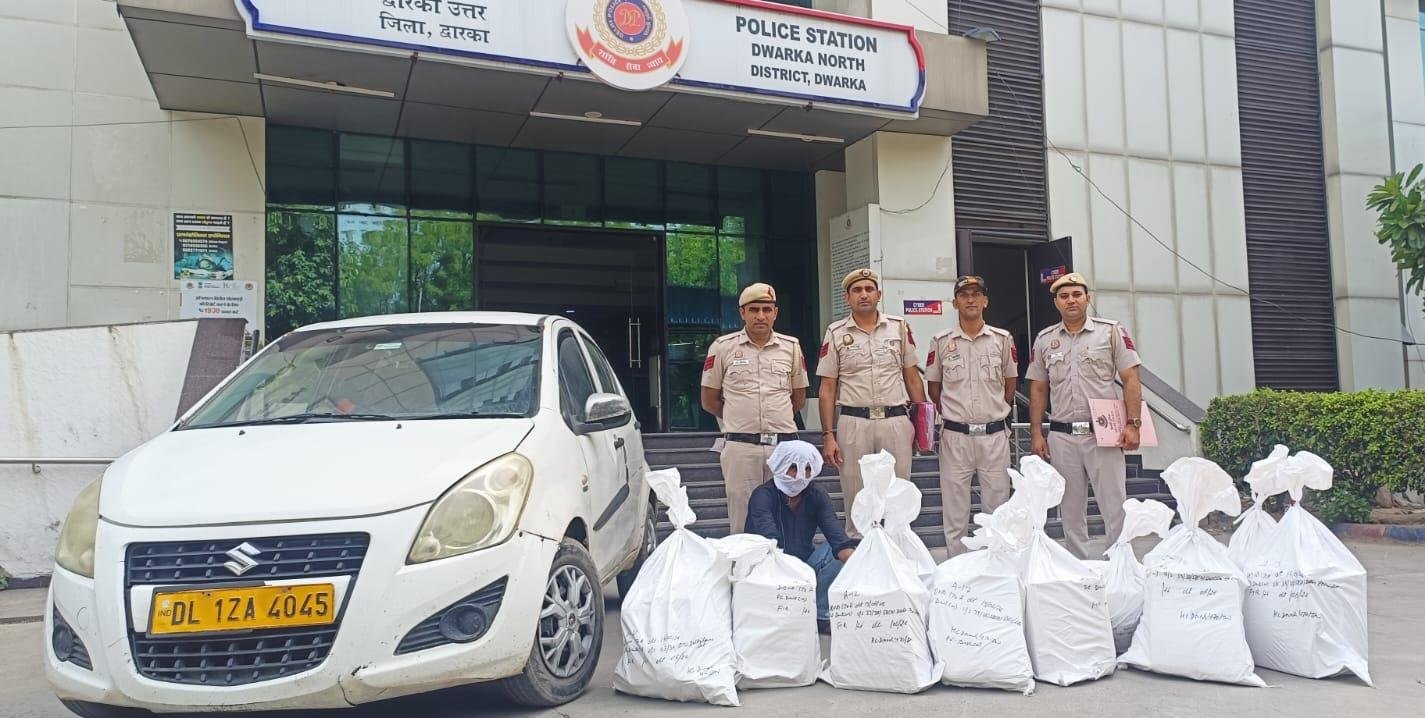
Illicit Liquor continues to remain one of the biggest challenges for law enforcement agencies across several parts of India. Beyond the issue of tax evasion, the illegal trade of alcohol often fuels organized crime networks, creates public safety concerns, and poses serious health risks to consumers. In a significant enforcement action, the Dwarka North Police Station team of Dwarka District, Delhi, successfully arrested an alleged Illicit Liquor supplier and recovered a massive consignment consisting of 1,900 quarters of illegally transported alcohol.
The operation highlights the growing focus of Delhi Police on curbing organized criminal activities and preventing the movement of illegal substances into the national capital. Acting on specific intelligence and carrying out a carefully planned operation, the police intercepted a vehicle allegedly being used to transport Illicit Liquor from Haryana into Delhi.
The recovery of such a large quantity of Illicit Liquor demonstrates not only the scale at which illegal alcohol smuggling continues to operate but also the importance of proactive policing and intelligence-led enforcement.
Table of Contents
Special Drive Against Organized Crime
According to police officials, the action was carried out as part of an ongoing campaign initiated by senior officers to tackle visible and organized criminal activities in the Dwarka District.
Under the directions of senior police leadership, police teams have been actively monitoring suspicious activities, strengthening patrols, and acting on intelligence inputs related to illegal trade and transportation networks.
Recognizing that Illicit Liquor smuggling often operates through organized supply chains, police officials have been focusing on identifying transport routes, storage points, and individuals involved in distribution.
To strengthen these efforts, a dedicated team comprising experienced and field-tested officers was tasked with preventing illegal activities in the area. The team worked under the supervision of senior district officers and remained on alert for any information related to organized crime and illegal transportation.
Such targeted enforcement strategies have increasingly become a key component of modern policing, where intelligence gathering and preventive action often stop criminal activities before they reach consumers or distributors.
Secret Information Leads to Major Breakthrough
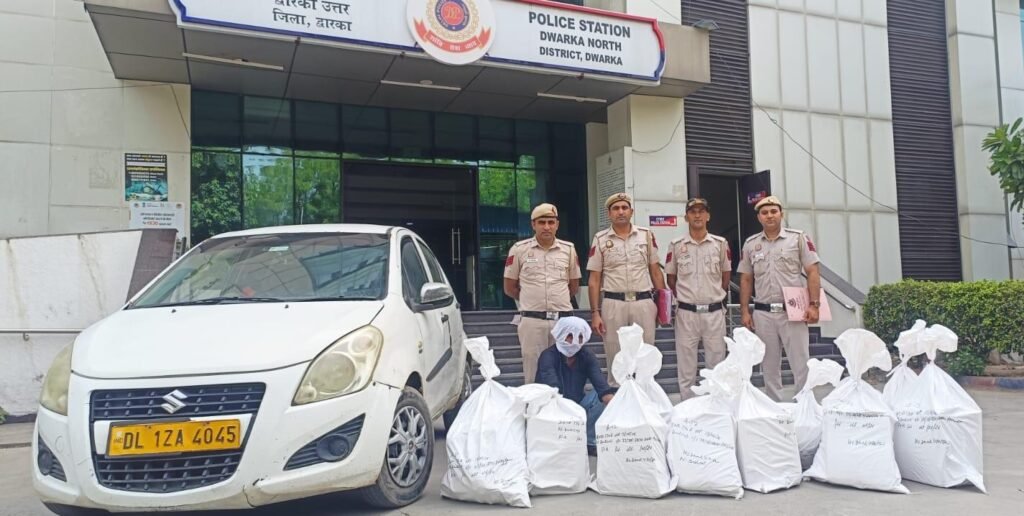
Police officials received confidential information indicating that a white-colored Ritz car would be transporting a large quantity of Illicit Liquor from Haryana into Delhi through the Nala Road route.
Secret information often plays a crucial role in law enforcement operations. However, actionable intelligence must be quickly verified and supported by effective field deployment to ensure successful results.
Understanding the seriousness of the information, the police team immediately organized surveillance in the suspected area.
Rather than waiting for the suspect vehicle to pass unnoticed, officers strategically positioned themselves near the expected route and maintained close observation.
Their quick response proved successful.
During the operation, police intercepted a white Ritz car near Delhi Jal Board Service Road on Golf Link Road in Sector 16D, Dwarka.
The vehicle was stopped and searched in the presence of police personnel.
What investigators discovered confirmed the intelligence input.
Massive Recovery of Illicit Liquor
Upon inspection of the vehicle, police recovered 38 cartons of Falcon Frost Santra Deshi Sharab.
Each carton reportedly contained 50 quarters, bringing the total recovery to an astonishing 1,900 quarters of Illicit Liquor.
The recovered stock was immediately seized under the provisions of the Delhi Excise Act.
In addition to the alcohol, the Ritz car allegedly being used for transportation was also taken into police custody.
For enforcement agencies, such recoveries are significant because they indicate not merely possession but an organized effort to transport and distribute alcohol illegally.
The volume recovered in this case suggests that the Illicit Liquor was likely intended for commercial distribution rather than personal consumption.
Police officials believe that such consignments often pass through multiple stages, including transportation, storage, and local distribution before reaching end consumers.
By intercepting the vehicle at an early stage, the police effectively disrupted the supply chain and prevented the illegal alcohol from entering local markets.
Understanding the Threat of Illicit Liquor
The issue of Illicit Liquor extends far beyond regulatory violations.
Illegal alcohol networks often operate outside government controls and licensing systems. Because such products bypass legal channels, authorities cannot verify their quality, ingredients, or safety standards.
Across India, numerous incidents have highlighted the dangers associated with illegal alcohol consumption.
Public health experts have repeatedly warned that Illicit Liquor may contain unsafe levels of chemicals or contaminants that can lead to severe illness and, in extreme cases, fatalities.
Apart from health concerns, illegal alcohol trade also results in substantial revenue losses for governments.
Licensed liquor businesses are required to comply with taxation, transportation regulations, and quality control standards. Illegal operators avoid these costs, enabling them to sell products at lower prices while undermining legitimate businesses.
As a result, enforcement against Illicit Liquor is not merely a law-and-order issue but also an important public health and economic concern.
This explains why police agencies continue to prioritize intelligence-led operations targeting illegal alcohol supply networks.
Accused Apprehended During Operation
During the operation, police apprehended Rahul, a 25-year-old resident of Ismaila village in Rohtak district, Haryana.
According to police records, the accused was allegedly transporting the recovered Illicit Liquor when he was intercepted.
Following the recovery, a case was registered under relevant provisions of the Delhi Excise Act at Police Station Dwarka North.
Investigators subsequently began questioning the accused to determine the source of the recovered stock and identify any individuals connected to the supply chain.
The arrest is considered important because transportation is often one of the most critical stages in illegal distribution networks.
Stopping a transporter can provide investigators with valuable information regarding suppliers, financiers, storage operators, and intended recipients.
Such information frequently helps authorities uncover broader criminal networks operating behind the scenes.
Interrogation Reveals Personal Circumstances
During questioning, the accused reportedly disclosed that financial difficulties had influenced his involvement in criminal activities.
According to police sources, he stated that economic hardship and poor financial conditions contributed to decisions that ultimately led him into illegal activities.
While financial stress can sometimes become a factor in criminal behavior, law enforcement experts point out that illegal trade networks often exploit vulnerable individuals by offering quick financial gains.
The transportation of Illicit Liquor frequently relies on individuals willing to move goods across state boundaries in exchange for payment.
However, participation in such activities carries significant legal consequences and often leads individuals deeper into criminal networks.
Police investigators are expected to examine whether the accused was acting independently or as part of a larger organized distribution system.
How Police Intelligence Helped Prevent Distribution
One of the most notable aspects of this case is the effectiveness of intelligence-based policing.
In many successful law enforcement operations, the recovery itself represents only one part of the achievement. Equally important is the ability to identify suspicious movements before illegal goods reach their destination.
The Dwarka North Police team demonstrated exactly this approach.
By acting promptly on secret information and coordinating field surveillance, officers were able to intercept the consignment before distribution could occur.
This reflects a growing trend in policing where prevention is considered more effective than post-crime investigation.
Rather than waiting for illegal products to enter local markets, authorities increasingly focus on disrupting supply chains at transportation and transit stages.
Such interventions reduce the likelihood of illegal goods reaching consumers while simultaneously weakening criminal networks.
The successful seizure of Illicit Liquor in this case serves as an example of how intelligence gathering, field experience, and timely action can work together to produce tangible results.
Vehicle Seizure Adds to Investigation
The seizure of the transport vehicle is another important aspect of the case.
Vehicles used in illegal transportation often provide investigators with crucial leads.
Authorities typically examine ownership records, travel patterns, communication links, and movement histories associated with seized vehicles.
Such investigations may reveal additional participants involved in procurement, storage, and delivery operations.
In cases involving Illicit Liquor, transportation vehicles frequently act as connecting links between suppliers and local distributors.
Investigators will likely continue examining whether the seized Ritz car was used in previous transportation activities and whether it has any connection to wider networks operating across state borders.
This line of inquiry could help authorities identify additional suspects and strengthen enforcement efforts against illegal alcohol trafficking.
Appreciation for Police Vigilance
The success of the operation reflects the alertness, dedication, and professionalism of the Dwarka North Police team.
Recovering 1,900 quarters of Illicit Liquor requires not only actionable intelligence but also effective planning, coordination, and execution on the ground.
The officers involved demonstrated strong commitment to law enforcement by acting swiftly on information and ensuring that the illegal consignment was intercepted before reaching consumers.
Such operations play an important role in maintaining public safety and discouraging illegal trade activities.
The seizure also sends a strong message to individuals involved in the transportation and distribution of Illicit Liquor that law enforcement agencies remain vigilant and prepared to act against violations of the law.
As investigations continue, police are expected to focus on identifying the origin of the recovered stock, tracing the intended distribution network, and determining whether additional individuals were involved in the transportation and supply of the Illicit Liquor recovered during the operation.