
Ganesh Chaturthi 2026 will be celebrated on Monday, September 14, marking the beginning of one of India’s most vibrant and widely observed Hindu festivals. Dedicated to Lord Ganesha, the elephant-headed deity associated with wisdom, prosperity, good fortune and the removal of obstacles, the festival brings together religious devotion, community celebrations, music, art and cultural traditions.
Also known as Vinayaka Chaturthi or Ganeshotsav, the festival begins on the fourth day, or Chaturthi Tithi, of the Shukla Paksha in the Hindu month of Bhadrapada, which generally falls in August or September. While the duration of celebrations varies from place to place and household to household, the most prominent public celebrations traditionally continue for around 10 days and conclude with Ganesh Visarjan on Anant Chaturdashi.
From elaborate pandals in Mumbai and Pune to small household celebrations across India, Ganesh Chaturthi has evolved into a festival that combines faith with community participation. Its importance is particularly pronounced in Maharashtra, although the festival is celebrated with enthusiasm in several other states and increasingly in communities around the world.
Table of Contents
Ganesh Chaturthi 2026 Date
In 2026, Ganesh Chaturthi falls on September 14. The festival is observed on Bhadrapada Shukla Chaturthi, the fourth day of the waxing phase of the Moon.
The installation of the Ganesha idol, known as Ganapati Sthapana, marks the beginning of the celebrations for many devotees. The idol is worshipped with prayers, flowers, offerings, aarti and devotional songs before eventually being immersed in water during Ganesh Visarjan.
The length of the celebration is not identical everywhere. Depending on family and community traditions, idols may be immersed after one and a half days, three days, five days, seven days or on Anant Chaturdashi. Maharashtra Tourism notes that Ganesh celebrations can follow several such durations, reflecting the diversity of local practices.
What Is Ganesh Chaturthi?
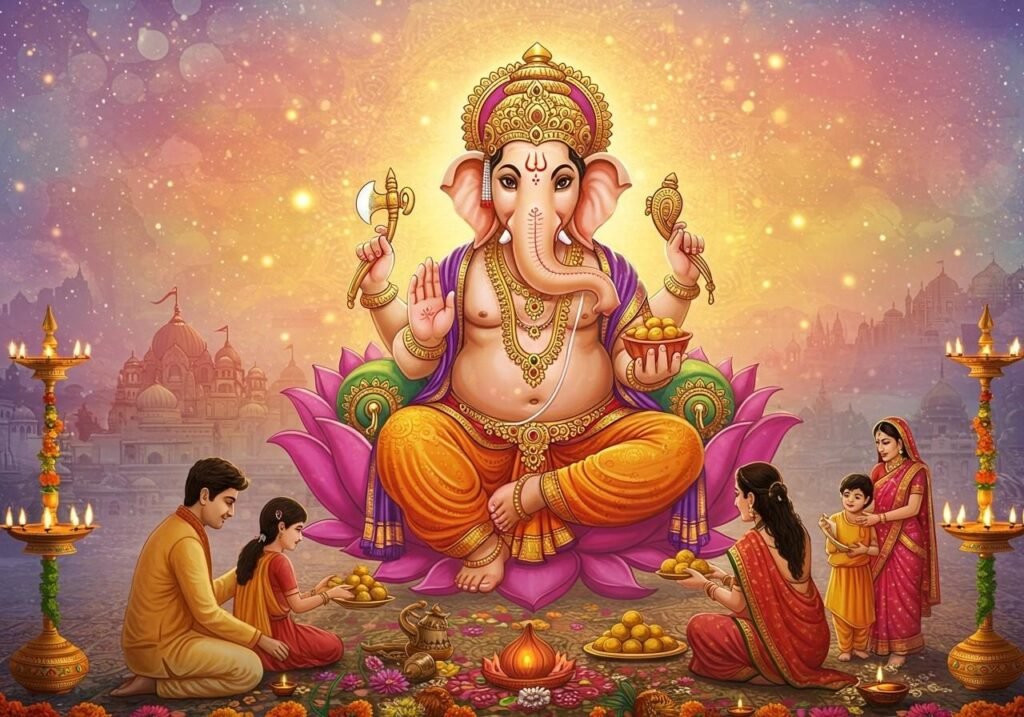
Ganesh Chaturthi commemorates the appearance or birth of Lord Ganesha, one of the most revered deities in Hinduism.
Lord Ganesha is widely worshipped as Vighnaharta, or the remover of obstacles, and is associated with wisdom, intelligence, prosperity and auspicious beginnings. This is why Ganesha is traditionally worshipped before important occasions such as weddings, religious ceremonies, business ventures, examinations and the beginning of new projects.
The festival is therefore not simply a celebration of a deity’s birth. For devotees, it is also an opportunity to seek blessings for a successful and prosperous year ahead.
The Story of Lord Ganesha’s Birth
One of the most widely known stories associated with Ganesh Chaturthi describes the creation of Ganesha by Goddess Parvati.
According to the traditional narrative, Parvati created Ganesha from the material of her body and instructed him to guard the entrance while she was bathing.
When Lord Shiva arrived, Ganesha did not recognise him and refused to allow him to enter.
A confrontation followed, eventually leading to Shiva severing Ganesha’s head.
When Parvati learned what had happened, she became furious and demanded that Ganesha be restored to life.
Shiva agreed and instructed his followers to bring the head of the first suitable living being they encountered. They returned with the head of an elephant.
Ganesha was then restored to life with the elephant’s head.
The story explains the distinctive appearance of Lord Ganesha and is among the most familiar narratives associated with his worship.
For devotees, the story carries deeper symbolic meanings involving obedience, devotion, transformation and divine intervention.
Why Is Lord Ganesha Worshipped First?
One of the reasons Ganesh Chaturthi has such importance is the belief that Lord Ganesha removes obstacles and helps devotees begin important undertakings successfully.
Ganesha is often invoked before other deities during Hindu rituals.
His association with wisdom is also significant. The elephant is traditionally regarded as a symbol of intelligence, strength and memory, while Ganesha’s distinctive form has been interpreted through various religious and philosophical traditions.
His large ears are often associated with listening carefully, while his elephant head is linked with wisdom and discernment.
The symbolism varies across traditions, but the broader message remains one of combining intelligence, humility and perseverance.
Ganapati Sthapana: The Beginning of Ganeshotsav
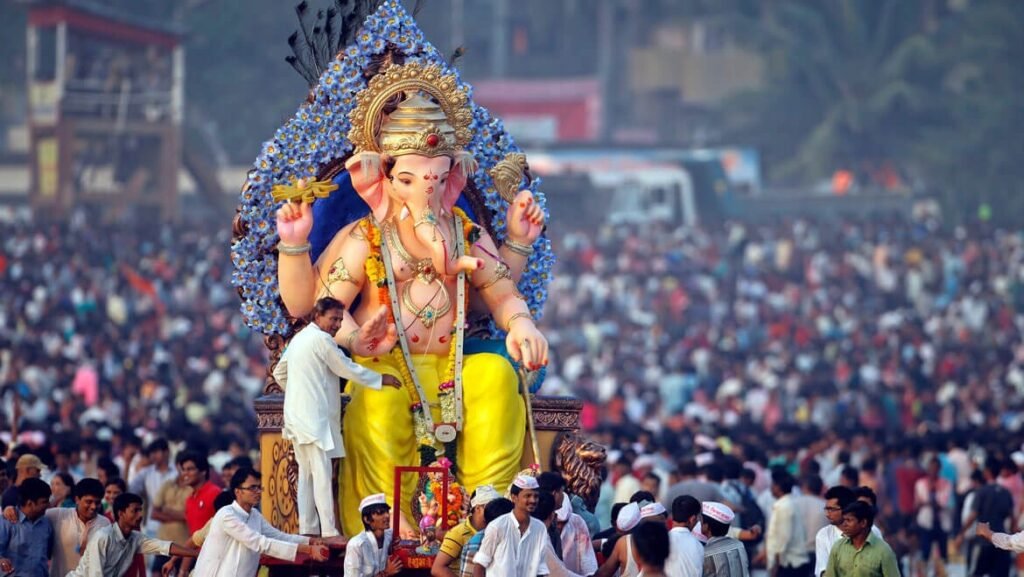
One of the most important rituals during Ganesh Chaturthi is Ganapati Sthapana, when devotees install a Ganesha idol in their homes or public pandals.
Families may bring home idols ranging from small clay figures to elaborate artistic creations.
In public celebrations, community organisations known as Ganesh Mandals create decorated pandals where devotees can gather for prayers and cultural programmes.
The idol is ceremonially installed and worshipped throughout the chosen period of the celebration.
Devotees offer flowers, fruits, sweets, durva grass and other traditional offerings. Aarti and devotional songs are performed regularly.
Why Modak Is Associated With Lord Ganesha
No discussion of Ganesh Chaturthi is complete without modak, the sweet traditionally associated with Lord Ganesha.
Modaks are prepared in several ways, with variations depending on the region and family tradition. Steamed modaks made using rice flour, coconut and jaggery are particularly associated with Maharashtra.
The sweet is often described as Ganesha’s favourite offering.
Modak also carries symbolic significance in devotional traditions. Its sweet filling and carefully prepared outer covering have been interpreted as representing the sweetness of spiritual knowledge and the rewards of devotion.
During Ganesh Chaturthi, households and sweet shops prepare numerous varieties of modak, making the sweet an important part of the festival’s culinary identity.
Why Ganesh Chaturthi Is Especially Famous in Maharashtra
Although Ganesh Chaturthi is celebrated throughout India, Maharashtra has become particularly synonymous with Ganeshotsav.
Mumbai, Pune and other cities across the state are known for enormous public celebrations, elaborate idols, decorated pandals and large processions.
The modern public form of the festival has an important historical connection with Lokmanya Bal Gangadhar Tilak.
According to Maharashtra Tourism, Tilak played a major role in transforming Ganesh Chaturthi into a large public celebration in 1893, helping create a platform for community unity during the Indian independence movement.
Public Ganesh celebrations subsequently became an important part of Maharashtra’s social and cultural landscape.
Today, the festival combines religious traditions with music, theatre, art, social initiatives and community activities.
Ganesh Chaturthi in Mumbai
Mumbai’s Ganesh Chaturthi celebrations are among the most prominent in India.
Thousands of devotees visit famous Ganesh pandals and temples throughout the city during the festival.
Large community idols attract huge crowds, while smaller household idols are worshipped privately.
The atmosphere during the festival is characterised by devotional music, aartis, cultural programmes and the famous chant:
“Ganpati Bappa Morya!”
Among the city’s best-known religious destinations is Siddhivinayak Temple, where devotees seek the blessings of Lord Ganesha.
The festival has become an important part of Mumbai’s cultural identity, attracting visitors and devotees from different parts of India.
Ganesh Chaturthi Beyond Maharashtra
The festival is not limited to Maharashtra.
Ganesh Chaturthi is observed in several states, including Karnataka, Gujarat, Goa, Madhya Pradesh, Andhra Pradesh and Tamil Nadu, among others.
Each region adds its own traditions.
In some areas, celebrations are primarily conducted within homes, while elsewhere large community pandals dominate the festivities.
The food, music, decorations, idol designs and rituals may also differ.
This regional diversity is one of the reasons Ganesh Chaturthi has become such an important part of India’s broader cultural landscape.
The Importance of Ganesh Visarjan
After days of prayers and celebrations comes one of the most emotional stages of the festival: Ganesh Visarjan.
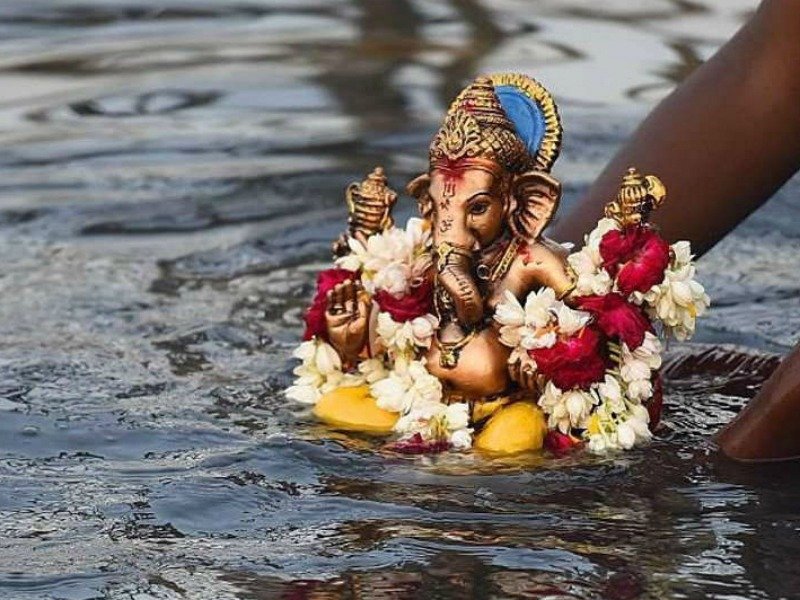
During Visarjan, devotees carry the Ganesha idol in a procession before immersing it in a water body.
For many communities, the largest immersion takes place on Anant Chaturdashi, the concluding day of the traditional 10-day Ganeshotsav. In 2026, Anant Chaturdashi falls on September 25.
Devotees accompany the procession with music, dancing, chanting and prayers.
The immersion symbolises the temporary nature of the physical form of the idol and the return of Lord Ganesha after completing his stay with devotees.
The familiar farewell phrase “Ganpati Bappa Morya, Pudhchya Varshi Lavkar Ya” expresses the hope that Ganesha will return again the following year.
Why Eco-Friendly Ganesh Idols Are Becoming Important
While Ganesh Chaturthi is a festival of devotion, modern celebrations have also raised questions about environmental sustainability.
Traditional Ganesha idols were often made using natural clay and natural colours. However, the widespread use of plaster of Paris and chemical-based paints has raised concerns about the impact of idol immersion on water bodies.
As a result, there has been growing interest in eco-friendly Ganesh idols made from clay and other environmentally conscious materials.
Maharashtra Tourism highlights the use of clay idols, natural colours, smaller idols and other environmentally responsible practices as part of contemporary Ganesh Chaturthi celebrations.
Many communities are also combining religious celebrations with tree-planting drives, cleanliness campaigns, water conservation initiatives and social-service activities.
Ganesh Chaturthi as a Celebration of Community
One of the defining characteristics of modern Ganesh Chaturthi is its ability to bring communities together.
Public pandals are often organised by neighbourhood groups, housing societies, community organisations and local associations.
People contribute money, time and effort towards decorations, cultural programmes and religious activities.
In many places, Ganesh Mandals also organise blood donation drives, medical camps, educational initiatives and charitable programmes.
This social dimension reflects the historical role of public Ganesh celebrations in creating community connections.
The Spiritual Meaning of Ganesh Chaturthi
Beyond decorations, music and public celebrations, Ganesh Chaturthi carries a deeply spiritual message.
Lord Ganesha is associated with wisdom, discipline, prosperity and the removal of obstacles.
The festival encourages devotees to seek not only material success but also the wisdom needed to overcome difficulties.
The arrival of Ganesha is welcomed with joy, while the eventual Visarjan serves as a reminder of impermanence.
The physical idol is created, worshipped and eventually returned to nature.
This cycle can be understood as a reminder that material forms are temporary while faith and spiritual values continue.
Ganesh Chaturthi 2026 and the Importance of Responsible Celebration
As preparations begin for Ganesh Chaturthi 2026, the festival is expected to once again combine tradition with modern community initiatives.
For devotees, the priority remains prayer, worship and seeking the blessings of Lord Ganesha.
At the same time, environmentally responsible celebrations are becoming increasingly relevant.
Choosing clay idols, avoiding harmful paints, reducing plastic decorations and following designated immersion arrangements can help communities celebrate while minimising environmental damage.
This approach allows the festival’s traditions to continue while adapting them to contemporary concerns.
Ganesh Chaturthi 2026, to be celebrated on September 14, will once again mark the arrival of Lord Ganesha into homes, temples and community pandals across India.
From the traditional story of Ganesha’s birth and the significance of Ganapati Sthapana to the devotion surrounding modaks, aartis and public celebrations, the festival combines mythology, spirituality and cultural expression.
Its grandest celebrations may be associated with Maharashtra, particularly Mumbai and Pune, but Ganesh Chaturthi has long since crossed regional boundaries.
The festival’s message remains relevant beyond its rituals: wisdom can overcome obstacles, new beginnings deserve faith and perseverance, and celebration can bring communities together.
As devotees prepare to welcome Bappa in 2026, the growing emphasis on eco-friendly idols and responsible festivities adds another dimension to the celebration—allowing an ancient tradition to remain meaningful in a changing world.