
The journey of Droupadi Murmu, the 15th President of India, is one of the country’s notable stories of public service, perseverance and constitutional leadership. Born in a Santhal tribal family in a remote village of Odisha, Murmu rose from a modest background to hold some of the highest constitutional responsibilities in the Republic of India.
She was sworn in as the 15th President of India on July 25, 2022, after serving as the Governor of Jharkhand from 2015 to 2021. Her career has included teaching, government service, grassroots politics, ministerial responsibilities, legislative work and constitutional office.
Her own account of her journey reflects the importance she places on education. In her address after assuming the presidency, Murmu recalled beginning her life in a small tribal village in Odisha and described attending college as something that once seemed like a dream. She also highlighted the significance of becoming the first daughter of her village to attend college.
Table of Contents
Early Life and Childhood
Droupadi Murmu was born on June 20, 1958, in Uparbeda village in Mayurbhanj district of Odisha. She was born into a Santhal tribal family, and her early years were spent in an environment where access to higher education was limited.
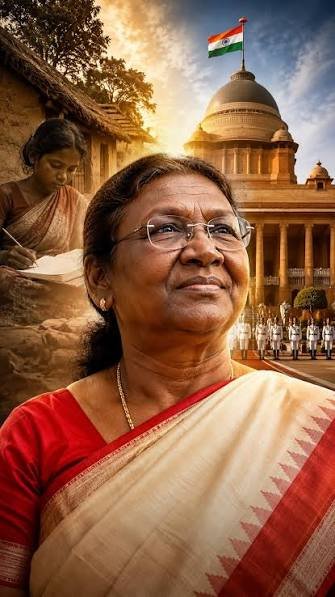
Her childhood played an important role in shaping her later views on education and social empowerment. According to the official presidential profile, Murmu began her education at the primary school in Uparbeda. She later moved to Bhubaneswar to continue her studies from Class VIII onwards.
The transition from a remote village to the state capital was an important step in her educational journey. In later speeches, Droupadi Murmu has repeatedly spoken about the challenges associated with obtaining education in her childhood and the role played by her parents and teachers in supporting her ambitions.
Addressing an education conference in New Zealand in 2024, she recalled growing up in a remote Indian village where access to quality education was limited. She said her parents understood the value of education and ensured that she was able to attend school.
Education: A Milestone in Her Village
Education became one of the defining elements of Murmu’s early life.
According to the official presidential profile, she became the first girl in her village to pass the matriculation examination and earn a degree. She also became the first woman from her village to receive a college education. She graduated with a Bachelor of Arts degree in Political Science and Economics in 1979 from Ramadevi Women’s College in Bhubaneswar.
Her educational achievement was particularly significant given the circumstances in which she grew up. Her later public speeches have frequently reflected her belief that education can transform individuals as well as communities.
This personal experience also became connected to her public work. During her political and administrative career, education remained an important area of interest, particularly the education of girls and students from marginalised communities.
Beginning of Her Professional Career
After completing her education, Droupadi Murmu entered government service.
From 1979 to 1983, she worked as a Junior Assistant in the Irrigation and Power Department of the Government of Odisha. This was her first significant professional position in government.
Her early administrative experience gave her an opportunity to understand the functioning of government institutions from within.
Later, she returned to the education sector. From 1994 to 1997, she served as an honorary teacher at the Sri Aurobindo Integral Education & Research Centre in Rairangpur.
Her experiences in both government service and teaching subsequently became part of the broader public-service journey that eventually took her into politics.
Entry Into Grassroots Politics
Droupadi Murmu’s formal political career began at the grassroots level.
In 1997, she was elected as a councillor of the Rairangpur Notified Area Council in Mayurbhanj district. She subsequently became the Vice Chairperson of the Rairangpur NAC.
Her political career developed through local governance before moving to state-level politics.
She was also associated with the Bharatiya Janata Party and served as the BJP District President of Mayurbhanj twice, according to the official presidential profile.
Her rise from local government to state politics is an important feature of her biography. Rather than entering public life directly at the national level, she accumulated experience through different levels of governance.
Becoming an Odisha MLA
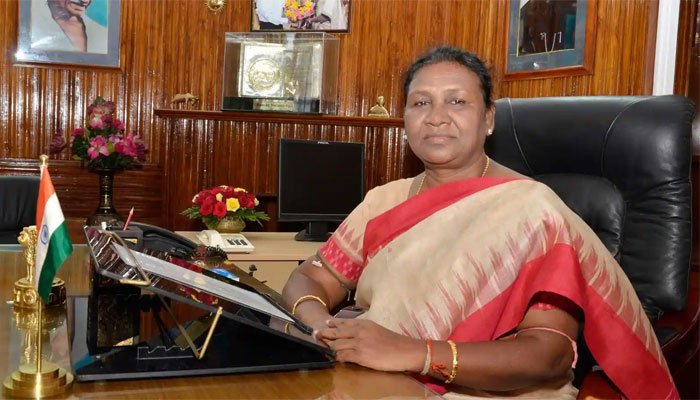
In 2000, Murmu was elected from the Rairangpur constituency to the Odisha Legislative Assembly. She was elected to the Odisha Legislative Assembly from Rairangpur for two terms and served as an MLA until 2009.
Her legislative career also brought her ministerial responsibilities.
From March 6, 2000, to August 6, 2002, she served as Minister of State with Independent Charge of the Department of Commerce and Transport in the Government of Odisha.
She subsequently served as Minister of State with Independent Charge of the Department of Fisheries and Animal Resources Development from August 6, 2002, to May 16, 2004.
During her time in the Odisha Assembly, she was also associated with various committees, including House and Standing Committees.
Her legislative work was recognised in 2007, when she received the Pandit Nilkanth Das – Best Legislator Award from the Odisha Legislative Assembly.
Personal Tragedies and Resilience
Murmu’s personal life has also been marked by significant hardships.
She married Shyam Charan Murmu, a bank officer. In 1980, Droupadi Murmu married Shyam Charan Murmu, a bank officer. He passed away in 2014.
She has a daughter, Itishree Murmu, who is a banking professional. Her son-in-law, Ganesh Hembram, is an international rugby player, according to the official presidential profile. She also has two granddaughters, Adyashree and Nityashree.
The official profile describes Droupadi Murmu’s life as one shaped by profound personal hardships and resilience. Her public career continued despite these difficulties, eventually leading to her appointment as Governor of Jharkhand and later her election as President of India.
Governor of Jharkhand
A major turning point in Droupadi Murmu’s career came in 2015, when she was appointed Governor of Jharkhand.
She assumed office on May 18, 2015, becoming the first tribal woman Governor of a state with a significant tribal population, according to the official presidential profile. She served as Jharkhand Governor from 2015 to 2021.
Her tenure lasted more than six years, making it the longest governorship of Jharkhand according to the President’s official profile.
During her time as Governor, Droupadi Murmu focused on areas including education and administrative reforms. She introduced reforms related to examination and recruitment processes in state universities and also focused on improving the quality of education in Kasturba Gandhi Balika Vidyalayas.
Her tenure was also associated with attention to girls’ education and the rights and development of tribal communities.
The Road to the Presidency
After completing her tenure as Jharkhand Governor in 2021, Droupadi Murmu remained a prominent public figure.
In 2022, she was selected as the candidate of the BJP-led National Democratic Alliance for the presidency.
The presidential election was conducted through the constitutional electoral process involving elected members of Parliament and state Legislative Assemblies.
Droupadi Murmu won the election and was sworn in as the 15th President of India on July 25, 2022.
Her election was historic in several respects. She became the first tribal person to serve as President of India and the country’s second woman President.
In her first address after assuming office, Droupadi Murmu spoke about her journey from a small tribal village to the highest constitutional office. She described her rise from being a ward councillor to becoming President as an example of India’s democratic possibilities.
Droupadi Murmu as President of India
As President, Droupadi Murmu serves as the constitutional head of the Republic of India.
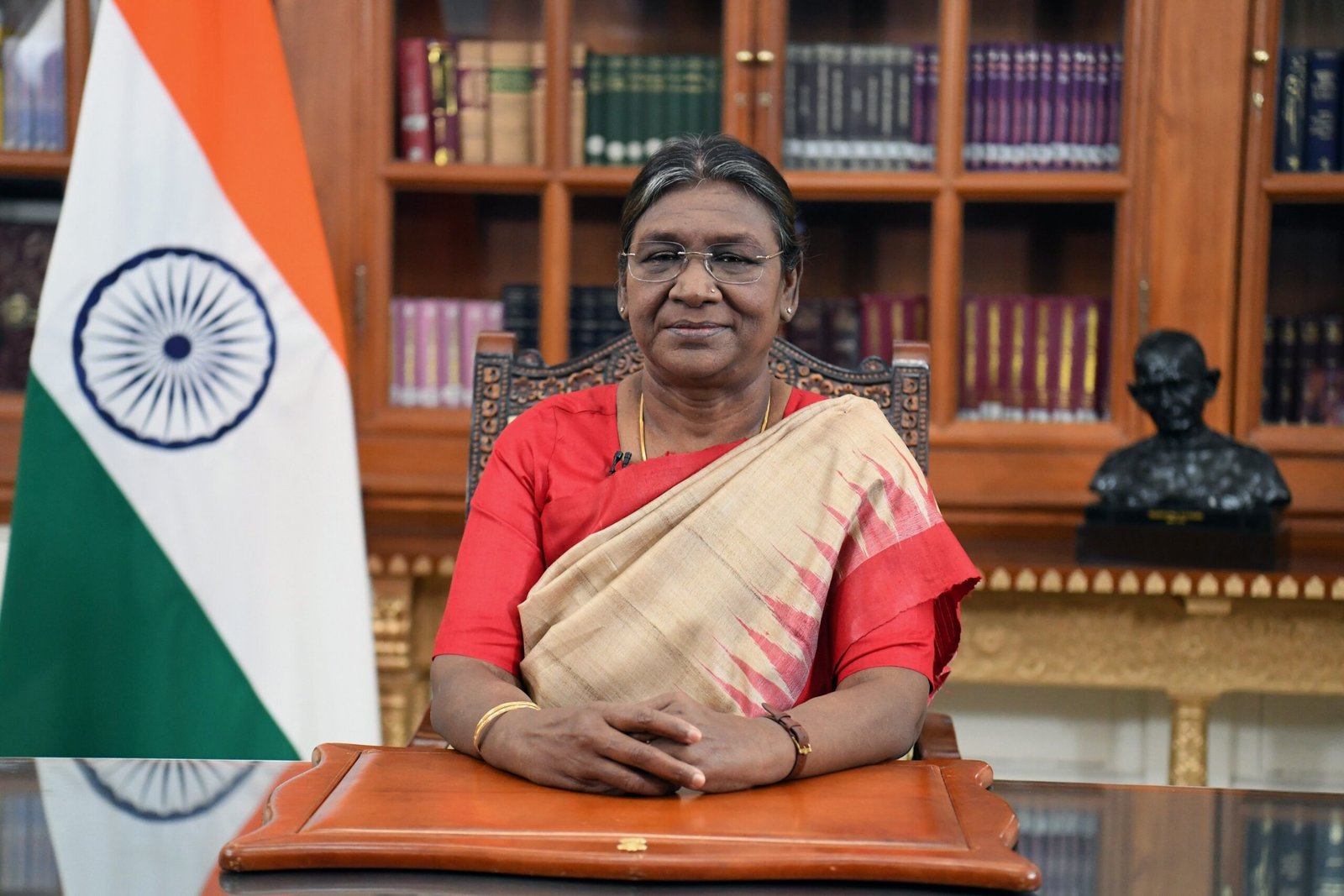
The President of India is the head of state, the first citizen of the country and the Supreme Commander of the Indian Armed Forces. The President exercises powers and performs responsibilities as defined by the Constitution.
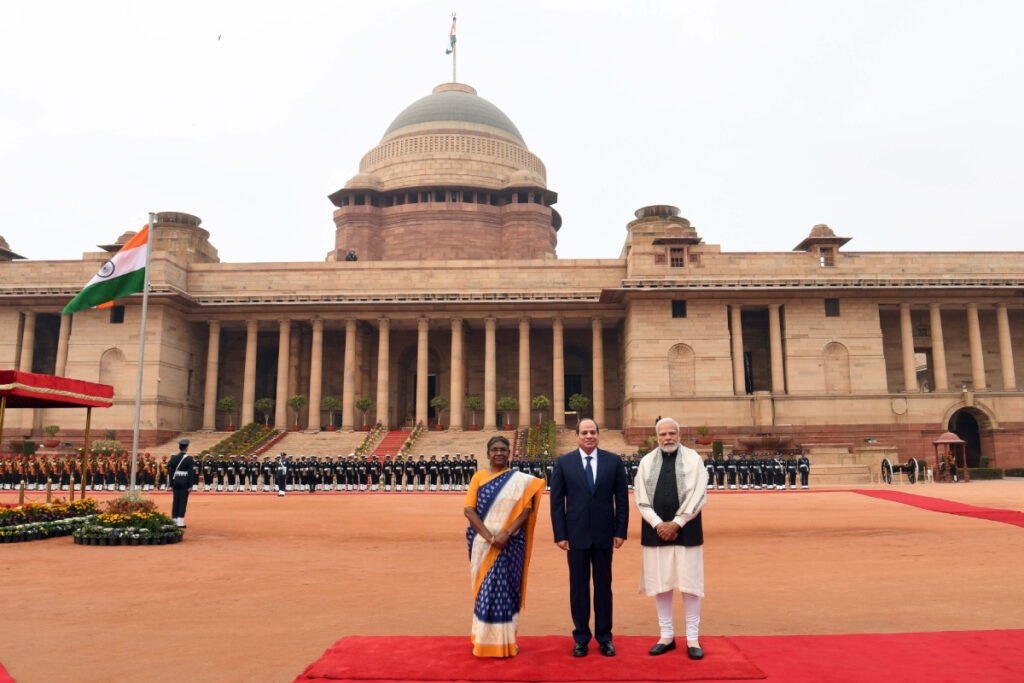
Droupadi Murmu’s presidential responsibilities include constitutional functions, receiving visiting heads of state and government, appointing constitutional authorities according to established procedures, addressing Parliament and representing India on important national and international occasions.
Her office has also included extensive engagement with students, educators, tribal communities, armed forces personnel and representatives of different sections of society.
Her Focus on Education
Education remains one of the most recurring themes in Droupadi Murmu’s public speeches.
Her own educational journey—from a village primary school to college in Bhubaneswar—has strongly influenced her views on the subject.
During her 2024 address at the New Zealand Education Conference, she described education as a means of social change and nation-building and connected these views to her own experience of growing up in a remote village.
As President, she has also continued to interact with students.
In 2024, while marking two years in office, she interacted with Class 9 students at Dr Rajendra Prasad Kendriya Vidyalaya in the President’s Estate and discussed issues including nature conservation and climate change.
Interest in Tribal Development and Inclusion
Droupadi Murmu’s background has also shaped her emphasis on inclusion and the empowerment of marginalised communities.
The official presidential profile says that uplifting neglected sections of society, gender justice, accessibility and efficiency of public services, sustainable environmental management and inclusive governance have remained important elements of her public-service vision.
Her journey has made her a prominent figure in discussions about representation of tribal communities in India’s public institutions.
At the same time, her constitutional position as President places her above day-to-day party politics. Her role is defined by the Constitution and includes representing the Republic as its head of state.
Her Interests and Personal Side
Away from formal constitutional responsibilities, the official presidential profile identifies reading and spirituality among Droupadi Murmu’s interests. She has also been associated with tribal socio-educational and cultural organisations in Odisha.
Her long association with education and public service has also influenced her interactions with young people.
Her speeches frequently draw upon personal experiences, particularly her childhood, education and journey through public institutions.
International Engagement as President
Droupadi Murmu’s responsibilities have also included representing India abroad.
As President of India, Droupadi Murmu has undertaken several international visits as part of India’s diplomatic outreach. Her overseas engagements have included State Visits and meetings with foreign leaders, governments and Indian diaspora communities. In July 2026, she undertook a State Visit to Moldova, North Macedonia and Romania, with the visits aimed at strengthening India’s bilateral relations with the three countries.
The President’s Secretariat has also recorded her state visits and international engagements in recent years.
These visits form part of the wider diplomatic responsibilities associated with the office of the President.
A Historic Journey From Uparbeda to Rashtrapati Bhavan
Droupadi Murmu’s biography is significant not only because she became President but also because of the path she followed to reach the office.
Her journey began in Uparbeda, a village in Odisha’s Mayurbhanj district. She pursued education despite limited access to higher learning, became the first woman from her village to receive college education, entered government service, worked as a teacher, moved into local politics, became an MLA and minister in Odisha, served as Governor of Jharkhand and eventually became President of India.
Her career therefore spans several layers of India’s democratic and administrative system.
From grassroots governance to the country’s highest constitutional office, her story illustrates the long institutional journey of a public servant whose career developed across local, state and national levels.
Droupadi Murmu’s life story combines education, public service, political experience, constitutional responsibility and personal resilience.
Born on June 20, 1958, in Uparbeda village of Odisha’s Mayurbhanj district, she grew up in a Santhal tribal family and pursued education despite the limitations of her surroundings. She later graduated from Ramadevi Women’s College in Bhubaneswar and began her professional career in the Odisha government.
Her transition into politics began at the grassroots level, followed by her election to the Odisha Legislative Assembly and service as a state minister. Her tenure as Governor of Jharkhand further expanded her constitutional and administrative experience.
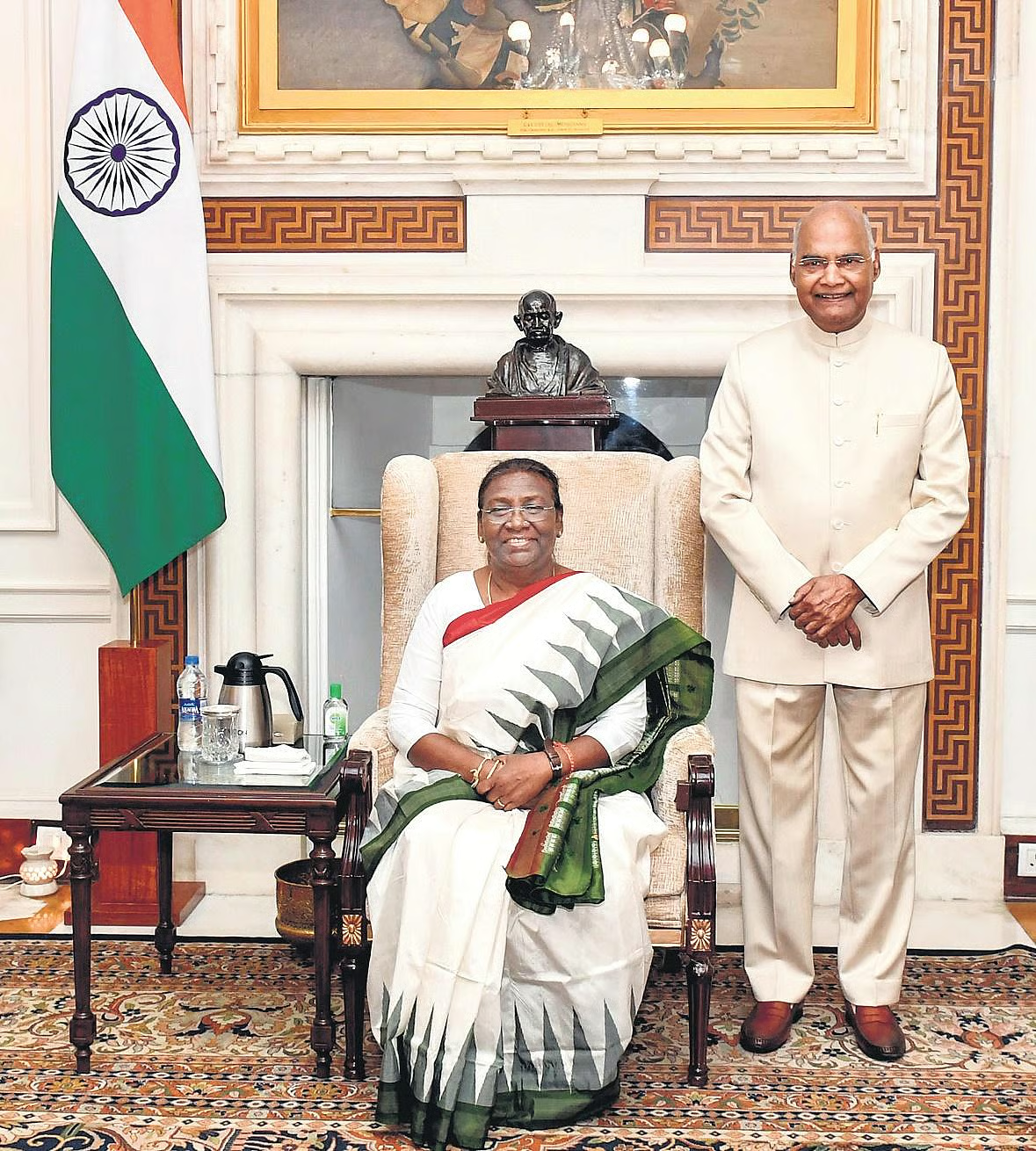
On July 25, 2022, she took the oath as the 15th President of India, becoming the first tribal person to occupy the country’s highest constitutional office.
For many observers, the most striking feature of her biography is the distance between her starting point and her eventual constitutional position. Her own speeches repeatedly return to the importance of education, determination and opportunity.
Her story, however, is not only a story of personal achievement. It is also a reflection of India’s democratic institutions and the possibilities created when education and public service intersect with representative politics.
As President,Droupadi Murmu continues to carry out constitutional, ceremonial and diplomatic responsibilities while maintaining a particular interest in education, inclusion, environmental concerns and the empowerment of marginalised communities.
From a young girl studying in a remote village in Odisha to the occupant of Rashtrapati Bhavan, Droupadi Murmu’s journey remains one of the distinctive political and constitutional biographies of contemporary India.