
The Bihar government has announced a fresh set of measures aimed at strengthening the state’s education system, improving examination standards and placing greater emphasis on student welfare. Chief Minister Samrat Choudhary announced the initiatives on August 9, 2026, outlining a reform framework that includes a state-level committee for quality education, a separate panel for examination reforms, special collaboration camps and Student Welfare Directorates across relevant departments.
The announcements come as Bihar continues to pursue broader changes across school and higher education. Recent initiatives have included the expansion of model schools, plans to make computer education mandatory in schools, recruitment of thousands of teachers and efforts to expand access to degree education. Together, these measures indicate a wider attempt to improve both educational access and the quality of learning and assessment in the state.
Table of Contents
Bihar Government Announces Special Committee for Quality Education
One of the central announcements is the creation of a state-level committee for quality education. According to the Chief Minister, the committee will work towards ensuring that quality education reaches every school and that schools gradually develop into centres of excellence.
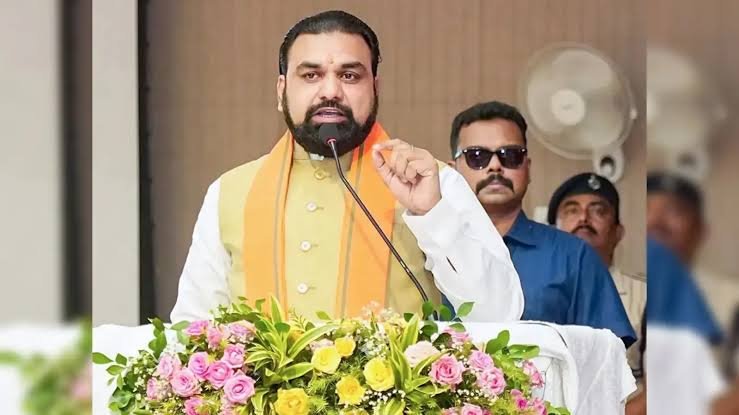
The government has also linked the initiative to improving students’ learning levels through continuous improvement. The emphasis therefore goes beyond simply increasing enrolment or expanding infrastructure. It places learning outcomes and the quality of education delivered inside classrooms at the centre of the reform agenda.
This focus is significant for Bihar, where the government has been undertaking several parallel measures intended to improve school education. In July, 551 model schools were inaugurated across the state, with the government saying the institutions would focus on quality, innovation and inclusiveness and help students prepare for national-level entrance examinations such as NEET and JEE.
The new committee could provide an institutional mechanism for examining how such initiatives are implemented and how schools can achieve more consistent learning outcomes.
Examination Reforms to Focus on Transparency and Modern Assessment
The second major announcement concerns examinations.
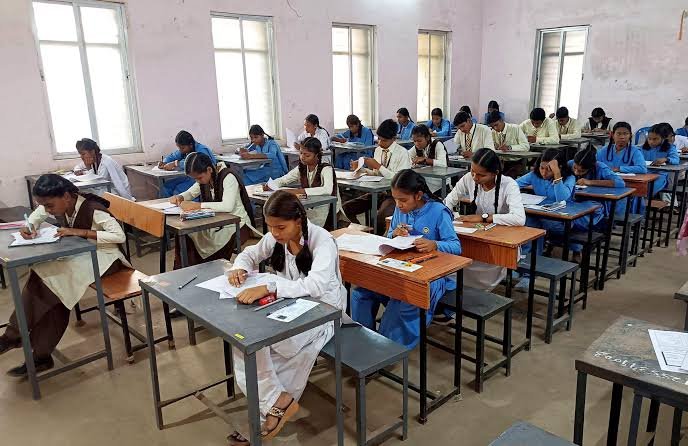
The Bihar government has constituted a state-level examination reform committee to examine ways of making examinations smoother, transparent, fair and modern. The panel is expected to recommend changes in the assessment process across board examinations, competitive examinations and class-level evaluations.
The proposed reforms are particularly notable because the government intends to examine how technology and artificial intelligence (AI) can be used to assess students more effectively.
According to the announcement, the objective is not merely to conduct examinations more efficiently but also to improve the assessment of students’ knowledge, understanding and analytical abilities. This signals a possible shift towards evaluation methods that look beyond memorisation and focus more strongly on what students understand and how they apply what they have learned.
For students, such a change could eventually influence the way examinations are designed, conducted and evaluated. However, the committee is currently at the recommendation stage, meaning specific examination formats or AI-based systems have not yet been announced.
AI Could Play a Bigger Role in Bihar’s Examination System
The reference to artificial intelligence represents one of the more technology-focused elements of the government’s latest education push.
AI is increasingly being discussed in education because of its potential applications in areas such as assessment, learning support, data analysis and administrative processes. In Bihar’s case, the government has specifically linked technology and AI with better assessment of students in board and competitive examinations as well as classroom evaluations.
The proposed approach could eventually help education authorities analyse patterns in student performance and identify areas where learners may need additional support. At the same time, any technology-driven assessment system would need appropriate safeguards to ensure accuracy, fairness and transparency.
For now, the government has announced the committee rather than a final technology framework. The recommendations of the panel will therefore be important in determining how AI is eventually incorporated into examinations.
Special Collaboration Camps to Bring Students Into the Reform Process
The government’s third initiative involves special collaboration camps focused on education reforms.
These camps are intended to provide a platform for dialogue involving the Chief Minister, ministers, MPs, MLAs and students. The stated purpose is to hear suggestions and problems directly and discuss possible solutions through interaction between policymakers and stakeholders.
Student participation is particularly important because examination policies, curriculum decisions and educational administration directly affect their academic experience.
By creating opportunities for students to communicate their concerns, the government is seeking to make education reform more participatory. Such discussions could potentially bring attention to practical issues that may not always be visible at the administrative level.
The effectiveness of the camps, however, will depend on how the suggestions received through these interactions are evaluated and translated into policy or administrative action.
Student Welfare Directorates to Improve Coordination
The fourth measure announced by the Chief Minister is the creation of Student Welfare Directorates in relevant departments.
The government said these directorates will help improve coordination and support the effective implementation of initiatives connected with student welfare.
Student welfare encompasses a broad range of issues, including academic support, access to educational opportunities and coordination of schemes intended to assist students.
The creation of dedicated directorates could help bring greater administrative focus to these issues. Instead of welfare-related initiatives being handled in a fragmented manner, the proposed structure is intended to improve coordination between departments.
For students, the practical impact will depend on how the directorates are structured, what responsibilities they receive and how efficiently they respond to educational and welfare-related needs.
Reform Push Comes Amid Wider Changes in Bihar Education
The latest announcements are part of a broader education-focused push by the Bihar government.
In recent months, the state has announced several measures covering school infrastructure, higher education, teacher recruitment, technology and academic opportunities.
The government has announced that computer education will soon become mandatory in Bihar schools, with Chief Minister Samrat Choudhary describing the move as part of efforts to promote digital governance and technology-driven development.
The state has also moved ahead with recruitment plans for 32,388 teachers under the fourth phase of the Teacher Recruitment Examination. The Education Department sent the requisition to the Bihar Public Service Commission, marking another effort to address staffing requirements in schools.
These developments suggest that the government’s education agenda is not limited to examination reforms. It is simultaneously addressing staffing, digital education, school quality and access to higher education.
Bihar Government Expands Model Schools and Competitive Exam Preparation
Another important part of the state’s education strategy is the expansion of model schools.
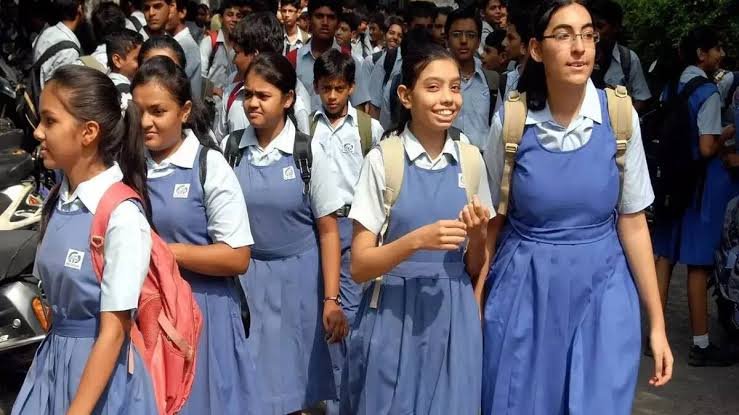
In July, the government inaugurated 551 model schools across Bihar. The schools were presented as institutions aimed at delivering quality secondary and higher-secondary education at the block level. The government also said they would help students prepare for competitive examinations such as NEET and JEE.
The initiative reflects an attempt to create stronger educational opportunities within the state rather than requiring students to depend entirely on institutions outside Bihar for advanced preparation.
The latest quality-education committee could potentially complement this model-school programme by examining standards and learning outcomes more broadly.
Bihar Government’s Higher Education Reform Agenda
Bihar’s education reform agenda extends beyond schools.
The state government has been considering significant changes to the structure and administration of higher education. A proposed Bihar Higher Education Bill has been described as a major potential restructuring of the state’s university system, including changes to how constituent undergraduate colleges are governed.
The government has also announced the opening of teaching in 211 new degree colleges, while plans have been discussed for an artificial intelligence and computer science university in Bhagalpur.
Taken together, these measures show that the education push is being pursued across multiple levels — from school classrooms and examinations to degree colleges and emerging technology-focused education.
Why Bihar Government’s Examination Reform Matters for Students
Examinations remain one of the most important parts of the education system because marks and results can influence students’ progression to higher education and access to competitive opportunities.
A transparent and fair examination system is therefore essential to maintaining confidence among students and families.
The Bihar government’s proposed examination reform committee is expected to study ways of improving the assessment process. Its focus on knowledge, understanding and analytical ability could be particularly significant if recommendations eventually lead to changes in question design and evaluation practices.
However, successful reform will require more than technology. Examination security, reliable infrastructure, trained personnel, clear rules and effective grievance mechanisms will also remain important components of a credible assessment system.
Bihar Government Focuses on Learning Outcomes
The government’s quality-education committee and examination-reform committee address two closely connected aspects of education.
Improving examination systems can make assessment fairer, but stronger assessments are most useful when they are supported by better teaching and learning.
That is why the government’s stated goal of improving learning levels is significant. The quality-education committee is expected to work towards continuous improvement rather than treating education as a one-time examination exercise.
If implemented effectively, this approach could encourage schools to focus more strongly on classroom learning, conceptual understanding and students’ overall academic development.
Bihar Government’s Push Towards AI and Digital Education
The emphasis on AI and computer education also reflects the changing nature of Bihar’s education policy.
Making computer education mandatory is intended to give students greater exposure to digital skills, while the proposed use of AI in assessment could introduce technology into another important part of the education system.
The challenge will be ensuring that technological reforms reach students across different regions and school environments. Digital initiatives are most effective when schools have the necessary infrastructure, teachers have adequate training and students have equitable access to technology.
The implementation phase will therefore be as important as the policy announcements themselves.
What Happens Next for Bihar Government’s Education Reforms
The immediate next step will be the work of the newly constituted committees.
The quality-education committee is expected to examine how quality education can be delivered consistently across schools and how learning levels can be improved. The examination reform committee will focus on modernising assessment and exploring technology and AI for evaluating students’ knowledge, understanding and analytical abilities.
The collaboration camps will provide another channel for receiving feedback from students and elected representatives, while the proposed Student Welfare Directorates will focus on coordination and implementation of welfare-related initiatives.
The exact recommendations, timelines and implementation mechanisms will become clearer as the government moves from announcements to execution.
Bihar Government Education Agenda Enters a New Phase
The latest announcements mark another significant step in Bihar’s ongoing effort to reshape its education system.
From model schools and teacher recruitment to computer education, expansion of degree colleges and proposed higher-education restructuring, the state is pursuing reforms across several areas.
The new quality-education and examination-reform committees add another layer to that agenda by focusing specifically on learning outcomes and assessment.
The government’s emphasis on technology, AI, transparency and student participation also indicates an attempt to make the education system more responsive to changing academic and technological requirements.
Ultimately, the success of the reforms will depend on implementation. Committees must translate their recommendations into workable policies, technology must be deployed responsibly, schools must have the resources needed to deliver quality education, and students’ feedback must lead to measurable improvements.
For Bihar’s students, the significance of the latest announcement will therefore be judged not simply by the creation of committees, but by whether those committees and accompanying initiatives lead to better classrooms, fairer examinations, stronger learning outcomes and more effective student support.
For now, the government’s message is clear: education reform is being placed at the centre of its development agenda, with quality, modern assessment, technology and student welfare forming the key pillars of the latest push.
For students across the state, the Bihar government education push could become significant.