
India celebrated National Handloom Day with renewed enthusiasm as Prime Minister Narendra Modi extended greetings to the nation, highlighting the country’s rich Handloom heritage and paying tribute to generations of weavers and artisans who have preserved India’s centuries-old textile traditions. Calling the handloom sector a cornerstone of rural empowerment, women-led development, and the vision of Atmanirbhar Bharat, the Prime Minister urged citizens to actively support artisans by purchasing handloom products and promoting India’s weaving culture on social media.
In a series of messages shared across social media platforms, including X and Instagram, PM Modi encouraged people—particularly the younger generation—to celebrate National Handloom Day with the same excitement as popular occasions such as Friendship Day. He also appealed to citizens to share “Get Ready With Me” (GRWM) videos featuring handloom attire using the hashtag #NationalHandloomDay, saying such initiatives would not only celebrate India’s cultural identity but also strengthen the livelihoods of millions of weaving families across the country.
The Prime Minister’s appeal comes at a time when the government continues to place significant emphasis on preserving India’s traditional crafts while integrating them into the country’s broader economic and cultural development agenda.
Table of Contents
PM Modi Pays Tribute to India’s Handloom Legacy
Extending his wishes on National Handloom Day, Prime Minister Narendra Modi described India’s handloom heritage as one of the country’s greatest cultural treasures.
In a post on X, he said:
“Today, on National Handloom Day, we celebrate India’s rich and vibrant handloom heritage. We also salute the skill, creativity and dedication of our weavers and artisans. For generations, they have preserved and enriched our traditions.”
The Prime Minister acknowledged the extraordinary craftsmanship of India’s weaving communities, whose skills have been passed down through generations. He emphasized that handloom products are not merely fabrics but symbols of India’s cultural diversity, artistic excellence, and sustainable craftsmanship.
Highlighting the government’s commitment, he reiterated that continued policy support for the handloom sector remains a priority because of its direct contribution to rural employment, women empowerment, and self-reliant economic growth.
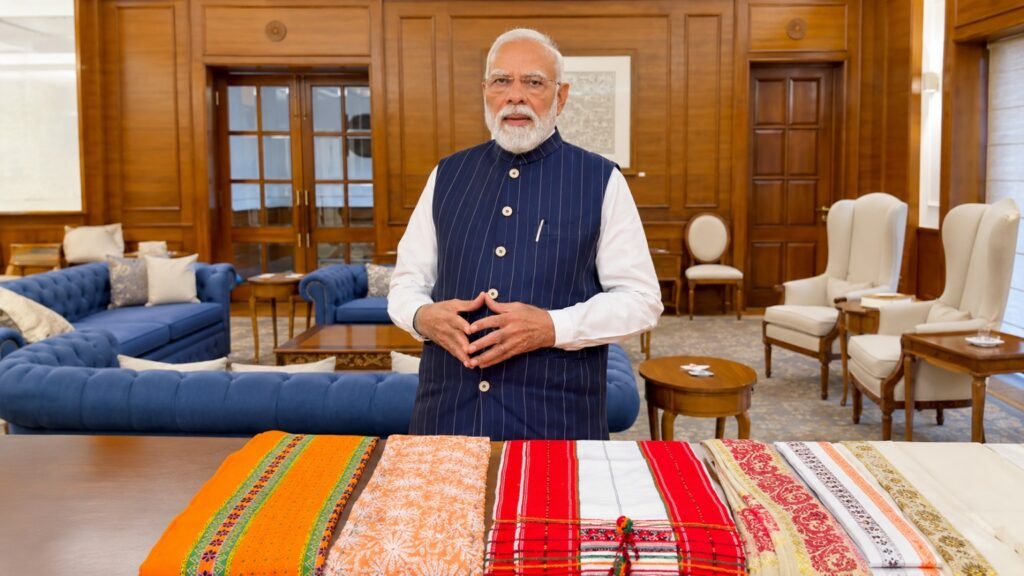
Government Reaffirms Support for the Handloom Sector
PM Modi reaffirmed that the government will continue strengthening the handloom industry through various initiatives aimed at improving market access, increasing incomes for artisans, and promoting Indian textiles globally.
Describing the sector as an important pillar of Atmanirbhar Bharat, he noted that supporting handloom directly contributes to:
- Rural economic development
- Employment generation
- Women’s financial independence
- Preservation of traditional craftsmanship
- Sustainable and eco-friendly production
- Promotion of indigenous industries
The Prime Minister encouraged citizens to actively participate in strengthening the industry by choosing handloom products over mass-produced alternatives whenever possible.
According to him, every handloom purchase directly supports artisan families while preserving India’s cultural heritage for future generations.
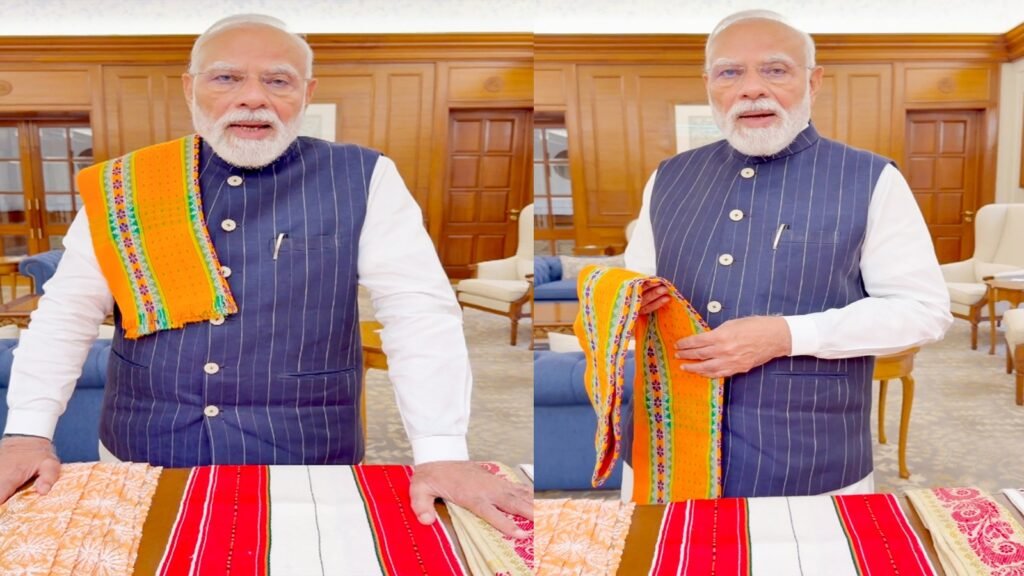
Appeal to Citizens: Buy Handloom and Share GRWM Videos
One of the most distinctive aspects of this year’s National Handloom Day campaign is the Prime Minister’s call for greater public participation through social media.
PM Modi urged citizens to purchase at least one handloom product and share Get Ready With Me (GRWM) videos showcasing traditional Indian attire made from handloom fabrics.
He appealed to people to use the hashtag #NationalHandloomDay, explaining that increased visibility on digital platforms can help promote Indian artisans, encourage young consumers to appreciate traditional textiles, and generate greater demand for authentic handloom products.
The initiative reflects the government’s growing focus on combining India’s cultural heritage with digital engagement, allowing younger audiences to connect with traditional crafts through modern platforms.
National Handloom Day and the Spirit of the Swadeshi Movement
The Prime Minister’s message also highlighted the historical significance of August 7, the day National Handloom Day is observed each year.
In an Instagram reel shared a day before the celebrations, PM Modi recalled August 7, 1905, when the Swadeshi Movement was launched during India’s freedom struggle against British colonial rule.
Describing the movement as a defining moment in India’s journey toward self-reliance, he said it inspired millions of Indians to reject imported goods and embrace products made by local artisans and manufacturers.
The Swadeshi Movement became one of the earliest mass movements promoting indigenous industries, including India’s handloom sector, which faced severe challenges during colonial rule due to the large-scale import of British textiles.
By connecting National Handloom Day with this historic event, the Prime Minister underscored the continued relevance of supporting locally made products in modern India.
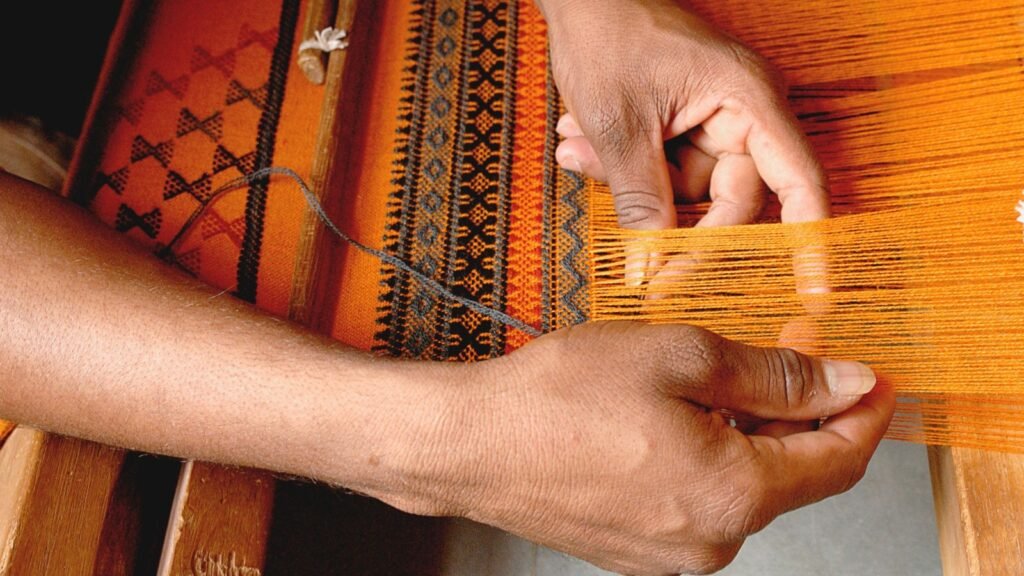
Why National Handloom Day Is Celebrated
National Handloom Day is observed every year on August 7 to commemorate the launch of the Swadeshi Movement in 1905 and to recognise the invaluable contribution of India’s handloom weavers.
The day serves multiple objectives:
- Celebrating India’s rich textile heritage
- Recognising the contribution of artisans and weavers
- Encouraging consumers to purchase handloom products
- Promoting sustainable and eco-friendly textiles
- Preserving traditional weaving techniques
- Creating awareness about the economic importance of the handloom sector
Since its inception in 2015, National Handloom Day has become an important annual event highlighting India’s diverse weaving traditions.
India’s Handloom Industry: A Pillar of Rural Economy
India possesses one of the largest and most diverse handloom industries in the world.
The sector supports millions of artisans, particularly in rural and semi-urban regions, making it one of the country’s largest sources of non-agricultural employment.
Handloom weaving also plays a crucial role in empowering women, many of whom actively participate in spinning, dyeing, weaving, embroidery, and finishing processes.
States renowned for their handloom traditions include:
- Uttar Pradesh
- West Bengal
- Tamil Nadu
- Andhra Pradesh
- Telangana
- Odisha
- Assam
- Gujarat
- Rajasthan
- Kerala
- Karnataka
- Madhya Pradesh
Each region contributes unique weaving styles, motifs, fabrics, and techniques that collectively represent India’s extraordinary textile diversity.
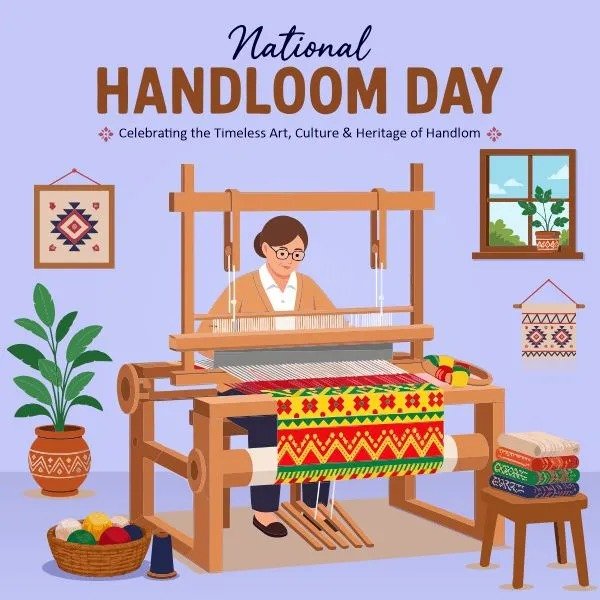
Handloom and Sustainable Fashion
The growing global interest in sustainable fashion has further increased the relevance of India’s handloom industry.
Unlike factory-produced textiles, handloom fabrics generally require:
- Minimal electricity
- Lower carbon emissions
- Reduced environmental impact
- Traditional natural fibres
- Skilled manual craftsmanship
Consumers worldwide increasingly appreciate handloom products for their authenticity, durability, and environmentally friendly production methods.
Government campaigns promoting “Vocal for Local” and “Make in India” have also encouraged greater awareness about sustainable Indian textiles.
Technology and Digital Platforms Expanding Opportunities
Over the past few years, digital marketplaces, e-commerce platforms, and social media have significantly expanded opportunities for India’s weaving communities.
Many artisans now sell directly to customers through:
- Online marketplaces
- Government-supported portals
- Social media platforms
- Digital exhibitions
- Virtual craft fairs
Campaigns such as sharing GRWM videos featuring handloom clothing are expected to further strengthen digital visibility for artisans and encourage younger consumers to embrace traditional Indian fabrics.
Challenges Facing the Handloom Sector
Despite its rich heritage, the handloom industry continues to face several challenges.
Among the most significant are:
- Competition from powerloom products
- Machine-made textile imports
- Fluctuating raw material costs
- Limited marketing opportunities
- Lack of branding
- Changing consumer preferences
- Income uncertainty for artisan families
Government initiatives, financial assistance, skill development programmes, and improved digital access are increasingly being used to address these issues and improve long-term sustainability.
Handloom’s Role in Atmanirbhar Bharat
The Prime Minister once again linked the handloom sector with the broader vision of Atmanirbhar Bharat, emphasizing that supporting local artisans strengthens India’s economy from the grassroots level.
Every handloom purchase contributes not only to preserving traditional skills but also to creating employment opportunities, promoting entrepreneurship, and reducing dependence on imported products.
The government’s continued support through various schemes aims to improve market access, increase exports, modernize production where appropriate, and ensure that India’s traditional weaving heritage remains economically viable in the years ahead.
Looking Ahead
As India celebrates another National Handloom Day, the message from the country’s leadership is clear: preserving traditional craftsmanship requires active participation from every citizen.
Whether through purchasing authentic handloom products, promoting Indian textiles on social media, or encouraging younger generations to appreciate indigenous craftsmanship, every contribution helps sustain one of India’s oldest and most valuable cultural industries.
With increasing global interest in sustainable fashion, handmade textiles, and ethical production, India’s handloom sector stands well-positioned to strengthen its presence in domestic as well as international markets.
National Handloom Day is more than a celebration of India’s textile traditions—it is a reminder of the resilience, creativity, and dedication of millions of artisans who continue to keep centuries-old weaving techniques alive. Prime Minister Narendra Modi’s call to support handloom products and celebrate the country’s weaving heritage reflects a broader effort to combine cultural preservation with economic empowerment.
As India advances toward the vision of Atmanirbhar Bharat, the handloom sector remains a powerful symbol of self-reliance, sustainable development, rural prosperity, and national pride. Supporting handloom is not merely about purchasing fabric; it is about preserving a living heritage, empowering artisan communities, and ensuring that India’s rich textile legacy continues to inspire future generations.