
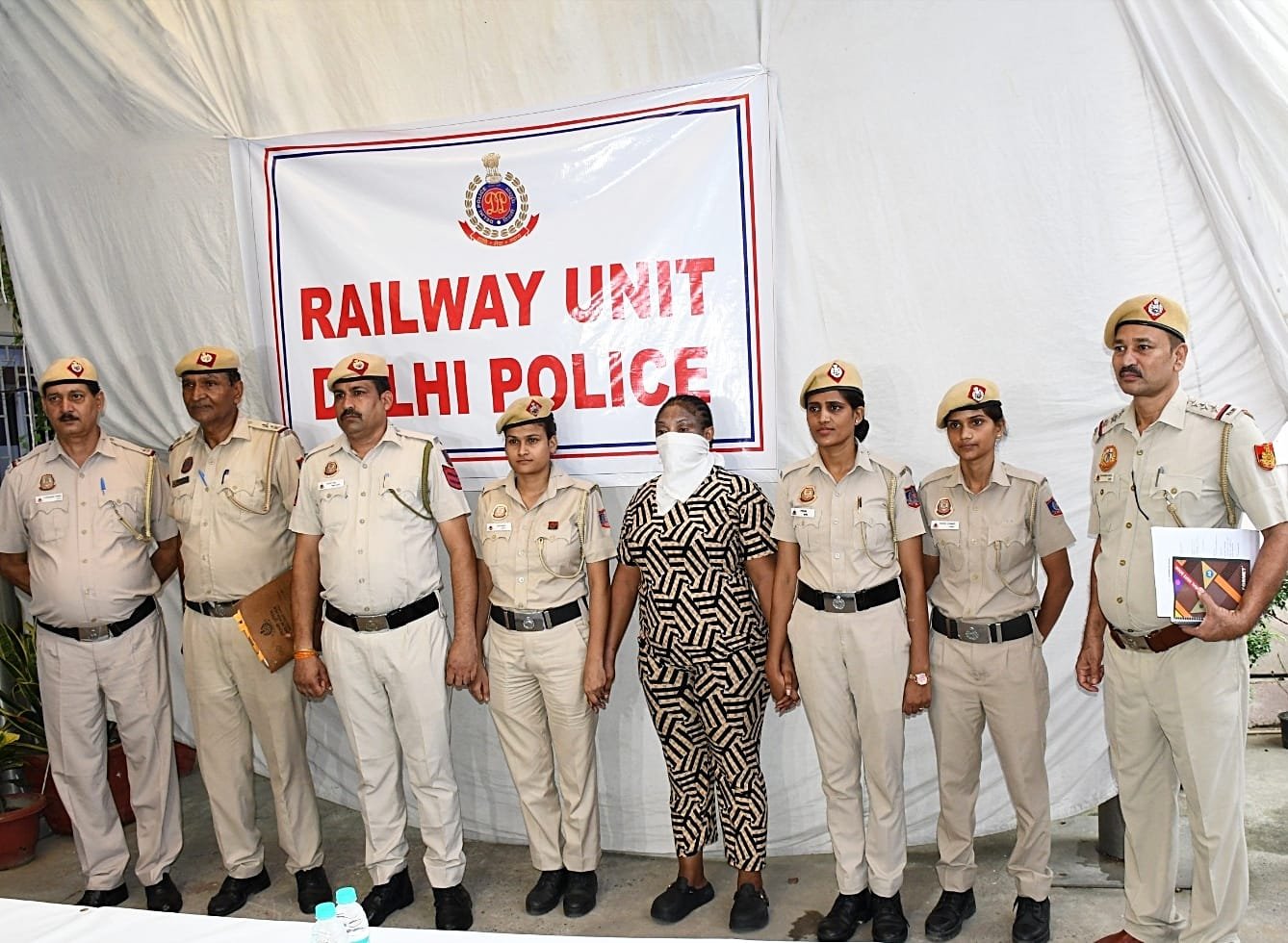
Interstate Cocaine trafficking network, In one of the largest narcotics seizures made by the Railway Unit of the Delhi Police in recent months, authorities have dismantled an alleged interstate Cocaine trafficking network operating between Mumbai and Delhi-NCR, arresting two Nigerian nationals and recovering 2.288 kilograms of commercial quantity cocaine valued at approximately ₹20 crore in the international illicit market.
The operation was carried out jointly by the Special Staff of the Railway Unit and personnel from Police Station Hazrat Nizamuddin Railway Station (GRP), Delhi Police, following sustained surveillance and intensive checking at one of the capital’s busiest railway stations.
According to Delhi Police, the seizure represents a major breakthrough in its ongoing campaign against organised narcotics trafficking and highlights the growing use of railway networks by drug syndicates to transport high-value contraband across states.
Police officials have confirmed that investigations are now focused on identifying the larger interstate syndicate, tracing the financial trail, uncovering the source of supply, and identifying the intended recipients of the seized cocaine.
Table of Contents
Major Cocaine Seizure During Special Railway Operation
The breakthrough came on July 31, 2026, when a joint team of the Railway Unit’s Special Staff and officials from Hazrat Nizamuddin Railway Station Police Station were conducting intensive patrolling and surveillance at Platform No. 1.
During routine checking, police personnel noticed two women displaying suspicious behaviour while carrying luggage inside the railway station.
Recognising possible criminal activity, the officers immediately alerted senior officials and initiated the mandatory legal procedures prescribed under the Narcotic Drugs and Psychotropic Substances (NDPS) Act, 1985 before conducting a detailed search.
During the operation, police recovered 11 packets containing cocaine concealed in the luggage of one of the accused.
Subsequently, the Crime Team and Forensic Science Laboratory (FSL) experts reached the scene to examine the recovered substance.
Preliminary forensic examination confirmed that the recovered narcotic substance was cocaine.
FIR Registered Under NDPS Act
Following the seizure, Delhi Police registered FIR No. 51/2026 dated 31 July 2026 at Police Station Hazrat Nizamuddin Railway Station (Railway Unit).
The case has been registered under Sections 21(3) and 29 of the Narcotic Drugs and Psychotropic Substances (NDPS) Act, 1985, which deal with offences relating to possession, trafficking, and criminal conspiracy involving commercial quantities of narcotic substances.
Police officials stated that further investigation is continuing under the relevant provisions of the law.
Two Nigerian Nationals Arrested
The operation resulted in the arrest of two Nigerian women allegedly linked to the interstate trafficking network.
The accused have been identified as:
- Chikanso James, 43 years, Nigerian national.
- Happiness Okoye, 41 years, Nigerian national.
According to investigators, both women were apprehended during the operation while allegedly transporting the commercial quantity of cocaine.
The passports of both accused have been seized as part of the ongoing investigation.
Police are also examining their travel history, communication records, financial transactions, and possible connections with other suspected members of the trafficking network.
Cocaine Worth Around ₹20 Crore Recovered
Delhi Police recovered:
- 2.288 kilograms of cocaine
- Commercial quantity
- Estimated international market value: Approximately ₹20 crore
Officials described the seizure as a significant blow to organised narcotics trafficking.
The recovery prevented a substantial quantity of cocaine from reaching the illegal market, where it could have been distributed through interstate drug supply networks.
Given the high purity and commercial quantity involved, investigators suspect the contraband was intended for large-scale distribution rather than individual consumption.
Prompt Surveillance Led to Successful Operation
Police officials credited the success of the operation to sustained surveillance, intelligence-based patrolling, and quick response by officers deployed at Hazrat Nizamuddin Railway Station.
According to Delhi Police, the suspicious conduct of the accused attracted the attention of patrolling personnel, who acted immediately while ensuring that all legal procedures required under the NDPS Act were strictly followed.
The prompt coordination between the Railway Unit’s Special Staff, local police station, Crime Team, and forensic experts enabled authorities to recover the contraband and arrest the accused without delay.
Officials noted that continued vigilance at railway stations remains an essential component of Delhi Police’s anti-narcotics strategy.
Police Team Behind the Operation
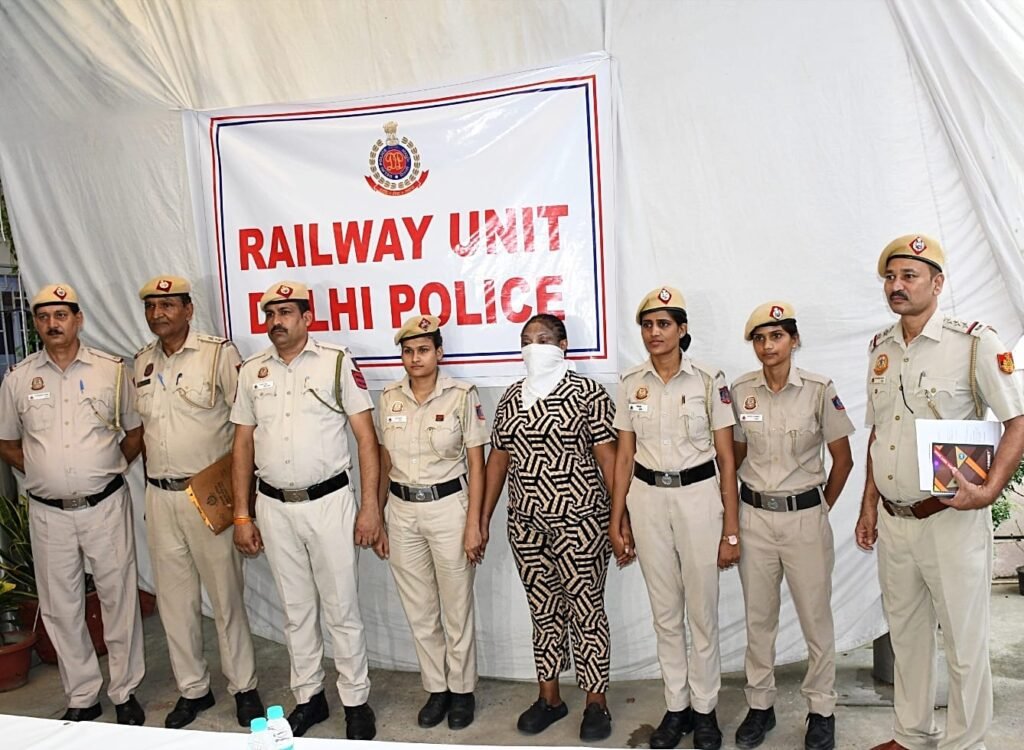
The successful operation was carried out by a dedicated team of officers from the Railway Unit and Hazrat Nizamuddin Railway Station under senior supervision.
The team included:
- Inspector Chanchal Singh, In-charge, Special Staff, Railway Unit.
- Inspector Shambhu Nath, SHO, Hazrat Nizamuddin Railway Station.
- ASI Surender.
- Head Constable Sukhpaal.
- Constable Yogesh.
- Constable Pawan.
- Woman Constable Pooja.
The operation was conducted under the supervision of Rajesh Kumar, ACP (Railways), and overall supervision of B. Bharat Reddy, IPS, Deputy Commissioner of Police (Railways), Delhi.
Police officials acknowledged the coordinated efforts of all personnel involved in ensuring the successful execution of the operation.
Investigation Expands to Interstate Drug Network
Investigators believe the seizure represents only one part of a much larger interstate narcotics trafficking network.
Delhi Police has initiated an extensive investigation to identify:
- The original source of the cocaine.
- Interstate supply routes.
- Intended recipients in Delhi-NCR.
- Financial transactions associated with the network.
- Other members of the syndicate.
- Backward and forward linkages.
- Possible international connections.
Officials stated that dismantling the complete trafficking network remains the primary objective of the investigation.
The police are also examining whether similar consignments may have been transported previously using railway routes.
Court Proceedings and Custody
Following their arrest, both accused were produced before the competent court.
According to Delhi Police:
- Chikanso James has been remanded to police custody to facilitate further interrogation regarding the source of supply, distribution channels, and other associates.
- Happiness Okoye has been remanded to judicial custody.
Investigators are expected to question the accused extensively regarding the procurement, transportation, financing, and intended delivery of the seized narcotics.
Railway Stations Under Increased Surveillance
Railway stations remain among the most important transportation hubs connecting multiple states and metropolitan cities.
Law enforcement agencies have increasingly strengthened surveillance at railway terminals to detect illegal movement of narcotics, arms, counterfeit currency, and other prohibited items.
Hazrat Nizamuddin Railway Station, being one of Delhi’s busiest rail terminals, witnesses heavy passenger traffic daily, making it a strategically important location for security operations.
Police officials said sustained patrolling, intelligence gathering, behavioural surveillance, and technological support continue to play an important role in detecting organised criminal activities.
Delhi Police Intensifies Anti-Narcotics Drive
The latest seizure forms part of Delhi Police’s broader campaign against drug trafficking and organised narcotics networks operating across state boundaries.
Officials said the Railway Unit has significantly intensified:
- Railway station surveillance.
- Intelligence-based operations.
- Inter-agency coordination.
- Random baggage checks.
- Passenger profiling based on behavioural indicators.
- Monitoring of suspected trafficking routes.
The objective is to prevent narcotics from entering Delhi and dismantle organised criminal syndicates involved in illegal drug distribution.
According to police, each successful seizure weakens the financial capabilities of trafficking networks while reducing the availability of illegal drugs in the market.
Significance of the Recovery
A recovery of 2.288 kilograms of commercial quantity cocaine represents a major law enforcement achievement because cocaine remains one of the highest-value narcotic substances in the illegal international drug trade.
Commercial quantities often indicate organised criminal involvement rather than isolated possession.
Investigators believe the seizure not only prevented significant financial gains for traffickers but also disrupted a supply chain potentially serving multiple distribution networks across Delhi-NCR and other regions.
The operation further demonstrates the importance of coordinated policing, intelligence-led investigations, and vigilant monitoring of transportation infrastructure.
Further Investigation Continues
Delhi Police has confirmed that investigations remain ongoing to identify all individuals connected with the interstate cocaine trafficking network.
Authorities are focusing on uncovering the complete supply chain, tracing the origin and destination of the seized contraband, identifying financial transactions linked to the syndicate, and apprehending additional suspects involved in the operation.
Officials are also exploring possible interstate and international links while analysing digital evidence, travel records, communication data, and financial documentation recovered during the investigation.
The seizure of 2.288 kilograms of cocaine worth approximately ₹20 crore at Hazrat Nizamuddin Railway Station marks a significant success in Delhi Police’s continuing crackdown on organised narcotics trafficking. The arrest of two Nigerian nationals and the disruption of an alleged interstate drug supply network underscore the importance of intelligence-led policing and coordinated enforcement efforts in combating the illegal drug trade.
As investigators work to unravel the broader syndicate, trace the financial trail, and identify additional operatives, the case is expected to provide crucial leads into larger narcotics networks operating between Mumbai, Delhi-NCR, and potentially beyond. Delhi Police has reiterated its commitment to enforcing the NDPS Act, 1985, strengthening surveillance across transport hubs, and ensuring that organised criminal networks involved in trafficking narcotic substances are brought to justice. The investigation remains active, with further arrests and recoveries not being ruled out.