

As the sacred month of Sawan 2026 begins, millions of devotees across India are preparing to observe one of Hinduism’s most spiritually significant periods dedicated to Lord Shiva. Falling during the monsoon season, Shravan is marked by fasting, prayer, temple visits, Rudrabhishek, and the chanting of “Om Namah Shivaya.” In 2026, Sawan begins on July 30 and concludes on August 28, with four Sawan Somwar (Monday) fasts observed on August 3, 10, 17, and 24.
For many devotees, fasting during Sawan is not only an act of devotion but also a way to practice self-discipline and mindful living. However, health experts advise that fasting should be balanced with proper nutrition and hydration to ensure that the body receives adequate energy, especially during humid monsoon weather.
Table of Contents
Why Is Sawan So Important in Hinduism?
Sawan, also known as Shravan Maas, is considered one of the holiest months in the Hindu calendar. According to Hindu beliefs, it was during the Samudra Manthan (Churning of the Ocean) that the deadly poison Halahal emerged. To save the universe, Lord Shiva consumed the poison, earning the name Neelkanth. Devotees believe that offering water and performing Jalabhishek on the Shivling during this month symbolizes gratitude and devotion.
Mondays, known as Sawan Somwar, hold special significance. Many devotees observe fasts seeking blessings for good health, family harmony, prosperity, and spiritual growth.

Purpose of Sawan Fasting
Religious scholars explain that fasting during Sawan is intended to purify both the body and mind. Rather than being solely about avoiding food, the vrat emphasizes:
- Self-control and discipline
- Simplicity in eating habits
- Regular prayer and meditation
- Charity and kindness
- Avoiding anger, harsh speech, and negative thoughts
Experts also note that eating lighter, easily digestible foods during the rainy season aligns with traditional wellness practices, as digestion may be comparatively weaker during the monsoon.
Types of Sawan Fasts
Different families and traditions follow different fasting practices. Common forms include:
Nirjala Vrat
No food or water throughout the day. This is a strict fast and should only be undertaken by healthy individuals.
Phalahar Vrat
Consumption of fruits, milk, nuts, and vrat-approved foods.
One-Meal Fast
Many devotees eat one simple satvik meal after evening prayers.
Partial Fast
Some people avoid grains, onion, garlic, alcohol, and non-vegetarian food while otherwise eating a normal vegetarian diet.
Religious experts emphasize that sincerity is more important than strictness, and devotees should choose a fasting method suited to their health and family tradition.
Foods You Can Eat During Sawan Fasting
Nutritionists recommend consuming foods that provide steady energy while remaining vrat-friendly.
Fruits
- Banana
- Apple
- Papaya
- Pomegranate
- Watermelon
- Muskmelon
- Pears
- Grapes
Dairy Products
- Milk
- Curd
- Buttermilk
- Paneer
Dry Fruits and Nuts
- Almonds
- Walnuts
- Cashews
- Raisins
- Dates
- Figs
Vrat-Friendly Ingredients
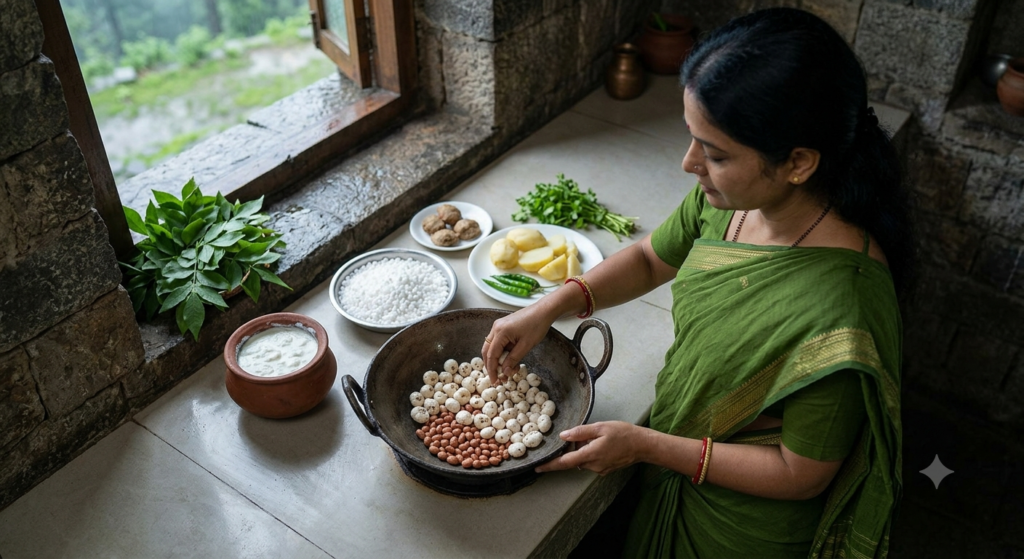
- Sabudana (sago)
- Kuttu (buckwheat flour)
- Singhara flour
- Samak rice (barnyard millet)
- Makhana (fox nuts)
- Sweet potatoes
- Potatoes
- Arbi (colocasia)
Healthy Fats
- Ghee
- Peanuts
- Coconut
Salt
Only Sendha Namak (rock salt) is generally used during fasting instead of regular table salt.
Foods to Avoid During Shravan
Most devotees avoid foods considered heavy or not permitted during vrat.
Commonly avoided items include:
- Onion
- Garlic
- Regular grains such as rice and wheat (depending on family tradition)
- Lentils and pulses
- Non-vegetarian food
- Eggs
- Alcohol
- Tobacco
- Processed and junk food
- Excessively spicy or oily dishes
Many households also avoid foods such as kadhi during Sawan as part of traditional observances.
A Healthy Sawan Diet Plan
Morning
- Warm water
- Fresh fruits
- Milk or buttermilk
- Handful of almonds and raisins
Mid-Morning
- Coconut water
- Fresh seasonal fruit
Lunch
- Sabudana khichdi
- Curd
- Cucumber salad
Evening Snack
- Roasted makhana
- Fruit smoothie (without refined sugar)
Dinner
- Samak rice khichdi
- Paneer
- Boiled sweet potato
- Glass of milk before bedtime
This type of diet provides carbohydrates, protein, healthy fats, calcium, and fibre while remaining suitable for many fasting traditions.
Hydration Is Essential During Fasting
Doctors caution that dehydration can become a concern during long fasting hours, especially in humid weather.
Good hydration choices include:
- Water
- Coconut water
- Lemon water (if permitted)
- Buttermilk
- Milk
Sugary soft drinks and excessive caffeinated beverages should be limited.
Health Benefits of Balanced Fasting
When practiced safely, fasting may support:
- Better portion control
- Improved digestive rest
- Mindful eating habits
- Reduced intake of processed foods
- Enhanced focus through meditation and prayer
However, these benefits depend on maintaining adequate nutrition and avoiding overeating after the fast.
Who Should Be Careful?
Medical experts advise that strict fasting may not be suitable for everyone.
People who should consult a doctor before fasting include:
- Individuals with diabetes
- Pregnant women
- Breastfeeding mothers
- Elderly people
- Children
- People taking regular medication
- Those with chronic kidney or heart disease
In such cases, a modified satvik diet may be a safer alternative.
Common Mistakes to Avoid
Experts recommend avoiding these common errors:
- Skipping water completely without medical fitness
- Eating excessive fried vrat foods
- Consuming too many sweets
- Breaking the fast with heavy meals
- Ignoring signs of weakness or dehydration
Balanced nutrition remains important even during religious fasting.
Spiritual Practices During Sawan
Apart from fasting, devotees commonly:
- Perform Jalabhishek on the Shivling
- Offer Bilva (Bael) leaves
- Chant Om Namah Shivaya
- Recite the Mahamrityunjaya Mantra
- Read Shiva Chalisa
- Visit Shiva temples
- Practice meditation and charity
These observances are believed to promote inner peace and spiritual discipline.
Frequently Asked Questions
Can tea or coffee be consumed?
Practices vary by family tradition. Many devotees avoid them, while others consume tea in moderation.
Is rock salt compulsory?
Most traditional vrat recipes use Sendha Namak instead of regular salt.
Can working professionals observe Sawan fasts?
Yes. Many choose fruit-based or one-meal fasts that suit their daily routine and health.
Can exercise be continued?
Light activities such as walking or yoga are generally preferred. Intense workouts may not be suitable during prolonged fasting.

Expert Advice for a Healthy Sawan
Dietitians recommend focusing on:
- Fresh fruits
- Adequate protein from paneer, milk, nuts, and makhana
- Hydration
- Balanced meal portions
- Avoiding excessive fried fasting snacks
A healthy fast should support devotion without compromising physical well-being.
Sawan 2026 offers devotees an opportunity to combine faith with mindful living. While fasting remains a deeply personal spiritual practice rooted in devotion to Lord Shiva, following the right dietary habits can help ensure that the observance is both spiritually fulfilling and physically healthy. By choosing wholesome vrat-friendly foods, staying hydrated, and respecting individual health needs, devotees can observe Shravan with balance and well-being.
Whether following a strict fast or a simple satvik diet, the essence of Sawan lies in devotion, self-discipline, compassion, and inner purification—values that continue to make this sacred month one of the most cherished periods in the Hindu calendar.