PM Surya Ghar Yojana, For millions of middle-class families across India, the monthly electricity bill is more than just another household expense—it is a constant source of financial planning and concern. From limiting the use of air conditioners during peak summer to switching off appliances whenever possible, countless households carefully monitor their electricity consumption to keep monthly expenses under control.
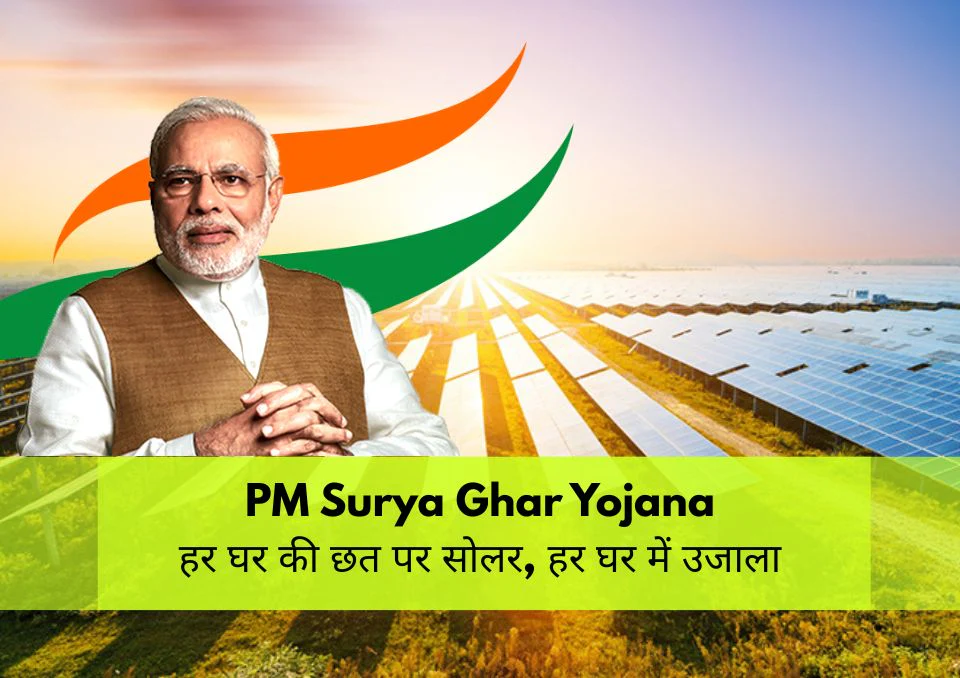
Recognizing this challenge, the Government of India introduced the PM Surya Ghar Yojana (PM Surya Ghar: Muft Bijli Yojana), an ambitious rooftop solar initiative aimed at reducing electricity costs while promoting clean energy adoption across the country. The scheme offers substantial financial assistance to eligible households for installing rooftop solar panels, making renewable energy more accessible than ever before.
Recently, the PM Surya Ghar Yojana has gained renewed public attention after being featured in the popular family web series after being featured in the popular family web series “Gullak” Season 5 on SonyLIV. Through a relatable middle-class storyline, the series highlights how rooftop solar panels can significantly reduce electricity bills while encouraging families to explore the government’s subsidy programme.
Table of Contents
Experts believe that this unique blend of entertainment and public awareness has helped simplify a government initiative that many people previously considered complicated or financially out of reach.
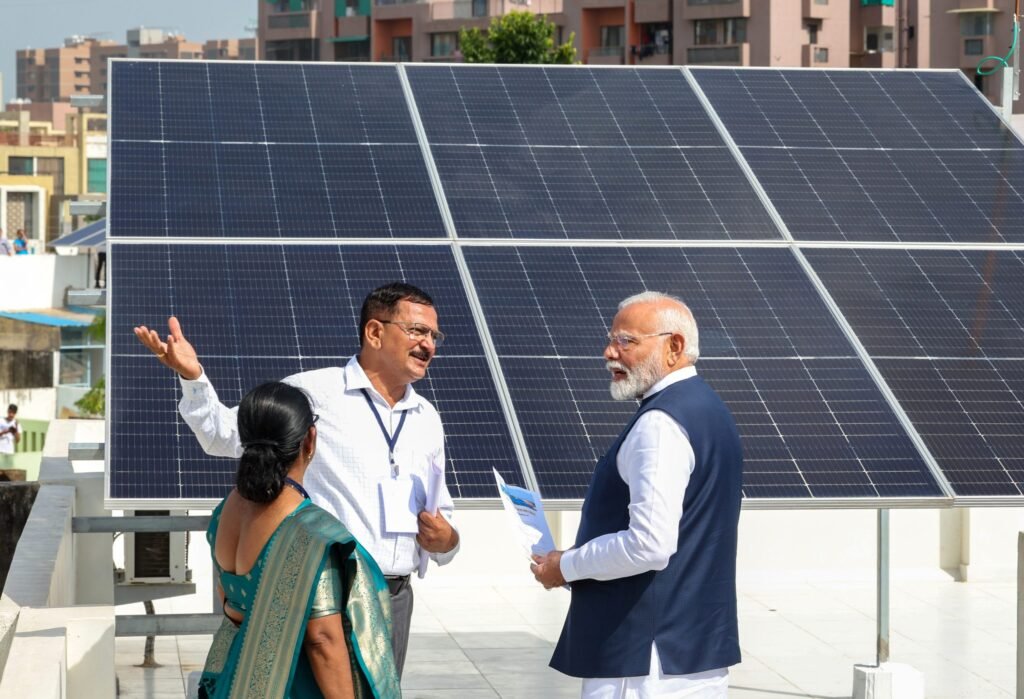
PM Surya Ghar Yojana: A Major Push Towards Affordable Clean Energy
Launched by the Government of India, the PM Surya Ghar Yojana aims to encourage households to install rooftop solar systems to encourage households to install rooftop solar systems by providing financial subsidies and easier access to financing.
The initiative supports India’s broader goals of increasing renewable energy capacity while helping families reduce their dependence on conventional electricity supplied through the grid.
The scheme seeks to make solar energy affordable for ordinary households by lowering the initial installation cost through government assistance.
Officials believe that widespread adoption of rooftop solar systems can reduce electricity bills, improve energy security, and contribute to environmental sustainability.
Why Electricity Bills Remain a Major Concern for Middle-Class Families
For many Indian households, monthly budgeting revolves around recurring expenses such as groceries, school fees, rent, transportation, healthcare, and electricity.
Rising temperatures have increased dependence on electrical appliances including:
- Air conditioners
- Coolers
- Refrigerators
- Washing machines
- Water pumps
- Fans
As electricity consumption increases during summer months, many families experience significantly higher monthly bills.
Consequently, several households attempt to reduce electricity usage by limiting appliance operation, often sacrificing comfort to manage expenses.
Experts note that rooftop solar systems offer a long-term solution by generating electricity directly from sunlight, reducing dependence on conventional power supply.
How ‘Gullak’ Season 5 Helped Popularize the Scheme
The latest season of the widely loved web series Gullak has played an unexpected role in increasing awareness about rooftop solar adoption.
Instead of presenting technical explanations, the storyline focuses on everyday financial concerns faced by a typical middle-class family.
In two special episodes released during July 2026, viewers see the family discussing rising electricity bills and searching for a permanent solution.
The character of Santosh Mishra, known for his practical and financially cautious nature, eventually decides to install rooftop solar panels under the PM Surya Ghar Yojana.
This decision resonates strongly with viewers because the character represents the mindset of many Indian middle-class households that carefully evaluate every major financial investment.
The episodes reportedly attracted millions of views across digital platforms, helping bring the scheme into mainstream public conversation.
Entertainment Meets Public Awareness
Communication experts often emphasize that people understand public policies more effectively when they are explained through relatable stories.
Instead of discussing climate change PM Surya Ghar Yojana or renewable energy in highly technical language, the series connects directly with one of the biggest concerns of ordinary families—the monthly electricity bill.
This storytelling approach demonstrates how lower electricity costs can improve household financial stability.
Viewers watch a familiar family evaluate the costs, understand the available subsidy, and ultimately experience tangible savings after installing rooftop solar panels.
Experts describe this approach as an effective example of behavioural communication, where audiences connect emotionally with practical solutions rather than abstract policy discussions.
Government Subsidy Makes Solar More Affordable
One of the biggest barriers preventing many families from adopting rooftop solar systems has traditionally been the initial installation cost.
Under the PM Surya Ghar Yojana, eligible beneficiaries can receive government financial assistance, substantially reducing the amount they need to pay themselves.
According to information highlighted during the awareness campaign, eligible households may receive government subsidies of up to ₹78,000, depending on system capacity and applicable guidelines.
In addition to the subsidy, financing options are available through participating financial institutions, allowing families to spread the remaining installation cost over manageable repayment periods.
These financial measures are intended to make rooftop solar accessible to a wider section of society.
Easy Financing Encourages Adoption
Apart from government subsidies, affordable financing has become another important feature supporting the scheme.
Eligible applicants may avail loans for rooftop solar installation, reducing the need for large upfront payments.
Easy financing options encourage households that might otherwise postpone installing solar systems due to budget constraints.
Experts say reducing financial barriers significantly increases the likelihood of widespread rooftop solar adoption.
The PM Surya Ghar Yojana also supports eligible applicants through affordable financing options
Seeing Real Results Builds Public Confidence
One of the strongest messages conveyed through the awareness campaign is that people often trust visible outcomes more than advertisements.
In the storyline, once rooftop solar panels are installed on the Mishra family’s home, their electricity bill reportedly drops dramatically.
The visible reduction in electricity expenses encourages neighbours to inquire about the scheme and eventually apply themselves.
This reflects a common behavioural pattern in society where people gain confidence after observing successful experiences within their own communities.
Experts note that word-of-mouth recommendations remain among the most effective forms of public awareness.
The success shown under the PM Surya Ghar Yojana encouraged neighbours to explore rooftop solar installation
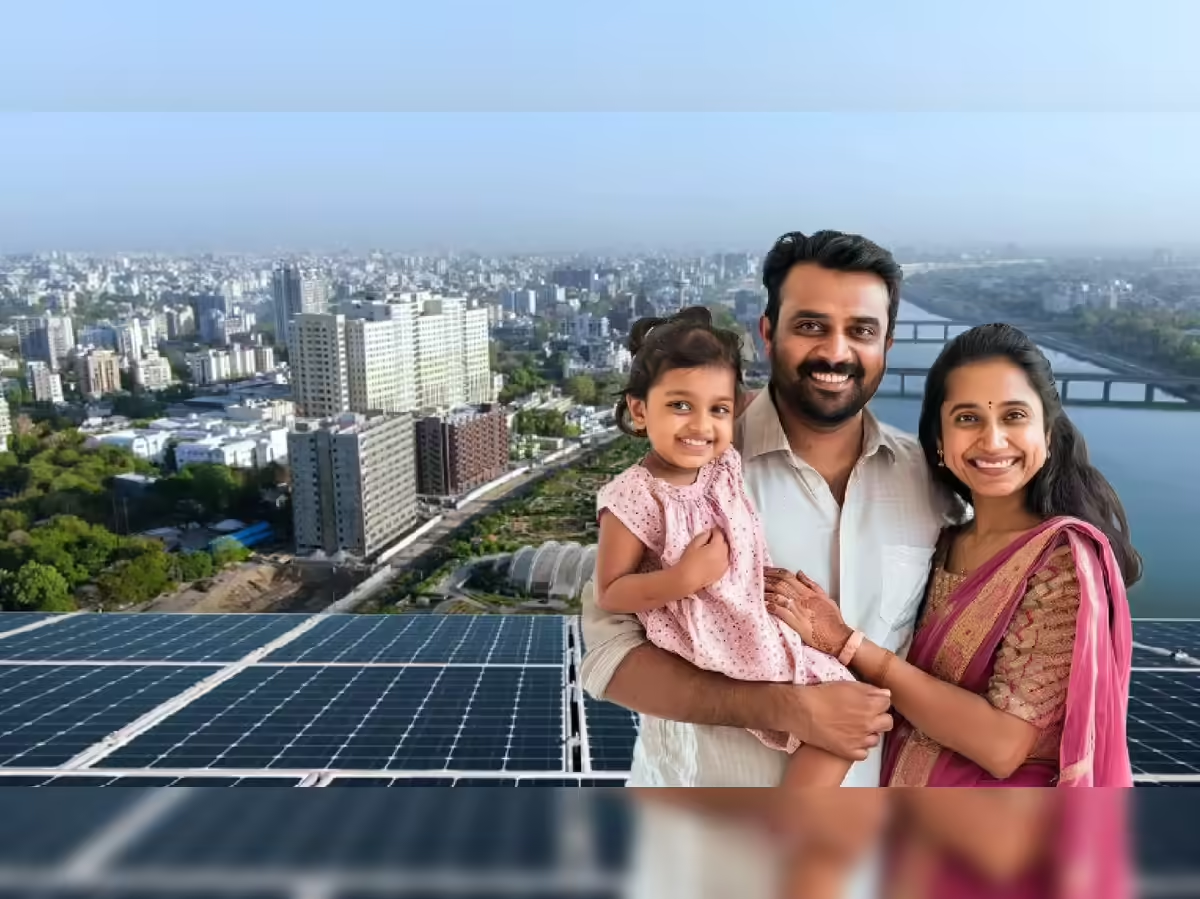
Understanding Behavioural Economics Behind the Campaign
Experts believe the PM Surya Ghar Yojana has benefited significantly from this behaviour-driven awareness campaign.
Policy experts describe the campaign as an example of behavioural economics, which focuses on how people make real-life financial decisions.
Instead of emphasizing environmental benefits alone, the campaign highlights direct economic advantages that families can immediately understand.
Key concerns addressed include:
- Rising electricity bills
- Household budgeting
- Long-term savings
- Affordable financing
- Government subsidy
- Practical return on investment
By focusing on everyday financial realities rather than technical concepts, the campaign makes rooftop solar appear practical rather than complicated.
PM Surya Ghar Yojana Rooftop Solar Offers Long-Term Financial Benefits
Energy experts explain that rooftop solar systems generate electricity during daylight hours using sunlight.
The electricity produced can reduce dependence on conventional grid power, lowering monthly electricity expenses.
Although installation requires an initial investment, government subsidies and financing options reduce the financial burden.
Over time, lower electricity bills may help households recover much of the installation cost while continuing to benefit from reduced energy expenses.
The exact savings depend on several factors, including electricity consumption, system capacity, sunlight availability, and applicable regulations.
The PM Surya Ghar Yojana makes these long-term savings more achievable through government support.
Environmental Benefits Beyond Financial Savings
Apart from reducing electricity bills, rooftop solar contributes to broader environmental goals.
Solar energy is a renewable resource that produces electricity without burning fossil fuels.
Greater adoption of rooftop solar can help reduce greenhouse gas emissions and lower dependence on conventional energy sources.
India has been steadily increasing investments in renewable energy as part of its long-term sustainability objectives.
Schemes promoting rooftop solar therefore contribute to both household savings and national clean-energy goals.
Why the March 2027 Deadline Matters
Government officials have indicated that the subsidy under the PM Surya Ghar Yojana is available until March 2027 that the current subsidy support under the PM Surya Ghar scheme is available for a limited period, with the present deadline extending until March 2027.
This timeline has encouraged many households to begin exploring rooftop solar options sooner rather than postponing the decision.
Experts believe that limited-time financial incentives often motivate quicker public participation, especially when combined with widespread awareness campaigns.
Families interested in the scheme are encouraged to verify eligibility, understand subsidy guidelines, and complete the application process within the applicable timeframe.
Growing Public Interest in Renewable Energy
Public awareness regarding renewable energy has grown significantly in recent years.
Increasing electricity costs, climate concerns, and improved government incentives have encouraged more homeowners to explore alternative energy solutions.
The popularity of rooftop solar is expected to increase further as technology becomes more affordable and financing options continue to improve.
Experts believe that greater awareness through both official campaigns and popular media can accelerate the transition toward cleaner household energy.
Growing awareness of the PM Surya Ghar Yojana has encouraged more homeowners to consider rooftop solar.
Challenges That Still Need Attention
Despite increasing interest, experts point out that several challenges remain.
These include:
- Limited public awareness in some regions
- Initial installation costs despite subsidies
- Need for technical guidance
- Understanding eligibility requirements
- Access to reliable installation partners
Continued awareness campaigns, simplified application procedures, and transparent information may help overcome these barriers.
Experts Recommend Informed Decision-Making
Energy specialists advise homeowners to carefully evaluate their electricity consumption, roof suitability, and installation requirements before proceeding.
Applicants should rely on official information regarding subsidy eligibility, approved vendors, and financing options.
Making informed decisions can help households maximize both financial savings and long-term system performance.
Experts advise families interested in the PM Surya Ghar Yojana to verify eligibility and approved vendors before applying.
The PM Surya Ghar Yojana (PM Surya Ghar: Muft Bijli Yojana) represents a significant effort to make rooftop solar energy more accessible a significant effort to make rooftop solar energy more accessible for ordinary households by combining government subsidies, affordable financing, and clean energy solutions. At a time when rising electricity bills continue to place pressure on middle-class budgets, the scheme offers families an opportunity to reduce long-term energy costs while contributing to India’s renewable energy goals.
The recent integration of the scheme into the popular web series Gullak Season 5 has further strengthened public awareness by presenting rooftop solar adoption through relatable, everyday family experiences rather than technical explanations. By focusing on practical savings, financial security, and visible real-life benefits, the campaign has helped simplify a government initiative for millions of viewers.
As the current subsidy window remains available until March 2027, experts encourage eligible households to explore the scheme, understand its benefits, and make informed decisions based on their energy needs. With greater public participation, rooftop solar has the potential to reduce household electricity expenses, support environmental sustainability, and strengthen India’s transition toward cleaner and more affordable energy.