
Scrolling through social media can sometimes leave people with the uncomfortable feeling that everyone else is living a better, happier and more successful life. One person appears to have landed a dream job, another is travelling to an exotic destination, someone else is celebrating a relationship milestone, while others seem to have their health, appearance, finances and careers perfectly under control.
The reality, however, is far more complicated than what appears on a phone screen.
Social media platforms are designed to encourage users to keep watching, interacting and returning. The content people encounter is also rarely a complete representation of another person’s life. Instead, users are generally exposed to carefully selected moments—photographs, achievements, celebrations and experiences that are considered worth sharing.
This constant exposure can create an illusion of comparison: other people appear to be moving ahead while we feel stuck in the same place.
Understanding why this happens requires looking beyond the apps themselves and examining how social comparison, selective self-presentation, algorithms and human psychology interact.
Table of Contents
Social Media Shows the Highlight Reel, Not the Whole Life
One of the biggest reasons social media can make other people’s lives appear better is simple: people generally do not post everything.
A person may upload photographs from a holiday but not share the months of financial planning that made the trip possible. Someone may post about a promotion but not about the years of uncertainty, rejection or stress that preceded it. A couple may share anniversary photographs without showing the disagreements and difficult conversations that are part of any real relationship.
The result is a distorted comparison.
Users are often comparing their complete, unfiltered lives with somebody else’s carefully selected highlights.
This is sometimes described as the “highlight reel” effect. Social platforms make it easy to see moments that are visually attractive, emotionally positive or socially significant, while ordinary experiences remain largely invisible.
Nobody routinely posts a photograph of a stressful commute, an unsuccessful job application, an argument with a friend, an unpaid bill or an afternoon spent feeling unproductive.
Yet these ordinary experiences are part of almost everyone’s life.
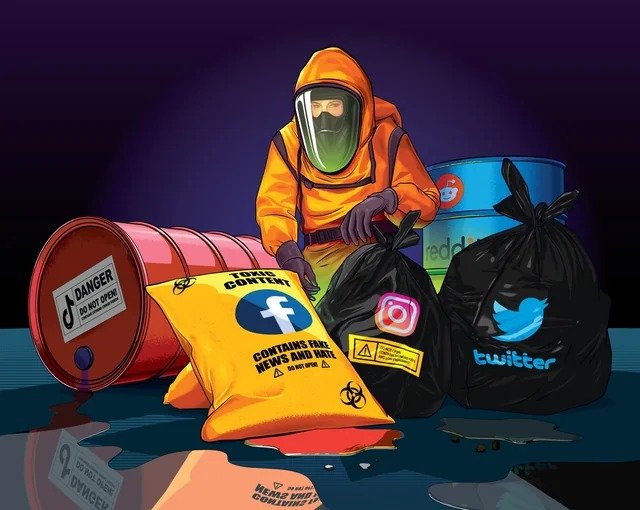
Why Human Beings Compare Themselves With Others
Social comparison is not a phenomenon created by social media. People have always evaluated themselves by observing others.
Human beings naturally look to their social environment for information about how they are performing, where they stand and what they should aspire to. In everyday life, this might mean comparing careers with colleagues, lifestyles with friends or achievements with relatives.
Social media dramatically expands the number of people available for comparison.
Instead of comparing yourself with a few dozen people you know personally, you can now encounter hundreds or thousands of people from different cities, professions and social backgrounds within minutes.
That creates a much larger comparison pool.
More importantly, social media can expose users to people who are unusually successful, attractive, wealthy, adventurous or socially active. This can make exceptional lifestyles appear ordinary simply because users see them repeatedly.
The “Everyone Is Doing Better” Illusion
Imagine opening an app and seeing several consecutive posts.
One person has bought a house. Another is travelling abroad. Someone has announced an engagement. A former classmate has received a major professional award. Another person appears to have transformed their fitness and appearance.
Individually, each post may represent only one moment.
Viewed together, however, they can create a powerful psychological impression: everyone is progressing except me.
This is partly because social media compresses different people’s timelines into one continuous feed.
In real life, your friend’s promotion, your cousin’s wedding and a former classmate’s vacation might happen weeks or months apart. Online, all of these events can appear within seconds.
The brain can therefore interpret a collection of unrelated events as evidence that other people are consistently succeeding.
Algorithms Can Reinforce What Holds Your Attention
Another important factor is the way social media feeds are organised.
Most major platforms use recommendation systems designed to determine what content users are most likely to watch, engage with or share. Content that generates strong reactions can receive greater visibility.
This can create a personalised environment in which certain themes appear repeatedly.
If a user frequently watches fitness content, for example, the platform may show more workout videos, transformation stories, healthy meals and fitness influencers. Someone interested in travel may repeatedly encounter luxury hotels, international destinations and travel creators.
Over time, users may begin to believe that these lifestyles are more common than they actually are.
The issue is not necessarily that the content is fake. The problem is that the feed may not represent everyday life proportionately.
It represents what the system believes will keep the user engaged.
Likes, Followers and Views Turn Life Into a Scoreboard
Traditional social comparison becomes even more complicated when social media attaches visible numbers to content.
Likes, comments, followers, views and shares can function as informal measures of popularity and social approval.
A photograph receiving thousands of likes may appear to carry greater social value than one receiving only a few dozen. A creator with millions of followers can appear more successful than someone with a much smaller audience.
For some users, these numbers can gradually become connected to self-worth.
Instead of simply asking, “Do I like this photograph?” a person may begin thinking, “Why doesn’t my life receive this kind of attention?”
This can transform social media from a communication tool into a perceived scoreboard.
The Comparison Becomes More Intense When It Concerns Appearance
Physical appearance is one of the areas where social media comparison can become particularly powerful.
Users are exposed to photographs and videos featuring carefully selected outfits, lighting, poses, makeup, camera angles and, in some cases, digital editing.
Even when people understand intellectually that images can be altered, repeated exposure can still influence perceptions of what is considered normal or desirable.
A person may begin comparing their everyday appearance with photographs captured under highly controlled conditions.
This can contribute to dissatisfaction with appearance and encourage unrealistic expectations about skin, body shape, fitness and ageing.
The problem becomes particularly significant when online images are treated as ordinary representations rather than curated content.

Why Comparison Can Affect Your Mood
Repeated upward comparison—comparing yourself with people who appear to be doing better—can influence how you evaluate your own circumstances.
Someone who already feels uncertain about their career may be especially affected by a feed filled with professional achievements. Someone experiencing loneliness may find constant relationship announcements particularly difficult. A person struggling financially may feel inadequate when repeatedly exposed to luxury purchases and expensive holidays.
The same post can therefore affect different people differently.
A vacation photograph may inspire one person while making another feel financially unsuccessful. A fitness transformation may motivate one user but make another feel dissatisfied with their body.
Context matters.
Social Media Can Create Fear of Missing Out
The fear of missing out, commonly known as FOMO, is another mechanism through which social media can influence perceptions of other people’s lives.
Seeing friends attending events, travelling, meeting new people or participating in experiences can create the impression that something important is happening without you.
Because social media provides continuous updates, there is rarely a clear end point to this comparison.
A person can check their phone in the morning, during lunch and before going to bed—and each time discover something they were not part of.
This can create the feeling that other people are constantly experiencing exciting moments while one’s own life is comparatively uneventful.
Why Night-Time Scrolling Can Feel Worse
The emotional impact of social media can also depend on when it is used.
At night, people may have fewer distractions and more time to think about their own lives. After a long day, scrolling through carefully curated posts can encourage reflection and comparison.
A person who is already tired or emotionally vulnerable may be more likely to interpret what they see negatively.
Instead of simply thinking, “That’s a nice holiday,” they may think, “Why am I not travelling?”
Instead of, “Congratulations on the promotion,” the thought may become, “Why haven’t I achieved something like that?”
The content has not changed. The interpretation has.

Not Everything Online Is Fake
It is also important not to assume that every positive post is misleading.
People genuinely experience happiness, success, love, travel and achievement. Social media does not automatically make those experiences artificial.
The issue is incompleteness.
A photograph can be completely genuine and still provide an incomplete picture of someone’s life.
This distinction is important because dismissing everything online as fake can be just as unhelpful as believing everything represents reality.
The healthier approach is to recognise that social media provides a selected window into people’s lives—not a complete documentary.
How to Build a Healthier Relationship With Social Media
The solution does not necessarily require deleting every social media application.
Instead, users can become more conscious of how they consume content.
One useful step is to review the accounts that consistently trigger feelings of inadequacy, jealousy or anxiety. Muting or unfollowing accounts that negatively affect mood can change the overall character of a feed.
Users can also diversify the content they consume by following educational, humorous, practical and genuinely useful accounts rather than relying exclusively on aspirational lifestyle content.
Another useful habit is to take regular breaks from scrolling.
A short pause can create enough distance to recognise that an emotional reaction may have been triggered by comparison rather than by an actual problem in one’s life.
Focus on Your Own Timeline
Perhaps the most important shift is to stop treating other people’s milestones as a measurement of personal progress.
People do not begin their careers at the same time. They do not have identical financial circumstances, family responsibilities, opportunities or goals.
One person’s achievement does not automatically represent another person’s failure.
Social media makes comparison easy because it places thousands of people’s milestones directly in front of us. But personal progress is not a competition with everyone visible on a screen.
Someone else’s promotion does not make your career less valuable. Someone else’s holiday does not make your life less interesting. Someone else’s relationship does not determine the quality of your own.
Social media can make it feel as though everyone else is doing better because it combines several powerful forces: selective self-presentation, constant social comparison, personalised algorithms, visible popularity metrics and an endless stream of other people’s milestones.
The result can be a distorted perception in which exceptional moments begin to look ordinary and personal struggles feel unusually significant.
The answer is not necessarily to reject social media completely. Instead, users can learn to recognise what they are actually seeing: selected moments from thousands of different lives, presented together in a highly personalised feed.
The next time scrolling leaves you feeling behind, it may be worth remembering that you are comparing your everyday reality with snapshots of someone else’s life.
Social media can show you what people choose to share. It cannot show you everything they experience.