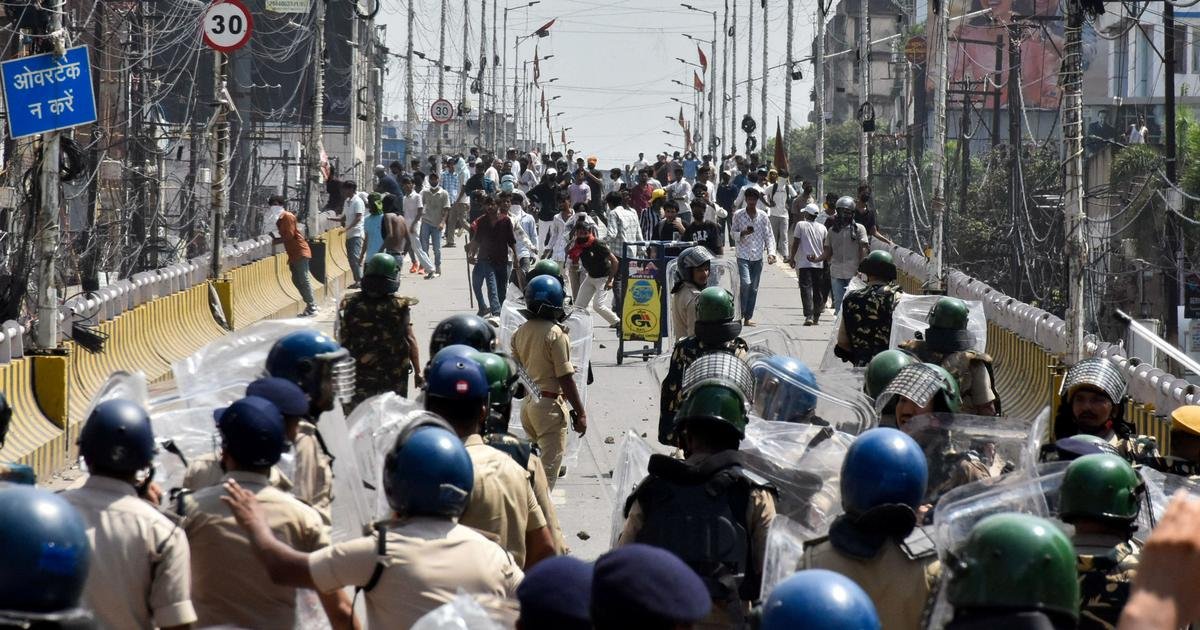
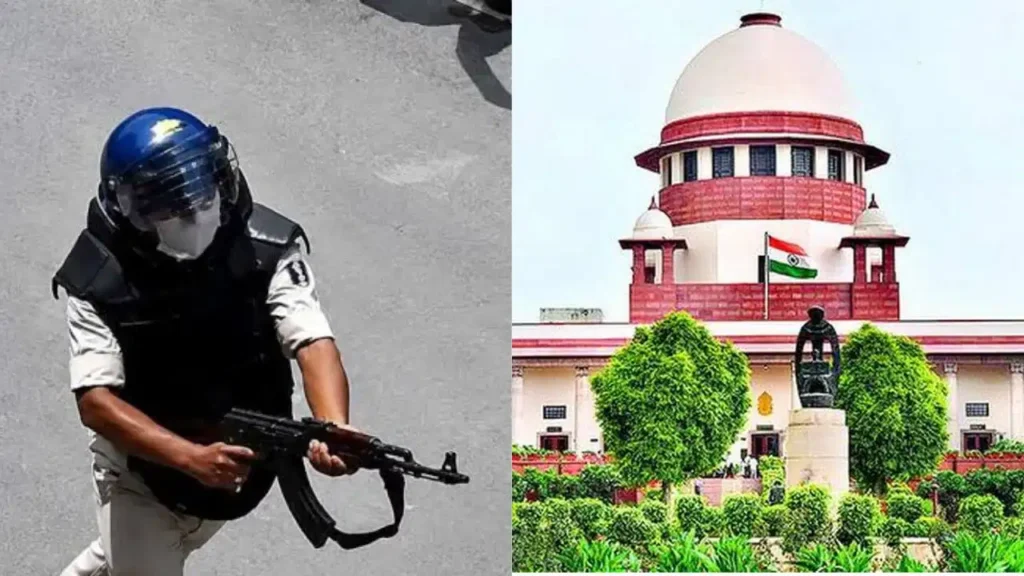
The Bihar government has told the Supreme Court that a police constable fired four rounds into the air during a student protest in Siwan on July 25 after he became trapped in a crowd. In an affidavit filed before the apex court, the state said the firing did not injure any protester and denied allegations that the police had deliberately used disproportionate force against demonstrators.
The incident had triggered a major controversy after a video showing a police personnel firing during the protest circulated widely. The episode became part of a larger dispute over police action during student demonstrations linked to allegations surrounding the NEET-UG examination and other competitive-examination concerns.
The Bihar government’s response has now placed its version of events before the Supreme Court. At the same time, the affidavit acknowledges that the firearm involved was not intended for routine law-and-order duties and says the constable has been suspended, with departmental proceedings initiated against him. A ballistic examination is also continuing in relation to the firing.
Table of Contents
What Happened During the Siwan Protest?
The Siwan incident occurred on July 25, when students and young protesters were participating in demonstrations connected with wider concerns over examination irregularities.
According to the Bihar government’s account submitted to the Supreme Court, the police force deployed at the location was initially inadequate to manage the situation. Additional personnel were subsequently called in as the crowd and tensions increased.
The state said that near JP Chowk, a constable became trapped in the crowd and fired four rounds into the air. The government has specifically maintained that nobody was injured by those rounds.
The explanation is significant because the firing had become one of the most controversial aspects of the protest. Questions were raised over why such a serious firearm was present during a student demonstration and whether its use was justified in a crowd-control situation.
The government’s affidavit attempts to address those questions while also acknowledging that the weapon should not ordinarily have been used for routine law-and-order duties.
Bihar Government’s Explanation Before the Supreme Court
In its response, the Bihar government denied that the police had adopted a policy of using disproportionate force against students.
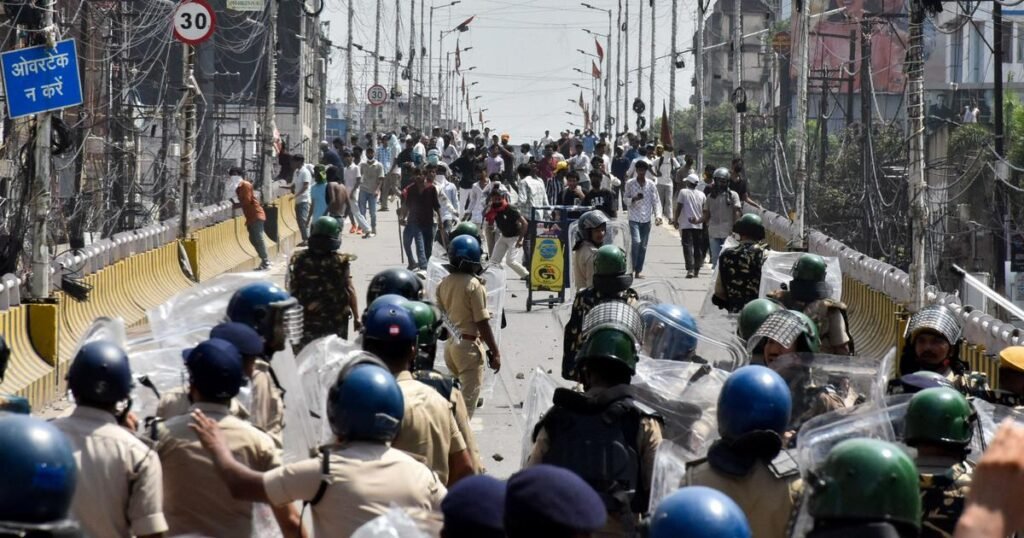
The state said the situation involved clashes between protesters and security personnel and alleged that some elements in the crowd engaged in stone-pelting and damage to public property. According to the government’s account, police personnel were also attacked during the unrest.
The state therefore presented the Siwan firing as an incident that occurred in the middle of a difficult crowd-control situation rather than as a deliberate attempt to harm protesters.
However, the affidavit’s acknowledgement that the firearm was unsuitable for ordinary law-and-order duties is also significant. The government said the weapon was meant for special operations rather than routine crowd management.
This distinction means that two separate questions are being considered: whether protesters were intentionally targeted and whether the police personnel’s conduct and deployment of the firearm complied with established procedures.
Constable Suspended After Firing Incident
The police personnel seen firing during the Siwan protest has been suspended.
The Bihar government has described the firing as “undesired conduct” and said departmental proceedings have been initiated. This means the matter is not being treated by the authorities as routine or automatically acceptable police conduct.
A ballistic investigation is also underway. The state has said that the examination is intended to establish relevant facts concerning the firearms involved in the incidents.
The suspension and departmental inquiry are important because they indicate that, even while defending the broader police response, the government has acknowledged that the constable’s conduct requires separate examination.
The final findings of the departmental and ballistic processes could provide additional clarity about what happened during the protest.
Were Protesters Injured in Siwan?
The Bihar government’s affidavit makes a specific distinction between the firing involving the constable and other instances of police firing during the wider protests.
The state has maintained that no person was injured by the rounds fired during the Siwan incident described at JP Chowk.
However, reports surrounding the broader July 25 unrest had earlier referred to injuries among protesters in Siwan. This has contributed to confusion over which incident caused which injuries.
The government’s affidavit says that three protesters suffered minor firearm-related injuries at a different location, near Hathi Chowk, where an assistant sub-inspector reportedly fired rounds from a different firearm to disperse the crowd. The state has specifically said those three people were not injured by the firearm involved in the JP Chowk incident and were not present at that location.
Because multiple locations and police actions were involved, investigators must establish the precise sequence of events before individual responsibility can be determined.
Why the Supreme Court Is Hearing the Matter
The Siwan incident is part of a larger set of petitions before the Supreme Court concerning alleged excessive use of force against students participating in protests.
Petitioners have raised concerns about police action during demonstrations linked to examination-related grievances. The court has therefore sought responses from the authorities concerning the conduct of security forces and the treatment of protesters.
The Bihar government’s affidavit is its formal response to those allegations.
The state has denied using disproportionate force to cause harm to protesters, while explaining the circumstances in which police personnel used force during the demonstrations.
The Supreme Court’s scrutiny means that the government’s explanation will be considered alongside the petitions, available evidence and other material placed before the court.
Broader Student Protests in Bihar
The Siwan episode did not occur in isolation.
During the period from July 22 to July 25, demonstrations were reported at several locations in Bihar. The state’s affidavit says that protests became violent at places including Patna, Jehanabad, Chapra, Bhagalpur, Sitamarhi, Aurangabad, Katihar, Kishanganj and Siwan.
The demonstrations were connected to broader student concerns over competitive examinations.
The protests attracted national attention and generated political controversy, particularly over allegations concerning examination irregularities and the government’s handling of student grievances.
The police response subsequently became another major issue, with opposition parties and civil-society voices questioning the use of force.
Government Says Police Personnel Were Also Injured
The Bihar government has argued that the protesters were not the only people affected by the unrest.
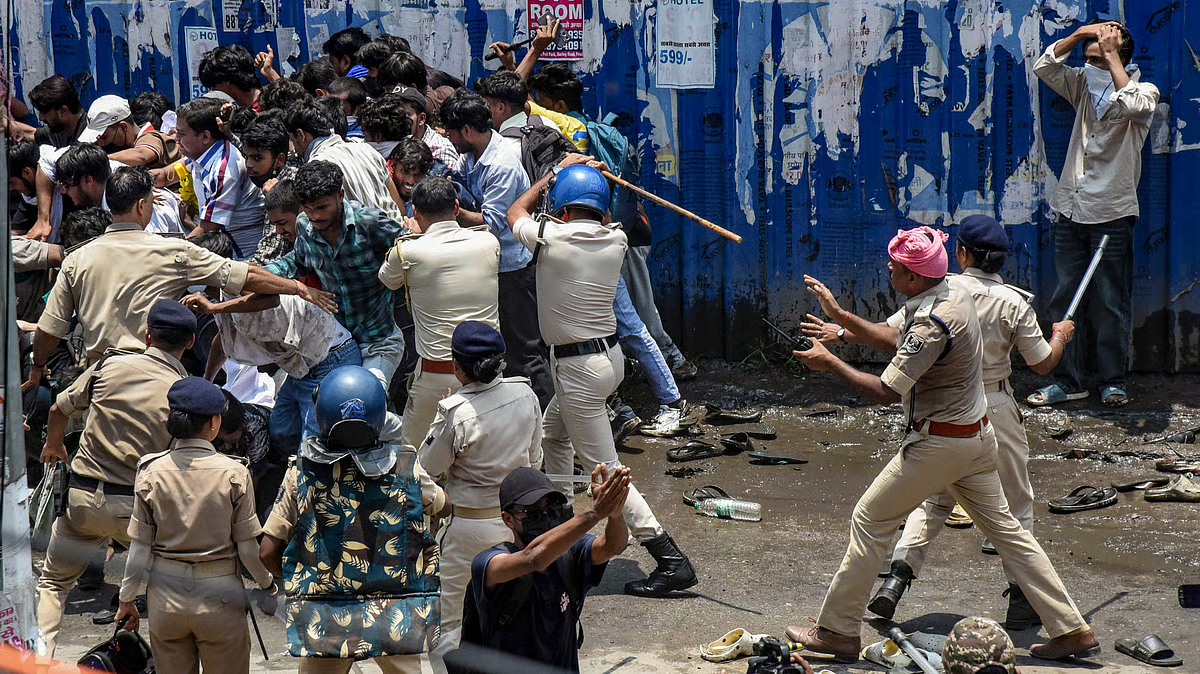
According to the affidavit, police personnel and other government employees were injured during the demonstrations. The state has said that a total of 157 police personnel and seven public servants were injured during the protests.
The government has also described incidents of stone-pelting and damage to public property.
At Chapra, for example, the state alleged that a protest that was peaceful earlier in the day later became violent after other elements joined the gathering. The affidavit says several government and police officials were injured there.
These claims form an important part of the state’s defence. The government argues that police personnel were dealing with an increasingly difficult law-and-order situation and that some actions were taken in response to violence.
Whether the force used in individual situations was proportionate remains a matter for examination based on evidence.
Tear Gas and Water Cannons Also Used
The Bihar government has acknowledged the use of crowd-control measures such as tear gas and water cannons during the protests.
According to the affidavit, these measures also resulted in injuries among protesters.
The use of such measures is part of the broader question before the court regarding the proportionality of police action.
In any protest situation, authorities are required to balance public safety and maintenance of order with the rights of people to participate in peaceful demonstrations.
When a protest becomes violent, police may need to intervene. At the same time, the response must remain within applicable legal and procedural limits.
The Supreme Court proceedings could therefore have implications beyond the Siwan incident itself.
Government Orders Preservation of Siwan Protest Evidence
The Bihar government has also said that video footage and other records connected with the protests are being preserved.
This is important because several aspects of the controversy involve visual evidence, including footage showing the police response during the Siwan incident.
Preserving such material can help investigators and the court establish the sequence of events rather than relying exclusively on competing accounts from protesters, police officials or political parties.
The state has also said that personal information and digital data relating to protesters should not be publicly disclosed for the time being.
Such measures are particularly relevant where students are involved and where legal proceedings are still underway.
No Coercive Action Against Eligible Students
The Bihar government has told the Supreme Court that it is not taking coercive measures against protesting students who have no criminal antecedents.
The state has also said that students and other protesters who met the conditions set out by the court were released on bail. According to the affidavit, 222 student protesters without criminal antecedents were released on bail, while 75 children were released through the Juvenile Justice Board.
The government further said that children below 18 who had been detained in connection with the protests and had no criminal background were released on simple bonds executed by themselves or their family members.
These measures are relevant to the wider Supreme Court proceedings because the petitions involve not only allegations of excessive force but also concerns about the treatment of students detained during the demonstrations.
The Larger Debate Over Police Conduct in Siwan
The Siwan controversy has raised broader questions about how police should respond when student demonstrations become disorderly or violent.
The government maintains that police personnel were responding to a difficult situation involving crowd pressure, stone-pelting and injuries to security personnel.
Critics, meanwhile, have questioned whether the response was proportionate and whether firearms should have been involved at all in a student protest.
The Supreme Court’s consideration of the matter provides an opportunity to examine these competing claims through evidence.
The fact that the government itself has acknowledged that the firearm involved was intended for special operations rather than routine law-and-order duties adds another layer to the debate.
Why the Ballistic Investigation Matters
The ongoing ballistic examination is expected to be important in establishing the facts surrounding the firing incidents.
The Bihar government has said that the examination is looking at relevant aspects of the firearms and the circumstances of the firing.
Such evidence can help investigators distinguish between different firing incidents and determine which firearm may have been responsible for particular injuries, if any.
This is particularly important because multiple incidents reportedly occurred at different locations during the same period of unrest.
Until the investigation is complete, claims about specific injuries and their causes should therefore be treated carefully.
What Happens Next?
The Supreme Court’s proceedings will determine the next stage of judicial scrutiny.
The Bihar government’s affidavit has now placed its explanation on record: the state says the constable became trapped in the crowd, fired four rounds into the air, and did not injure anyone with those rounds. It also says the constable has been suspended and faces departmental proceedings.
The state has simultaneously denied allegations that police deliberately used disproportionate force against student protesters.
The continuing investigations, preservation of video evidence and ballistic examination could provide further information as the matter progresses.
For now, the Siwan firing remains a contested episode, with the government’s account and allegations by protesters and opposition groups forming different sides of the debate.
The Bihar government’s response to the Supreme Court has brought new details into the controversy surrounding the Siwan firing incident during student protests.
According to the state’s affidavit, a constable became trapped in a crowd near JP Chowk and fired four rounds into the air. The government says nobody was injured by those rounds and has defended the broader police response while acknowledging that the firearm was not intended for routine law-and-order duties.
The constable has since been suspended and departmental proceedings have begun. A ballistic examination is also underway.
At the same time, the state has acknowledged that other protesters suffered firearm-related injuries at a separate location and has sought to distinguish those injuries from the JP Chowk incident.
The Supreme Court’s scrutiny will be important in determining how the competing accounts should be assessed. The preservation of video footage and other evidence could play a crucial role in establishing the sequence of events.
The episode ultimately highlights the difficult balance between maintaining public order and protecting the rights of students and other citizens participating in demonstrations. As the judicial and departmental processes continue, the focus will remain on establishing the facts and determining whether police conduct during the protests complied with the required standards.