
MUMBAI — In an era dominated by rapid digital releases and front-loaded box office dynamics, filmmaker Imtiaz Ali has achieved a rare and significant milestone. His latest cinematic offering, Main Vaapas Aaunga (2026), has officially completed a 50-day theatrical run. It has emerged as one of the year’s most striking examples of word-of-mouth driving box office success.
The critical and commercial turnaround of the period drama marks a major victory for the director, the ensemble cast, and the production houses involved. To mark the occasion, Ali penned an emotional message to filmgoers, celebrating what he termed an “unusual success” built strictly on the emotional investment of the public.
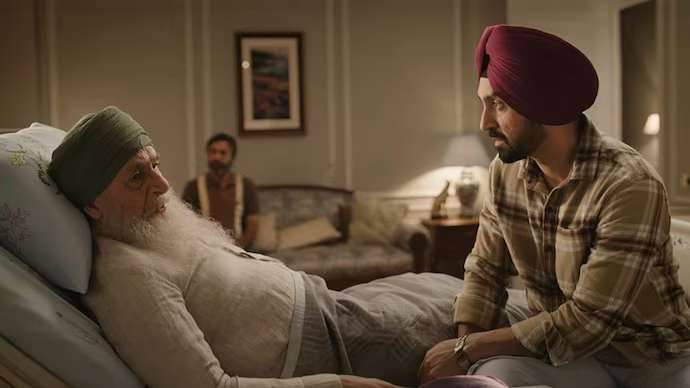
Table of Contents
A Rare Feat: Imtiaz Ali Pens a Note of Thankfulness
Reflecting on the film’s resilience at the ticket windows, Imtiaz Ali emphasized that surviving 50 days in modern multiplexes and single screens is a massive accomplishment. Traditional theatrical windows have trunked significantly, often pushing lower-performing titles straight to streaming platforms after a single week.
Taking to social media, the acclaimed filmmaker wrote:
“50 days in cinemas!! This is a rare feat for any film. Main Vaapas Aaunga achieves this today and my first thought is of gratitude towards the audience—the good people that watch cinema, who invested emotionally in the film and convinced others to watch it, who created the extraordinary word of mouth—for no reason except that they liked the film. May the tribe increase!”
Ali went on to explain that the public’s positive reception of Main Vaapas Aaunga functions as a “beacon of hope” for contemporary storytellers trying to craft meaningful, slow-burn narratives without relying on hyper-nationalist tropes or calculated internet rage-bait.
“The love that the audience has shown us will always be in my heart and inspire me to make better and more entertaining cinema in its service,” Ali added. “The love that the stellar cast and crew put into the film has been reciprocated by the audience, and I am very happy about that.”

The Initial Deficit: Overcoming a Critical Opening Failure
The journey of Main Vaapas Aaunga is being analyzed across the Indian film trade as a landmark lesson in modern movie marketing. Produced by Birla Studios and Applause Entertainment, alongside Mohit Choudhary and Shibasish Sarkar of Window Seat Films, the historical drama initially stumbled out of the gate, generating a meager ₹1 crore net collection at the domestic box office on its opening day.
Trade analysts quickly dismissed the project. Production partners realized immediately that traditional marketing channels—consisting of templated trailers, digital agency campaigns, and street hoardings—had failed to communicate the deep emotional texture of the story to the target audience.
The Strategic Pivot: Organic Reassessment and Box Office Recovery
Rather than pulling the plug, Ali and Sarkar pivoted to a localized, highly intimate audience-outreach campaign. The director and lead cast members launched an extensive tour, physically attending more than 50 theatrical screenings across major metros and tier-2 hubs like Indore, Pune, Delhi, and Mumbai.
During these unannounced visits, Ali interacted directly with viewers visibly moved by the story. Unfiltered videos of these interactions—where Partition survivors shared personal family histories directly with the director—went viral on social media. This organic push forced a critical reassessment by the public, allowing the film to cross a massive ₹89 crore gross milestone within a month, eventually pushing past a ₹98.86 crore worldwide gross against its ₹70 crore budget.
The Modern Framing Structure: Aging and Generational Trauma
Main Vaapas Aaunga operates on a dual-timeline structure co-written by Imtiaz Ali and Nayanika Mahtani, portraying the trauma of the 1947 Partition as a deeply personal, generational wound. The modern-day framing story stars Naseeruddin Shah as 95-year-old Ishar Singh Grewal, a stroke patient with advanced dementia who is obsessed with returning to his childhood home in Sargodha, Pakistan. His corporate-professional grandson Nirvair (Diljit Dosanjh) returns from England to care for him, gradually unearthing painful, long-buried family secrets from the dying patriarch’s fragmented memories.
The 1947 Flashbacks: Rupture and Digital Resolution
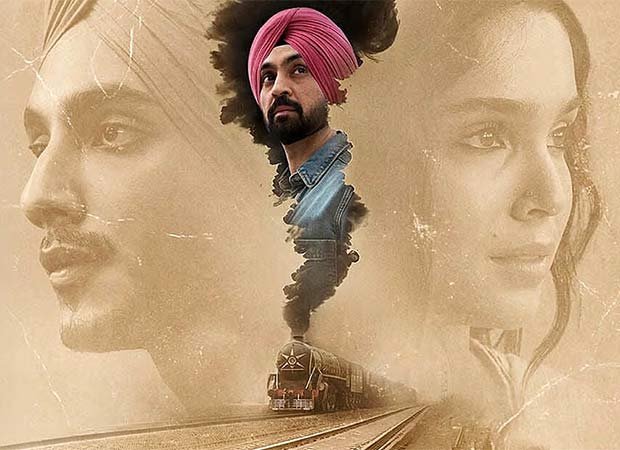
The film regularly flashes back 78 years to undivided British India, where a young Ishar (Vedang Raina) shares a passionate romance with Jiya/Afsana (Sharvari Wagh). Their peaceful life is violently shattered by the enforcement of the Radcliffe Line, forcing a brutal separation as the family is caught up in the chaos of refugee trains. Rather than relying on a conventional physical reunion, the script crafted by director imtiaz ali focuses heavily on emotional closure. Nirvair eventually uses digital connectivity, tracking down Afsana’s surviving relatives in Pakistan to show his grandfather his childhood home via a real-time video call, granting the old man peace in his final moments as envisioned by imtiaz ali.
A Sincere Note of Appreciation to the Distributors
In his celebratory statement, imtiaz ali made it a point to highlight the often-overlooked players in the theatrical ecosystem: the film exhibitors and regional distributors. When an independent, narrative-driven film registers an underperforming opening day, single screens and multiplex chains are traditionally quick to reallocate showtimes to mainstream commercial properties. The creative vision of imtiaz ali needed time to find its audience, which is why imtiaz ali extended his gratitude to these theater owners.
“The support of exhibitors and distributors to this film that did not have a good opening was crucial for its unusual success,” imtiaz ali stated gratefully. “Many thanks to all there.”
By maintaining screen space during the critical first week, exhibitors allowed the positive critical reviews praising the work of imtiaz ali—which highlighted the film as a vital antidote to modern rage-baiting cinema—to reach potential ticket buyers who appreciate the storytelling style of imtiaz ali.
The Digital Future on Netflix
With the 50-day landmark safely crossed, the theatrical window for Main Vaapas Aaunga is preparing to transition into its secondary monetization phase. The film has locked its official digital streaming debut on Netflix, scheduled to begin on August 7, 2026, marking another milestone for imtiaz ali.
Industry insiders believe that the strong box office footprint driven by imtiaz ali and his powerful word-of-mouth strategy will translate into record-breaking viewership numbers on the streaming service, attracting audiences who missed out on the big-screen experience. For imtiaz ali, whose expansive filmography often dissects themes of longing, distance, and emotional evolution, the endurance of Main Vaapas Aaunga reaffirms the continuous appetite for deep, human-centric storytelling in Indian cinema.