

Liquor Smuggling has suffered a significant setback in the national capital after the Delhi Police’s Special Staff of North-West District seized 8,100 quarters of illicit liquor being transported in a pickup vehicle during a late-night operation near Bhalaswa Flyover. The successful interception not only prevented a large quantity of illegally transported liquor from entering the city’s distribution network but also highlighted the continued vigilance of Delhi Police in dismantling organized illegal supply chains operating across state borders.
The operation, conducted during the early hours of July 10, resulted in the seizure of 162 cartons of liquor marked “For Sale in Haryana Only,” along with the recovery of the vehicle used for transportation. Although the driver managed to escape under the cover of darkness, investigators recovered a mobile phone from the driver’s seat, which is expected to play a crucial role in identifying the accused and tracing the larger network involved in the illegal trade.
The action reflects the sustained efforts of Delhi Police to curb Liquor Smuggling, an offence that not only causes substantial revenue losses to the government but also fuels organized crime, illegal distribution networks, and violations of excise regulations.
Table of Contents
A well-planned intelligence-based operation
The breakthrough was achieved after the Special Staff of North-West District received specific intelligence regarding the movement of a vehicle transporting a large consignment of illicit liquor into Delhi.
Acting swiftly on the information, the police team formulated an operational plan instead of conducting routine vehicle checks. Officers strategically positioned themselves near the Outer Ring Road close to Bhalaswa Flyover, an important route frequently monitored due to its connectivity with neighbouring states.
The operation demonstrated the importance of intelligence-driven policing. Rather than relying on random inspections, law enforcement personnel used actionable information to intercept the suspected vehicle at the right place and time.
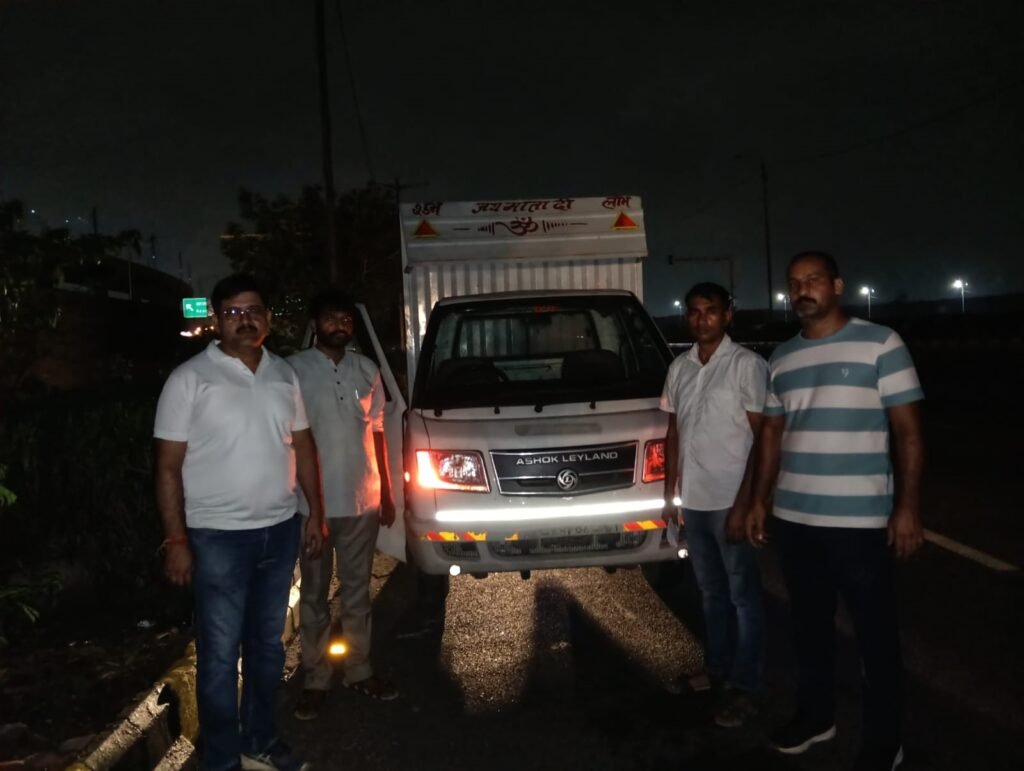
As the pickup van approached the interception point, police attempted to stop it for inspection. Sensing the presence of officers, the driver abandoned the vehicle and fled from the scene before he could be apprehended.
Although the accused escaped, the police secured the vehicle immediately, ensuring that the illegal consignment could not be diverted or destroyed.
Massive recovery exposes scale of illegal transportation
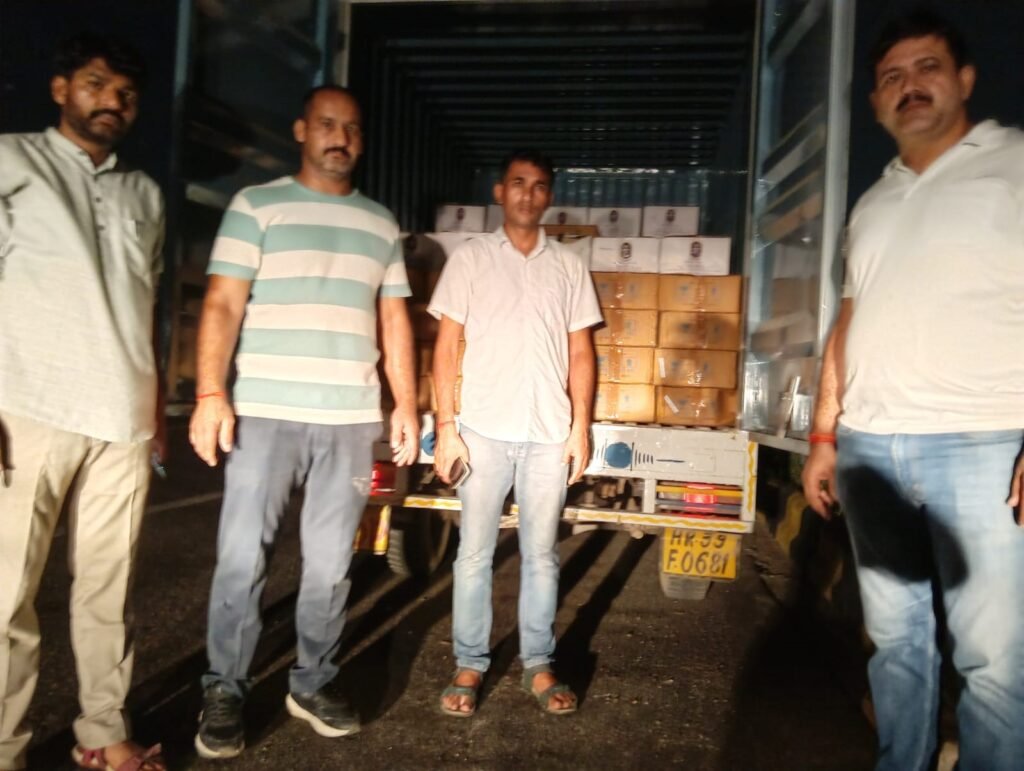
A detailed inspection of the pickup vehicle revealed a large stock of liquor meant exclusively for sale in Haryana but allegedly being transported illegally into Delhi.
Police recovered a total of 162 cartons containing 8,100 quarters of liquor, making it one of the significant seizures in the district’s recent anti-excise enforcement operations.
The recovered stock included:
- 20 cartons of Race 7 Metro Whisky containing 1,000 quarters.
- 109 cartons of Falcons Chapta Santra Whisky containing 5,450 quarters.
- 33 cartons of Night Blue Whisky containing 1,650 quarters.
Every carton carried markings indicating that the products were intended only for sale within Haryana. Such markings are important because liquor sold in one state is subject to that state’s taxation and licensing system. Transporting it into another state without legal authorization constitutes a violation of excise laws and forms a major part of Liquor Smuggling operations.
The pickup vehicle used for transportation was also seized under legal provisions.
Mobile phone may unlock the larger network
One of the most valuable pieces of evidence recovered during the operation was a mobile phone found on the driver’s seat.
Investigators believe that digital evidence stored in the device could provide critical leads regarding the identity of the absconding driver, his associates, suppliers, transport routes and intended recipients of the illegal liquor.
Modern investigations increasingly rely on digital forensics. Mobile phones often contain call records, messaging applications, GPS history, financial transactions and contact details that help investigators reconstruct the movement of organized criminal networks.
Officials are examining the device carefully as part of the ongoing investigation.
FIR registered under the Delhi Excise Act
Following the seizure, Delhi Police registered FIR No. 448/26 at Police Station Jahangir Puri under Sections 33 and 38 of the Delhi Excise Act.
The provisions deal with illegal possession, transportation and distribution of liquor without lawful authorization.
The registration of the case allows investigators to pursue the absconding accused while expanding the probe into possible suppliers, transport coordinators and receivers operating within the illegal network.
Police are also examining whether the recovered consignment was part of a larger interstate syndicate involved in repeated Liquor Smuggling into Delhi.
Why Liquor Smuggling remains a major challenge
Liquor Smuggling is far more complex than simply transporting alcohol across state borders.
Different states impose different excise duties and taxes on alcoholic beverages. These price differences create opportunities for illegal operators to purchase liquor from one state where prices are comparatively lower and transport it illegally into another state where the retail price is higher.
The illegal profit margin often attracts organized criminal groups that operate sophisticated transportation networks.
Instead of passing through licensed distributors and government-approved channels, illegally transported liquor reaches unauthorized sellers who evade taxes and licensing requirements.
Liquor Smuggling ,Such activities directly affect legitimate businesses while causing significant financial losses to state governments.
Economic impact of illegal liquor trade
Excise duty on liquor represents one of the largest revenue sources for many state governments.
Every bottle sold legally contributes tax revenue that supports public welfare programmes, infrastructure development and government services.
When Liquor Smuggling takes place, governments lose substantial revenue because taxes are bypassed completely.
Large-scale illegal transportation also disturbs the legal market by enabling unauthorized sellers to offer liquor at lower prices than licensed vendors.
This creates unfair competition while encouraging further illegal trade.
Experts have frequently noted that interstate Liquor Smuggling networks exploit tax differences, making continuous enforcement essential for protecting government revenue.
Public safety concerns
Beyond financial losses, Liquor Smuggling also raises significant public safety concerns.
Illegal supply chains often operate outside regulatory oversight.
Authorities cannot always verify whether the liquor has been transported, stored or handled according to safety standards.
Although many seizures involve genuine branded liquor diverted illegally across state borders, illegal supply networks have also been associated with counterfeit alcohol in several parts of the country.
Counterfeit liquor may contain harmful substances that pose serious health risks to consumers.
By intercepting illegal consignments before they reach unauthorized markets, police help reduce the possibility of unsafe products entering public circulation.
Importance of intelligence-based policing
The latest operation highlights how intelligence gathering has become central to modern policing.
Instead of depending solely on checkpoints or random inspections, specialized police units now collect information through surveillance, informants and analysis of previous criminal patterns.
This approach enables officers to identify vulnerable transport routes and intercept illegal consignments more effectively.
The successful Liquor Smuggling seizure near Bhalaswa Flyover demonstrates the effectiveness of coordinated planning, timely information and rapid operational response.
Such operations require careful preparation because suspects frequently alter transportation routes, travel during late-night hours and attempt to avoid law enforcement by using less-monitored roads.
Appreciation for Delhi Police’s coordinated effort
The operation reflects the professionalism and dedication of the Special Staff of North-West District, whose alertness prevented a massive quantity of illicit liquor from entering Delhi’s illegal market.
The police team displayed quick decision-making after receiving intelligence inputs, immediately organizing surveillance and intercepting the suspect vehicle without allowing the consignment to disappear into the city’s distribution network.
Although the driver escaped, recovering the entire stock, securing the transport vehicle and collecting digital evidence significantly strengthens the ongoing investigation.
Such enforcement actions demonstrate the importance of continuous vigilance by Delhi Police in protecting the city’s legal trade ecosystem and maintaining public order.
Operations like these also send a strong message to organized criminal networks that law enforcement agencies remain proactive in identifying and disrupting illegal transportation routes.
Interstate coordination remains essential
Cases involving Liquor Smuggling often extend beyond a single jurisdiction.
Since the recovered liquor was marked exclusively for sale in Haryana, investigators may coordinate with authorities from neighbouring states to determine the origin of the consignment and identify the supply chain.
Interstate cooperation has become increasingly important because illegal transport networks frequently operate across multiple states using different vehicles, drivers and storage locations.
Sharing intelligence between police units and excise departments helps authorities dismantle entire syndicates rather than merely intercept individual consignments.
Technology is changing investigations
Digital evidence Liquor Smuggling is expected to play an increasingly significant role during the investigation.
Apart from examining the recovered mobile phone, investigators may analyse call records, location history, communication patterns and financial links connected to the suspected network.
Modern Liquor Smuggling investigations increasingly combine traditional policing with technological tools, including surveillance cameras, vehicle tracking systems, digital forensics and data analysis.
These techniques improve the ability of investigators to identify repeat offenders and map criminal networks more efficiently.
Ongoing efforts against illegal liquor networks
Delhi Police has continued conducting regular enforcement drives against illegal transportation of liquor across various districts.
Such operations target unauthorized storage units, transport vehicles, illegal distribution points and organized supply chains that attempt to evade excise regulations.
The latest seizure of 8,100 quarters of illicit liquor represents another significant achievement in these ongoing efforts.
By removing such a large consignment from circulation, police have disrupted what appears to be a substantial illegal supply operation while creating valuable investigative leads through the recovered evidence.
Liquor Smuggling ,Efforts are continuing to identify and arrest the absconding driver, examine the digital evidence recovered from the vehicle and uncover the complete Liquor Smuggling network responsible for transporting the consignment into Delhi.