
The deadline for filing (ITR Filing last date) Income Tax Returns for the Financial Year 2025-26 (Assessment Year 2026-27) is approaching, and millions of taxpayers across India are preparing to complete their annual tax compliance. For most individual taxpayers, including salaried employees, pensioners, and those not requiring tax audits, the last date to file ITR is 31 July 2026.
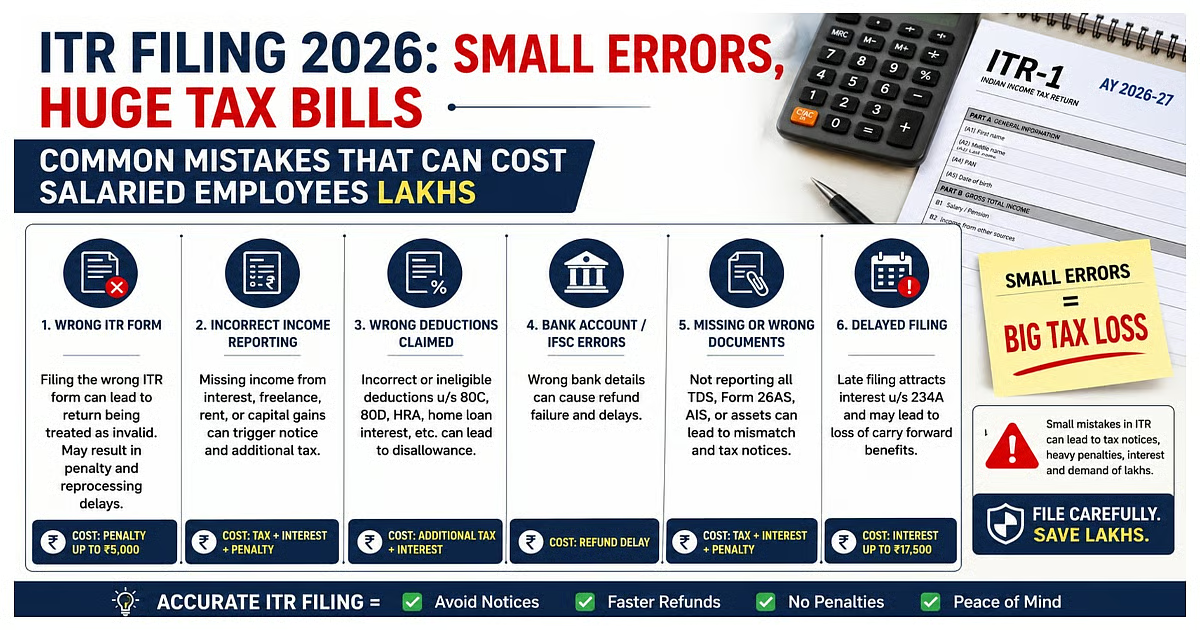
While online ITR Filing has made the process faster and easier, many taxpayers still make common mistakes while submitting their returns. Errors such as selecting the wrong ITR form, failing to match details with Annual Information Statement (AIS), missing income sources, incorrect deductions, or incomplete bank details can lead to delays, notices from the Income Tax Department, or rejection of claims.
Tax experts advise taxpayers not to wait until the final days because heavy traffic on the e-filing portal and last-minute corrections can create unnecessary difficulties. The Income Tax Department has been continuously updating its online ITR Filing system and making forms available for different categories of taxpayers through the official portal.
Table of Contents
Why Filing ITR Before the Deadline Is Important
A smooth ITR Filing process helps taxpayers maintain financial transparency and avoid future tax-related complications.
ITR Filing is not only a legal requirement but also an important financial responsibility for individuals. An ITR provides a record of income, taxes paid, investments, deductions, and financial transactions during a financial year.
Timely filing of ITR helps taxpayers:
- Avoid late filing penalties
- Receive eligible tax refunds faster
- Maintain a clean financial record
- Apply easily for loans and visas
- Carry forward certain eligible losses
- Avoid unnecessary communication from tax authorities
Missing the deadline can result in additional financial consequences. Taxpayers filing after the due date may face late fees under applicable provisions, interest liabilities, and restrictions on certain benefits.
ITR Filing Deadline 2026: Who Has to File by 31 July?
For Assessment Year 2026-27, taxpayers need to understand the ITR Filing deadline applicable to their income category.
The 31 July 2026 deadline generally applies to:
- Salaried individuals
- Pensioners
- Individuals with income from sources that do not require audit
- Other taxpayers who are not required to submit audit reports
Taxpayers with business or professional income may have different deadlines depending on audit requirements.
Experts recommend checking eligibility carefully before filing because choosing the wrong form or missing mandatory disclosures can create compliance issues.
Completing ITR Filing before 31 July 2026 can help taxpayers avoid unnecessary penalties and last-minute issues.
10 Common Mistakes Taxpayers Should Avoid During ITR Filing 2026
1. Selecting the Wrong ITR Form
One of the most common mistakes taxpayers make during ITR Filing is choosing an incorrect Income Tax Return form.
Different taxpayers need different forms depending on their income sources.
For example:
- Salaried individuals with eligible conditions may use ITR-1
- Individuals with capital gains, multiple income sources, or foreign assets may require other forms
- Business and professional income taxpayers may need ITR-3 or ITR-4 depending on eligibility
Filing an incorrect form may result in a defective return notice from the Income Tax Department.
2. Not Checking Annual Information Statement (AIS) and Form 26AS
Many taxpayers rely only on Form 16 provided by employers. However, income details may come from multiple sources.
AIS and Form 26AS contain important information related to:
- TDS deductions
- Interest income
- Dividend income
- Securities transactions
- Other financial activities
Taxpayers should compare these details before completing their ITR Filing to avoid mismatches.
3. Forgetting Additional Income Sources
A common mistake is reporting only salary income while ignoring other earnings.
Taxpayers should disclose income from:
- Savings account interest
- Fixed deposits
- Rental income
- Dividends
- Freelance work
- Capital gains from investments
Failure to report income may result in tax notices or additional liabilities.
4. Incorrectly Claiming Tax Deductions
Tax deductions help reduce taxable income, but claims must be supported by valid documents.
Common deduction-related mistakes include:
- Claiming investments that were not actually made
- Entering incorrect amounts
- Forgetting eligibility conditions
- Claiming deductions under the wrong section
Taxpayers should maintain proof of investments and expenses before claiming benefits.
5. Ignoring Capital Gains Details
Many investors forget to report profits or losses from investments.
Capital gains may arise from:
- Shares
- Mutual funds
- Property sales
- Other investments
With increasing participation in financial markets, accurate reporting of capital gains has become more important.
6. Not Reporting Foreign Assets or Overseas Income
Individuals who own foreign assets or receive income from abroad must carefully disclose relevant information.
This may include:
- Foreign bank accounts
- Overseas investments
- Foreign shares
- Other international assets
Tax experts have advised taxpayers to review foreign asset disclosures carefully because information-sharing agreements between countries have increased transparency.
7. Entering Incorrect Personal Details
Small errors in personal information can create problems during processing.
Taxpayers should verify:
- Name spelling
- PAN details
- Aadhaar information
- Address
- Contact details
Incorrect information may delay communication and refund processing.
8. Choosing the Wrong Tax Regime
Taxpayers must carefully evaluate whether the old tax regime or new tax regime is beneficial for them.
The choice depends on factors such as:
- Salary structure
- Available deductions
- Investments
- Financial planning goals
A wrong selection can impact the final tax calculation.
9. Forgetting Bank Account Verification
For taxpayers expecting refunds, bank details are extremely important.
Common mistakes include:
- Providing inactive bank accounts
- Entering incorrect account numbers
- Not completing bank verification
Taxpayers should ensure that their preferred bank account is properly validated on the income tax e-filing portal.
10. Not Completing ITR Verification
Filing the return is not the final step. Taxpayers must also verify their submitted return.
Verification can be completed through methods such as:
- Aadhaar-based OTP
- Net banking
- Other approved electronic methods
An unverified return may not be considered successfully filed.
How to Prepare Before Filing ITR 2026
Experts suggest keeping all necessary documents ready before starting the filing process.
Important documents include:
- PAN card
- Aadhaar card
- Form 16
- Bank statements
- Investment proofs
- Loan certificates
- Insurance documents
- Capital gains statements
Preparing documents early reduces the chances of mistakes and makes the filing process smoother.
Avoid Last-Minute Filing Pressure
Many taxpayers wait until the final week to submit their returns. However, last-minute filing can create problems due to:
- Portal traffic
- Missing documents
- Correction requirements
- Technical issues
Experts recommend completing filing well before the deadline to allow sufficient time for reviewing details.
What Happens If You Miss the ITR Deadline?
Failure to file ITR within the due date may lead to financial consequences.
Possible impacts include:
- Late filing fee
- Interest on outstanding tax liability
- Difficulty in carrying forward certain losses
- Additional compliance requirements
Taxpayers should not assume that deadline extensions will automatically be announced. As of now, taxpayers are advised to complete filing before the applicable due date.

Income Tax Department Focuses on Accurate Digital Filing
The Income Tax Department has increasingly focused on technology-based compliance, improving online services and using data matching systems to identify discrepancies.
Through systems such as AIS, taxpayers can review financial information before filing their returns. The objective is to encourage accurate reporting and reduce errors during assessment.
The ITR Filing 2026 deadline of 31 July is an important reminder for taxpayers to complete their income tax compliance on time. While digital filing has simplified the process, small mistakes can create unnecessary complications.
Selecting the correct ITR form, verifying income details, checking AIS and Form 26AS, reporting all income sources, and completing final verification are essential steps for a smooth filing experience.
With proper preparation and careful review, taxpayers can avoid common mistakes and ensure their Income Tax Return is filed accurately before the deadline.
As the deadline approaches, experts advise taxpayers to avoid rushing at the last moment and complete their ITR filing with accuracy, transparency, and proper documentation.