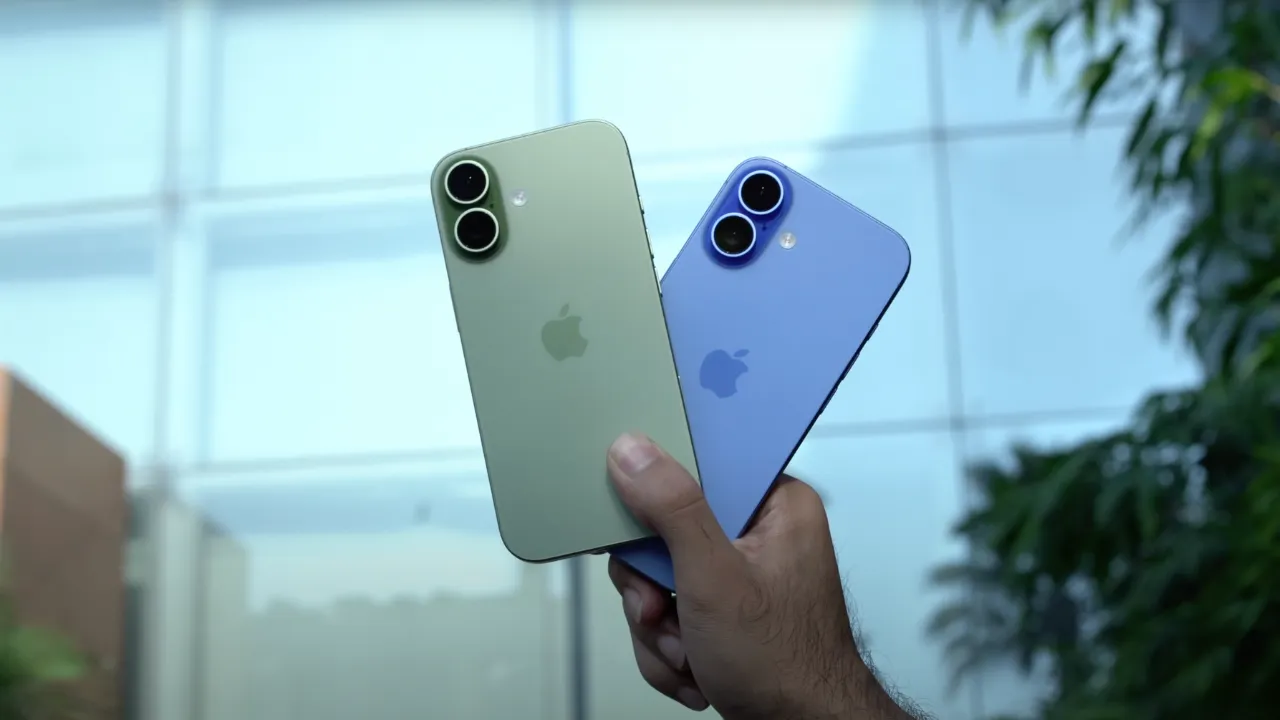
iPhone 17 is back in the spotlight, but this time, it is not because of a new feature or camera upgrade. Instead, Apple has made an unexpected move that is likely to catch the attention of buyers across India. Following the launch of the new iPhone 18 Pro series, expectations were high that previous-generation iPhones would become more affordable. However, Apple has taken a surprising turn and increased the prices of several existing models. The iPhone 17, along with the iPhone 16, iPhone 17e and ultra-thin iPhone Air, has received a notable price revision, giving Apple’s India lineup a fresh and rather unexpected pricing landscape.
The changes come immediately after Apple’s September 2026 product launch, where the company unveiled the iPhone 18 Pro and iPhone 18 Pro Max alongside its first foldable iPhone, the iPhone Duo. The latest Pro models have moved further into the premium segment, while the price adjustments to older devices significantly alter the positioning of Apple’s existing lineup in India.
According to the Times of India report provided as the primary source, Apple’s revised pricing has resulted in increases ranging from Rs 10,000 to Rs 30,000 across selected models. The iPhone Air has received the largest increase, while the iPhone 17 and iPhone 17e have also become considerably more expensive.

Apple iPhone prices revised after iPhone 18 Pro launch
The most notable change is the revised pricing of the iPhone 17. The smartphone was originally launched in India at Rs 82,900 for the 256GB configuration. Following Apple’s latest pricing adjustment, the same model now starts at Rs 99,900.
This represents a Rs 17,000 increase and brings the standard iPhone 17 into a significantly higher price bracket.
The iPhone 17e has also become more expensive. Originally introduced at Rs 64,900, the entry-level model now costs Rs 79,900, representing a Rs 15,000 increase.
Meanwhile, Apple’s older iPhone 16 has received a Rs 10,000 price increase. Its price has moved from Rs 79,900 at launch to Rs 89,900.
The biggest increase, however, applies to the iPhone Air. The ultra-thin model was introduced at Rs 1,19,900 but now carries a starting price of Rs 1,49,900, a substantial Rs 30,000 increase.
The revised prices are significant because they change the relative value proposition of Apple’s existing smartphones. Consumers who previously viewed an older-generation iPhone as a more affordable route into Apple’s ecosystem may now face a considerably higher entry cost.
Revised iPhone prices in India
| Model | Launch price | Revised price | Increase |
|---|---|---|---|
| iPhone 17e | Rs 64,900 | Rs 79,900 | Rs 15,000 |
| iPhone 16 | Rs 79,900 | Rs 89,900 | Rs 10,000 |
| iPhone 17 | Rs 82,900 | Rs 99,900 | Rs 17,000 |
| iPhone Air | Rs 1,19,900 | Rs 1,49,900 | Rs 30,000 |
The Times of India report notes that the revised pricing has also been reflected on Apple’s US website.
iPhone 17 now starts at nearly Rs 1 lakh
Among the revised models, the iPhone 17’s new starting price is particularly noteworthy. At Rs 99,900, its entry price is effectively at the Rs 1 lakh mark.
The move changes how the standard iPhone 17 sits within Apple’s portfolio. When the phone debuted, its Rs 82,900 starting price offered a relatively clear distinction between the standard model and Apple’s more expensive Pro offerings.
The new price reduces that gap and makes the decision between an older or standard-generation iPhone and a premium model more consequential for buyers.
The iPhone 17 itself remains a technically capable smartphone. It features a 6.3-inch display with a 120Hz refresh rate, a feature previously associated primarily with Apple’s Pro models. The screen can reach a peak brightness of 3,000 nits and supports an always-on display. Apple also introduced Ceramic Shield 2 and an anti-reflective treatment intended to improve durability and outdoor visibility.
The handset is powered by Apple’s A19 chip, which is designed to support the company’s growing artificial-intelligence ambitions as well as demanding applications and gaming.
Camera upgrades remain a key iPhone 17 feature
Apple also substantially upgraded the camera system on the iPhone 17.
The rear camera setup combines a 48MP primary sensor with a 2x optical-quality telephoto crop, while the 48MP ultra-wide camera is designed to capture more detailed images across wider scenes.
On the front, Apple introduced an 18MP camera with a square sensor configuration. One of the practical advantages is that users can capture wider compositions without necessarily rotating the phone horizontally.
The front camera also incorporates Center Stage, Apple’s technology designed to keep users centred during video calls.
Battery life is another area where Apple claims a significant improvement. According to the information reported by the Times of India, the iPhone 17 can deliver up to 30 hours of video playback, eight hours more than the iPhone 16.
These specifications help explain the iPhone 17’s position as a premium mainstream smartphone, although its revised price means consumers will now have to spend substantially more than they did at launch.
iPhone 17e gets a Rs 15,000 price increase
The iPhone 17e was positioned as a more accessible member of the newer iPhone generation. Its original starting price of Rs 64,900 made it an important option for consumers looking for a relatively modern iPhone without paying flagship-level prices.
The new Rs 79,900 starting price changes that proposition considerably.
A Rs 15,000 increase is equivalent to nearly 23% of its original launch price. For price-sensitive buyers, such a jump can materially affect the purchasing decision, particularly when competing smartphones from other manufacturers offer high-end displays, cameras and processors at lower prices.
Nevertheless, Apple’s ecosystem remains an important factor in the buying equation. Integration with services and devices such as Macs, iPads, Apple Watches and AirPods can make an iPhone attractive even when its hardware specifications are not being considered in isolation.

iPhone Air sees the biggest price jump
The most dramatic revision in Apple’s Indian portfolio is reserved for the iPhone Air.
The device originally entered the market at Rs 1,19,900. Its revised starting price of Rs 1,49,900 means buyers now have to pay Rs 30,000 more than the launch price.
That is the largest absolute increase among the models listed in the report.
The iPhone Air combines a 6.5-inch Super Retina XDR OLED display with ProMotion’s 120Hz refresh rate, an always-on display and a peak brightness of 3,000 nits. It also includes the Dynamic Island and is powered by the A19 Pro chip.
Its camera setup includes a 48MP Fusion rear camera and an 18MP Center Stage front camera. Apple claims up to 27 hours of video playback, alongside fast and wireless charging capabilities.
The Air’s premium positioning is closely connected to its thin design. However, the Rs 30,000 price revision means its appeal will increasingly depend on how much consumers value that design and portability compared with conventional iPhone models.
The iPhone 16 also becomes more expensive
Apple has also raised the price of the iPhone 16, despite the handset being an older-generation model.
The phone’s price has increased from Rs 79,900 to Rs 89,900, a Rs 10,000 rise.
Price reductions on older iPhones have historically provided consumers with an alternative to buying the newest generation. Apple’s latest strategy goes in the opposite direction for the models covered by the revised pricing.
For consumers, this means that waiting for an older model to become substantially cheaper may no longer produce the savings they expect.
The new pricing could also influence demand for the used and refurbished iPhone market, where older-generation devices may become more attractive if new retail prices remain elevated.
iPhone 18 Pro launch changes Apple’s premium lineup
The price revisions arrive at an important moment for Apple.
The company has launched the iPhone 18 Pro and iPhone 18 Pro Max as its latest flagship smartphones. Both models are powered by Apple’s A20 Pro chip and ship with iOS 27. The new generation brings camera improvements, new colour options and additional Apple Intelligence capabilities.
Apple has also introduced a new 48MP Fusion Main camera with variable aperture on the Pro models, representing a notable change to the camera system. The company has simultaneously expanded battery capabilities and other aspects of the flagship hardware.
The iPhone 18 Pro starts at Rs 1,64,900 in India, while the iPhone 18 Pro Max starts at Rs 1,79,900. Both models are available with multiple storage configurations, extending up to 2TB for the Pro Max.
The latest flagship launch therefore establishes a substantially higher premium ceiling for Apple’s smartphone lineup.
Apple also breaks with its traditional iPhone launch strategy
This year’s launch is notable for another reason: Apple did not introduce a standard iPhone 18 alongside the Pro models.
Instead, the company focused its September event on the iPhone 18 Pro, iPhone 18 Pro Max and its first foldable smartphone, the iPhone Duo. The absence of the standard iPhone 18 represents a departure from Apple’s traditional annual September lineup and could indicate a shift in the company’s product-release strategy.
The iPhone Duo itself adds another premium tier to Apple’s smartphone portfolio. It features a 7.6-inch internal display and a 5.4-inch external display and is priced at Rs 2,99,900 in India.
With the Pro, Pro Max and foldable models occupying increasingly expensive segments, Apple’s decision to raise prices on existing devices creates a broader and more expensive pricing architecture.
What the price hike means for Indian consumers
For Indian buyers, the immediate impact is straightforward: several iPhones that were expected to become more affordable as newer models arrived are instead more expensive.
The increases also create a different calculation for customers considering an upgrade. Someone choosing between the iPhone 16, iPhone 17 and iPhone Air must now account not only for differences in hardware and features but also for Apple’s revised pricing.
The iPhone 17’s move to Rs 99,900 is especially important because it places the mainstream model close to the psychological Rs 1 lakh threshold. Meanwhile, the iPhone Air’s Rs 1,49,900 starting price moves it firmly into the premium category.
For buyers who prioritise value, promotions from retailers, bank discounts, exchange offers and financing schemes could therefore become more important than the official list price.
A more premium iPhone strategy
Apple’s latest pricing moves suggest a broader premiumisation of its iPhone portfolio in India.
The company is not simply introducing new flagship products; it is also adjusting the prices of existing models. That means consumers are facing higher prices across multiple points of the lineup rather than only at the very top.
At the same time, Apple continues to differentiate its devices through display technology, camera capabilities, proprietary processors, artificial intelligence features and integration with its broader ecosystem.
The strategy could strengthen Apple’s premium positioning, but it also raises the importance of value for money in a highly competitive Indian smartphone market.
What buyers should consider before purchasing
Consumers planning to buy an iPhone after the latest price revision should consider several factors.
- Check the revised official price rather than relying on the launch price. Older articles and retailer listings may continue to display introductory prices.
- Compare generations carefully. The higher price of an older model does not necessarily make it a better purchase than a newer device.
- Look at storage requirements. Paying for a higher storage tier can significantly increase the final purchase price.
- Consider retailer offers. Exchange bonuses, bank discounts and promotional pricing may reduce the effective cost.
- Evaluate how long you intend to keep the phone. Longer ownership can make newer processors and extended software support more valuable.
- Consider refurbished or used models. Buyers who are primarily looking for affordability may find better value outside Apple’s current new-device lineup.
Apple’s latest iPhone launch has brought more than a new generation of flagship smartphones to India. It has also fundamentally changed the pricing landscape for several existing models.
The iPhone 17 now starts at Rs 99,900, the iPhone 17e at Rs 79,900, the iPhone 16 at Rs 89,900 and the iPhone Air at Rs 1,49,900. Among these, the Rs 30,000 increase for the iPhone Air is the steepest, while the iPhone 17’s Rs 17,000 increase is arguably the most consequential for mainstream buyers.
The changes coincide with Apple’s push further into premium hardware through the iPhone 18 Pro series and the company’s first foldable iPhone. Together, these moves point to a smartphone strategy is a more expensive iPhone ecosystem. Buyers will need to look beyond the model name and carefully compare specifications, storage, current offers and long-term value before deciding which iPhone makes the most sense for their budget. increasingly centred on premium positioning and higher-value devices.
For Indian consumers, the result is a more expensive iPhone ecosystem. Buyers will need to look beyond the model name and carefully compare specifications, storage, current offers and long-term value before deciding which iPhone makes the most sense for their budget.