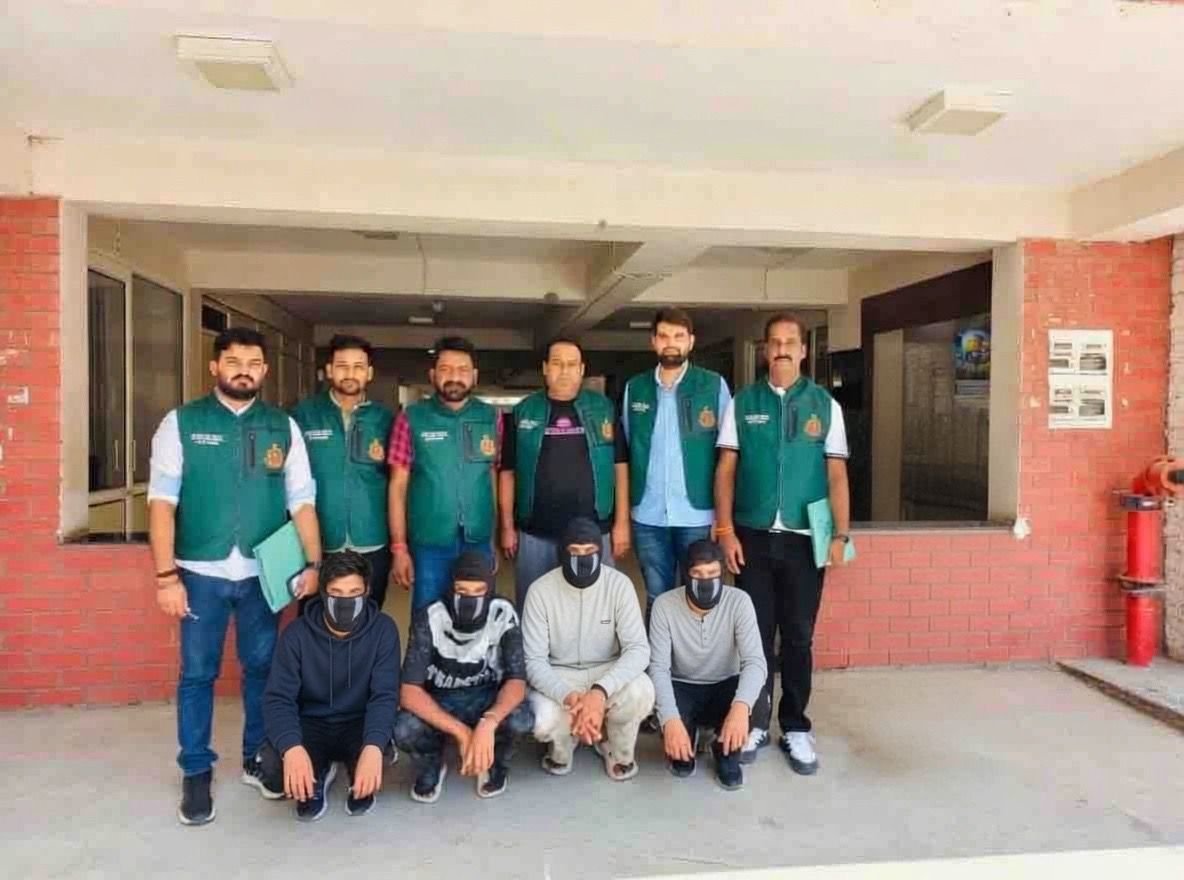
The Special Cell of Delhi Police has dismantled an alleged inter state terror network with suspected links to Pakistan-based handlers. Four accused, including three from Punjab and one apprehended in Delhi, have been arrested during a coordinated operation that investigators say prevented a planned terror strike in the Delhi-NCR region.
According to Delhi Police, the accused were allegedly acting on instructions from Pakistan-based ISI handler Shahzad Bhatti and his associates. The investigation has revealed that the suspects were using foreign mobile numbers provided by their handlers to evade detection while allegedly receiving operational instructions and coordinating activities.
The operation, carried out after weeks of intelligence gathering and technical surveillance, also led to the recovery of two foreign-made pistols, nine live cartridges, and five mobile phones containing crucial digital evidence. Investigators believe the arrests have disrupted an emerging inter state terror module before it could execute its alleged plans.
The successful operation reflects the growing emphasis on intelligence-driven policing and inter-agency coordination in tackling evolving security threats.
Table of Contents
Intelligence input triggered the operation
The investigation began after the Special Cell received specific and credible intelligence indicating that Pakistan-based operatives were attempting to revive an inter state terror network by recruiting young individuals from Punjab.
The information suggested that the recruits were allegedly being directed to carry out terror-related activities in Delhi and the National Capital Region.
Recognising the seriousness of the intelligence, officers of the Special Cell initiated an extensive investigation involving technical surveillance, human intelligence, and multiple field operations across Delhi and Punjab.
Rather than conducting immediate arrests, investigators first mapped communication patterns, verified intelligence inputs, Inter State Terror and identified individuals allegedly linked to the network.
This careful approach enabled investigators to gather substantial evidence before launching simultaneous operations.
First arrest led investigators to a wider network
The first breakthrough came when police apprehended one accused from Majitha Road in Amritsar, Punjab.
During the operation, officers recovered one semi-automatic pistol, five live cartridges, and two mobile phones from his possession.
Investigators allege that the accused was maintaining direct communication with Pakistan-based handlers using foreign mobile numbers that had allegedly been arranged specifically to avoid Indian surveillance systems.
According to the investigation, he also disclosed information regarding additional associates allegedly connected with the inter state terror network.
The interrogation became a turning point in the case, enabling investigators to expand the operation beyond the initial arrest.
Follow-up raids resulted in more arrests
Acting on fresh leads, Delhi Police carried out multiple follow-up operations in Punjab.
These coordinated raids led to the arrest of two additional accused who were allegedly associated with the same inter state terror network.
Police recovered another foreign-made Zigana pistol, four live cartridges, and additional mobile phones during these operations.
Investigators allege that these accused maintained regular communication with Pakistani handlers through foreign numbers and were involved in receiving illegal consignments allegedly transported across the border using drones.
The recovery of sophisticated firearms and communication devices has become an important part of the ongoing investigation.

Fourth accused arrested in Delhi
The investigation later reached Delhi, where officers arrested another accused believed to have been assigned operational responsibilities within the alleged inter state terror network.
Police recovered a mobile phone containing what investigators describe as incriminating digital material.
According to Delhi Police, the accused had allegedly been instructed by Pakistan-based handlers to conduct reconnaissance of religious places, police stations, and police pickets across Delhi.
Investigators further Inter State Terror allege that he had been tasked with carrying out a firing incident targeting police establishments in the capital.
Authorities are currently examining digital evidence recovered from the seized mobile phone to verify the full extent of these alleged plans.
Foreign communication channels under investigation
One of the most significant aspects of the investigation involves the communication methods allegedly adopted by the accused.
According to investigators, the suspects avoided using regular Indian mobile numbers and instead communicated through foreign numbers arranged by their Pakistani handlers.
Security agencies believe such communication methods are increasingly being used by cross-border networks to reduce the risk of interception and identification.
Digital forensic experts are now examining the seized mobile devices to recover deleted messages, encrypted chats, call records, social media interactions, and other electronic evidence.
The analysis may provide valuable insights into the structure of the inter state terror network and identify additional individuals connected to the operation.

Alleged use of drones for arms delivery
Investigators have also highlighted the suspected use of drones for transporting weapons and narcotics across the international border.
According to Delhi Police, one of the accused allegedly disclosed that consignments containing firearms and Inter State Terror narcotic substances were delivered through drones operating from across the border.
Drone-based smuggling has emerged as one of the most significant security challenges along India’s international border in recent years.
Unlike traditional infiltration methods, drones can transport weapons, ammunition, explosives, narcotics, and communication equipment while minimising direct human involvement.
Security agencies have repeatedly strengthened anti-drone surveillance systems to counter this evolving threat.
The current investigation may help authorities better understand how such smuggling routes are organised and coordinated.
Profile of the accused
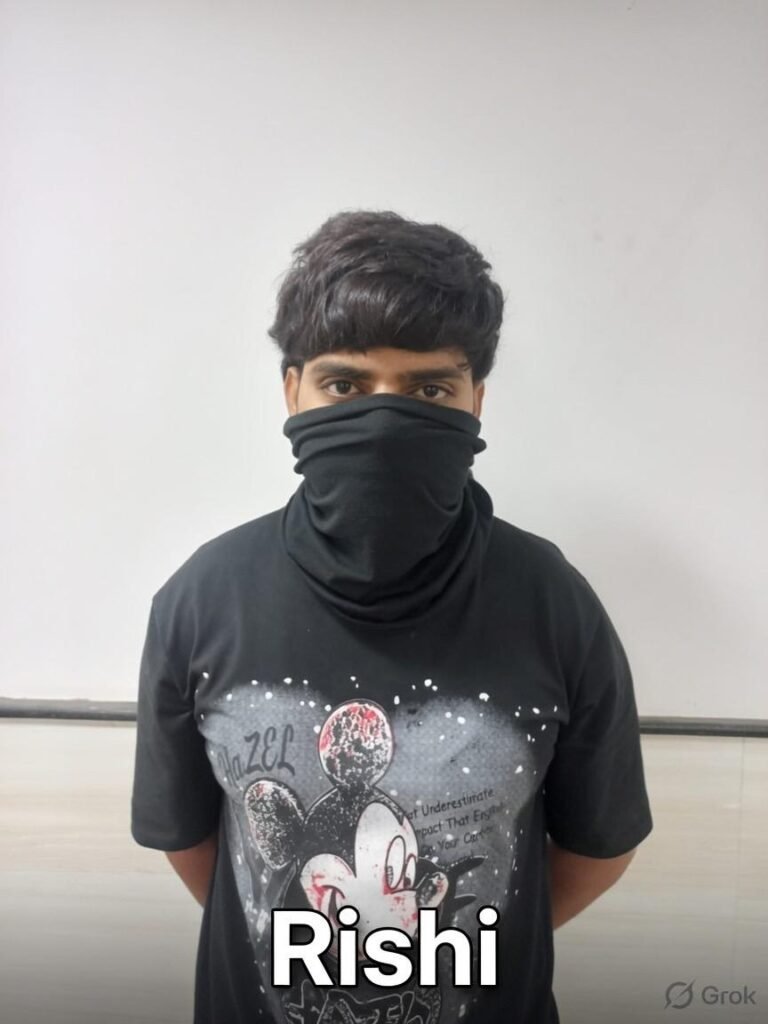
According to investigators, the accused belonged to different districts of Punjab and allegedly maintained varying responsibilities within the network.
Police stated that one accused resided in Tarn Taran district, located close to the India-Pakistan border, and allegedly played an important role in receiving drone consignments.
Another accused from the same district was allegedly involved in coordinating with handlers and receiving illegal consignments.
A third accused from Amritsar was also allegedly connected to cross-border communications.
The fourth accused, arrested in Delhi, is alleged to have been responsible for conducting reconnaissance of sensitive locations and gathering information that could facilitate future attacks.
Police have also indicated that some of the accused had previously faced cases under the Narcotic Drugs and Psychotropic Substances (NDPS) Act.
Investigators are verifying their complete criminal history.

Digital evidence becomes crucial
Modern terrorism investigations increasingly rely upon digital evidence alongside physical recoveries.
The five mobile phones recovered during the operation are expected to play a central role in the investigation.
Digital forensic specialists are examining:
- Call records
- Social media accounts
- Messaging applications
- Photographs
- Videos
- GPS location history
- Contact lists
- Deleted files
- Financial transaction details
These digital trails often reveal operational planning, recruitment efforts, financial support systems, and communication patterns that may not be immediately visible through conventional investigation.
Authorities believe the analysis could expose additional links connected with the alleged inter state terror network.
Reconnaissance of security establishments raises concern
One of the more serious allegations emerging from the investigation is the claimed reconnaissance of police establishments and religious places.
Police allege that one accused had been instructed to prepare videos and collect information regarding police stations, police pickets, and other sensitive locations.
Reconnaissance is frequently regarded as one of the earliest stages of planning any organised attack because it allows perpetrators Inter State Terror to study security arrangements, identify vulnerabilities, and determine operational timings.
Preventing such activities before any attack occurs remains one of the most important responsibilities of intelligence and counter-terror agencies.
The timely intervention by Delhi Police appears to have disrupted these alleged plans before they could advance further.
Appreciation for Delhi Police’s professional investigation
The successful operation deserves appreciation for the professionalism displayed by the Special Cell of Delhi Police.
Counter-terrorism investigations are among the most complex responsibilities undertaken by law enforcement agencies.
Unlike ordinary criminal cases, they often involve multiple states, encrypted communications, cross-border coordination, digital evidence, intelligence gathering, and continuous surveillance over extended periods.
The Special Cell demonstrated patience by allowing the investigation to develop through technical analysis before launching coordinated operations.
The arrests across Punjab and Delhi illustrate effective teamwork, meticulous planning, and seamless coordination between investigators operating in different jurisdictions.
The recovery of weapons, ammunition, communication devices, and valuable digital evidence reflects the thoroughness of the investigation.
Most importantly, the operation appears to have neutralised a potential Inter State Terror security threat before any alleged terror activity could take place.
Such preventive policing represents one of the strongest examples of proactive law enforcement.
Cross-border terror networks remain a major challenge
Security agencies continue to face evolving threats from cross-border terror organisations that increasingly exploit modern technology.
Encrypted communication platforms, foreign SIM cards, drone deliveries, anonymous financial transfers, and social media recruitment have significantly changed the operational methods of such networks.
Consequently, investigations today require close coordination between intelligence agencies, cyber experts, border security forces, financial investigators, and state police units.
Every successful operation against an inter state terror network contributes to broader national security efforts by disrupting recruitment pipelines, intercepting illegal weapons, and exposing communication channels.
Investigation continues to identify larger network
Although four accused have already been arrested, investigators have made it clear that the case remains under active investigation.
Delhi Police are now working to identify every individual connected with the alleged inter state terror network, including handlers, facilitators, financiers, recruiters, logistics providers, Inter State Terror and any other associates who may have supported the operation.
Authorities are analysing financial records, electronic communications, travel history, border-related intelligence, and technical evidence recovered during the investigation.
Further arrests cannot be ruled out as investigators continue examining the digital evidence and intelligence gathered during the operation.
The latest action by the Special Cell demonstrates the importance of intelligence-led policing in protecting national security. By identifying suspicious activities early, conducting coordinated interstate operations, and acting before any alleged Inter State Terror attack could be executed, Delhi Police have once again shown their commitment, vigilance, and operational excellence in safeguarding the people of the national capital against emerging security threats.